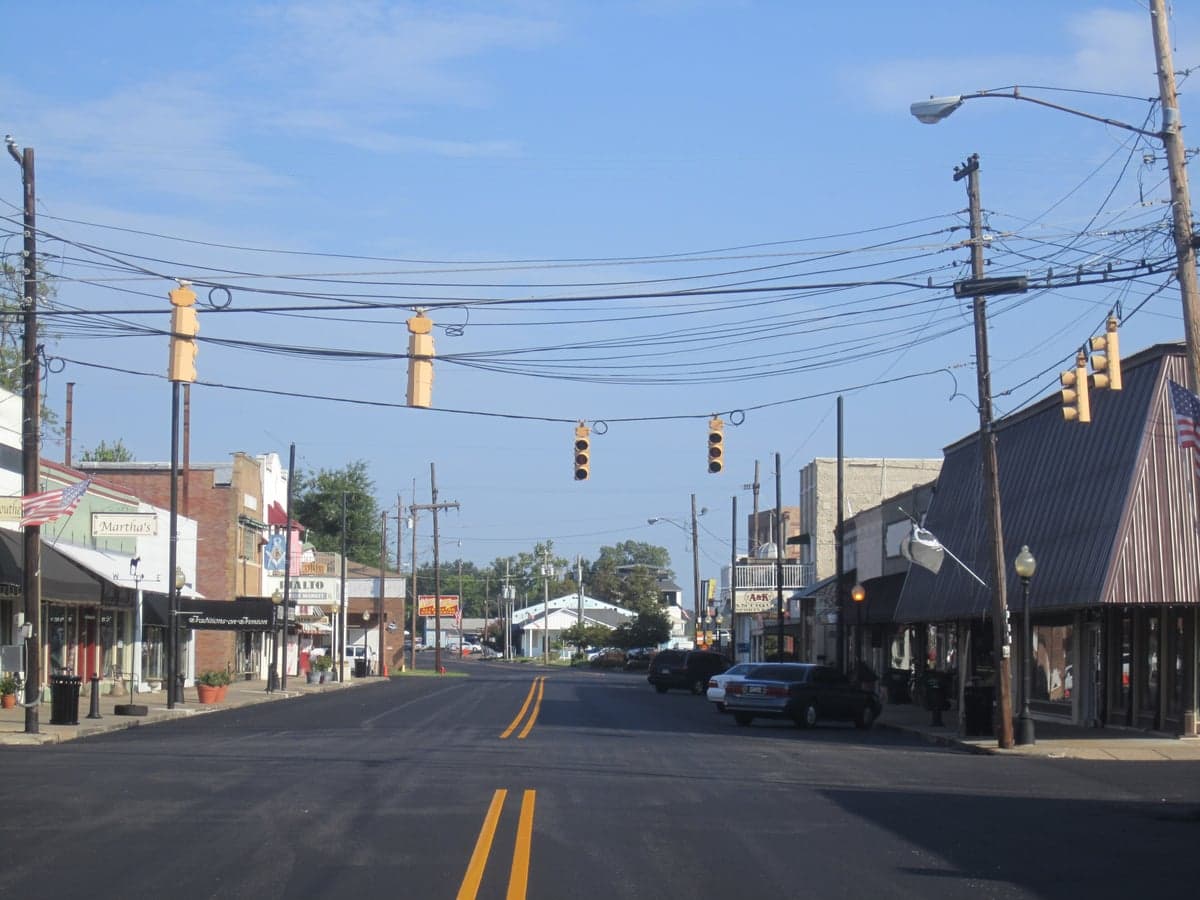
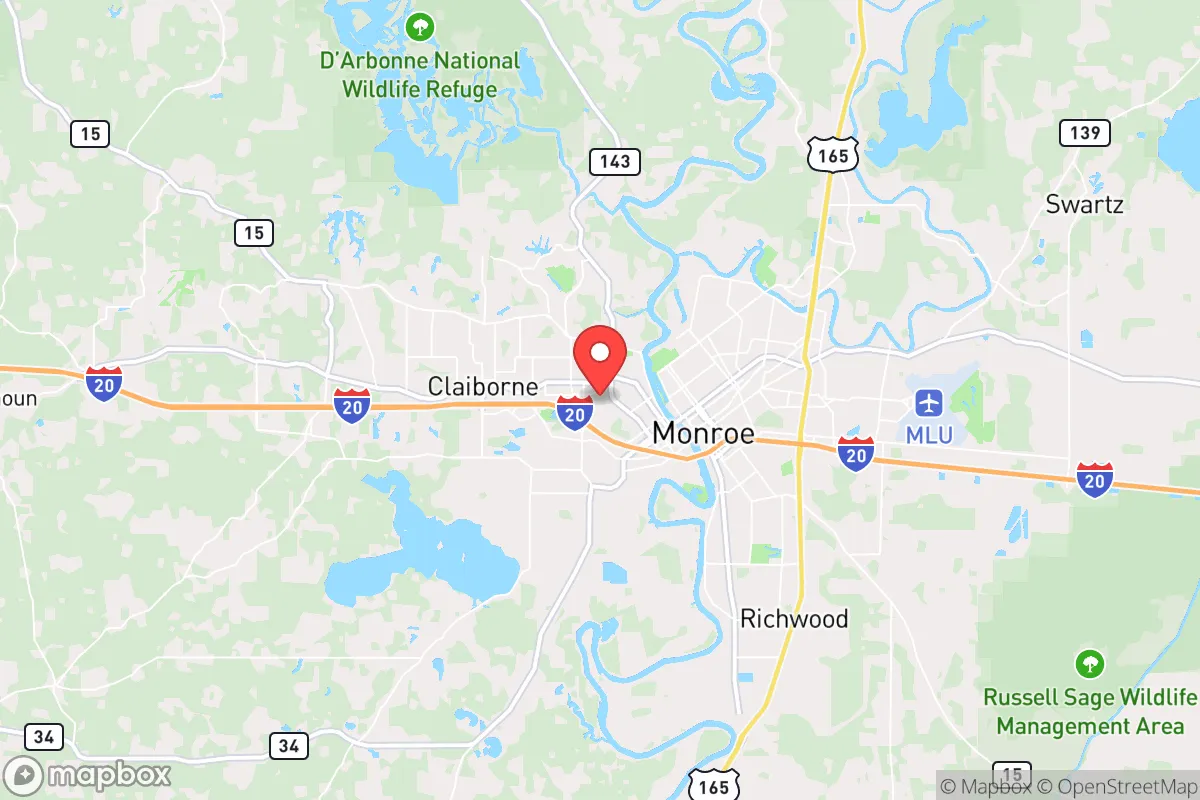
Photo: Wikipedia
Personal Sovereignty in West Monroe, LA
Strong independent fundamentals that actively favor personal liberty and low regulation.
What does Personal Sovereignty tell us?
Personal Sovereignty measures your capacity for self-reliance and independence with minimal government friction. Higher scores mean fewer barriers between you and the way you want to live... but it assumes you have the space you need and good neighbors.
What does this tell us?
Personal Sovereignty measures your capacity for self-reliance and independence with minimal government friction. Higher scores mean fewer barriers between you and the way you want to live... but it assumes you have the space you need and good neighbors.
State Policy
Energy independence: Net exporter (280% of energy produced in-state)
Personal Liberty
Homesteading

Personal Liberty Analysis
West Monroe, Louisiana, offers a personal sovereignty environment that stands in stark contrast to the coastal and urban jurisdictions where government overreach has become the norm. For those who view the accelerating erosion of individual rights as a primary relocation driver, this Ouachita Parish community provides a legal and cultural framework where the state’s presence is deliberately limited, and the individual’s right to live, defend, and provide for themselves remains largely intact. The combination of a low-tax, low-regulation state posture, robust self-defense laws, and a deeply ingrained culture of self-reliance makes West Monroe a serious contender for anyone prioritizing autonomy over convenience.
Tax burden and regulatory posture: How Louisiana’s fiscal climate protects your wallet and your choices
Louisiana’s state-level tax structure is one of the most favorable in the nation for those seeking to minimize government extraction from their income and property. The state imposes a flat personal income tax rate of 3% on all taxable income, a simplification that eliminates the progressive brackets used to penalize higher earners. There is no state-level property tax on vehicles, and the homestead exemption shields the first $75,000 of a primary residence’s assessed value from parish property taxes, a significant buffer against local government expansion. Sales tax in West Monroe, combining state and local rates, hovers around 9.45%, but the absence of an estate tax and the state’s right-to-work laws (which prevent forced union membership) further reduce the regulatory friction that chokes personal initiative. The regulatory posture in Ouachita Parish is notably permissive: there are no county-level zoning codes that dictate what you can build on your own land in unincorporated areas, and the state’s business licensing requirements are minimal. For the individual who views every tax dollar as a loss of personal sovereignty and every regulation as a potential infringement, Louisiana’s fiscal and regulatory climate is a deliberate feature, not an afterthought.
Self-defense and gun law specifics: Stand your ground, permitless carry, and the legal framework for personal protection
West Monroe sits in a state that has codified the right to self-defense in the strongest possible terms. Louisiana is a permitless (constitutional) carry state, meaning any law-abiding adult 18 or older can carry a concealed firearm without a government-issued license. This eliminates the bureaucratic hurdle and fee that many states use to discourage carry. The state’s Stand Your Ground law (La. R.S. 14:20) removes any duty to retreat before using deadly force in any place where the individual has a lawful right to be, provided they reasonably believe force is necessary to prevent death, great bodily harm, or a forcible felony. This is not a “castle doctrine” limited to the home; it applies to your vehicle, your workplace, and the public street. Furthermore, Louisiana law explicitly protects the use of force against home invaders under the “presumption of reasonable fear” standard—if someone unlawfully enters your residence, you are legally presumed to have held a reasonable fear of death or great bodily harm. For the prepper or survivalist, this legal architecture means that the decision to defend yourself, your family, and your property is not second-guessed by the state after the fact. The only notable restriction is the federal Gun-Free School Zones Act, but state law does not add additional layers of prohibition beyond that. In West Monroe, the legal framework treats self-defense as a fundamental right, not a privilege to be managed.
Self-reliance and homesteading viability: Lot sizes, zoning, and off-grid feasibility in Ouachita Parish
The physical environment around West Monroe is exceptionally conducive to a self-reliant lifestyle, largely because local government has not imposed the suburban-style restrictions that make homesteading illegal in much of the country. In unincorporated Ouachita Parish, there are no county-wide zoning ordinances that prohibit keeping livestock, building a workshop, or installing alternative energy systems. Minimum lot sizes in rural areas are typically 1 to 5 acres, with many parcels available for under $5,000 per acre, making land acquisition feasible for a modest budget. The parish does not enforce building codes on owner-built structures in rural zones, meaning you can construct a cabin, a barn, or a greenhouse without navigating a permitting gauntlet. Off-grid feasibility is high: the region receives ample rainfall (about 55 inches annually), so rainwater catchment systems are practical, and the shallow water table in many areas makes well drilling affordable. Solar panels face no local restrictions, and the state’s net metering policy allows you to sell excess power back to the grid. The only practical limitation is that the parish requires a septic system permit (standard health department oversight), but this is a one-time process, not an ongoing regulatory burden. For the individual who wants to reduce dependency on grocery stores, utility companies, and municipal water, West Monroe’s rural fringe offers one of the most permissive environments in the South for actually doing so.
Personal liberties: Parental rights, medical autonomy, speech, and property protections
Louisiana has taken a strong legislative stance on several fronts that directly affect personal sovereignty. Parental rights are explicitly protected under state law (La. R.S. 17:100.5), which requires schools to obtain written parental consent before administering any mental health, psychological, or medical survey to a student. The state also prohibits school districts from hiding a child’s medical or mental health information from parents, a direct counter to the “parental alienation” policies seen in blue states. On medical autonomy, Louisiana has enacted laws prohibiting COVID-19 vaccine mandates by state and local governments, and it does not require children to be vaccinated against COVID-19 to attend school. The state’s Right to Farm law (La. R.S. 3:3601) protects agricultural operations from nuisance lawsuits, which is critical for anyone raising animals or growing crops on their property—neighbors cannot sue you for the normal sounds, smells, or dust of farming. Free speech is protected under the state constitution, which has its own free speech clause that courts have interpreted as at least as protective as the First Amendment. Property rights are further secured by the state’s lack of a “quick-take” eminent domain law for private development, meaning the government cannot seize your land for a private shopping center without a full court process. In West Monroe, these protections are not theoretical; they are actively enforced by local courts and sheriffs who view their role as defending individual rights against government overreach.
Compared to the regulatory density of the Northeast, the West Coast, or even parts of the Midwest, West Monroe represents a deliberate retreat from the expanding footprint of state control. The tax burden is low, the gun laws are among the most permissive in the country, the land-use regulations are minimal, and the legal protections for parental and medical autonomy are explicit. For the individual or family who views personal sovereignty as the primary metric for choosing a home, this area offers a legal and cultural environment where the default answer from the government is “yes, you may,” rather than “prove you deserve the permission.” It is not a utopia—no place is—but for those who prioritize the right to live, defend, and provide for themselves without state interference, West Monroe is a strong, defensible choice in a country where such places are becoming increasingly rare.

* Values derived from national, state, county, city and local statistics and may differ in a specific area. Last updated: 2026-04-23T01:14:47.000Z
Narrative content on this page is AI-generated and may contain mistakes. Verify any details that matter before acting on them.
ReloMaps may earn a commission from affiliate links at no extra cost to you.

