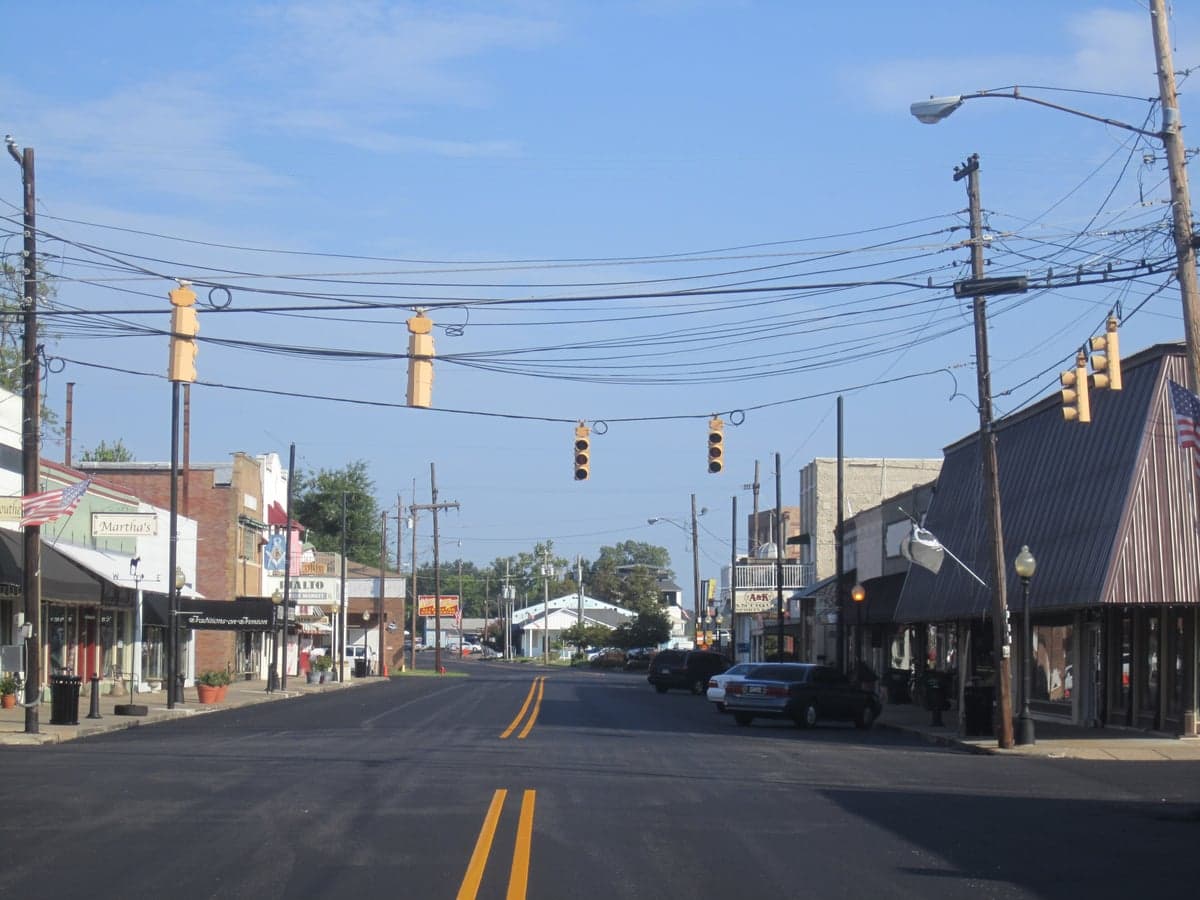
Photo: Wikipedia
Political ClimatePolitical Climate in West Monroe, LA
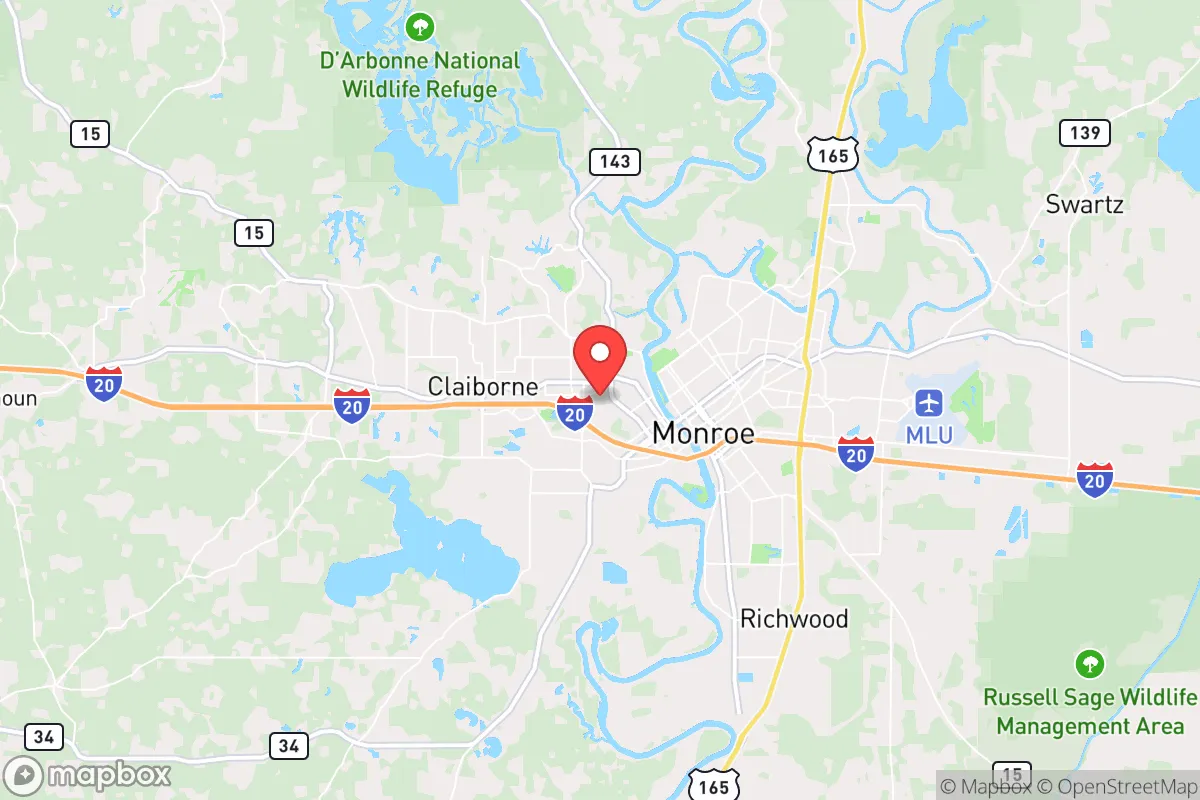
District shown is the primary district for this city’s centroid. Cities may span multiple districts.
Local Political AnalysisPolitical Analysis of West Monroe, LA
West Monroe, Louisiana, sits deep in the heart of the Bible Belt, and its politics reflect that reality with a Cook PVI of R+18, meaning the area votes about 18 points more Republican than the national average. If you’ve lived here as long as I have, you’ve seen the political compass stay pretty steady—solidly conservative, with a strong distrust of federal overreach and a preference for local control. The trajectory hasn’t shifted much in the last decade, but there’s a growing unease as national progressive trends try to creep into local school boards and parish councils. Most folks here still vote like their granddaddies did, but you can feel the tension building between the old guard and the new wave of transplants from places like Monroe proper or even Shreveport.
How it compares
Compared to its twin city across the Ouachita River, Monroe, West Monroe is noticeably more conservative. Monroe leans slightly more moderate, with a higher concentration of college students from ULM and a more diverse economic base, which pulls its politics a bit left of center. Drive ten miles north to Sterlington or south to Calhoun, and you’ll find even redder territory—places where the R+18 number might feel like a compromise. The contrast is starkest on issues like gun rights and property taxes: West Monroe residents tend to bristle at any hint of government telling them what to do with their land or their firearms, while Monroe has seen more support for zoning changes and public safety ordinances that feel like overreach to us. If you’re looking for a place where the county sheriff still means something and the Second Amendment isn’t up for debate, West Monroe is your spot.
What this means for residents
For daily life, this political climate means you’re largely left alone to live as you see fit. Property taxes here are among the lowest in the state, and the Ouachita Parish School Board has resisted most progressive curriculum changes that have stirred up fights in larger districts. You won’t see mask mandates or vaccine passports being enforced at local businesses—most owners know better than to push that kind of government overreach on their customers. The downside? Infrastructure and public services can feel underfunded, because the same anti-tax sentiment that keeps government small also means potholes take longer to fill and the library’s budget gets tight. But for most residents, that trade-off is worth it. The local culture prizes self-reliance, and there’s a quiet pride in not needing the government to solve every problem.
One cultural distinction worth noting: West Monroe has a strong tradition of church involvement in civic life, which shapes everything from school board meetings to city council decisions. You’ll see more prayer before public meetings here than in almost any other part of Louisiana. That said, there’s a growing worry among longtime residents that the national Democratic Party’s push on issues like transgender policies and critical race theory will eventually trickle down through state mandates. If that happens, expect a fight—this isn’t a community that rolls over for Sacramento-style or D.C.-style dictates. The long-term outlook depends on whether the parish can hold the line against outside pressure while keeping the local economy strong enough to retain families who might otherwise move to Texas or Florida. For now, West Monroe remains a place where your vote actually means something, and where the government still knows its place.

State Political ClimatePolitical Climate in Louisiana
State Political AnalysisPolitical Environment in the State
Louisiana has long been a reliably red state in federal elections, but its political climate is far more complex than a simple partisan label suggests. The state leans Republican at the presidential level, with Donald Trump winning it by nearly 20 points in 2024, but Democrats still hold a significant number of local and state offices, particularly in the New Orleans and Baton Rouge areas. Over the past 20 years, the state has shifted from a Democratic stronghold to a solidly Republican one, driven by the realignment of white, rural, and suburban voters, while the urban cores have become increasingly Democratic. This trajectory has accelerated since 2010, with the GOP now holding supermajorities in both chambers of the state legislature and all statewide elected offices.
Urban vs. rural divide
The political map of Louisiana is a textbook example of the urban-rural divide. The Democratic strongholds are concentrated in the state's two major metros: New Orleans (Orleans Parish) and Baton Rouge (East Baton Rouge Parish). Orleans Parish voted for Joe Biden by over 80% in 2020, and East Baton Rouge Parish went for Biden by about 15 points. These cities are home to large African American populations, unionized labor, and academic institutions like LSU and Tulane, which drive progressive politics. In contrast, the rest of the state is overwhelmingly Republican. The Acadiana region, centered around Lafayette, is a conservative stronghold, with Lafayette Parish voting for Trump by 30 points. The North Louisiana cities of Shreveport and Monroe are more mixed—Shreveport (Caddo Parish) is a Democratic-leaning city, but the surrounding rural parishes are deeply red. The Florida Parishes (north of Lake Pontchartrain), including Mandeville and Covington, have become reliably Republican suburbs, with St. Tammany Parish voting for Trump by over 40 points. The Bayou parishes like Terrebonne and Lafourche, centered around Houma, are also solidly conservative, driven by the oil and gas industry and Cajun cultural values.
Policy environment
Louisiana's policy environment is a mixed bag for conservatives. On the positive side, the state has a flat income tax of 3% (as of 2025), which is a major improvement over the previous progressive system. The state also has a right-to-work law and is a constitutional carry state for firearms, meaning no permit is needed to carry a concealed weapon. However, the state's sales tax is among the highest in the nation, averaging over 9.5% when local taxes are included, which hits low-income families hard. Education policy is a battleground: the state has a robust school choice program (the Louisiana Scholarship Program) and a growing charter school sector, but the teacher's union remains powerful in New Orleans and Baton Rouge. On healthcare, the state expanded Medicaid under the Affordable Care Act in 2016, a decision that many conservatives view as a government overreach that has ballooned the state budget. Election laws are relatively secure: Louisiana requires a photo ID to vote, and there is no widespread mail-in voting without an excuse. However, the state's closed primary system means only registered party members can vote in primaries, which some argue limits voter choice.
Trajectory & freedom
Louisiana has been on a trajectory of expanding personal freedom in several key areas, but there are worrying signs of government overreach. In 2024, the state passed a near-total abortion ban with no exceptions for rape or incest, which aligns with conservative values but has created legal uncertainty for doctors. The state also passed a parental rights in education bill (HB 81) that requires schools to notify parents of any changes to a student's mental or physical health, a major win for family autonomy. On gun rights, Louisiana became a constitutional carry state in 2021, and the legislature has repeatedly blocked any attempts at red flag laws. However, the state's property tax system is a concern: while property taxes are relatively low, the homestead exemption is capped at $75,000, meaning many homeowners pay more than they would in neighboring Texas. The biggest threat to freedom is the state's overreliance on federal funding—Louisiana receives more federal dollars per capita than almost any other state, which gives Washington D.C. leverage over state policy. The recent criminal justice reform efforts, like the 2017 "Justice Reinvestment" package, have been controversial, with some conservatives arguing they have led to early release of violent offenders.
Civil unrest & political movements
Louisiana has a history of political activism, but it is generally less volatile than other Southern states. The Black Lives Matter protests in New Orleans and Baton Rouge in 2020 were significant, with the Baton Rouge protests following the death of Alton Sterling in 2016 being particularly intense. These events have energized progressive activism in the urban cores, but they have also galvanized conservative backlash in the suburbs and rural areas. The oil and gas industry is a major political force, with the Louisiana Oil and Gas Association (LOGA) wielding significant influence in the state legislature. Immigration politics are less heated than in border states, but there is growing concern about illegal immigration in the port areas of New Orleans and along the I-10 corridor. The state has no sanctuary cities, and local law enforcement generally cooperates with ICE. There is a small but vocal secessionist movement in the Acadiana region, driven by Cajun cultural identity and frustration with federal overreach, but it remains fringe. Election integrity is a hot topic: the 2020 election saw no major scandals in Louisiana, but the legislature has passed laws to tighten voter ID requirements and ban ballot harvesting.
Projection
Over the next 5-10 years, Louisiana is likely to remain a solidly red state, but with growing internal tensions. The in-migration of retirees and remote workers from California and the Northeast is accelerating, particularly in the Northshore suburbs (Mandeville, Covington) and the Lafayette area. These newcomers tend to be more moderate Republicans, which could soften the state's hardline conservative edge on some issues like marijuana legalization (medical marijuana is already legal) and criminal justice reform. However, the out-migration of young, educated professionals from New Orleans and Baton Rouge to Texas and Florida is draining the Democratic base. The state's population decline (it lost a congressional seat after the 2020 census) means that political power is shifting to the growing conservative suburbs. The biggest wildcard is the coastal erosion crisis—as the Gulf of Mexico encroaches on the Bayou parishes, the state's political geography will literally shrink, potentially concentrating Democratic voters in the remaining urban areas. A new resident moving in now should expect a state that is culturally conservative, low-tax (on income), but high-tax (on sales), with a government that is generally hands-off on personal freedoms but deeply entangled with federal money.
For a conservative family or individual looking to relocate, Louisiana offers a strong cultural fit with its emphasis on family, faith, and local community. The state's gun-friendly laws, school choice options, and flat income tax are major draws. However, be prepared for high sales taxes, a crumbling infrastructure (especially roads and levees), and a government that is still too big for many conservatives' tastes. The best places to land are the Northshore suburbs (Mandeville, Covington) for proximity to New Orleans without the crime, or the Lafayette area for a strong economy and deep Cajun culture. Avoid the urban cores of New Orleans and Baton Rouge unless you are comfortable with high crime rates and progressive politics. Bottom line: Louisiana is a red state with blue spots, and if you pick the right parish, you can enjoy a high degree of personal freedom and a community that shares your values.
* Values derived from national, state, county, city and local statistics and may differ in a specific area. Last updated: 2026-04-23T01:14:47.000Z
Narrative content on this page is AI-generated and may contain mistakes. Verify any details that matter before acting on them.
ReloMaps may earn a commission from affiliate links at no extra cost to you.

