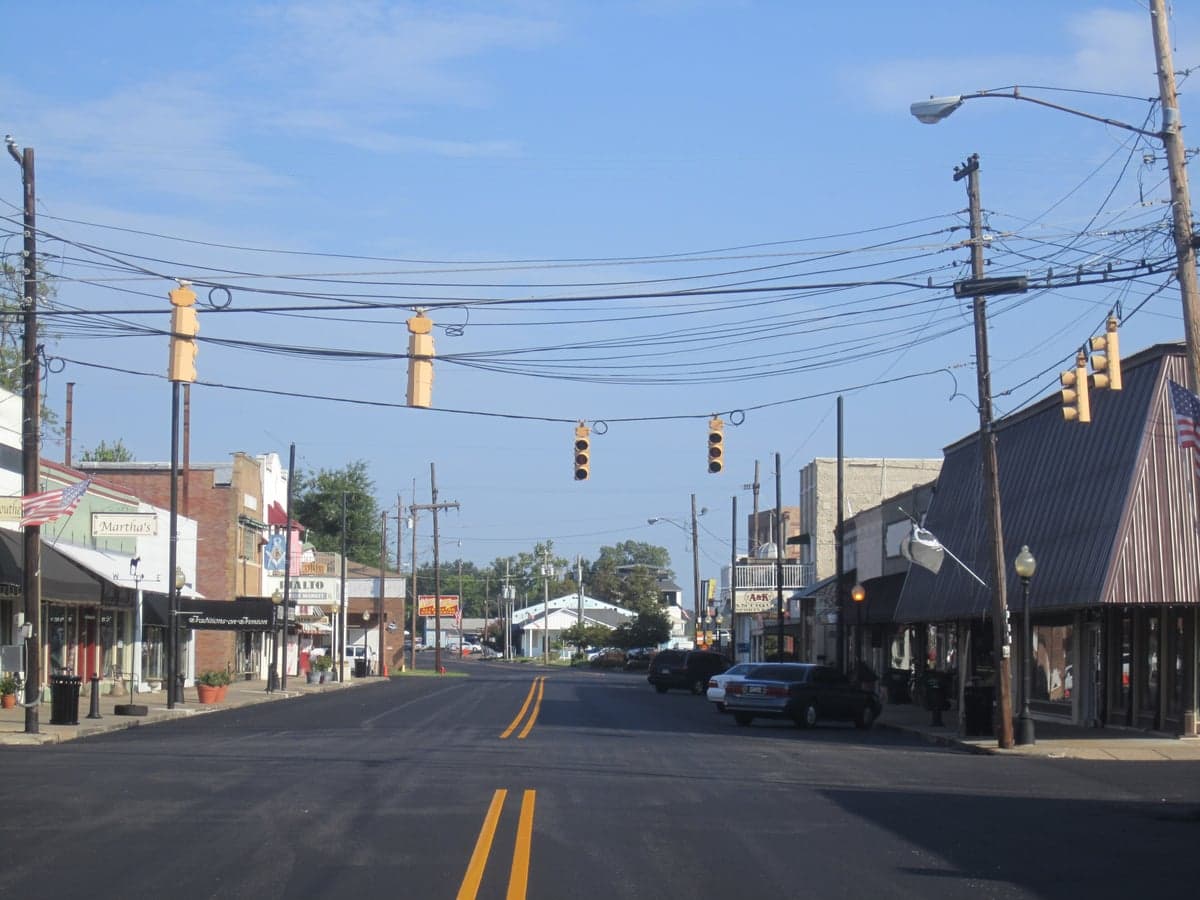
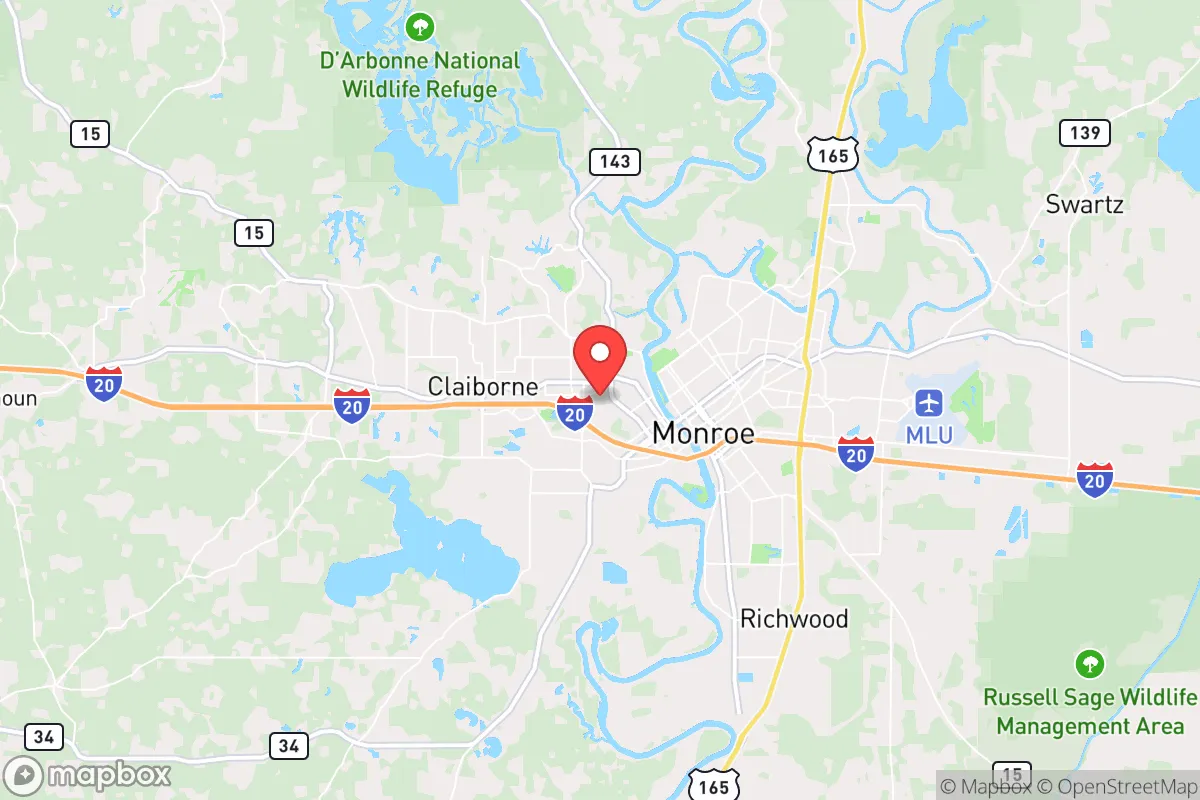
Photo: Wikipedia
Demographics of West Monroe, LA
Affluence Level in West Monroe, LA
A low-income area with significant economic hardship. Household wealth and educational attainment are well below national averages.
People of West Monroe, LA
West Monroe, Louisiana, is a city of 12,837 residents where the population is nearly evenly split between White (47.9%) and Black (39.4%) communities, with a growing Hispanic presence (9.7%) and a small East/Southeast Asian population (1.1%). The city’s character is shaped by its industrial roots along the Ouachita River and a relatively low college attainment rate (22.6%), reflecting a workforce historically tied to manufacturing, paper mills, and regional trade. Only 3.1% of residents are foreign-born, making West Monroe a predominantly native-born community with deep generational ties to the region. Distinct neighborhoods like the historic downtown district, the suburban Cypress Point area, and the working-class South Side each tell a different part of the city’s settlement story.
How the city was settled and grew
West Monroe was founded in the late 19th century as a railroad and industrial counterpart to Monroe, its larger neighbor across the Ouachita River. The city’s growth was driven by the arrival of the Vicksburg, Shreveport & Pacific Railroad in the 1880s and the establishment of the Brown Paper Mill Company in the early 1900s. The original population was overwhelmingly White, drawn from rural Louisiana and Mississippi by jobs in the mill and rail yards. The Downtown West Monroe district, centered on Trenton Street, became the commercial and residential hub for these early workers, with modest frame houses and boarding houses built within walking distance of the mill. By the 1920s, Black families began arriving from surrounding Ouachita Parish plantations, settling in the South Side neighborhood along the river’s edge, where they worked in domestic service, at the mill, and on the railroad. The North 18th Street corridor emerged as a secondary Black commercial district during the Jim Crow era, with small businesses and churches serving a segregated community. The city’s population peaked around 14,000 in the 1960s, driven by the expansion of the paper mill and the opening of the nearby Selman Field (a WWII training base), which brought temporary military families and some permanent transplants.
Modern era (post-1965)
After the 1965 Immigration and Nationality Act, West Monroe saw minimal foreign-born influx compared to larger Southern cities. The small East/Southeast Asian community (1.1%) arrived primarily in the 1980s and 1990s, with Vietnamese and Filipino families settling in the West Monroe Heights area, drawn by work at the mill and at regional healthcare facilities in Monroe. The Hispanic population (9.7%) began growing noticeably after 2000, driven by construction and service-sector jobs; these families concentrated in the Millhaven subdivision and along the Louisiana 594 corridor, where newer, affordable housing was built. The Black population, which had been largely confined to the South Side and North 18th Street areas through the 1970s, began suburbanizing in the 1990s into the Cheniere area (an unincorporated pocket near the city limits) and into the West Monroe Estates subdivision, a middle-class development built on former farmland. White flight to the suburbs of Monroe and rural Ouachita Parish accelerated after school desegregation in the 1970s, leaving West Monroe’s White population share to decline from roughly 70% in 1970 to 47.9% today. The city’s overall population has been stable but slightly declining since 2000, as younger residents move to larger metros like Baton Rouge or Dallas for college and white-collar jobs.
The future
West Monroe’s population is likely to continue its slow decline, with the city’s aging housing stock and limited high-education job market pushing younger adults out. The Hispanic share is the fastest-growing segment, projected to reach 12–14% by 2035, driven by natural increase and continued in-migration for construction and service work. The Black and White populations are both aging in place, with little new domestic migration from outside the region. The city is not tribalizing into distinct ethnic enclaves; rather, the Millhaven and West Monroe Heights areas are becoming more mixed as Hispanic families move into previously White or Black subdivisions. The East/Southeast Asian community is plateauing, with no significant new immigration expected. The foreign-born share (3.1%) will likely remain low, as West Monroe lacks the refugee resettlement programs or ethnic networks that drive growth in larger Louisiana cities like New Orleans or Baton Rouge.
For someone moving in now, West Monroe is a stable, slow-changing community where the population is becoming more Hispanic but remains overwhelmingly native-born and rooted in the region’s industrial and agricultural past. The city offers affordable housing and a tight-knit feel, but the demographic trajectory points toward continued modest decline and homogenization rather than a dynamic influx of new groups. New residents should expect a place where neighborhood identity is still tied to the old mill-and-railroad economy, and where the biggest demographic story is the gradual diversification of the Hispanic population rather than any dramatic shift.

* Values derived from national, state, county, city and local statistics and may differ in a specific area. Last updated: 2026-04-23T01:14:47.000Z
Narrative content on this page is AI-generated and may contain mistakes. Verify any details that matter before acting on them.
ReloMaps may earn a commission from affiliate links at no extra cost to you.

