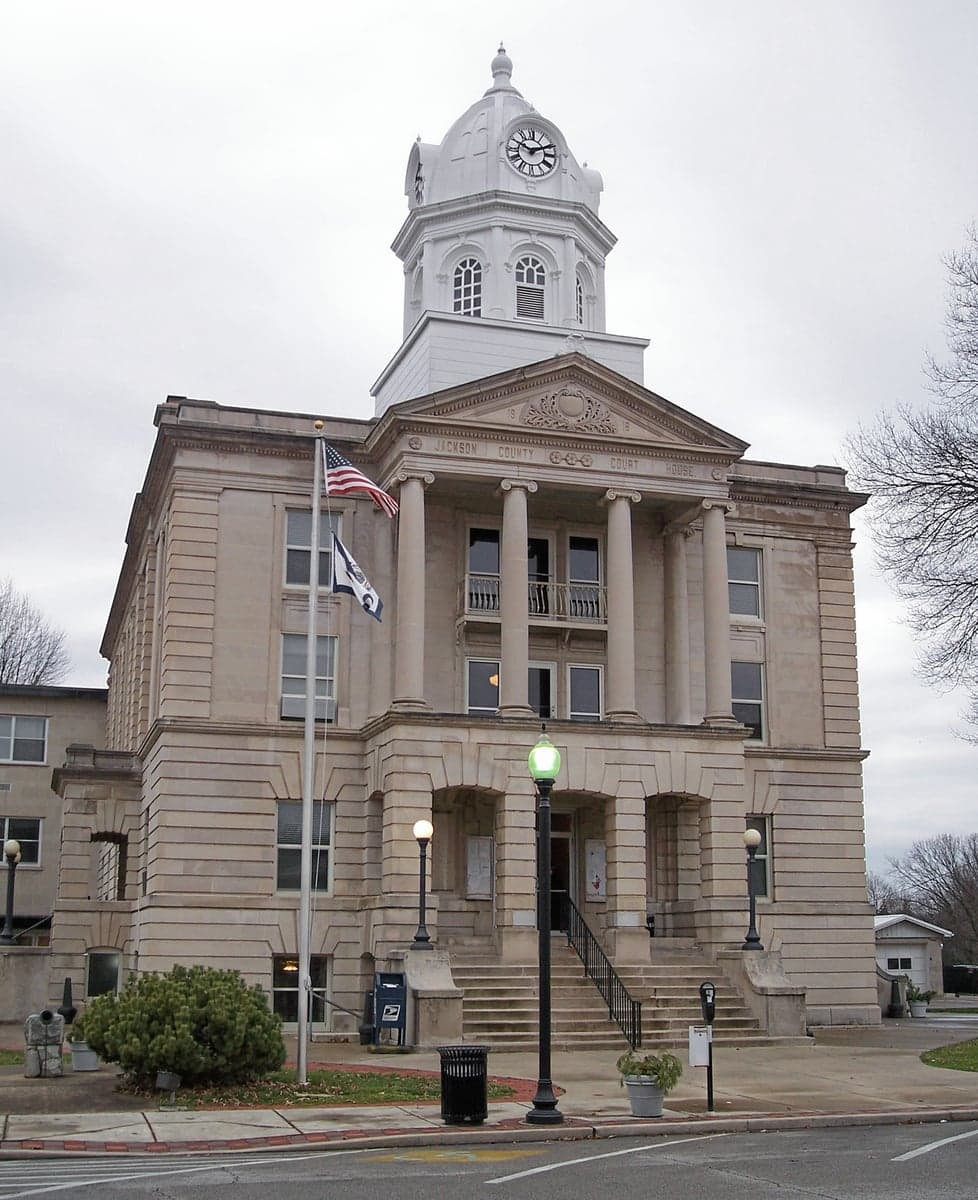
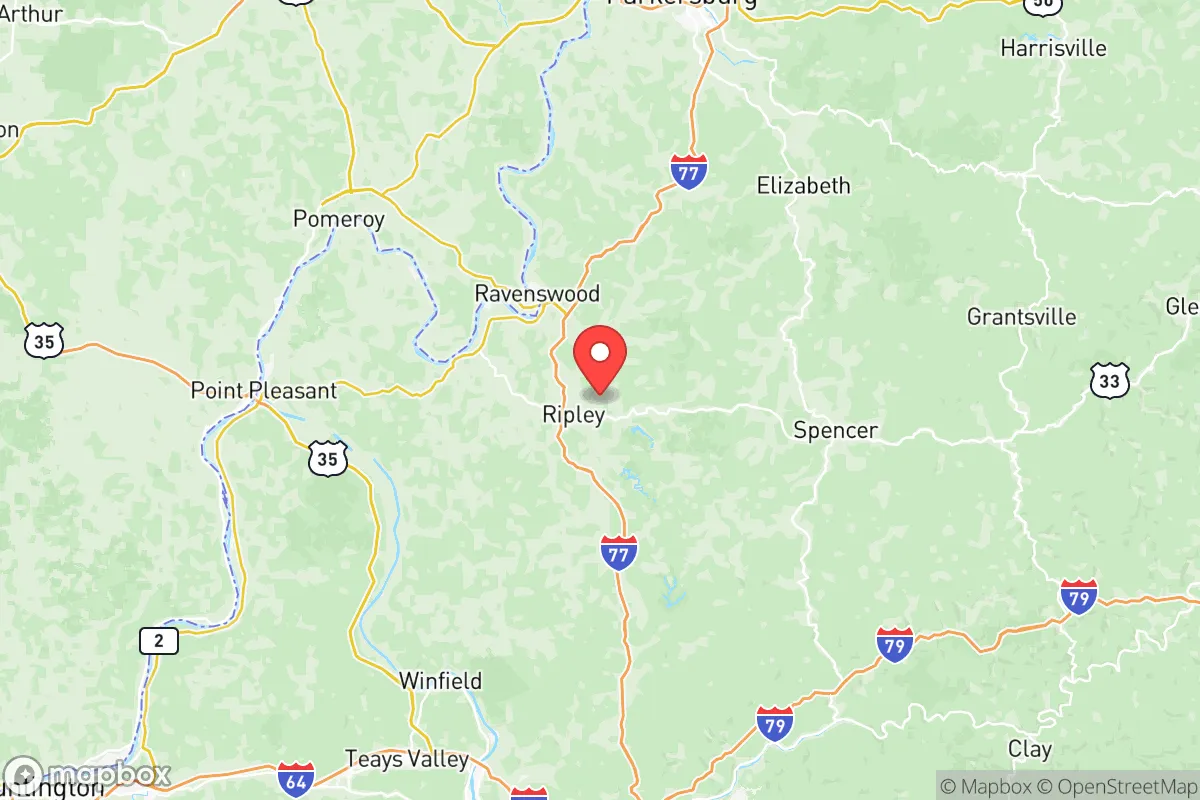
Photo: Wikipedia
Political ClimatePolitical Climate in Jackson County
Showing district-level results — no local-only data available.
Local Political AnalysisPolitical Analysis of Jackson County
Jackson County is about as solidly red as they come in West Virginia, and that’s saying something. The Cook PVI here is R+22, just a hair more conservative than the state’s R+21, and that gap has been widening over the last few cycles. If you’d asked me twenty years ago, I’d have said the county was reliably Republican but with a few stubborn Democratic holdouts in the old union towns. Now? Those holdouts are vanishing. The shift isn’t subtle—it’s a realignment that’s been accelerating since 2016, and it shows no signs of slowing down.
How it compares
Statewide, West Virginia has moved from a purple-ish swing state to a deep red stronghold in about a decade. Jackson County has moved even faster. The difference between R+22 and R+21 might sound small, but it’s meaningful when you look at local precincts. Ripley, the county seat, votes about 75% Republican in presidential races—that’s a solid 10 points redder than the state average. Ravenswood, the other main town, is similar, though you’ll find a few more split-ticket voters there, especially among older folks who still remember when the local paper mill was union strong. The real outlier is Cottageville, a tiny unincorporated area that’s become a bit of a swing precinct—it’s still red, but you’ll see a handful of Democratic votes pop up, usually tied to local school board races or county commission seats. Meanwhile, Kenna and Statts Mills are about as red as it gets, with precincts hitting 80% Republican or higher. The state’s overall R+21 is pulled down by a few remaining blue pockets in places like Morgantown and Charleston, but Jackson County doesn’t have those. We’re uniformly conservative, and that’s not changing.
What this means for residents
For the people living here, the political climate means a government that mostly stays out of your business—at least at the local level. County commission meetings are short, taxes are low, and there’s no appetite for the kind of progressive social engineering you see in bigger cities. Property taxes here are among the lowest in the state, and there’s no serious push to change that. The downside? State-level overreach is a real concern. Even with a Republican supermajority in Charleston, we’ve seen attempts to centralize control over local schools and land use—things that used to be decided by folks who actually know the area. The 2024 session had a bill that would have let the state override county health department decisions, which didn’t pass but came close. That kind of thing worries me. We don’t need bureaucrats in Charleston telling us how to run our own towns.
On the cultural side, Jackson County is a place where the Second Amendment isn’t debated—it’s assumed. Constitutional carry passed in 2016, and you’ll see open carry in Ripley without anyone batting an eye. The local sheriff’s office is well-funded and pro-active, but they’re not overbearing. There’s a live-and-let-live attitude that’s refreshing, especially compared to the constant nanny-state nonsense you hear about from other parts of the country. The biggest concern I see going forward is the slow creep of progressive ideology through school curriculum and county planning. We’ve managed to hold the line so far, but it takes constant vigilance. If you’re looking for a place where your rights are respected and your neighbors think like you do, Jackson County is still that place. But don’t take it for granted—we’ve got to keep showing up at the polls and at those county commission meetings to make sure it stays that way.

State Political ClimatePolitical Climate in West Virginia
State Political AnalysisPolitical Environment in the State
West Virginia is about as solidly Republican as a state gets these days, with a Cook PVI of R+21 that puts it among the most conservative corners of the country. That wasn’t always the case—this place was a Democratic stronghold for generations, voting for the party’s presidential ticket in every election from 1932 to 1996 except for the Reagan landslides. The shift has been dramatic and decisive: the state flipped hard for Trump in 2016 and has only deepened its red hue since, with Republicans now holding supermajorities in both chambers of the legislature and every statewide office. What you’re seeing here isn’t a temporary trend—it’s a fundamental realignment driven by cultural values, economic frustration, and a deep skepticism of federal overreach.
Urban vs. rural divide
The political map of West Virginia is mostly a sea of red, but there are a few blue dots worth knowing about. The biggest is Morgantown, home to West Virginia University, which reliably votes Democratic thanks to the academic and younger demographic. Monongalia County went for Biden in 2020, making it one of the few counties in the state to do so. Charleston, the capital, also leans left, especially in the city proper, though the surrounding Kanawha County is more competitive. Huntington, home to Marshall University, is another small blue pocket, but it’s surrounded by deeply conservative rural areas. The rest of the state—places like Beckley, Parkersburg, Wheeling, and the entire eastern panhandle—votes overwhelmingly Republican. The rural-urban divide here is stark: the coal fields, small towns, and mountain hollows are rock-ribbed conservative, while the college towns and the capital provide the only real pushback. If you’re moving to a place like Lewisburg or Shepherdstown, you’ll find a more moderate vibe, but the overall political culture is unmistakably red.
Policy environment
West Virginia’s policy environment is aggressively conservative, and it’s been getting more so every year. The state has no personal income tax on Social Security benefits and has been steadily cutting its income tax rates—the top rate is now 4.82%, down from 6.5% a few years ago, with a goal of full elimination. Property taxes are among the lowest in the nation, and there’s no estate or inheritance tax. The regulatory climate is business-friendly, especially for energy extraction, manufacturing, and data centers. On education, the state passed a robust school choice law in 2021 that created the Hope Scholarship, a universal education savings account program that lets parents use public funds for private school, homeschooling, or tutoring—one of the most expansive such programs in the country. Healthcare is a mixed bag: the state expanded Medicaid under the ACA, which many conservatives opposed, but it’s also passed laws restricting abortion to the first eight weeks with no exceptions for rape or incest, and it’s a Second Amendment Sanctuary state. Election laws are tight—voter ID is required, early voting is limited to 10 days, and there’s no same-day registration. The overall message is clear: this is a state that values low taxes, parental rights, gun rights, and limited government, and it’s not shy about legislating those values.
Trajectory & freedom
West Virginia has been on a clear trajectory toward greater personal freedom over the past decade, especially in areas that matter most to conservatives. The 2021 passage of the Hope Scholarship was a landmark win for school choice and parental rights, giving families control over their children’s education without government interference. In 2023, the legislature passed a law banning transgender athletes from girls’ sports and prohibiting gender-affirming care for minors, reflecting a strong stance on biological reality and parental authority. Gun rights have been expanded: permitless carry was enacted in 2016, and the state has a strong preemption law that prevents local governments from passing their own restrictions. Property rights got a boost with the 2020 passage of a right-to-farm amendment, protecting agricultural operations from nuisance lawsuits. On the tax front, the income tax cuts are a direct reduction of government’s claim on your earnings, and the push toward full elimination signals a commitment to fiscal freedom. The only real concern is the state’s heavy reliance on federal funding—about 40% of the budget comes from Washington—which creates a vulnerability if the federal spigot ever gets turned off. But for now, the trend is unmistakably toward more liberty, not less.
Civil unrest & political movements
West Virginia isn’t a place known for street protests or political violence, but it has a long history of labor activism, especially in the coal fields. The 2018 teachers’ strike shut down schools across the state for nine days and was one of the largest labor actions in recent American history, but it was focused on pay and benefits, not culture-war issues. More recently, the political energy has shifted to the right. The state has seen a strong grassroots movement around election integrity, with many counties passing resolutions calling for a return to paper ballots and hand-counting. There’s also a vocal Second Amendment community that organizes regular rallies at the state capitol in Charleston. Immigration politics are mostly a non-issue here—the foreign-born population is tiny, around 1.5%—so you won’t see the kind of sanctuary city battles you get in other states. What you will notice is a deep-seated distrust of federal authority, especially around environmental regulations that affect the coal and natural gas industries. The “Friends of Coal” movement is still active, and you’ll see those bumper stickers everywhere. Overall, the political climate is stable and civil, but there’s a simmering resentment of coastal elites and federal overreach that unites most residents.
Projection
Looking ahead five to ten years, West Virginia is likely to get even more conservative, not less. The state is losing population—it’s one of the few states that shrank in the 2020 Census—and the people leaving tend to be younger and more moderate, while those staying or moving in are often retirees, remote workers, and conservatives fleeing high-tax states like California and New York. The eastern panhandle, especially around Berkeley County and Jefferson County, is seeing growth from Washington D.C. exurbs, but those newcomers are often conservative-leaning families looking for cheaper land and lower taxes, not progressive activists. The coal industry will continue to decline, but natural gas, timber, and tourism are picking up some of the slack. Politically, expect more tax cuts, more school choice expansion, and more legislation aimed at protecting traditional values. The only wild card is the opioid crisis and the broader health crisis—West Virginia has the highest overdose death rate in the nation and the lowest life expectancy—which could create pressure for more government intervention in healthcare. But given the current political makeup, any such intervention will likely be framed as a matter of personal responsibility and local control, not federal mandates.
For a conservative individual or family looking to relocate, West Virginia offers a rare combination of low taxes, strong gun rights, school choice, and a culture that values self-reliance and traditional values. The political climate is stable and predictable, with no real threat of a leftward shift in the foreseeable future. You’ll find like-minded neighbors in places like Morgantown’s outskirts, the eastern panhandle, or the small towns along the Ohio River. Just be prepared for a slower pace of life, limited job opportunities outside of energy and healthcare, and a state government that, while friendly to your values, is also dealing with serious economic and health challenges. If you’re looking for a place where the government stays out of your way and your vote actually counts, West Virginia is hard to beat.
* Values derived from national, state, county, city and local statistics and may differ in a specific area. Last updated: 2026-05-13T12:34:43.000Z
Narrative content on this page is AI-generated and may contain mistakes. Verify any details that matter before acting on them.
ReloMaps may earn a commission from affiliate links at no extra cost to you.

