Photo: Wikipedia
Demographics of Taylor County
Affluence Level in Taylor County
A below-average socioeconomic profile. Incomes, home values, and educational attainment trail the U.S., with higher poverty and unemployment.
People of Taylor County
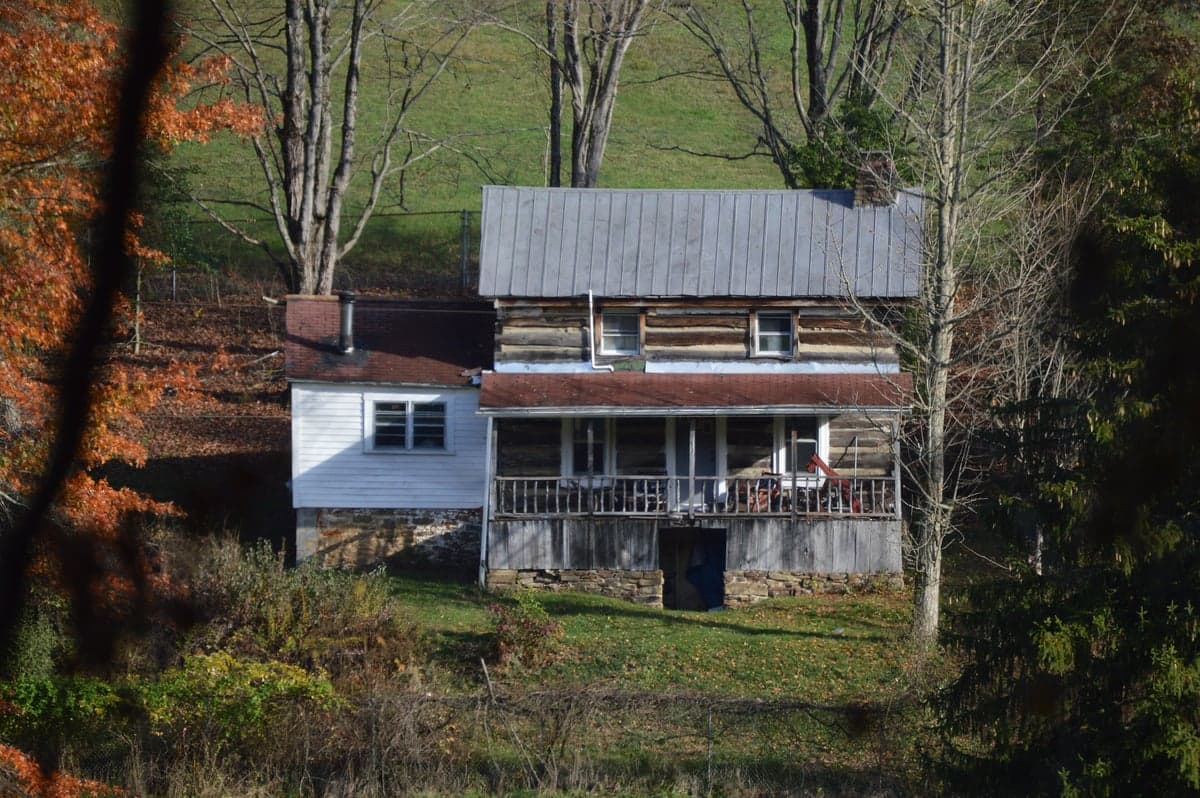
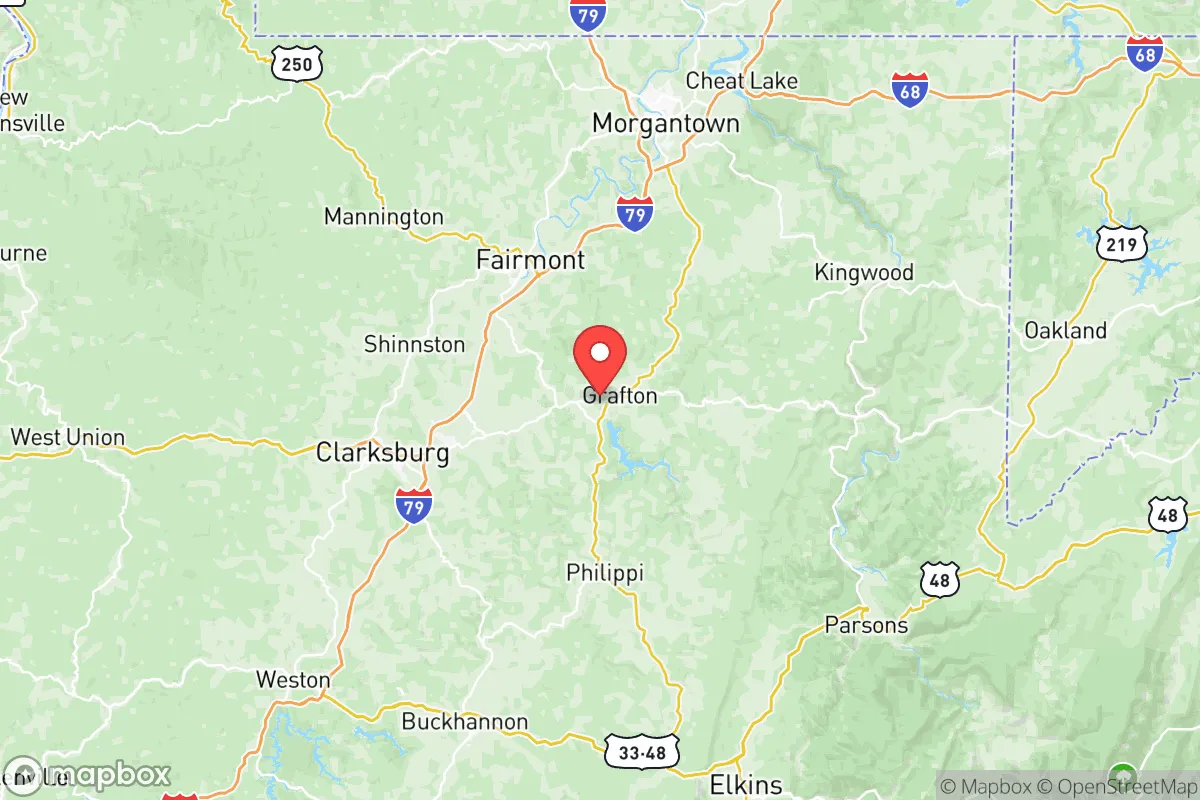
Taylor County, West Virginia, is a predominantly white, rural community of 16,543 residents, characterized by its deep Appalachian roots and a population density of roughly 50 people per square mile. The county seat of Grafton serves as the historic and commercial hub, while smaller communities like Flemington and Thornton anchor the surrounding farmlands and hollows. With a foreign-born population of just 0.1% and a 95% white demographic, Taylor County remains one of the most ethnically homogenous counties in the state, a direct legacy of its 19th-century settlement patterns and limited 20th-century in-migration.
Settlement & growth (pre-1960)
Before European settlement, the area now known as Taylor County was part of the hunting grounds of the Seneca and other Iroquoian-speaking nations, as well as the Algonquian-speaking Shawnee. These groups used the Tygart Valley River and its tributaries for travel and seasonal camps, but no permanent Native American villages existed within the county's modern boundaries. The first European incursion came in the mid-1700s, when British colonial surveyors and fur traders passed through the region, but permanent settlement did not begin until after the American Revolution.
The first wave of settlers arrived between 1790 and 1820, almost exclusively Scots-Irish and English migrants pushing westward from Virginia's Piedmont and the Shenandoah Valley. These families were drawn by the promise of cheap, fertile land in the Tygart Valley and the protection offered by the newly established federal government. They founded the earliest communities along the river bottoms: Fetterman (originally a mill site), Pruntytown (the original county seat of the larger Harrison County), and the area that would become Grafton. These settlers were subsistence farmers and small-scale livestock raisers, and their cultural imprint—staunch independence, Protestant faith, and suspicion of centralized authority—remains visible in the county's political and social character today.
The county's population and economy transformed dramatically with the arrival of the Baltimore and Ohio Railroad in the 1850s. Grafton was platted in 1856 as a railroad town, and the B&O's main line and branch lines made it a critical junction for moving coal, timber, and agricultural goods. This second wave of settlement brought a small but significant influx of Irish immigrants who built the railroad grades and tunnels, as well as a handful of German and Italian craftsmen who settled in Grafton to work in the rail yards and machine shops. By 1870, Taylor County's population had reached roughly 8,000, with Grafton emerging as the dominant town. The county was officially formed in 1844 from parts of Barbour, Harrison, and Marion counties, and Grafton was named the permanent county seat in 1878.
From the 1880s through the 1940s, the county's population remained relatively stable, hovering between 12,000 and 14,000 residents. The economy diversified modestly with the establishment of glass factories, a tannery, and small coal mines in the southern part of the county near Thornton and Boothsville. However, no major new immigrant groups arrived during this period. The county's black population, which peaked at roughly 3% in the early 1900s, consisted primarily of families who moved to Grafton to work as railroad laborers and domestic servants during the Great Migration's first wave. The county's white population remained overwhelmingly native-born of Scots-Irish and English descent, with a small German-origin cluster in and around Grafton.
World War II and the post-war years brought a gradual population decline as younger residents left for industrial jobs in Pittsburgh, Akron, and Detroit. The railroad industry, which had been the county's economic backbone, began contracting in the 1950s as diesel locomotives replaced steam and the B&O consolidated its operations. By 1960, Taylor County's population had fallen to 13,500, and the demographic pattern of an aging, shrinking, and increasingly homogenous white population was firmly established.
Modern era (post-1965)
The 1965 Hart-Cellar Act, which dramatically expanded immigration from Asia, Latin America, and Africa, had virtually no impact on Taylor County. The county's foreign-born population today stands at 0.1%, meaning that fewer than 20 residents were born outside the United States. This is not an oversight or statistical anomaly—it reflects the county's complete absence of the economic pull factors (diverse industrial bases, universities, refugee resettlement programs, or agricultural labor demand) that attracted immigrants to other parts of West Virginia and the broader United States.
Domestic migration patterns since 1965 have also been minimal. Taylor County has not experienced the Rust Belt-to-Sun Belt exodus that reshaped much of the South and Southwest, nor has it attracted significant coastal flight. Instead, the county has seen a slow, steady out-migration of working-age adults, particularly those with college degrees, who leave for job opportunities in Morgantown, Clarksburg, or out of state entirely. The county's college-educated population is just 17.4%, well below the West Virginia average of 21% and the national average of 33%. This brain drain has reinforced the county's demographic stability: those who remain are disproportionately older, less mobile, and deeply rooted in the local culture.
The county's racial and ethnic composition has shifted only marginally since 1965. The white share of the population has actually increased slightly, from roughly 93% in 1970 to 95% today, as the small black population has aged and not been replaced by younger black families. The Hispanic population, at 1.0%, is almost entirely composed of a handful of families who moved to Grafton for work in the healthcare and service sectors. The East/Southeast Asian population (0.1%) and Indian subcontinent population (0.0%) are statistically negligible, representing fewer than 20 individuals combined. There is no identifiable ethnic enclave or immigrant neighborhood anywhere in the county.
Suburbanization has been limited. Grafton remains the only incorporated town with a population over 1,000, and the county's rural character has been preserved by the absence of major highway construction. U.S. Route 50 and U.S. Route 119 pass through the county, but they have not spurred the strip-mall development seen in neighboring Harrison County. The unincorporated communities of Webster, Rosemont, and Maple Lake remain small clusters of homes and farms, with no significant new housing developments built since the 1970s.
The future
Taylor County's population is projected to continue its slow decline over the next 10 to 20 years, driven by an aging demographic profile and sustained out-migration of young adults. The county's median age is approximately 45, compared to the national median of 38, and the under-18 population has been shrinking for decades. Without a significant economic catalyst—such as a major employer relocating to the county or a large-scale infrastructure project—the population is likely to fall below 15,000 by 2040.
The county is not becoming more diverse. The white share of the population is expected to remain above 94% for the foreseeable future, as there are no mechanisms in place (refugee resettlement programs, migrant agricultural labor, or university recruitment) that would attract non-white residents. The small Hispanic and black populations may grow slightly through natural increase, but they will remain statistically marginal. The county's cultural identity—rooted in Appalachian Scots-Irish traditions, evangelical Protestantism, and a strong sense of local place—will likely persist unchanged.
One potential wildcard is the expansion of remote work, which could bring a small number of new residents to the county if housing prices in nearby Morgantown and Clarksburg continue to rise. Taylor County's low cost of living and rural character could appeal to a niche of remote workers seeking a slower pace of life. However, the county's limited broadband infrastructure and lack of amenities (restaurants, entertainment, shopping) will likely keep this influx very small—perhaps a few dozen families over the next decade, concentrated in Grafton and the areas closest to Interstate 79.
For someone moving in now, Taylor County offers a stable, safe, and deeply traditional community where neighbors know each other and the pace of life is unhurried. The trade-off is clear: the county's demographic homogeneity and economic stagnation mean limited diversity, few job opportunities outside of healthcare and education, and a social fabric that can feel insular to newcomers. It is a place for those who value continuity over change, and who are willing to accept that the county's future will look very much like its past.

* Values derived from national, state, county, city and local statistics and may differ in a specific area. Last updated: 2026-08-08T15:02:26.000Z
Narrative content on this page is AI-generated and may contain mistakes. Verify any details that matter before acting on them.
ReloMaps may earn a commission from affiliate links at no extra cost to you.

