Photo: Wikipedia
Demographics of Westfield, IN
Affluence Level in Westfield, IN
An upper-middle-class area. Household wealth, education levels, and homeownership run ahead of national benchmarks.
People of Westfield, IN
The people of Westfield, Indiana, today number roughly 51,100, forming a predominantly white (77.7%), highly educated (60.3% college degree) community that blends small-town roots with rapid suburban growth. The city’s character is defined by a conservative-leaning, family-oriented population, with a noticeable but modest foreign-born share of 4.6%. Distinctive identity markers include a strong sense of local boosterism centered on the Grand Park sports complex and a housing stock that ranges from historic brick homes to sprawling new subdivisions, reflecting a population that has shifted from agrarian to professional in just two generations.
How the city was settled and grew
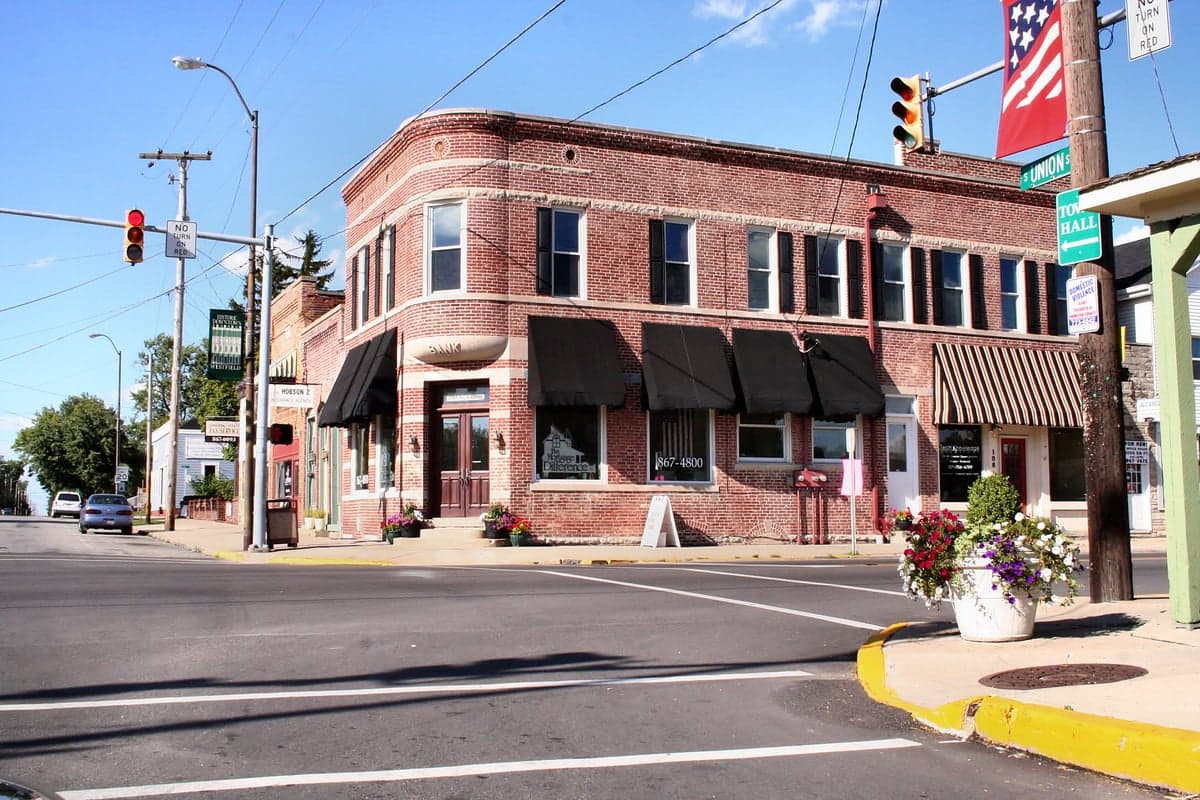
Westfield’s original population was drawn by the promise of fertile farmland and religious community. Founded in 1834 by Quaker settlers from North Carolina and Ohio, the town was a stop on the Underground Railroad, attracting a small free Black population before the Civil War. These early families built the core of what is now Historic Downtown Westfield, centered around the Quaker meetinghouse on Union Street. The town remained a quiet agricultural hub through the early 20th century, with the population hovering under 1,000. The arrival of the Nickel Plate Railroad in the 1880s spurred modest growth, but Westfield did not experience a major population wave until the post-World War II era, when returning veterans and their families began filling modest homes in neighborhoods like Mill Creek and Maple Glen, drawn by affordable land and proximity to Indianapolis.
Modern era (post-1965)
The 1965 Hart-Cellar Act had a negligible immediate effect on Westfield, as the city remained overwhelmingly white and rural through the 1970s. The real demographic shift began in the 1990s and accelerated after 2000, driven by domestic in-migration from other parts of Indiana and the Midwest. The expansion of Interstate 69 and the development of the Grand Park sports complex (opened 2014) turned Westfield into a bedroom community for Indianapolis professionals and a destination for youth sports tourism. This wave of newcomers, predominantly white and college-educated, settled in master-planned subdivisions like Springmill Village and Oak Manor, where large single-family homes on cul-de-sacs became the norm. The Hispanic population, now 9.8%, grew steadily from the 1990s onward, with many families finding housing in the more affordable Westfield Estates area and working in construction, landscaping, and service industries tied to the building boom. The Black population (3.2%) and East/Southeast Asian population (2.1%) remain small but have increased modestly since 2010, concentrated in newer developments near the U.S. 31 corridor. The Indian-subcontinent community (1.6%) is a recent arrival, largely composed of tech and medical professionals who commute to Indianapolis or work at the nearby IU Health Saxony Hospital in Fishers.
The future
Westfield’s population is projected to continue growing, likely exceeding 60,000 by 2035, driven by ongoing residential construction and the expansion of Grand Park. The city is not homogenizing into a single demographic block; rather, it is tribalizing into distinct enclaves. The historic core and older subdivisions remain overwhelmingly white and native-born, while newer developments along the 191st Street corridor are absorbing a more diverse mix of Hispanic, Asian, and Indian families. The foreign-born share, currently 4.6%, is likely to rise slowly as the tech and healthcare sectors expand, but Westfield is not expected to become a major immigrant gateway. The Hispanic population is growing organically through births and continued in-migration, and is gradually assimilating into the broader community, with second-generation families moving into previously all-white neighborhoods. The East/Southeast Asian and Indian communities are small enough that they are likely to remain niche populations, concentrated in specific subdivisions and professional networks, rather than forming large ethnic enclaves.
For someone moving in now, Westfield is becoming a more layered place: still predominantly white and conservative, but with a growing Hispanic minority and a thin but visible layer of Asian and Indian professionals. The city’s trajectory points toward continued affluence and suburban expansion, with demographic diversity increasing at a measured, not disruptive, pace. The practical takeaway is that newcomers will find a community that values order, schools, and sports, but where the old Quaker quiet has been replaced by the hum of construction and the roar of weekend tournaments.

* Values derived from national, state, county, city and local statistics and may differ in a specific area. Last updated: 2026-04-22T12:25:36.000Z
Narrative content on this page is AI-generated and may contain mistakes. Verify any details that matter before acting on them.
ReloMaps may earn a commission from affiliate links at no extra cost to you.

