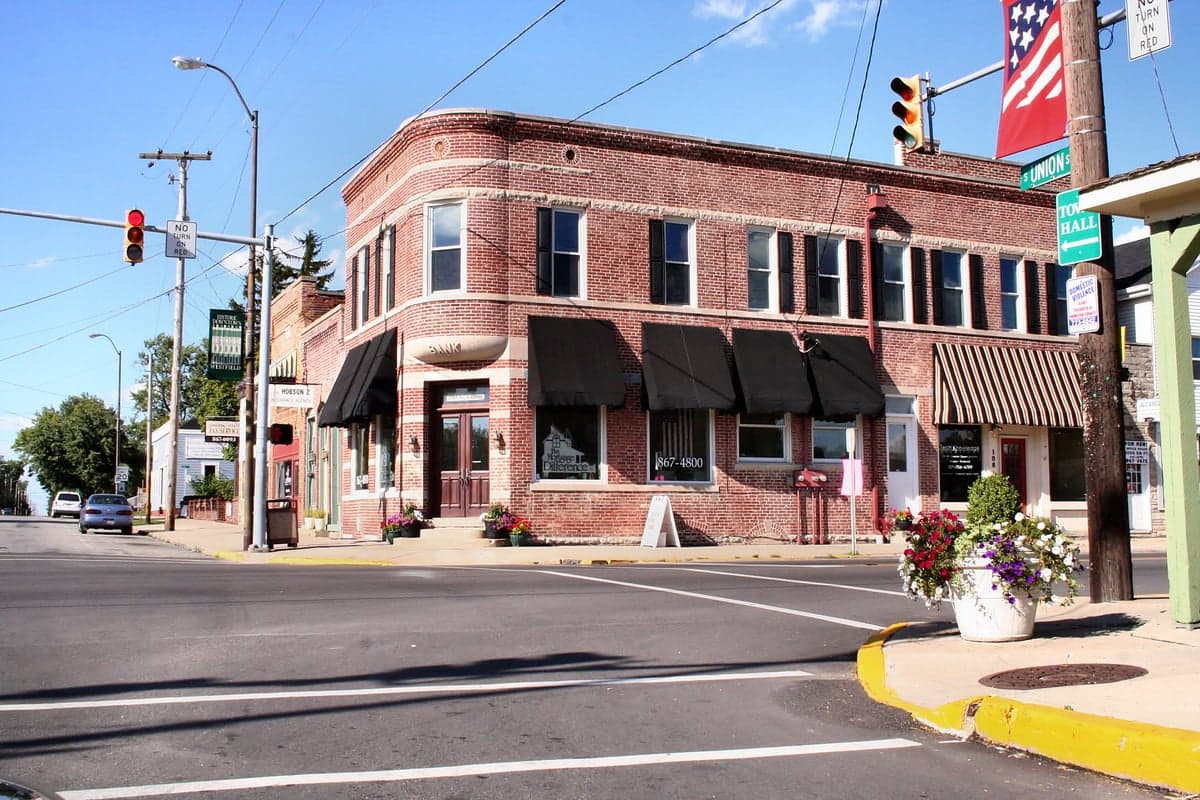
Photo: Wikipedia
Personal Sovereignty in Westfield, IN
Viable for self-reliance. Generally workable, though some barriers may limit total independence.
What does Personal Sovereignty tell us?
Personal Sovereignty measures your capacity for self-reliance and independence with minimal government friction. Higher scores mean fewer barriers between you and the way you want to live... but it assumes you have the space you need and good neighbors.
What does this tell us?
Personal Sovereignty measures your capacity for self-reliance and independence with minimal government friction. Higher scores mean fewer barriers between you and the way you want to live... but it assumes you have the space you need and good neighbors.
State Policy
Energy independence: Importer (35% of energy produced in-state)
Personal Liberty
Homesteading

Personal Liberty Analysis
For the individual who values personal sovereignty above all else—the survivalist, the prepper, the parent who refuses to cede authority over their own household—Westfield, Indiana offers a surprisingly strong foundation, but one that requires clear-eyed assessment. Located in Hamilton County, this community sits within a state that has deliberately positioned itself as a bulwark against federal overreach, with a legal and cultural environment that generally favors individual decision-making over government mandate. However, the area's rapid suburban growth and proximity to Indianapolis introduce pressures that can erode autonomy if not actively defended. The question isn't whether Westfield is a libertarian paradise—it isn't—but whether its combination of low tax burden, permissive gun laws, and community-scale self-reliance potential makes it a viable base of operations for those seeking to live with maximum personal freedom in an increasingly uncertain national landscape.
Tax burden and regulatory posture: How much of your income stays yours
Indiana's tax structure is one of the most favorable in the Midwest for those who prioritize keeping their earnings out of government hands. The state imposes a flat income tax rate of 3.05% as of 2026, with no progressive brackets that punish higher earners or those who build wealth through multiple income streams. Property taxes in Westfield are capped at 1% of assessed value for homesteads under the state's constitutional amendment, and effective rates in Hamilton County typically run between 0.8% and 1.1%—well below the national average. There is no inheritance tax, no estate tax, and no state-level tax on Social Security benefits. For the prepper mindset, this means more capital available for land, supplies, and infrastructure rather than funding programs you may not support. The regulatory environment at the state level is similarly restrained: Indiana is a right-to-work state, has no statewide building code for single-family homes in unincorporated areas, and maintains a relatively streamlined permitting process for property improvements. The primary caution is at the municipal level—Westfield's zoning code is more detailed than rural counties, and the city has been aggressive in annexing land and enforcing subdivision standards. If you buy within city limits, expect HOAs and setback requirements that limit what you can do with your property. The strategic move is to purchase just outside the corporate boundary, where county jurisdiction applies and regulatory overhead drops significantly.
Self-defense and gun law specifics: What you can carry, where, and without permission
Indiana is a constitutional carry state, meaning no permit is required to carry a handgun openly or concealed for any law-abiding adult 18 or older. This is non-negotiable for the survivalist: the state recognizes that the right to keep and bear arms is a personal, not governmental, grant. There is no waiting period for firearm purchases, no state-level registry, and no ban on standard-capacity magazines or commonly owned semi-automatic rifles. The state preempts all local gun ordinances, so Westfield cannot impose restrictions stricter than state law—no city-level bans on carry in parks, no extra permitting schemes. Stand-your-ground laws are in full effect, with no duty to retreat in any place you are lawfully present. For those building a serious capability, Indiana also allows the private sale of firearms without background checks, and there are no restrictions on the purchase of body armor or ammunition components. The only significant limitation is that carrying in K-12 school buildings requires a license (though the state does allow carry on school property with a permit), and private property owners can still prohibit firearms on their premises. For the prepper, this legal framework means you can maintain a fully equipped home defense system, train with suppressors (legally owned with a tax stamp), and move through daily life without asking permission to exercise your fundamental rights. The state's firearm-friendly culture is backed by a strong network of ranges, training facilities, and gun stores within a 30-minute drive of Westfield.
Self-reliance and homesteading viability: Lot sizes, zoning, and off-grid feasibility
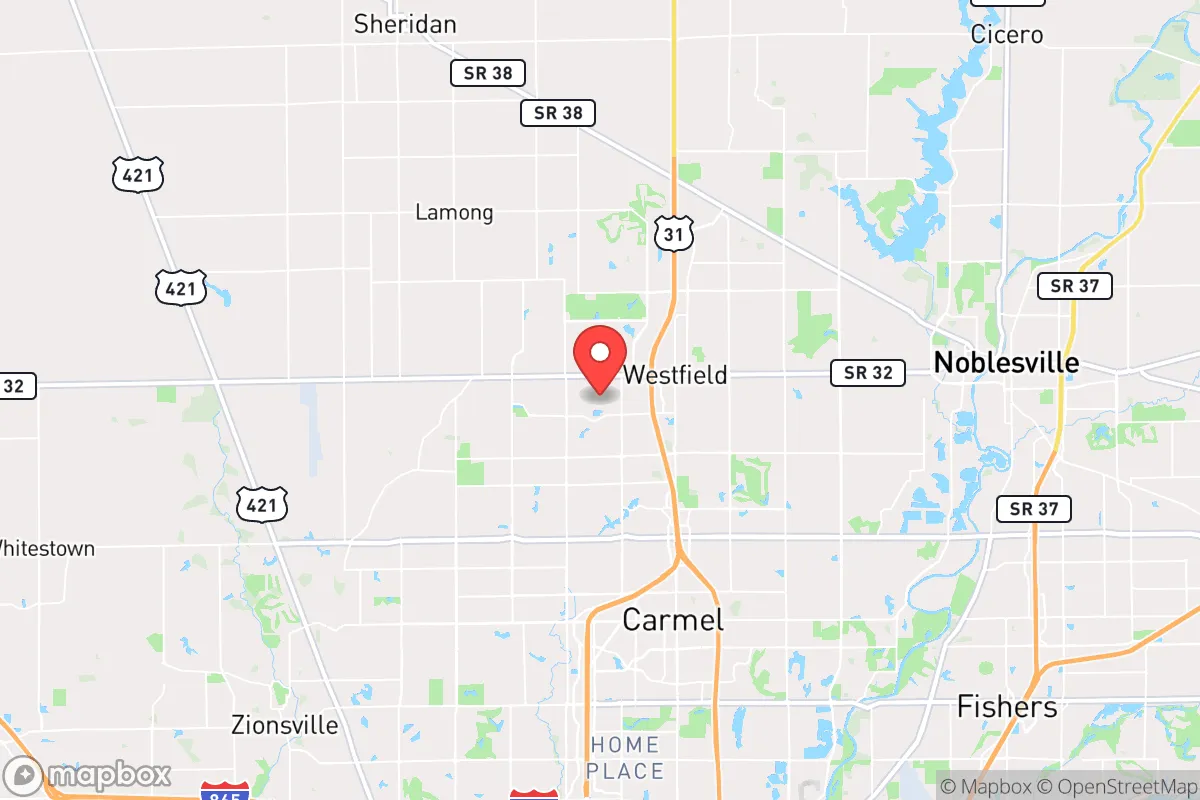
This is where Westfield presents both opportunity and limitation. Within the city's current boundaries, lot sizes in new subdivisions rarely exceed a quarter-acre, and HOAs typically prohibit chickens, visible gardens, clotheslines, and outbuildings. Off-grid living—solar panels, rainwater collection, composting toilets—is effectively impossible under municipal code, which requires connection to city water and sewer. However, the key insight for the strategic relocator is that Westfield's growth is still consuming farmland, and parcels of 1 to 10 acres remain available within a 10-minute drive of the town center, particularly to the north and west toward Sheridan and Cicero. In unincorporated Hamilton County, zoning is far more permissive: you can keep livestock, install a septic system, drill a well, and erect a workshop or storage building without the bureaucratic hurdles of city government. Solar panels are unrestricted at the county level, and while Indiana's net metering policies have been weakened, battery storage systems are legal and increasingly affordable. For the serious homesteader, the play is to buy a few acres in the county, establish a well and septic, build a pole barn for storage and workshop space, and maintain a low profile. The soil in this region is excellent for gardening, and the growing season (roughly April through October) supports a substantial portion of annual food production. The trade-off is that you'll be driving into Westfield for supplies, work, and community—but that's a small price for the ability to build genuine self-reliance without constant government oversight.
Personal liberties: Parental rights, medical autonomy, speech, and property
Indiana has been a battleground for several key liberty issues, and the outcomes have been mixed but generally favorable for those who prioritize personal sovereignty. Parental rights are strongly protected by state law: parents have the explicit right to direct the education, upbringing, and medical care of their children, and the state has passed legislation requiring schools to obtain parental consent before administering surveys or providing materials on sensitive topics. Homeschooling is legal with minimal regulation—no notification requirement, no curriculum approval, no standardized testing mandate. For medical autonomy, Indiana's COVID-era emergency powers were rolled back, and the state now requires legislative approval to extend public health emergencies beyond 30 days. Vaccine mandates by private employers are legal but not required by the state, and there is no state-level vaccine passport system. Medical freedom advocates have successfully pushed for laws protecting the right to refuse any medical treatment, including vaccines, without penalty from state agencies. On speech and assembly, Indiana has no anti-mask laws that would restrict anonymous political expression, and the state's campus free speech laws protect expressive activity at public universities. Property rights are secured by strong eminent domain protections—the state cannot take land for economic development purposes, only for genuine public use, and compensation must include relocation costs. The one area of concern is the state's recent expansion of surveillance capabilities through automated license plate readers and drone use by law enforcement, though these programs are primarily in larger cities like Indianapolis rather than Westfield itself. For the liberty-minded individual, the overall posture is one of cautious optimism: the legal framework supports personal decision-making, but vigilance is required to prevent erosion.
When stacked against other Midwestern relocation options, Westfield offers a rare combination of low taxes, strong gun rights, and a legal environment that respects parental and medical autonomy—all within a community that is still small enough to avoid the worst of urban governance. It is not a prepper's paradise in the sense of remote, off-grid isolation; you will have neighbors, and you will have to navigate some local regulations. But for the strategic individual who understands that sovereignty is built through deliberate choices—where you buy, how you structure your property, what legal protections you secure—Westfield provides a solid base. The state government in Indianapolis is generally aligned with personal liberty, the local culture is conservative and self-reliant, and the infrastructure exists to support a life that is largely independent of government programs. If you are looking for a place where you can keep what you earn, defend what you own, and raise your family according to your own values without constant interference, Westfield deserves serious consideration. Just buy the acreage outside city limits, and keep your head down while you build.

* Values derived from national, state, county, city and local statistics and may differ in a specific area. Last updated: 2026-04-22T12:25:36.000Z
Narrative content on this page is AI-generated and may contain mistakes. Verify any details that matter before acting on them.
ReloMaps may earn a commission from affiliate links at no extra cost to you.

