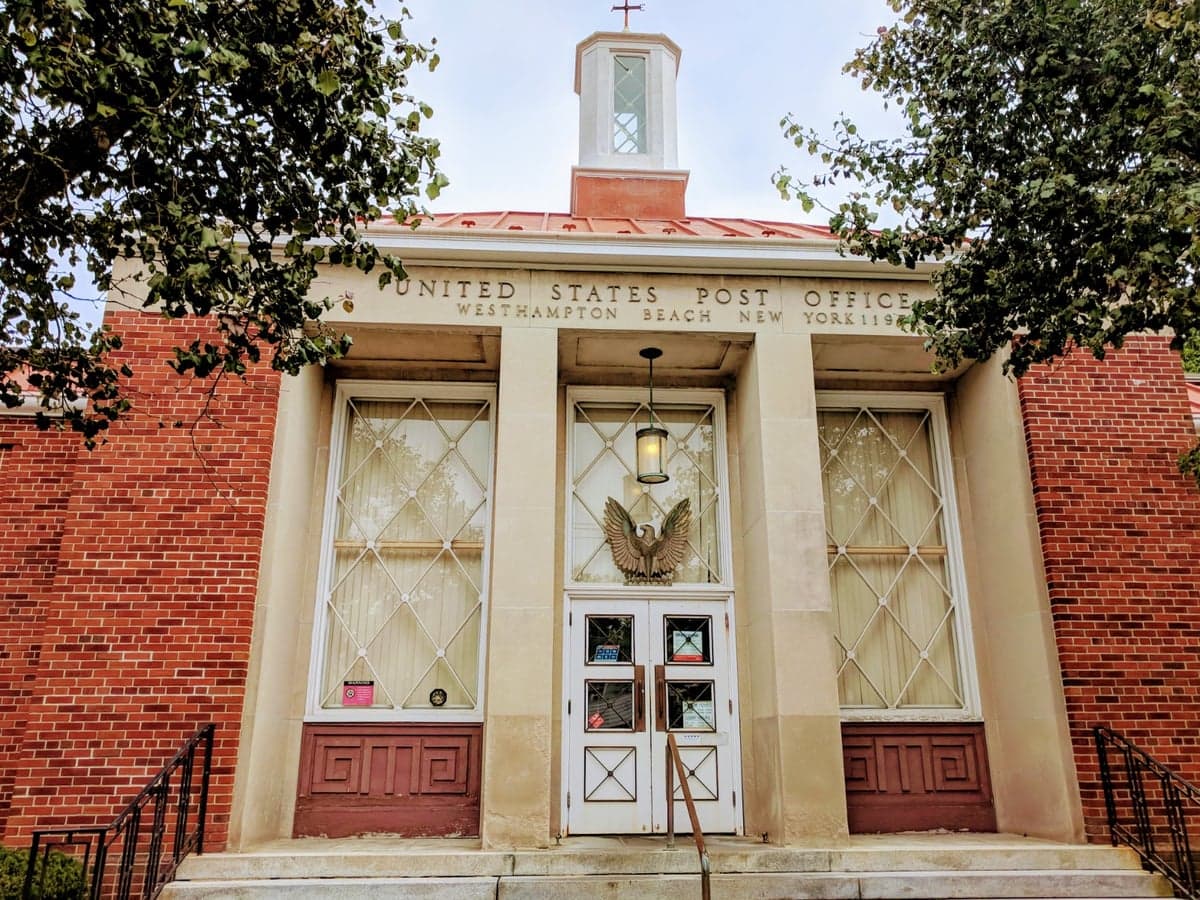
Photo: Wikipedia
Demographics of Westhampton Beach, NY
Affluence Level in Westhampton Beach, NY
A wealthy area with high-earning, well-educated households. Incomes, home values, and educational attainment meaningfully outpace national averages.
People of Westhampton Beach, NY
Today, Westhampton Beach, New York, is an affluent, predominantly white village of 2,476 residents, characterized by a high concentration of college-educated professionals (62.8%) and a strong seasonal economy driven by summer tourism. The population is notably less diverse than Suffolk County as a whole, with a Hispanic share of 8.3% and an East/Southeast Asian share of 2.9%, while the Black and Indian subcontinent populations remain very small at 1.4% and 0.0% respectively. The village’s identity is shaped by its historic role as a Gilded Age resort for wealthy New York City families, a legacy that continues to influence its real estate market, civic life, and cultural tone. For a conservative-leaning audience, Westhampton Beach represents a stable, low-crime, family-oriented community where property values and local governance reflect a preference for tradition and exclusivity.
How the city was settled and grew
Westhampton Beach’s population history is not one of agricultural settlement or industrial migration, but of resort development. The area was originally inhabited by the Shinnecock people, but European-American settlement began in earnest after the Long Island Rail Road extended service to the South Fork in the 1870s. The village was officially incorporated in 1898, and its early growth was driven by wealthy New York City families seeking summer estates. The Dune Road area, with its oceanfront mansions, became the enclave of the city’s most prominent families, including the Vanderbilts and Whitneys. The Main Street district developed as the commercial and civic core, with hotels, shops, and the village hall serving the seasonal population. By the early 20th century, the population was almost entirely white, Protestant, and upper-class, with a small service workforce of Irish and Italian immigrants living in the Rogers Avenue and Potunk Lane neighborhoods, which offered more modest housing. The village’s growth remained slow through the mid-20th century, as zoning laws and high property values limited new development. The 1950 census recorded just 1,200 year-round residents, a number that would only double over the next 70 years.
Modern era (post-1965)
After the Hart-Cellar Act of 1965, Westhampton Beach saw little of the immigration-driven diversification that transformed other parts of Long Island. The village’s high housing costs—median home values consistently exceed $1 million—and restrictive zoning effectively limited new arrivals to affluent professionals, many of whom were white and from the New York metropolitan area. The Speonk-Ponquogue Bridge area and the Quogue-Water Mill Turnpike corridor saw some new construction in the 1980s and 1990s, attracting families from Manhattan and Nassau County seeking second homes or year-round residences. The Hispanic population grew modestly, from near zero in 1970 to 8.3% today, concentrated in service-sector jobs in landscaping, hospitality, and construction. These workers tend to live in the Mill Road and Old Country Road areas, where older, smaller homes and rental units are more common. The East/Southeast Asian population, at 2.9%, is largely composed of professionals in finance, law, and medicine who moved to the area in the 2000s and 2010s, settling in the Seabreeze Avenue and Beach Lane neighborhoods. The Black population remains minimal at 1.4%, and the Indian subcontinent population is statistically nonexistent. The village’s demographic stability is reinforced by a strong local economy—anchored by the Westhampton Beach Performing Arts Center, the village’s school system, and seasonal tourism—which attracts residents who value low crime rates, excellent public schools, and a walkable downtown.
The future
Westhampton Beach’s population is projected to remain stable or grow very slowly, with the year-round count likely staying below 3,000 through 2040. The village is not homogenizing into a single bloc, but rather tribalizing into distinct enclaves: the wealthy, multi-generational white families on Dune Road and the oceanfront; the professional newcomers in Seabreeze Avenue and Beach Lane; and the Hispanic service workforce in Mill Road and Old Country Road. The Hispanic share may rise modestly, possibly reaching 12-15% by 2040, driven by continued demand for service labor in the tourism and construction sectors. The East/Southeast Asian population is likely to plateau or grow slowly, as the village’s high cost of living and lack of ethnic infrastructure (e.g., Asian grocery stores, cultural centers) limit its appeal to new immigrants. The Black and Indian subcontinent populations are expected to remain negligible. The village’s zoning laws and historic preservation rules will continue to constrain new housing construction, reinforcing its character as an exclusive, low-density community. For a conservative-leaning family or individual moving in now, Westhampton Beach offers a predictable, safe, and culturally homogeneous environment, but one with limited demographic change and high barriers to entry.
In short, Westhampton Beach is becoming more of what it already is: a wealthy, white, and well-educated resort village where demographic change is slow and incremental. For someone moving in now, the trade-off is clear—you gain a beautiful, safe, and tradition-rich community, but you should expect little racial or ethnic diversification in the coming decades, and the high cost of entry will continue to filter who can call this place home.

* Values derived from national, state, county, city and local statistics and may differ in a specific area. Last updated: 2026-04-24T01:48:21.000Z
Narrative content on this page is AI-generated and may contain mistakes. Verify any details that matter before acting on them.
ReloMaps may earn a commission from affiliate links at no extra cost to you.

