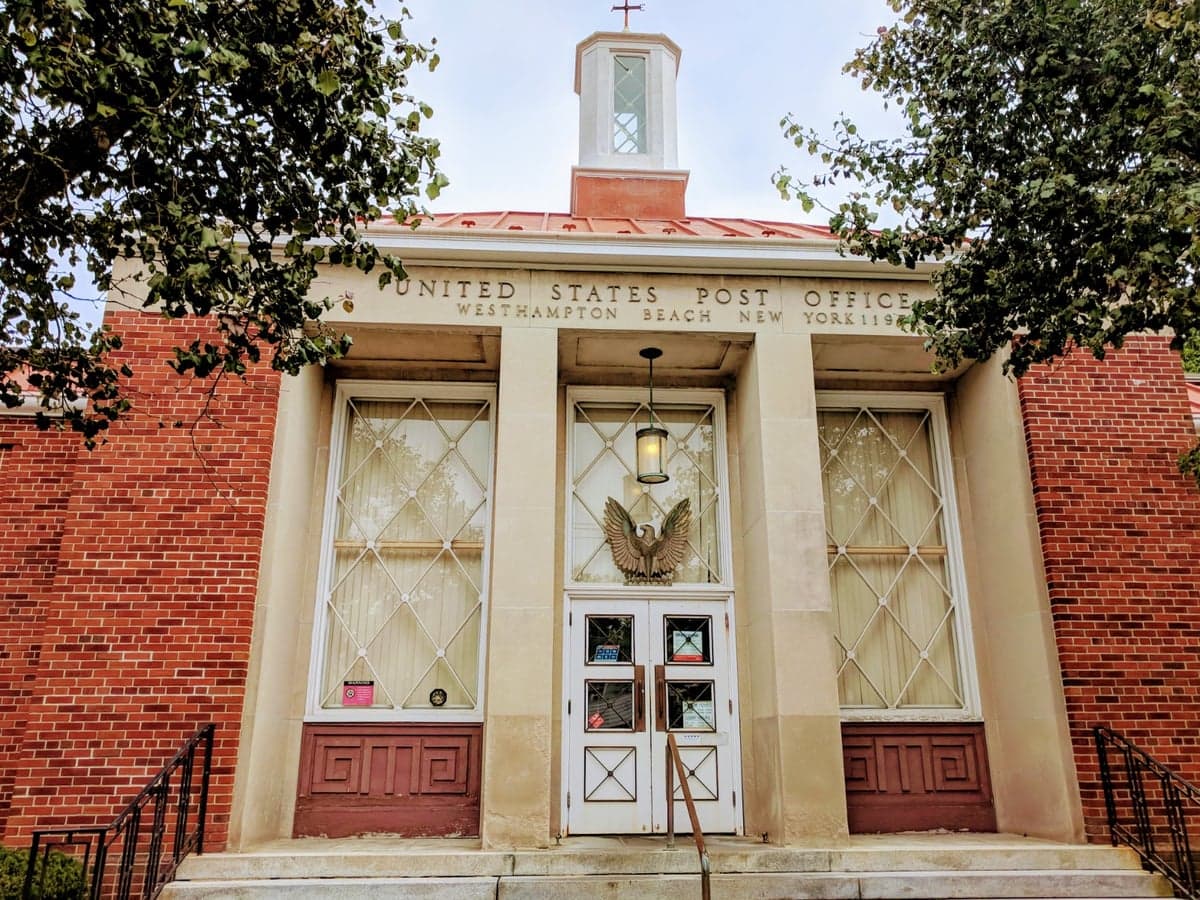
Photo: Wikipedia
Political ClimatePolitical Climate in Westhampton Beach, NY
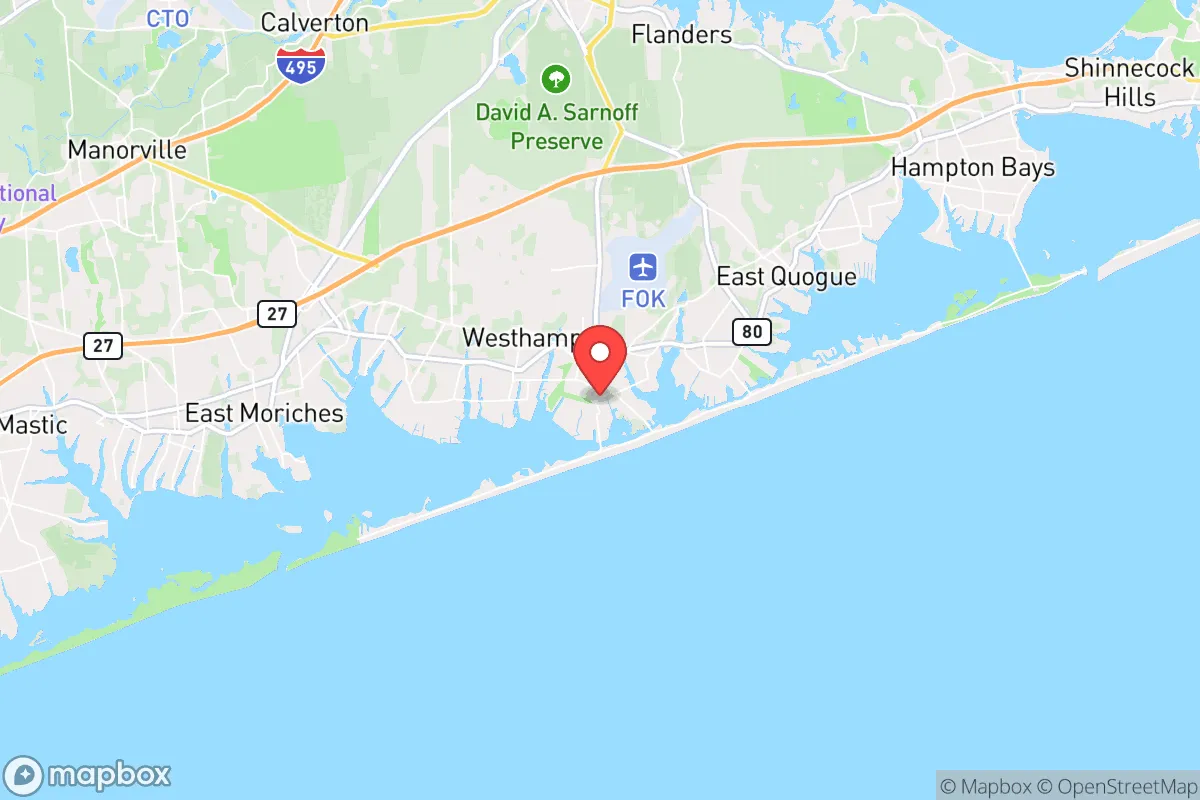
District shown is the primary district for this city’s centroid. Cities may span multiple districts.
Local Political AnalysisPolitical Analysis of Westhampton Beach, NY
Westhampton Beach has long been a quiet, family-oriented community where folks value their privacy and their property rights, and the politics here have traditionally reflected that. The area carries a Cook PVI of R+4, which means it leans reliably Republican, but it’s not a deep-red stronghold—it’s more of a place where common-sense conservatism and a live-and-let-live attitude have held sway for decades. If you’ve been around here as long as I have, you’ve seen the slow creep of influence from the Hamptons crowd to the west, but Westhampton Beach itself has mostly held the line, voting for GOP candidates in local, state, and national races by comfortable margins. That said, the last few years have brought some noticeable shifts, especially as younger, more transient buyers from New York City have snapped up second homes, and you can feel the tension between the old guard and the new arrivals who want to change things up.
How it compares
Drive 15 minutes west to Southampton Village or Bridgehampton, and you’re in a completely different political world—those areas lean heavily Democratic, with a much more progressive, activist vibe that can feel like a different country. Westhampton Beach, by contrast, still feels like a place where you can have a conversation about taxes or zoning without being shouted down. The contrast is stark: Southampton’s town board has pushed through affordable housing mandates and environmental regulations that tie up property owners in red tape, while Westhampton Beach has been more cautious, keeping government out of people’s backyards. Even Riverhead, just north of here, is more purple, with a mix of working-class conservatives and newer transplants, but Westhampton Beach remains a pocket where the Republican registration advantage actually means something at the ballot box. The R+4 rating might not sound huge, but in a region where many surrounding towns are D+5 or worse, it’s a meaningful bulwark against the kind of overreach you see in places like East Hampton.
What this means for residents
For those of us who live here year-round, the political climate translates directly into how much freedom you have to use your own property and run your own life. The local government has historically been hands-off on things like short-term rentals, home businesses, and even modest renovations—you don’t need a parade of permits just to put up a fence or add a deck. That’s a big deal compared to places like Sag Harbor, where the village board has been known to micromanage everything from paint colors to the height of your hedges. The school board here also tends to keep curriculum focused on fundamentals, without the kind of ideological experiments you hear about in more progressive districts. Property taxes are still high—this is New York, after all—but the town has resisted the urge to pile on new fees or mandates that would squeeze middle-class families. If you’re worried about government creeping into your personal decisions, Westhampton Beach is one of the last places on the South Fork where you can still breathe easy, though you should keep an eye on the next few election cycles as the demographics slowly shift.
Culturally, Westhampton Beach has always been a bit of an outlier—it’s the part of the Hamptons that doesn’t want to be the Hamptons. You won’t find the same kind of activist energy or progressive activism here that you see in the villages to the west. The local paper, the Westhampton Beach Monthly, still runs letters to the editor complaining about overdevelopment and traffic, but the tone is more about preserving the character of the town than pushing a political agenda. There’s a strong sense of localism here: people care about their own property, their own families, and their own community, and they’re skeptical of anyone who wants to impose a one-size-fits-all solution from Albany or Washington. That’s not to say it’s a perfect place—there’s always the risk that the next wave of newcomers will bring the same progressive politics that have turned other parts of Long Island into bureaucratic nightmares. But for now, Westhampton Beach remains a place where a conservative, freedom-minded person can still feel at home, and where the government mostly stays out of your way. If that changes, it’ll be because people stopped paying attention—so keep your eyes open and your vote ready.

State Political ClimatePolitical Climate in New York
State Political AnalysisPolitical Environment in the State
New York State has shifted from a classic purple swing state to a solidly blue stronghold over the past two decades, with Democrats now holding a supermajority in the State Assembly and a functional supermajority in the Senate. The state hasn’t voted Republican in a presidential race since 1984, and the GOP’s last statewide win was George Pataki’s 2002 re-election. Today, the political engine is driven overwhelmingly by New York City and its inner suburbs, while the vast rural upstate region has become a frustrated Republican redoubt that keeps losing electoral clout as its population declines.
Urban vs. rural divide
The political map of New York is a tale of two states. New York City’s five boroughs — Manhattan, Brooklyn, Queens, the Bronx, and Staten Island — cast roughly 40% of the state’s vote, and they break about 75-80% Democratic. The city’s liberal tilt is amplified by its massive population density and the influence of public-sector unions, real estate money, and progressive activist networks. The inner-ring suburbs of Westchester County, Nassau County on Long Island, and Albany’s Capital District also lean blue, though Long Island still has pockets of Republican strength in Suffolk County’s eastern towns. Upstate, the picture flips dramatically. The Southern Tier counties along the Pennsylvania border — like Steuben, Chemung, and Chautauqua — vote Republican by 20-30 points. The North Country (Jefferson, St. Lawrence, Clinton counties) is similarly red, as are the Finger Lakes rural areas. Erie County (Buffalo) and Monroe County (Rochester) are Democratic strongholds due to their urban cores, but their surrounding suburbs and exurbs are competitive or lean red. The divide is so stark that in 2024, Manhattan voted 84% for Kamala Harris while Lewis County in the Tug Hill region voted 72% for Donald Trump — a 56-point gap within the same state.
Policy environment
New York’s policy environment is among the most progressive in the nation, and it’s been accelerating leftward. The state has the highest combined state and local tax burden in the country, with income tax rates topping out at 10.9% and property taxes that can exceed 2% of home value in places like Rochester and Syracuse. The 2019 bail reform law eliminated cash bail for most misdemeanors and non-violent felonies, which critics say has driven a surge in repeat offending and shoplifting — visible in Buffalo and Albany retail corridors. Education policy is dominated by the teachers’ unions; the state spends over $28,000 per pupil, the highest in the nation, yet test scores remain middling. The 2019 Reproductive Health Act codified abortion up to birth and removed restrictions on late-term procedures. New York is a “sanctuary state” under the 2017 “Green Light” law, which bars state and local law enforcement from cooperating with federal immigration authorities and issues driver’s licenses to undocumented immigrants. Election laws are among the most permissive: no-excuse absentee voting, early voting, and same-day registration were all expanded in 2019-2021. The state also passed the “John R. Lewis Voting Rights Act” in 2022, which imposes preclearance requirements on local election changes — a level of oversight typically reserved for the Deep South.
Trajectory & freedom
On the personal freedom front, New York is moving in a direction that many conservatives find alarming. The 2022 “Concealed Carry Improvement Act” (CCIA), passed after the Supreme Court’s Bruen decision, turned the state into a “sensitive places” maze — banning firearms in virtually any public space, including parks, theaters, and even private businesses unless the owner posts a sign explicitly allowing them. The law has been partially blocked by courts but remains largely in effect. Parental rights took a hit with the 2021 repeal of the “opt-out” provision for LGBTQ curriculum in elementary schools; parents can no longer exempt their children from lessons on gender identity and sexual orientation. The 2019 “HATE” law (Hate Crimes Modernization Act) expanded hate crime categories to include gender identity and expression, and critics argue it’s been used to chill speech on college campuses. Medical freedom has been constrained by the state’s aggressive COVID-19 mandates, which included a private-sector vaccine mandate that lasted longer than in almost any other state. Property rights are under pressure from the 2019 Housing Stability and Tenant Protection Act, which eliminated vacancy decontrol and made it nearly impossible for landlords to evict non-paying tenants in New York City and Albany. The state also passed a “good cause eviction” law in 2024 that applies statewide, requiring landlords to prove “just cause” to non-renew a lease — a measure that has chilled small-scale rental investment in Rochester and Syracuse.
Civil unrest & political movements
New York has been a flashpoint for political activism on both sides. The 2020 George Floyd protests in New York City and Buffalo were among the largest and most destructive in the nation, with looting and arson in Manhattan’s SoHo and Midtown. The Buffalo police’s “shove” incident of a 75-year-old protester became a national symbol of police-community tension. On the right, the “Second Amendment Sanctuary” movement has taken root in rural counties — at least 30 upstate counties have passed resolutions declaring themselves sanctuaries from state gun laws, though these are symbolic. The “New York State Rifle & Pistol Association” remains the most active gun-rights group, filing constant lawsuits. Immigration politics are a live wire: the state’s sanctuary policies have drawn tens of thousands of asylum seekers to New York City since 2022, overwhelming shelters and sparking backlash in working-class neighborhoods in Queens and Brooklyn. The “New York City” mayor’s office has been forced to bus migrants to upstate cities like Albany and Rochester, creating friction with local governments. Election integrity remains a concern for conservatives: the 2020 and 2022 elections saw widespread use of mail-in ballots and ballot drop boxes, and the state’s automatic voter registration system has been criticized for registering non-citizens — though the state insists safeguards exist. The “New York” secession movement, “New York State of Mind,” which proposed splitting the state into three regions, fizzled after the 2022 election but still has a vocal online following.
Projection
Over the next 5-10 years, New York is likely to become even more Democratic and progressive. The state’s population is declining overall — it lost over 600,000 residents between 2020 and 2024 — but the losses are concentrated in upstate and rural areas, while New York City and its suburbs are growing or stable. This demographic shift means the political center of gravity will continue to move left. The state’s supermajority is unlikely to be broken; the last Republican to win a statewide race was 2002, and the party’s bench is thin. Expect further expansions of the welfare state: a single-payer healthcare bill (the “New York Health Act”) has passed the Assembly multiple times and is stalled only in the Senate. A “public bank” bill and a “right to repair” law for electronics are also in the pipeline. On the freedom front, the trend is toward more regulation: a proposed “digital fairness” tax on targeted advertising, a “climate superfund” bill that would make fossil fuel companies pay for climate damages, and a “clean slate” law that automatically seals criminal records after a certain period. The state’s housing crisis will likely lead to more state preemption of local zoning — a 2024 law already allows accessory dwelling units by right statewide. For a conservative moving in, the realistic expectation is that New York will remain a high-tax, high-regulation, culturally progressive state where your vote in statewide elections will be largely irrelevant, but your local vote in upstate counties can still matter for school boards and town councils.
Bottom line for a new resident: New York offers world-class natural beauty in the Adirondacks and Finger Lakes, strong job markets in finance and tech in New York City, and excellent universities. But you’ll pay for it with the highest taxes in the nation, a regulatory environment that touches nearly every aspect of daily life, and a political system that is increasingly unresponsive to conservative voices. If you’re moving here, do it for the mountains, the lakes, or a specific job — not for the politics. And if you’re a parent, be prepared to engage actively at the local level, because the state government in Albany is not on your side on school choice, curriculum transparency, or Second Amendment rights.
* Values derived from national, state, county, city and local statistics and may differ in a specific area. Last updated: 2026-04-24T01:48:21.000Z
Narrative content on this page is AI-generated and may contain mistakes. Verify any details that matter before acting on them.
ReloMaps may earn a commission from affiliate links at no extra cost to you.

