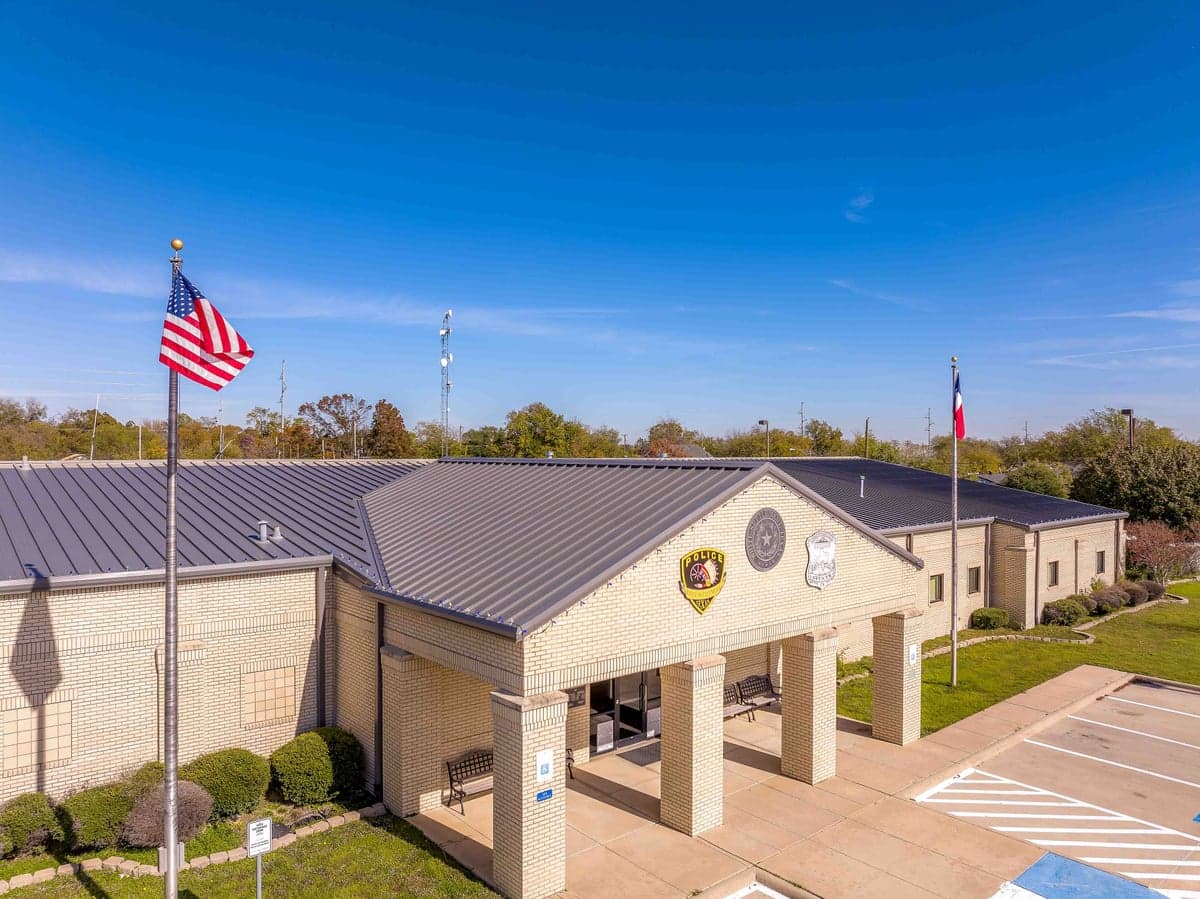
Photo: Wikipedia
Demographics of White Settlement, TX
Affluence Level in White Settlement, TX
A middle-class area roughly in line with national averages across income, home values, education, and employment.
People of White Settlement, TX
White Settlement, Texas, is a city of 18,119 residents that presents a distinctive demographic profile within the Dallas-Fort Worth metroplex: a majority-white population (51.0%) alongside a substantial Hispanic community (36.3%), with smaller Black (7.5%) and East/Southeast Asian (1.6%) populations. The city’s foreign-born share is low at 4.3%, and its college-educated rate of 18.3% is well below regional averages, reflecting a historically working-class, blue-collar character. Today, White Settlement is a predominantly native-born, family-oriented suburb where older Anglo neighborhoods sit adjacent to newer Hispanic enclaves, creating a community in transition.
How the city was settled and grew
White Settlement’s name derives from its origins as a late-19th-century farming community settled primarily by Anglo-American families from the U.S. South and Midwest. The area was originally part of the Peters Colony land grant, which drew homesteaders in the 1840s and 1850s, but the city itself did not incorporate until 1941. The earliest settlers clustered around what is now Old White Settlement Road and the Historic Downtown District, where small farms and cotton gins defined the economy. A major growth wave came during World War II, when the U.S. Army established the Fort Wolters training base (later Naval Air Station Fort Worth) just east of the city. This brought a temporary influx of military personnel and defense workers, many of whom stayed after the war, settling in the Westworth Village area and the Lake Worth corridor. The post-war period saw the construction of modest ranch-style homes in Ridglea Hills and White Settlement Heights, attracting white working-class families employed at nearby General Dynamics (now Lockheed Martin) and the burgeoning aerospace industry in Fort Worth.
Modern era (post-1965)
After the 1965 Immigration and Nationality Act, White Settlement saw minimal direct immigration compared to other DFW suburbs, but domestic migration patterns shifted significantly. The city’s Hispanic population began growing in the 1980s and 1990s, driven by Mexican-American families moving from older Fort Worth barrios like North Side and Riverside in search of affordable housing and lower crime rates. These families concentrated in the Meadowbrook and Westland neighborhoods, where older, smaller homes offered entry points for first-time buyers. The Black population, which grew from negligible levels to 7.5% by 2020, settled primarily in the Chapel Creek area and along the White Settlement Road corridor, drawn by newer apartment complexes and townhomes built in the 2000s. The East/Southeast Asian community (1.6%) is small and dispersed, with no single ethnic enclave, though a cluster of Vietnamese-owned nail salons and restaurants has emerged near Las Vegas Trail and I-30. Notably, the Indian-subcontinent population is effectively zero, distinguishing White Settlement from many DFW suburbs where Indian communities are growing rapidly.
The future
White Settlement’s demographic trajectory points toward continued Hispanic growth and gradual Anglo decline, though the pace is slower than in neighboring Fort Worth. The Hispanic share has risen from roughly 25% in 2000 to 36.3% today, and this trend is likely to continue as younger Hispanic families age into homeownership and older Anglo residents pass away or move to retirement communities. The city is not tribalizing into starkly separate enclaves; rather, neighborhoods like Meadowbrook and Westland are becoming more mixed as Hispanic families buy homes in formerly all-white blocks. The Black population appears stable, while the East/Southeast Asian share may grow modestly as the city’s affordable housing stock attracts service-sector workers. However, the low college attainment rate (18.3%) and limited white-collar job base suggest White Settlement will remain a working-class suburb rather than gentrifying rapidly. The city’s annexation of the Brewer Ranch development in the 2010s has added newer, slightly more expensive homes, but these have not yet attracted a significantly more educated or diverse population.
For someone moving in now, White Settlement is a solid, middle-income community where the Anglo majority is shrinking but still dominant, and the Hispanic population is growing steadily without creating ethnic polarization. The city’s future is one of gradual diversification within a working-class framework, not a rapid transformation into a cosmopolitan suburb. New residents should expect a family-oriented, low-density environment with strong ties to Fort Worth’s defense and manufacturing economy, but limited cultural or educational amenities.

* Values derived from national, state, county, city and local statistics and may differ in a specific area. Last updated: 2026-04-27T02:23:31.000Z
Narrative content on this page is AI-generated and may contain mistakes. Verify any details that matter before acting on them.
ReloMaps may earn a commission from affiliate links at no extra cost to you.

