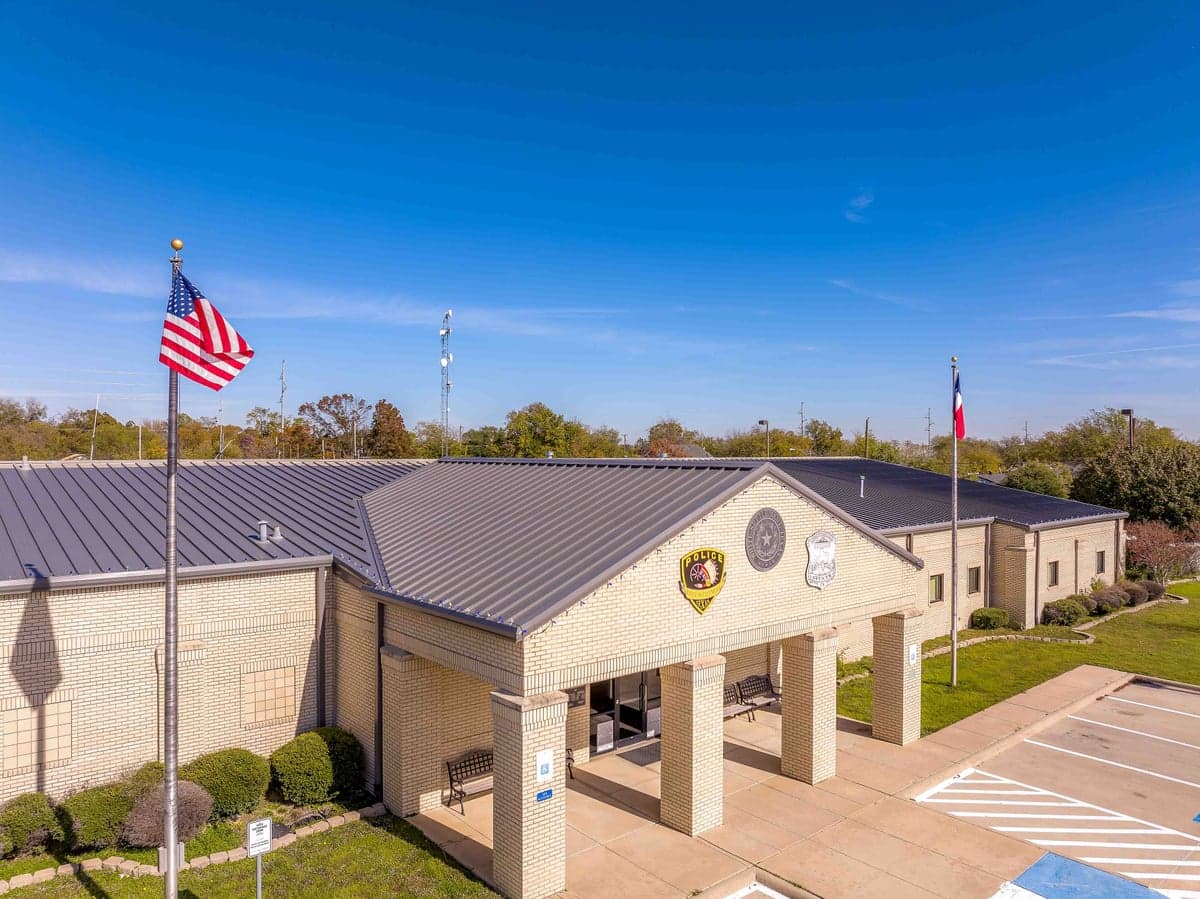
Photo: Wikipedia
Political ClimatePolitical Climate in White Settlement, TX
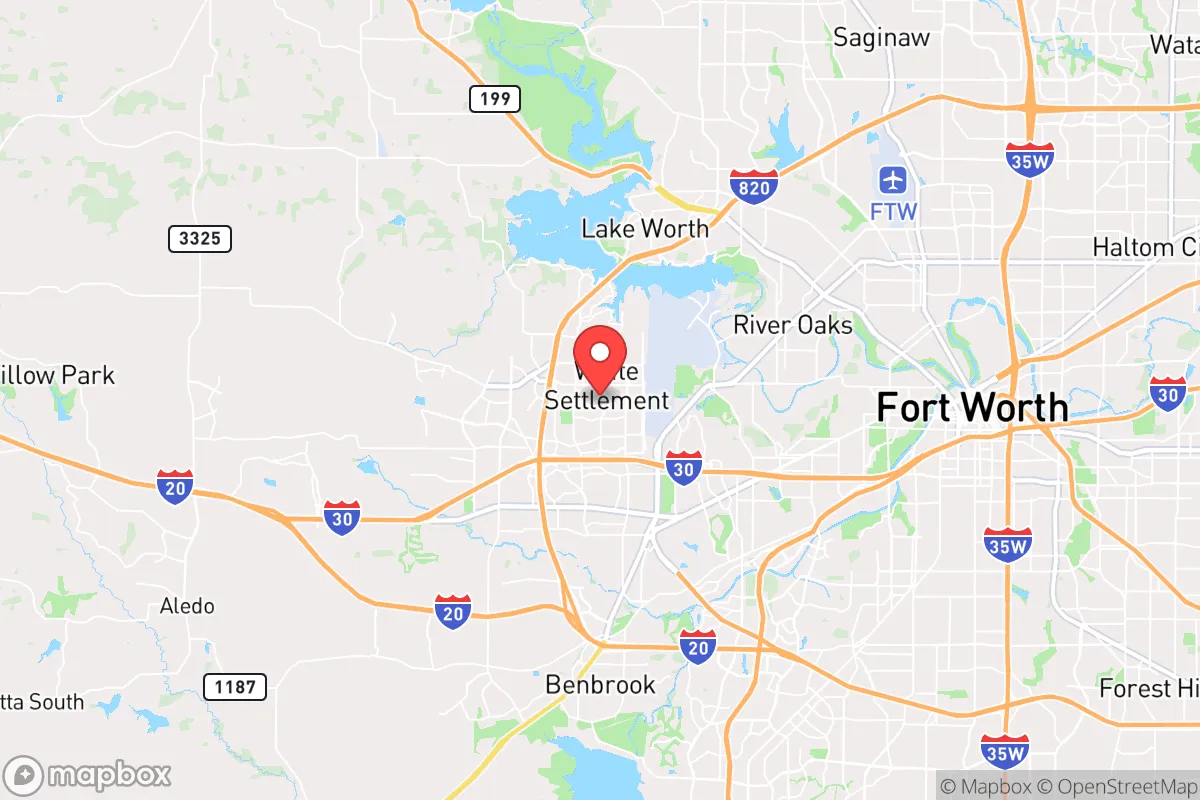
District shown is the primary district for this city’s centroid. Cities may span multiple districts.
Local Political AnalysisPolitical Analysis of White Settlement, TX
White Settlement, Texas, has long been a rock-solid conservative community, and that hasn't changed much even as the rest of Tarrant County has seen some purple creeping in. The Cook PVI rating of R+11 tells you the story right off the bat—this isn't a place that flips on a whim. In the 2024 election, the precincts here voted heavily Republican, and you can feel that in the local chatter and the way folks keep their yards and their opinions. The trajectory is steady, but there's a quiet worry among long-time residents that the growth pushing out from Fort Worth could bring some of that big-city progressive thinking with it, if we're not careful.
How it compares
Drive ten minutes east into Fort Worth proper, and you'll hit neighborhoods that are trending bluer every cycle, especially closer to the cultural district and downtown. The contrast is stark. White Settlement still feels like the old Tarrant County—where the Second Amendment isn't debated, it's assumed, and where the local school board meetings don't turn into shouting matches over critical race theory or gender ideology. Compare us to places like Arlington or even parts of north Fort Worth, and you'll see a different world: more taxes, more regulations, more government sticking its nose where it doesn't belong. Over in Dallas County, it's a whole other planet. White Settlement is a holdout, a place where you can still have a conversation about personal responsibility without someone calling for a new ordinance. The nearby towns of Lake Worth and Saginaw lean similar, but even they've seen some zoning fights and noise about "equity" initiatives that make you raise an eyebrow.
What this means for residents
For the people who live here, the political climate means you get to live your life without a lot of bureaucratic nonsense. Property taxes are still a pain—that's Texas for you—but you're not dealing with the kind of overreach you see in blue cities, like mask mandates that last forever or business shutdowns that pick winners and losers. The city council here has historically been hands-off on personal freedoms, which is exactly how it should be. You can put up a Trump sign in your yard without worrying about your neighbor calling the HOA, because most HOAs here aren't run by busybodies. The downside? If you're hoping for a shift toward more progressive policies—like sanctuary city stuff or defunding the police—you're going to be disappointed. That's a feature, not a bug, for the vast majority of us. The concern is that as developers build more apartments and bring in folks from out of state, we might see pressure to "modernize" things that don't need fixing.
Culturally, White Settlement still holds onto a few distinctions that set it apart. The name itself is a source of pride for some, a reminder of the area's history, even if outsiders find it awkward. There's a strong military and veteran presence here, thanks to the proximity to Naval Air Station Fort Worth, and that keeps the patriotism front and center. You won't find a lot of boutique coffee shops or bike lanes—it's more about church potlucks, high school football, and knowing your neighbors. The policy vibe is simple: keep the government small, keep the taxes reasonable, and let people make their own choices. If that starts to slip, you'll hear about it at the feed store or the VFW hall long before it hits the news. For now, White Settlement is a good place to be if you value your privacy and your rights, but you've got to keep an eye on the horizon.

State Political ClimatePolitical Climate in Texas
State Political AnalysisPolitical Environment in the State
Texas remains a solidly Republican state at the statewide level, but the coalition that keeps it red has shifted dramatically over the last 20 years. The GOP still holds every statewide office and both legislative chambers, but the margin of victory has tightened from double digits in the 2000s to roughly 5-6 points in recent presidential cycles. The old guard of rural, Anglo, and socially conservative voters is being slowly diluted by a massive influx of newcomers from blue states and a rapidly growing Hispanic population that is trending away from the GOP. The result is a state that feels politically red on paper but is increasingly purple in its major metros, creating a tension that defines every legislative session.
Urban vs. rural divide
The political map of Texas is a tale of two landscapes. The vast rural and exurban counties — places like Lubbock, Amarillo, and the sprawling Hill Country around Fredericksburg — vote Republican by 60-80% margins. These areas anchor the GOP’s legislative supermajorities. Meanwhile, the major urban centers are deep blue. Austin (Travis County) is the most liberal city in the state, voting over 70% Democrat. El Paso is reliably blue, driven by a heavily Hispanic electorate that leans left on immigration and social services. Dallas and Houston are more competitive but trending blue, especially in their inner-core precincts. The real battleground is the fast-growing suburban ring around these cities — places like Collin County (north of Dallas) and Fort Bend County (southwest of Houston). Collin County was once a GOP stronghold but has flipped to competitive, with Democrats winning some local races in 2020 and 2022. Fort Bend County, once reliably red, is now a Democratic-leaning county due to rapid diversification. The 2024 election saw Bexar County (San Antonio) and Harris County (Houston) stay blue, while rural counties held the line for Trump. The divide is not just geographic — it’s cultural, economic, and generational.
Policy environment
Texas has no state income tax, which remains the single biggest policy draw for conservatives and businesses. Property taxes are high to compensate, but the state legislature has passed multiple rounds of compression and appraisal caps to slow the growth. The regulatory posture is famously business-friendly: no state-level occupational licensing for many trades, weak zoning laws in most cities, and a right-to-work law that keeps unions weak. On education, the state has leaned into school choice, with the 2023 passage of a universal Education Savings Account (ESA) program that lets parents use state funds for private or homeschool expenses. This was a major win for parental rights advocates. Healthcare policy is a mixed bag: Texas refused Medicaid expansion under Obamacare, leaving roughly 1.5 million uninsured, but the state has also expanded telemedicine and deregulated direct primary care. Election laws tightened after 2020 with Senate Bill 1 (2021), which banned drive-through voting, restricted mail-in ballot access, and added ID requirements. Voter ID laws remain among the strictest in the nation. On social issues, the state passed a near-total abortion ban (trigger law) in 2021, and the 2023 “Save Women’s Sports Act” banned transgender athletes from female school sports. The policy environment is unmistakably conservative, but the constant pressure from blue metros means every session is a fight to maintain these gains.
Trajectory & freedom
On the freedom front, Texas has moved in two directions at once. On economic and Second Amendment issues, the state has expanded liberty. Constitutional carry (permitless carry) became law in 2021, allowing any law-abiding adult to carry a handgun without a license. Property rights were strengthened with the 2023 “Take Act,” which limits the ability of local governments to impose restrictive land-use regulations. On the other hand, personal medical freedom has been sharply curtailed. The 2021 abortion ban (SB 8) created a private enforcement mechanism that effectively ended abortion access, and the 2023 trigger law made it a felony. The state also banned gender-affirming care for minors in 2023 (SB 14), overriding parental medical decisions. On speech, Texas passed a law (HB 20) in 2021 that restricts social media platforms from “censoring” users based on viewpoint, though it’s tied up in court. The net effect: Texas is freer on guns and taxes, but less free on medical choices and some parental decisions. For a conservative moving here, the trade-off is usually acceptable, but the trend toward government intervention in private medical decisions is a red flag for those who value bodily autonomy across the board.
Civil unrest & political movements
Texas has seen its share of political flashpoints. The 2020 Black Lives Matter protests in Austin and Dallas were large and occasionally violent, leading to property damage and a lasting tension between city leaders and state police. The state government responded with the 2021 “Back the Blue” law that increased penalties for protesting near police. Immigration politics are a constant flashpoint. Governor Abbott’s “Operation Lone Star” (2021-present) deployed state troopers and National Guard to the border, bused migrants to sanctuary cities like New York and Chicago, and installed razor wire along the Rio Grande. This has drawn lawsuits from the Biden administration and created a visible, ongoing confrontation. On the right, the “Texas Nationalist Movement” (TEXIT) has gained some traction, pushing for a referendum on secession, though it remains a fringe idea. Election integrity remains a hot-button issue: the 2020 election saw widespread allegations of irregularities in Harris County, leading to the 2021 voting law overhaul. A new resident will notice the political polarization in everyday life — bumper stickers, yard signs, and local news coverage are heavily partisan. The state is not in civil war, but the cultural divide is real and visible.
Projection
Over the next 5-10 years, Texas will likely remain Republican at the statewide level, but the margin will continue to shrink. The in-migration from California, New York, and Illinois is bringing more moderate and left-leaning voters to the suburbs, while the native-born population is aging and becoming more diverse. The Hispanic vote is the wild card: if Republicans can hold 40-45% of it, the state stays red. If that share drops to 30%, Texas flips purple or blue by 2032. The state legislature will likely pass more school choice expansion, further property tax cuts, and possibly a state-level school voucher program. On social issues, expect continued battles over transgender rights, abortion exceptions, and medical freedom. The biggest risk for conservatives is that the state’s growing urban population will eventually outvote the rural base, leading to a slow erosion of the current policy environment. A new resident moving in now should expect a state that is still conservative but increasingly contested, with every election cycle becoming a national battleground.
Bottom line for a new resident: Texas offers low taxes, strong gun rights, and a business-friendly climate, but the political landscape is shifting. You’ll find a state that is still red but fighting to stay that way. If you value personal freedom and limited government, you’ll feel at home in the suburbs and rural areas, but you’ll need to be politically engaged to keep it that way. The cities are blue and growing, so your vote matters more than ever. Come for the no income tax and the constitutional carry, but stay because you’re willing to fight for the Texas you want.
* Values derived from national, state, county, city and local statistics and may differ in a specific area. Last updated: 2026-04-27T02:23:31.000Z
Narrative content on this page is AI-generated and may contain mistakes. Verify any details that matter before acting on them.
ReloMaps may earn a commission from affiliate links at no extra cost to you.

