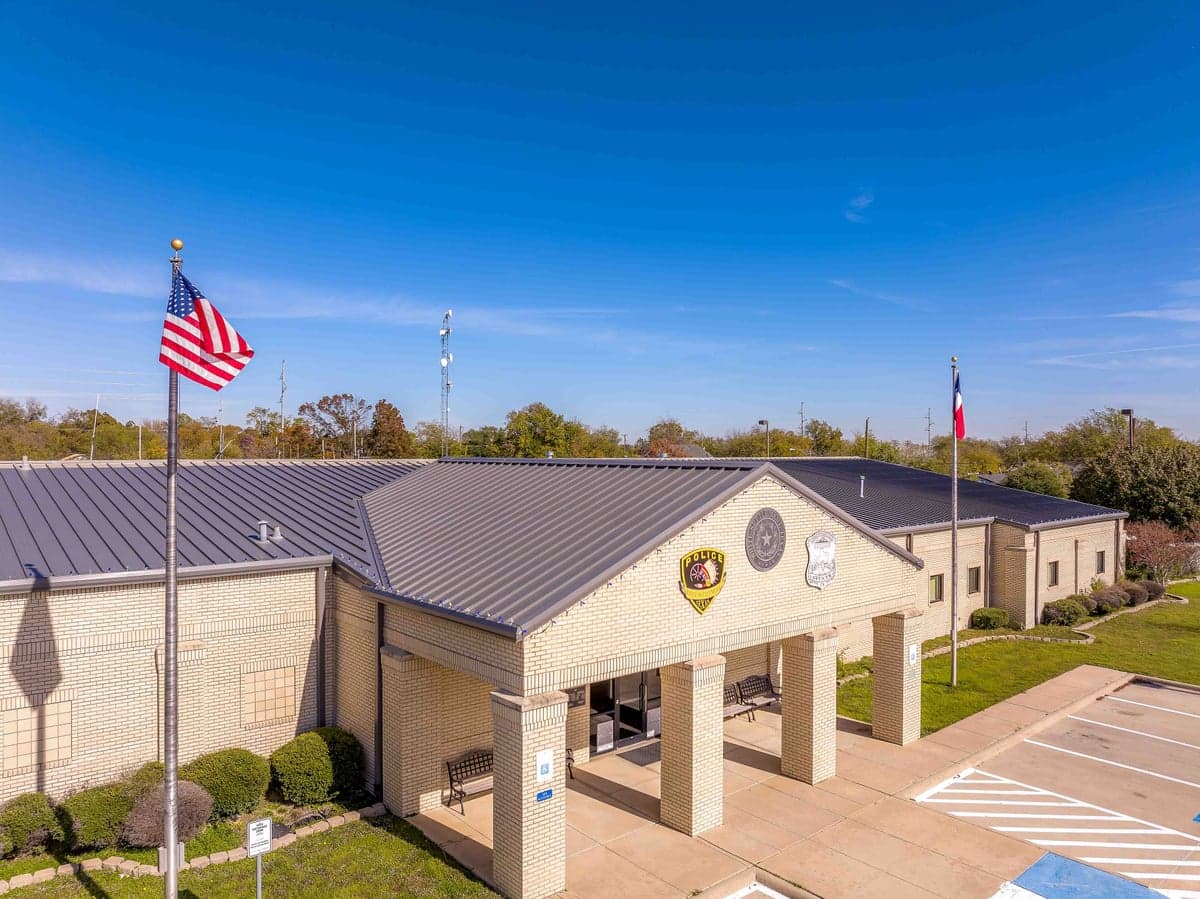
Photo: Wikipedia
Personal Sovereignty in White Settlement, TX
Strong independent fundamentals that actively favor personal liberty and low regulation.
What does Personal Sovereignty tell us?
Personal Sovereignty measures your capacity for self-reliance and independence with minimal government friction. Higher scores mean fewer barriers between you and the way you want to live... but it assumes you have the space you need and good neighbors.
What does this tell us?
Personal Sovereignty measures your capacity for self-reliance and independence with minimal government friction. Higher scores mean fewer barriers between you and the way you want to live... but it assumes you have the space you need and good neighbors.
State Policy
Energy independence: Net exporter (220% of energy produced in-state)
Personal Liberty
Homesteading

Personal Liberty Analysis
White Settlement, Texas, offers a notably high degree of personal sovereignty compared to many urban and suburban jurisdictions, largely due to Texas’s strong preemption laws and a local culture that values self-reliance. For those concerned with government overreach, this city provides a legal environment where individual rights—from gun ownership to property use—are broadly protected, though it is not without its own municipal ordinances that require scrutiny. The overall autonomy environment here is best described as a pragmatic balance: the state sets a libertarian-leaning floor, while the city adds only modest restrictions, making it a viable option for those seeking to minimize external control over their daily lives.
Tax burden and regulatory posture in Tarrant County
Texas imposes no state income tax, which is a foundational advantage for personal financial sovereignty. White Settlement’s property tax rate, however, is a critical factor: the total rate (including city, county, school district, and special districts) typically falls around 2.5% to 2.7% of assessed value, which is moderate for Tarrant County but higher than some rural Texas counties. The city’s regulatory posture is generally business-friendly, with no city-level income tax and relatively streamlined permitting for home-based businesses. However, the city does enforce standard building codes and zoning ordinances, which can limit certain off-grid modifications without permits. For a survivalist mindset, the absence of state income tax is a major win, but property taxes mean you are effectively renting from the government—a reality that demands careful property valuation and potential homestead exemptions to reduce the burden.
Self-defense rights and gun law specifics in White Settlement
Texas is a constitutional carry state, meaning no permit is required to carry a handgun openly or concealed for anyone legally allowed to possess a firearm. White Settlement does not impose additional local gun restrictions beyond state law, so the Second Amendment is fully respected here. The city’s police department is known for a pro-2A stance, and there are no local magazine capacity bans or “assault weapon” restrictions. For preppers, this means you can legally stockpile firearms and ammunition without fear of local confiscation orders. Stand-your-ground laws apply statewide, and Texas’s Castle Doctrine explicitly covers vehicles and workplaces, not just homes. One practical note: while the city itself is safe, the proximity to Fort Worth means that some businesses (e.g., those with 30.06/30.07 signage) may prohibit carry, so situational awareness is necessary. Overall, White Settlement offers a robust legal framework for self-defense, with no local erosion of state-level protections.
Self-reliance and homesteading viability: lot sizes, zoning, and off-grid feasibility
White Settlement is a fully developed suburban city, so large-scale homesteading is limited. Typical residential lot sizes range from 0.15 to 0.5 acres, with some older neighborhoods offering slightly larger parcels. Zoning is primarily single-family residential (SF-1 and SF-2), which allows for vegetable gardens, small livestock like chickens (subject to city code limits on number and coop placement), and rainwater collection—but not for larger animals like goats or horses without special permits. Off-grid feasibility is constrained: the city requires connection to municipal water and sewer in most areas, and solar panels are allowed but must comply with HOA rules if applicable. For a survivalist, this means you can achieve partial self-reliance (food gardening, backup power) but not full independence from municipal infrastructure. The city’s code enforcement is active, so visible “prepper” modifications like large fuel tanks or extensive fencing may draw scrutiny. For true off-grid living, rural areas west of White Settlement (e.g., Parker County) offer more flexibility, but the city itself is a compromise for those who want suburban convenience with moderate self-reliance options.
Personal liberties: parental rights, medical autonomy, speech, and property
Texas law strongly protects parental rights, including the right to direct a child’s education, medical care, and religious upbringing. White Settlement ISD does not have any local policies that override these state-level protections, and homeschooling is fully legal without state interference. Medical autonomy is similarly robust: Texas has no state-level vaccine mandate for adults, and while school vaccine requirements exist, exemptions (medical and conscientious) are available. During the COVID-19 era, White Settlement did not impose local mask or business closure mandates, reflecting a community preference for individual choice over government diktat. Free speech is protected under the First Amendment, and the city has no local ordinances restricting public assembly or expressive conduct beyond standard time/place/manner rules. Property rights are strong, with Texas’s property code limiting eminent domain abuse and requiring just compensation. However, HOAs in some subdivisions can impose restrictive covenants that limit personal expression (e.g., flag displays, vehicle storage), so buyers should verify HOA rules before purchasing. Overall, White Settlement offers a legal environment where personal liberties are well-guarded, with the main caveat being HOA or deed restrictions in certain neighborhoods.
In the broader context of the Dallas-Fort Worth metroplex, White Settlement ranks favorably for personal sovereignty, particularly when compared to more progressive cities like Austin or Dallas that have enacted local gun restrictions, vaccine mandates, or business regulations. The city’s tax burden is moderate, its regulatory touch is light, and its cultural alignment with self-reliance and individual rights is strong. For a survivalist or prepper, the key trade-off is suburban convenience versus rural autonomy: you get strong state-level protections and a like-minded community, but you must accept municipal water/sewer hookups and zoning limits. If your priority is minimizing government overreach while maintaining access to urban infrastructure, White Settlement is a solid choice—just be prepared to navigate HOA rules and property taxes as the primary constraints on your personal sovereignty.

* Values derived from national, state, county, city and local statistics and may differ in a specific area. Last updated: 2026-04-27T02:23:31.000Z
Narrative content on this page is AI-generated and may contain mistakes. Verify any details that matter before acting on them.
ReloMaps may earn a commission from affiliate links at no extra cost to you.

