 Popular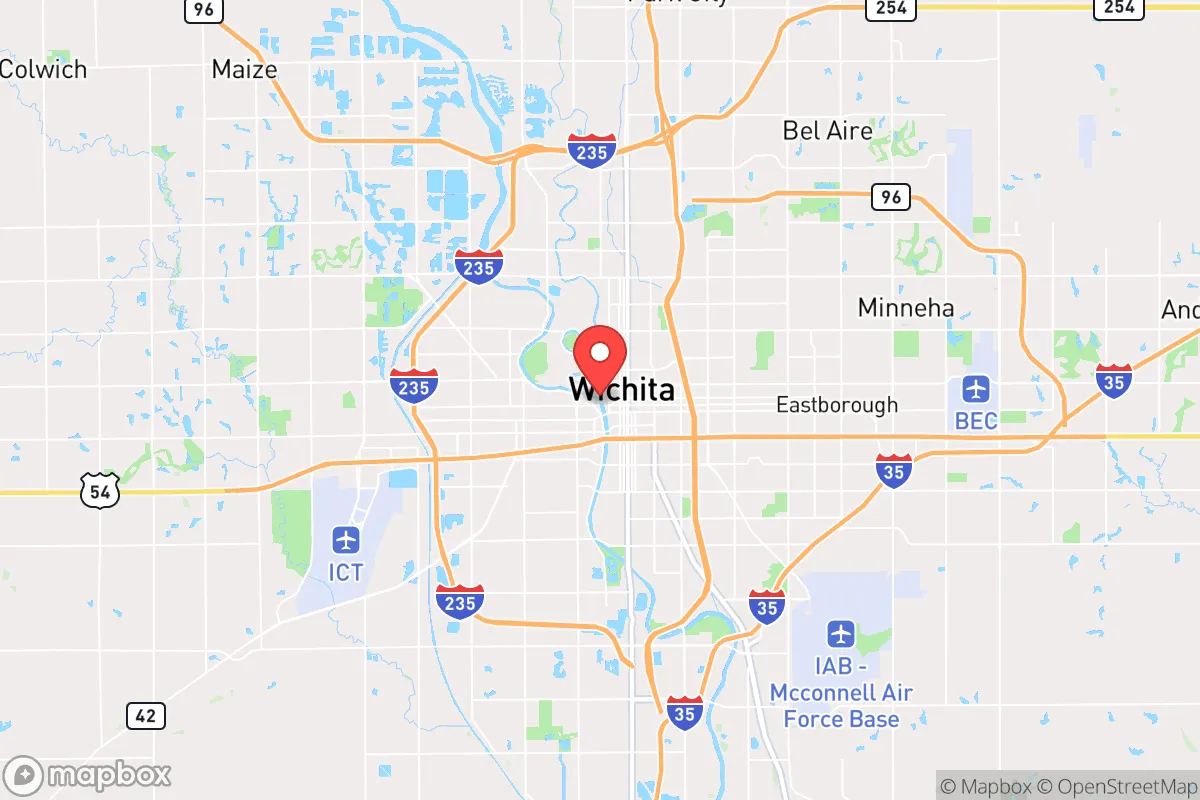
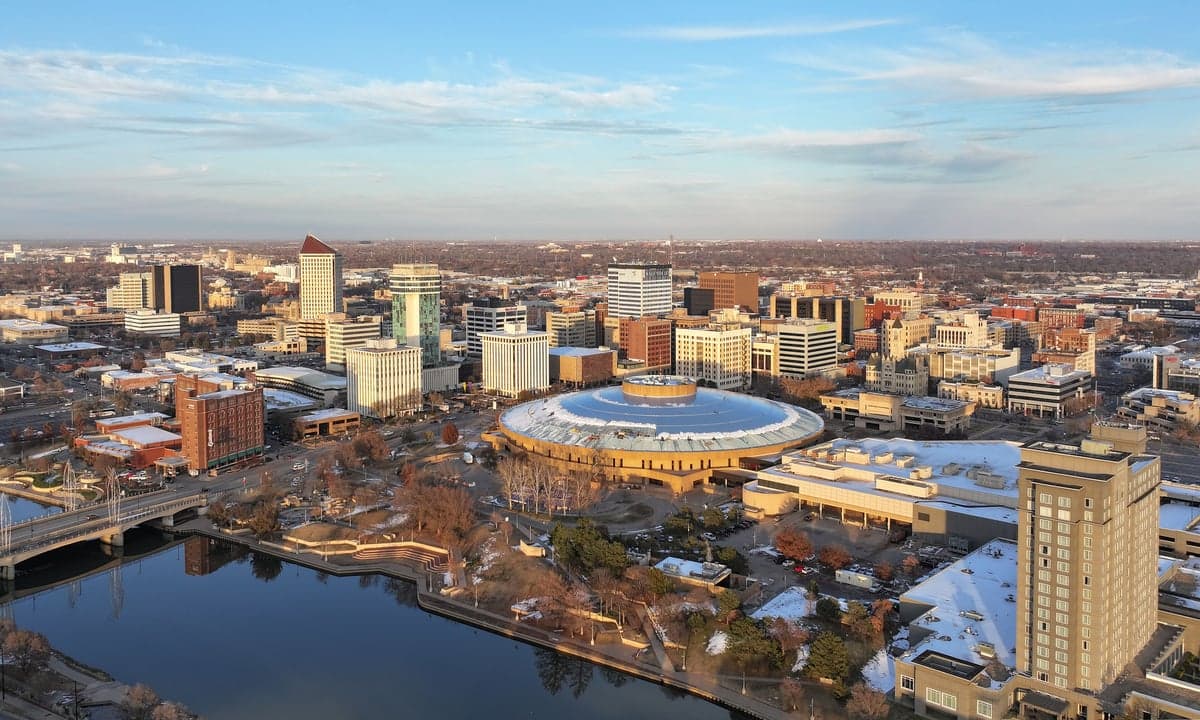
Photo: Wikipedia
Political ClimatePolitical Climate in Wichita, KS
District shown is the primary district for this city’s centroid. Cities may span multiple districts.
Local Political AnalysisPolitical Analysis of Wichita, KS
Wichita has long been a reliably conservative stronghold in Kansas, with a Cook PVI of R+12 that reflects a solid Republican lean in federal elections. But if you’ve lived here as long as I have, you’ve seen the political winds shift in ways that feel both familiar and a little unsettling. The city itself—especially the core and near-downtown areas—has been trending slightly more purple over the past decade, while the surrounding suburbs and rural parts of Sedgwick County remain deeply red. That split is something you notice in local races, where moderate Republicans and even a few Democrats can win city council seats, but countywide and state-level offices stay firmly in GOP hands.
How it compares
Drive 20 minutes east to Andover or 15 minutes west to Goddard, and you’ll find communities that vote even more Republican than Wichita proper—think R+20 or stronger. Head north to Newton or south to Winfield, and the politics are still conservative but with a more independent, “leave us alone” streak. The real contrast is with Lawrence or Kansas City, Kansas, which lean heavily Democratic and push policies that many Wichitans view as government overreach—like strict mask mandates or zoning rules that limit property rights. Here, the prevailing attitude is that local control matters more than state or federal directives, and that’s been tested lately as progressive ideas about policing, taxes, and land use have crept into city hall debates. It’s not a full-blown takeover, but it’s enough to make you keep an eye on the ballot box.
What this means for residents
For the average Wichitan, the political climate means you generally get to live your life without too much interference. Property taxes are moderate compared to Johnson County, and the city has resisted adopting the kind of strict rental regulations or business mandates you see in more progressive metros. That said, there’s been a push in recent years to raise the minimum wage locally and expand non-discrimination ordinances—moves that sound good on paper but often come with unintended consequences for small businesses and religious liberty. The school board has also become a battleground, with debates over curriculum transparency and parental rights heating up. If you value personal freedom—whether it’s choosing your own healthcare, homeschooling your kids, or running a business without red tape—Wichita is still a good place to be, but you can’t afford to be complacent. The long-term trend is toward more government involvement in daily life, and that’s something worth watching.
Culturally, Wichita remains a place where church attendance is high, gun ownership is common, and the phrase “mind your own business” is practically a civic virtue. You won’t see the kind of street-level activism or protest culture you’d find in Portland or Austin, but there’s a quiet resistance to anything that feels like top-down control. The biggest policy distinction is probably the city’s approach to homelessness and public space—Wichita has avoided the “housing first” model that’s become controversial elsewhere, instead relying on faith-based shelters and limited camping bans. That might change if the political balance shifts, but for now, the conservative majority keeps things grounded. If you’re looking for a place where your rights aren’t constantly under threat from a distant bureaucracy, Wichita still delivers—but don’t take it for granted.

State Political ClimatePolitical Climate in Kansas
State Political AnalysisPolitical Environment in the State
Kansas has long been considered a reliably Republican state, but the picture is more nuanced than a simple red-state label suggests. The state’s overall partisan lean is solidly conservative, with Republicans holding every statewide office and supermajorities in both legislative chambers, but the margin of victory in presidential races has narrowed over the past two decades—from a 21-point win for George W. Bush in 2004 to a 14-point win for Donald Trump in 2024. The dominant coalition is a mix of rural conservatives, suburban moderates, and a growing libertarian-leaning wing, but a persistent urban-suburban shift toward Democrats in places like Johnson County has made the state more competitive than its reputation implies.
Urban vs. rural divide
The political map of Kansas is a textbook case of the urban-rural split. The eastern third of the state, anchored by the Kansas City metro area, is where the real action is. Johnson County, the state’s wealthiest and most populous county, has been trending blue for a decade. In 2012, Mitt Romney carried it by 12 points; in 2024, Donald Trump won it by just 2 points. The suburbs of Overland Park and Lenexa are now home to a growing number of college-educated professionals who lean moderate to liberal on social issues, while still being fiscally conservative. Meanwhile, Wyandotte County (Kansas City, KS) is a deep-blue urban core, reliably Democratic by 40+ points. On the other side, Sedgwick County (Wichita) remains a Republican stronghold, though the city itself has a sizable Democratic base. The rural expanse—counties like Sherman, Grant, and Haskell in the west—votes Republican by margins of 70-80%, driven by agriculture, energy, and a strong distrust of federal overreach. The divide isn’t just about party; it’s about worldview. Rural Kansans see government as a distant, often hostile force, while suburbanites in Johnson County are more concerned with school funding and infrastructure.
Policy environment
Kansas’s policy environment has been a laboratory for conservative governance, with mixed results. The state’s tax structure is defined by the flat income tax passed in 2022, which set a single rate of 5.7%—a major win for fiscal conservatives after years of battling over the Brownback-era tax cuts. Property taxes remain a sore spot, with no statewide cap, though local levies vary widely. The regulatory posture is business-friendly, with right-to-work laws and a tort reform system that limits lawsuit abuse. On education, the state has a school choice program—the Kansas Tax Credit for Low-Income Students Scholarship Program—but it’s modest compared to states like Florida or Arizona. The real flashpoint has been education funding, with the Kansas Supreme Court repeatedly ordering the legislature to increase spending, leading to a constitutional crisis in 2016 when lawmakers threatened to defund the courts. Healthcare policy is a mixed bag: Kansas rejected Medicaid expansion, leaving roughly 150,000 low-income adults in a coverage gap, but the state has a robust private insurance market. Election laws are conservative but not extreme—voter ID is required, and the state has a clean voter roll maintenance system, but no restrictive mail-in ballot rules. The Value Them Both Amendment, passed in 2022, affirmed that the Kansas Constitution does not protect a right to abortion, overturning a 2019 state Supreme Court ruling—a major victory for pro-life advocates.
Trajectory & freedom
On the freedom front, Kansas is moving in a decidedly positive direction for conservatives, but the path has been bumpy. The biggest win in recent years was the Second Amendment Protection Act (2013), which declared that firearms made and kept in Kansas are not subject to federal regulation—a direct challenge to federal overreach that has withstood court challenges. The state also passed constitutional carry in 2015, allowing permitless concealed carry for adults. On parental rights, the Parental Bill of Rights (2021) gives parents the right to direct their child’s education and medical care, including the ability to opt out of mask mandates and curriculum materials. Medical autonomy took a hit with the COVID-19 vaccine mandate for healthcare workers, which was eventually repealed in 2023 after public backlash. Property rights are strong, with no statewide zoning mandates and a robust eminent domain law that requires just compensation. The biggest threat to freedom remains the Kansas Supreme Court, which has a liberal majority and has struck down conservative legislation on abortion, school funding, and voting maps. The legislature is currently pushing a judicial selection reform bill to give the governor more control over appointments, but it’s stalled. Overall, Kansas is freer than most blue states, but the judicial branch is a persistent check on legislative will.
Civil unrest & political movements
Kansas has seen its share of political flashpoints, but nothing like the riots in Portland or Seattle. The most visible unrest came in 2020, when Black Lives Matter protests in Wichita and Kansas City turned violent, with property damage and clashes with police. The response was swift: the legislature passed a law enforcement bill of rights in 2021, and local prosecutors have been aggressive in charging rioters. On the right, the Kansas State Rifle Association and Kansas for Life are well-organized and influential. Immigration politics are relatively quiet, though the state has a sanctuary city ban (2019) that prohibits local governments from adopting policies that shield illegal immigrants. The most heated issue has been election integrity. In 2022, the legislature passed a law requiring signature verification for mail-in ballots and banning ballot harvesting, which was challenged in court but upheld. The Kansas Democratic Party has been accused of coordinating with out-of-state dark money groups, but no major scandals have broken. The nullification movement is alive in rural counties, where some sheriffs have declared they will not enforce federal gun laws. A new resident would notice the strong sense of localism—people here trust their neighbors more than the state capital.
Projection
Over the next 5-10 years, Kansas is likely to become more competitive, but not necessarily more liberal. The key demographic shift is the in-migration of remote workers from the coasts, particularly to Johnson County and the Lawrence area. These newcomers tend to be moderate on social issues but fiscally conservative, which could push the state toward a more libertarian-leaning Republicanism. The Kansas City metro will continue to grow, while rural counties will shrink, making the state’s political future hinge on whether Republicans can hold the suburbs. The 2026 gubernatorial race will be a bellwether: if a moderate Republican wins, the party will likely stay the course; if a hardline conservative wins, expect more fights with the courts. The biggest wildcard is the Kansas Supreme Court, which will see several retirements in the next few years. If the legislature succeeds in reforming the selection process, the court could shift right, unlocking more conservative legislation on abortion, school choice, and property rights. For someone moving in now, expect a state that remains conservative but is increasingly divided between the rural heartland and the suburban frontier. The culture war will intensify, but the policy environment will remain business-friendly and tax-averse.
For a new resident, the bottom line is this: Kansas offers a high degree of personal freedom, low taxes, and a strong sense of community, but you’ll need to navigate a growing urban-rural divide. If you’re looking for a place where your rights are respected and your voice matters, Kansas is a solid bet—just be prepared for the occasional fight with the courts and the constant debate over how much government is too much. The state is not for everyone, but for those who value independence and tradition, it’s home.
* Values derived from national, state, county, city and local statistics and may differ in a specific area. Last updated: 2026-04-30T23:46:43.000Z
Narrative content on this page is AI-generated and may contain mistakes. Verify any details that matter before acting on them.
ReloMaps may earn a commission from affiliate links at no extra cost to you.

