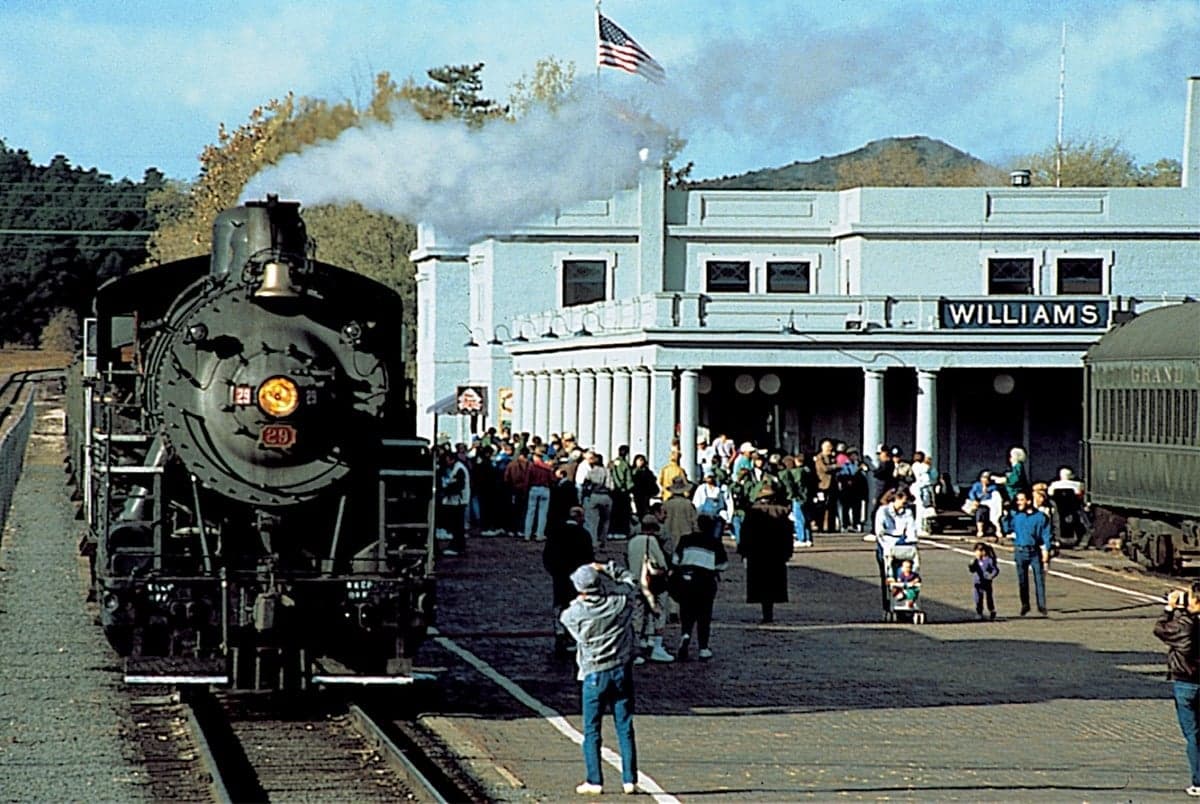
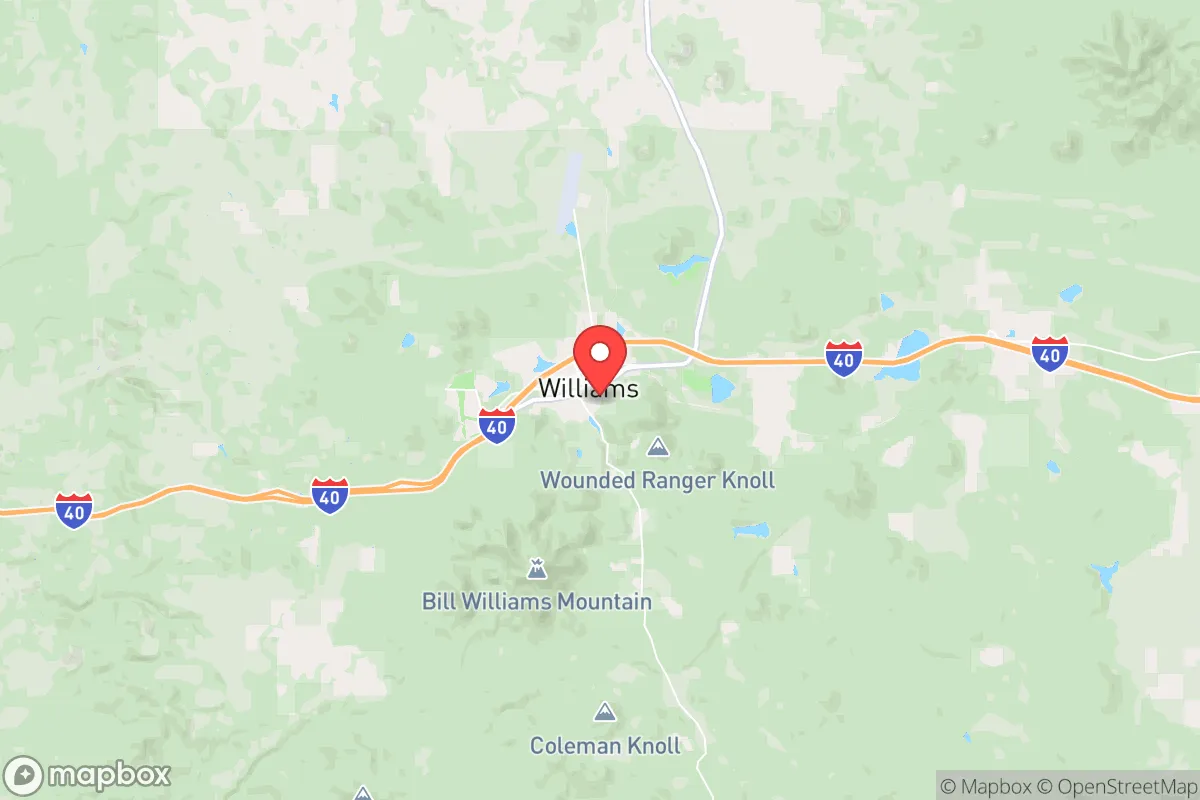
Photo: Wikipedia
Personal Sovereignty in Williams, AZ
Viable for self-reliance. Generally workable, though some barriers may limit total independence.
What does Personal Sovereignty tell us?
Personal Sovereignty measures your capacity for self-reliance and independence with minimal government friction. Higher scores mean fewer barriers between you and the way you want to live... but it assumes you have the space you need and good neighbors.
What does this tell us?
Personal Sovereignty measures your capacity for self-reliance and independence with minimal government friction. Higher scores mean fewer barriers between you and the way you want to live... but it assumes you have the space you need and good neighbors.
State Policy
Energy independence: Importer (20% of energy produced in-state)
Personal Liberty
Homesteading

Personal Liberty Analysis
Williams, Arizona offers a notably high degree of personal sovereignty compared to many parts of the country, particularly for those who prioritize minimal government interference in daily life. Nestled along the historic Route 66 corridor and serving as the gateway to the Grand Canyon, this small city of roughly 3,200 residents operates within a state framework that consistently ranks among the most freedom-oriented in the nation. For the survivalist or prepper mindset, Williams presents a strategic balance of rural autonomy and access to critical infrastructure, though it is not without its own local nuances that require careful consideration.
Tax burden and regulatory posture: How Arizona’s framework supports personal financial sovereignty
Arizona’s state-level policies create a foundation for personal sovereignty that directly benefits Williams residents. The state imposes a flat income tax rate of 2.5% as of 2025, one of the lowest in the country, and there is no state-level estate or inheritance tax. Property taxes in Coconino County, where Williams sits, average around 0.6% of assessed value, significantly below the national average of roughly 1.1%. This means a $300,000 home in Williams carries an annual tax bill of approximately $1,800, compared to over $3,300 in many other states. Sales tax in Williams is 9.05% (state plus local), which is moderate but worth noting for major purchases. The regulatory environment in Arizona is deliberately business-friendly, with no state-level occupational licensing for many trades and a right-to-work law that prevents forced union membership. For those looking to operate a home-based business, engage in barter, or keep more of what they earn, Williams sits in a jurisdiction that largely stays out of the way. The city itself has minimal business licensing requirements, and zoning is generally permissive for home occupations, provided they don’t create excessive traffic or noise.
Self-defense and gun law specifics: What the Second Sanctuary status means for residents
Williams and Coconino County are part of Arizona’s robust Second Amendment landscape, which is among the most protective in the nation. Arizona is a constitutional carry state, meaning no permit is required to carry a concealed firearm for anyone legally allowed to possess one. There is no state-level firearm registration, no waiting periods for purchase, and no magazine capacity restrictions. In 2021, Coconino County formally declared itself a Second Amendment Sanctuary, meaning local law enforcement is directed not to enforce any federal gun laws they deem unconstitutional. For the prepper, this is a critical layer of protection against potential federal overreach. The city of Williams itself has no additional firearm ordinances beyond state law, so open carry is fully legal, and carrying in vehicles without a permit is standard. Stand-your-ground laws apply statewide, with no duty to retreat in any place where a person is lawfully present. For those concerned about self-defense in a grid-down scenario or during civil unrest, Williams offers a legal environment that respects the right to keep and bear arms without bureaucratic hurdles.
Self-reliance and homesteading viability: Lot sizes, zoning, and off-grid feasibility in Williams
Williams provides genuine opportunities for self-reliance, though the high desert environment imposes practical constraints. Within city limits, residential lots typically range from 6,000 to 10,000 square feet, with some larger parcels available in the outskirts. Zoning in the city allows for small-scale livestock like chickens and rabbits on standard residential lots, but larger animals such as goats or horses generally require a minimum of one acre. The county’s zoning outside city limits is far more permissive, with many parcels of 2.5 to 40 acres available for purchase at prices ranging from $5,000 to $15,000 per acre. Off-grid living is legally feasible in Coconino County, as there are no county-level mandates requiring connection to municipal water or power. Rainwater harvesting is legal and encouraged, and solar panel installation requires only a standard building permit. However, well drilling is expensive (typically $15,000 to $30,000) due to the depth required in the Colorado Plateau geology, and septic system permits require percolation tests. The growing season is short—only about 120 days—so serious food production requires greenhouse investment. For the prepper, the area’s low population density and permissive county zoning make it viable for establishing a semi-autonomous homestead, but water security and short growing seasons demand upfront planning and capital.
Personal liberties: Parental rights, medical autonomy, speech, and property protections
Arizona law provides strong protections for personal liberties that directly affect Williams residents. Parental rights are explicitly protected under state law, with a 2023 statute affirming that parents have the fundamental right to direct the upbringing, education, and healthcare of their children. This includes the ability to opt out of any school curriculum or activity without penalty, and no state mandate for childhood vaccinations exists. Medical autonomy is similarly robust: Arizona does not have a state-level vaccine passport system, and there are no mandates for COVID-19 or other vaccines for adults. The state’s Right to Try law allows terminally ill patients access to experimental treatments without FDA approval, and there is no state-level prescription drug monitoring program that restricts patient access. Free speech protections are strong, with no state-level hate speech laws that could criminalize unpopular opinions. Property rights are safeguarded by Arizona’s strict eminent domain laws, which require just compensation and a demonstrated public use. The state also has a strong private property rights act that limits regulatory takings. For those concerned about government overreach into medical decisions, educational content, or property use, Williams sits within a legal framework that consistently prioritizes individual choice over state control.
In the broader context of personal sovereignty across the United States, Williams, Arizona ranks among the top-tier locations for those seeking to minimize government intrusion while maintaining access to modern infrastructure. The combination of constitutional carry, low taxes, permissive zoning for self-reliance, and strong protections for parental and medical autonomy creates an environment where a survivalist or prepper can operate with minimal friction. Compared to states like California, New York, or Oregon—where firearm restrictions, vaccine mandates, and property use limitations are common—Williams offers a starkly different paradigm. The trade-offs are real: the remote location means longer response times from emergency services, and the high desert climate requires serious preparation for water and food security. But for those who value the freedom to live on their own terms, prepare for uncertain times, and raise their families without state interference, Williams represents a strategic stronghold in the American Southwest that is worth serious consideration.

* Values derived from national, state, county, city and local statistics and may differ in a specific area. Last updated: 2026-05-02T04:17:15.000Z
Narrative content on this page is AI-generated and may contain mistakes. Verify any details that matter before acting on them.
ReloMaps may earn a commission from affiliate links at no extra cost to you.

