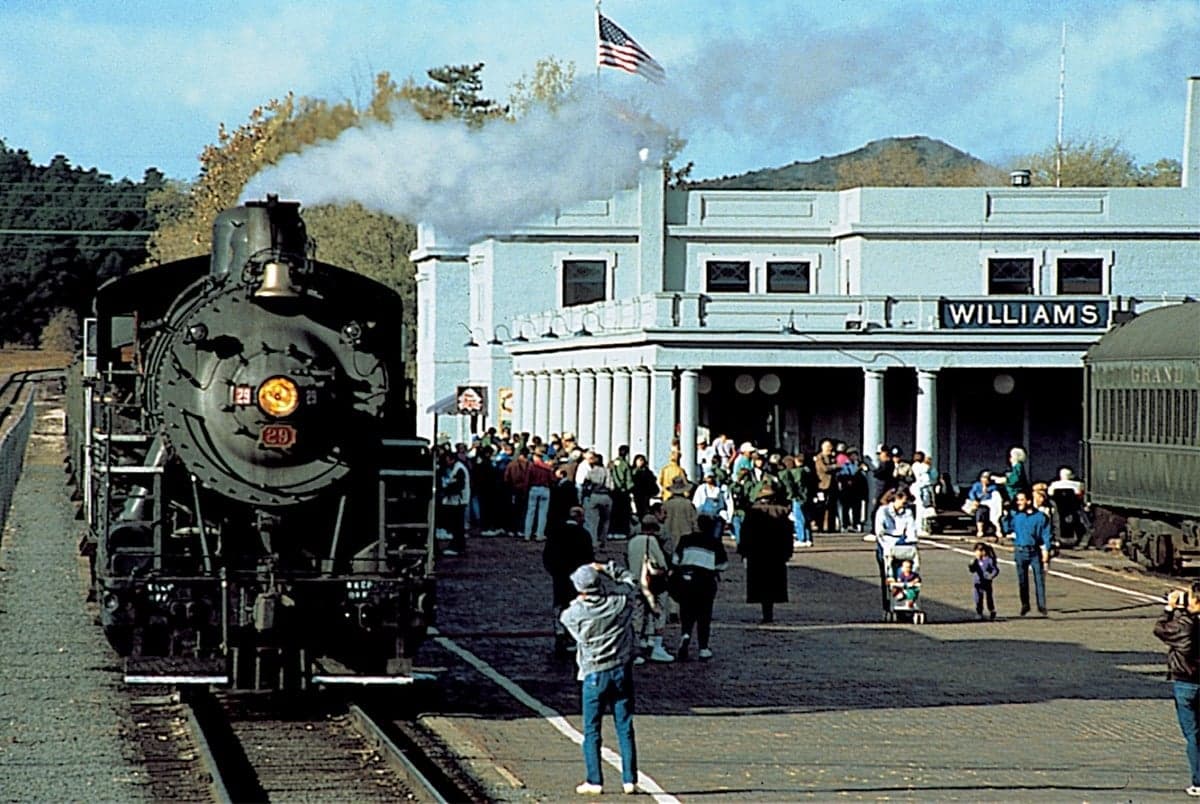
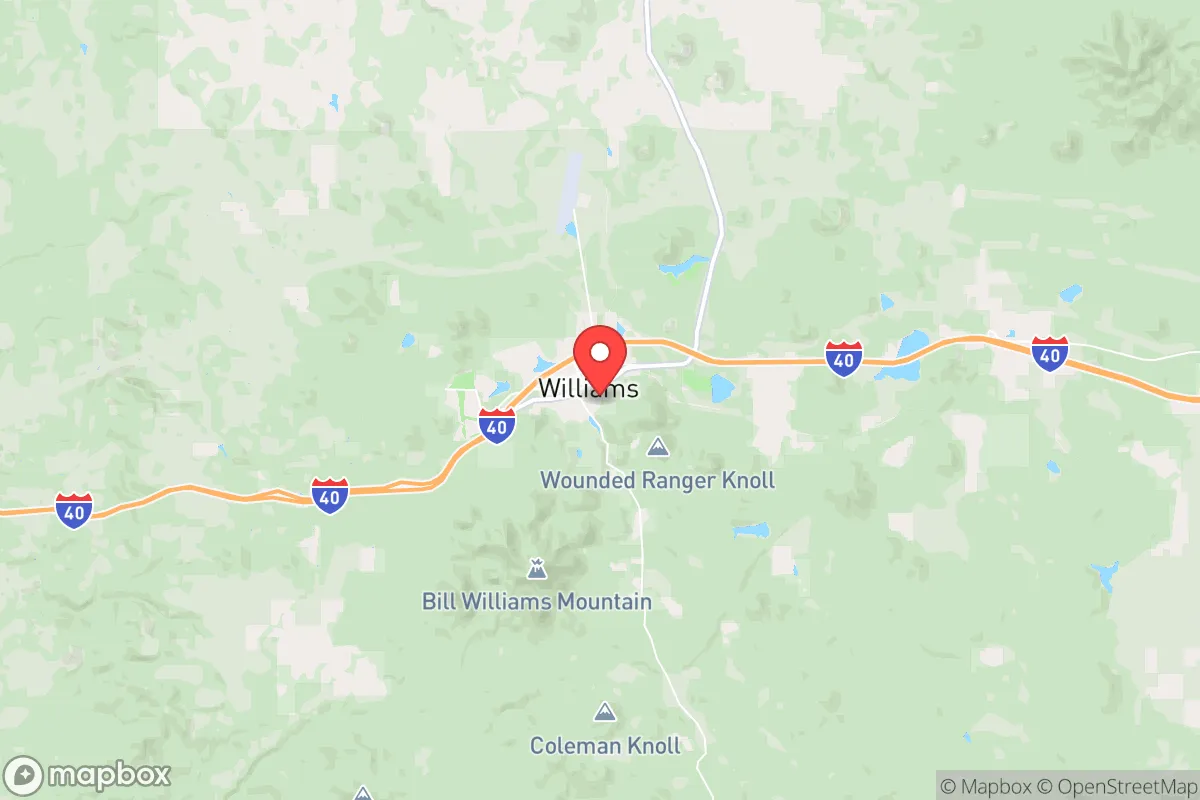
Photo: Wikipedia
Quality of Life in Williams, AZ
A high quality of life with strong walkability, manageable living costs, healthy neighborhood signals, and solid amenity access.
What does Quality of Life tell us?
Quality of Life blends cost of living, nearby amenities, socioeconomic signals, and neighborhood character. City-level scores represent the whole municipality; individual neighborhoods can differ.
What does this tell us?
Quality of Life blends cost of living, nearby amenities, socioeconomic signals, and neighborhood character. City-level scores represent the whole municipality; individual neighborhoods can differ.
Cost of Living
23% above national average
The Real Cost of Living in Williams, AZ for 2026
| Tier | Individual | Family (4) |
|---|---|---|
| Survival | $18k | $34k |
| Comfortable | $56k | $82k |
| Luxury | $81k+ | $126k+ |
| Elite (Top 5%) | $96k+ | $149k+ |
81%
The Area Signal
A metric tracking the socioeconomic signals of the area.
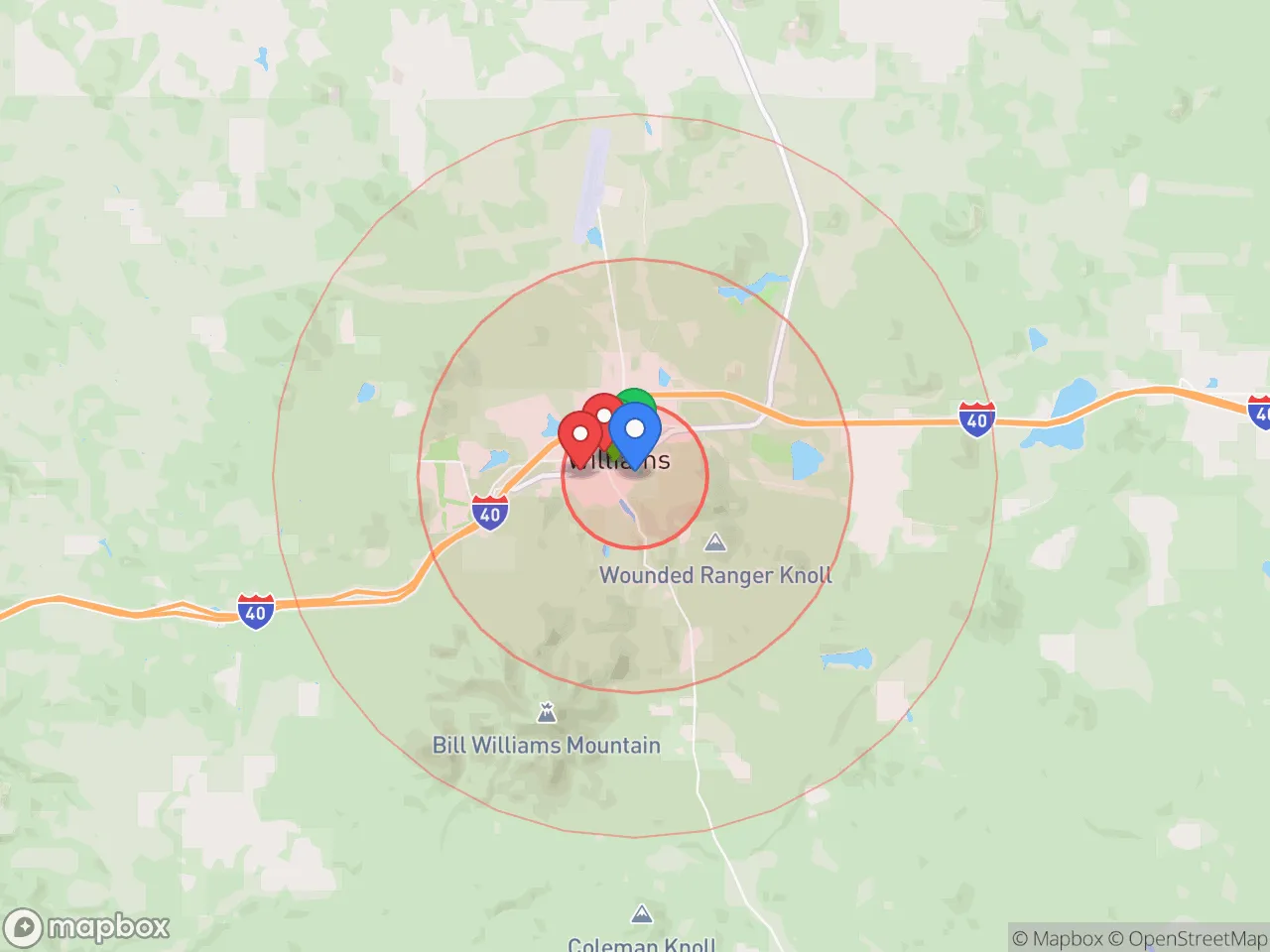
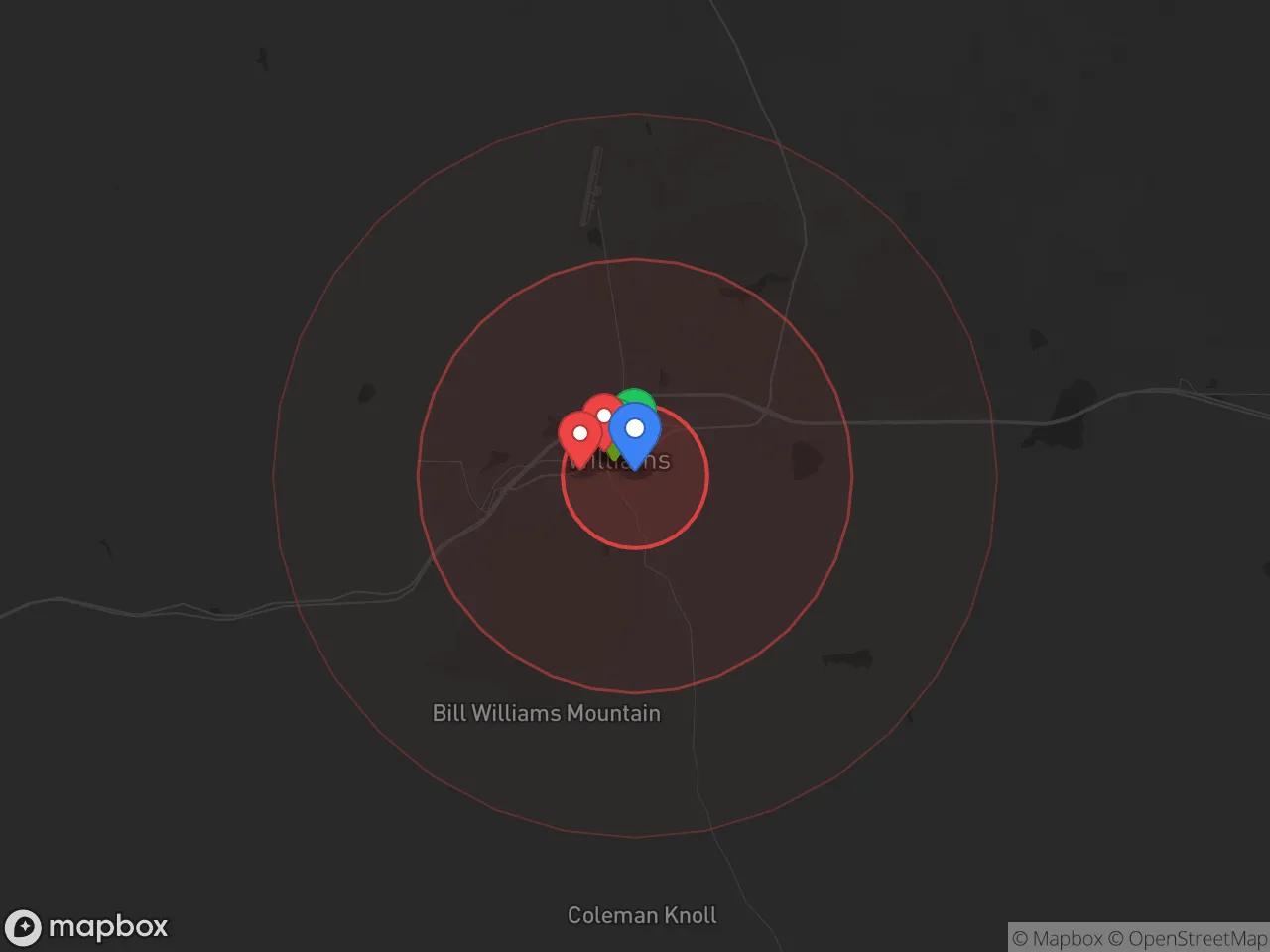
Hobbies
Explore the areaGroceries
1 within 10 miles
Gas
8 within 10 miles
Hospital
0 within 20 miles
Airport
PHX — Phoenix Sky Harbor International
Post Office
USPS — Williams, AZ
Critical Amenities
Quality-of-Life Analysis
Williams, Arizona, presents a quality of life shaped by its unique position as a mountain-town gateway to the Grand Canyon, attracting a mix of tourism-industry workers, remote professionals, and retirees seeking a slower pace. The area’s cost of living index of 123 (23% above the U.S. average) reflects its desirability and limited housing stock, yet it remains more affordable than the pricier resort towns of Flagstaff and Sedona. The population skews toward older adults and families who value outdoor recreation and a tight-knit community, with a median age around 43 and a growing number of second-home owners.
Cost of living, housing affordability, and how Williams compares to Flagstaff and Sedona
Housing is the primary driver of Williams’ above-average cost of living, with a median home value of $457,500 and a median rent of $1,122. While these figures are steep relative to the national median, they are roughly 30-40% lower than Flagstaff’s median home value of $650,000 and Sedona’s $850,000, making Williams a relative bargain for those priced out of those markets. Renters face a tighter squeeze: the median rent consumes about 28% of the local median household income ($48,000), which is slightly above the 30% affordability threshold. The average commute of 25.5 minutes is notably shorter than Flagstaff’s 20-minute average but longer than the national norm, reflecting the spread of workers commuting to Grand Canyon Railway jobs or Flagstaff employers. Property taxes remain low by Arizona standards (roughly 0.6% of assessed value), which helps offset the higher purchase price for homeowners.
Local amenities, schools, and the daily rhythm of life in Williams
Daily life in Williams revolves around its historic Route 66 corridor, the Grand Canyon Railway depot, and the surrounding Kaibab National Forest. The town’s school system, Williams Unified School District, serves about 700 students with a 16:1 student-teacher ratio and a graduation rate of 88%, slightly above the state average. Groceries and basic services are concentrated along Route 66, with a Safeway and a few local markets; for major shopping or specialized healthcare, residents drive 35 minutes east to Flagstaff, which offers Flagstaff Medical Center and a wider retail selection. The town’s cultural rhythm is tied to seasonal tourism: summer and fall bring heavy visitor traffic, while winter sees a quieter, snowier pace with access to skiing at the Arizona Snowbowl (45 minutes away). Outdoor amenities are abundant, with hiking, mountain biking, and fishing in nearby Bill Williams Mountain and Cataract Lake, but nightlife and dining options are limited to a handful of local restaurants and bars.
Williams is best suited for those who prioritize outdoor access, small-town quiet, and relative affordability over urban conveniences. Retirees and remote workers with stable incomes will find the lower home prices and tax-friendly environment appealing, while families should weigh the limited job market (dominated by tourism, retail, and government) against the quality schools and low crime rate. Commuters to Flagstaff or the Grand Canyon will appreciate the manageable drive, but those seeking a vibrant arts scene, diverse dining, or robust healthcare should look to larger cities. Overall, Williams offers a distinct quality of life for those who value nature, history, and community over hustle and choice.

Crime in Williams, AZ
Generally safer than 68% of comparable U.S. locations.
Violent CrimeViolent Crime Analysis
Property CrimeProperty Crime Analysis
Crime Analysis
Williams, Arizona, presents a crime profile that is significantly elevated compared to national averages, with a violent crime rate of 788.3 per 100,000 residents and a property crime rate of 1,773.6 per 100,000. These figures place the city in a concerning position for safety, particularly when considering its status as a small town near a major metro area. The data suggests that residents and visitors face a heightened risk of victimization, a trend that warrants careful consideration for anyone evaluating relocation to this historic Route 66 community.
Crime in context
Williams’ violent crime rate of 788.3 per 100,000 is more than double the national average of approximately 380 per 100,000 and substantially exceeds the Arizona state average of roughly 440 per 100,000. Property crime, at 1,773.6 per 100,000, also surpasses the national benchmark of around 1,950 per 100,000 but is notably lower than the state average of approximately 2,200 per 100,000. However, the violent crime figure is the primary concern. As a small city located within commuting distance of Flagstaff and the broader metropolitan influence of northern Arizona, Williams is subject to the same regional challenges that often accompany proximity to larger urban centers. These include the spillover effects of progressive prosecutorial policies in nearby jurisdictions, which can lead to reduced incarceration rates and increased recidivism, directly impacting smaller communities like Williams.
What residents experience
For residents, the elevated violent crime rate translates into a tangible sense of risk. The likelihood of experiencing a violent crime—such as assault, robbery, or rape—is roughly 1 in 127 in Williams, compared to about 1 in 250 nationally. Property crime, including theft, burglary, and vehicle break-ins, occurs at a rate that makes it a common concern, with a roughly 1 in 56 chance of being a victim. These statistics are not abstract; they reflect daily realities for those living in the city. The presence of a progressive justice system in the broader region, which often prioritizes rehabilitation over punishment, can result in offenders cycling through the system and returning to communities like Williams. This dynamic undermines public safety and erodes trust in the justice system’s ability to protect victims and deter crime.
Neighborhood-level variation
While citywide data is stark, neighborhood-level variation does exist. Areas closer to the historic downtown and major tourist corridors along Route 66 tend to see higher property crime rates due to transient populations and visitor traffic. Residential neighborhoods farther from the commercial core, particularly those on the outskirts near the Kaibab National Forest, generally report lower crime incidents. However, the overall violent crime rate is a citywide concern, and even in quieter pockets, residents are not insulated from the broader trends. For those considering a move, it is advisable to consult local police reports and speak with long-term residents about specific block-level safety, as the data suggests that no area is entirely free from the elevated risk that defines Williams’ current safety landscape.
* Values derived from national, state, county, city and local statistics and may differ in a specific area. Last updated: 2026-05-02T04:17:15.000Z
Narrative content on this page is AI-generated and may contain mistakes. Verify any details that matter before acting on them.
ReloMaps may earn a commission from affiliate links at no extra cost to you.

