Photo: Wikipedia
Political ClimatePolitical Climate in Williams, AZ
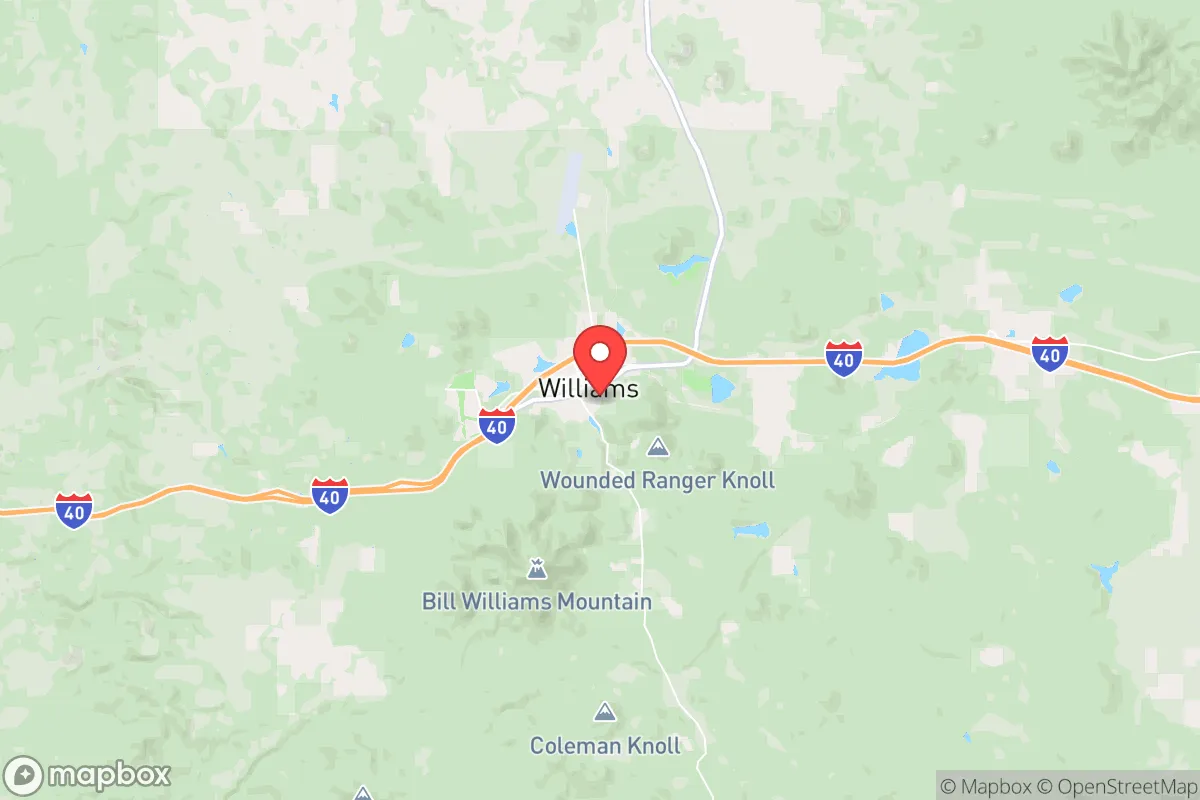
District shown is the primary district for this city’s centroid. Cities may span multiple districts.
Local Political AnalysisPolitical Analysis of Williams, AZ
Williams, Arizona, has long been a rock-solid conservative stronghold, and that hasn't changed much despite the waves of change hitting other parts of the state. With a Cook PVI of R+7, this town leans reliably Republican, and you feel it in the everyday conversations at the local diner or the hardware store. The political lean here isn't just about party registration; it's a deep-seated belief in personal responsibility, limited government, and the right to live your life without a bunch of bureaucrats telling you how to do it. While places like Flagstaff, just 30 miles east, have drifted noticeably leftward in recent years, Williams has held the line, and most folks here are pretty proud of that.
How it compares
The contrast with Flagstaff couldn't be starker. Flagstaff is a college town with a growing progressive activist scene, pushing policies on everything from housing regulations to environmental restrictions that often feel like they're designed in a vacuum. Williams, on the other hand, is a working-class railroad and tourism town. People here are more concerned with keeping their businesses open and their families fed than with the latest social experiments. You see the same split when you look south to Prescott Valley, which is also conservative, but Williams has a more rugged, independent streak. It's not just about voting red; it's about a fundamental distrust of government overreach. The R+7 rating feels about right, but if you look at local elections, the margin is often wider. The real concern among long-time residents is that the progressive ideology creeping in from Flagstaff and the Phoenix metro area might start to influence county-level decisions, especially on land use and water rights.
What this means for residents
For the people who live here, the political climate means a lot of things are left up to the individual. There's no heavy-handed city council trying to dictate what kind of light bulb you can use or what you can build on your own property. The local government is generally hands-off, which is exactly how most folks want it. The downside is that this independence can sometimes mean fewer public services, but that's a trade-off most are willing to make. The biggest worry right now is the slow creep of state-level mandates that feel like they're designed for Phoenix or Tucson, not a small mountain town. If you value your Second Amendment rights, your ability to run a small business without a mountain of red tape, and your freedom to live your life without constant interference, Williams is still a haven. But you have to stay vigilant, because the political winds can shift, and once that progressive foot is in the door, it's hard to kick it back out.
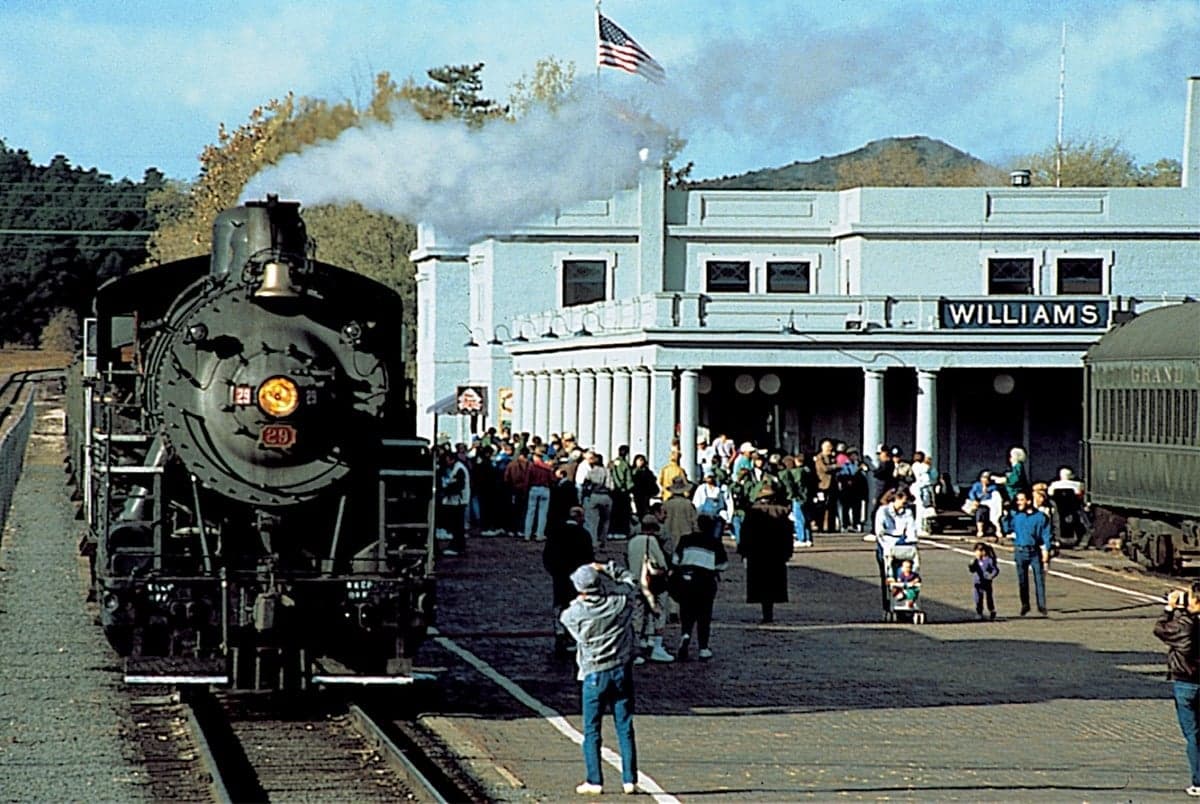
Culturally, Williams is distinct because it's a place where the old Western values of self-reliance and neighborly help still hold strong. You won't find a lot of political yard signs or heated arguments at the grocery store, but you will find a quiet, determined resistance to anything that smacks of government overreach. The town's identity is tied to the railroad and Route 66, both symbols of American grit and independence. The biggest policy distinction is the local attitude toward property rights and business regulation. There's a general understanding that if you want to start a business, you should be able to, without jumping through a dozen hoops. That's the Williams way, and as long as the people here keep that spirit alive, the political climate will stay true to its roots. But keep an eye on the county commission races and any ballot initiatives coming out of Flagstaff—that's where the real battles are shaping up.

State Political ClimatePolitical Climate in Arizona
State Political AnalysisPolitical Environment in the State
Arizona has transformed from a reliably Republican stronghold into a true battleground state over the past two decades, with its partisan lean shifting from a solid +8-point GOP advantage in 2004 to a razor-thin margin where Democrats carried the presidential vote in 2020 by just 10,457 votes. The state’s political identity is now defined by a tug-of-war between a rapidly growing, diverse Maricopa County electorate and deeply conservative rural and exurban counties that still anchor the right. For a conservative considering relocation, Arizona offers a mixed picture: low taxes and a pro-business climate coexist with a volatile political landscape where control of the state legislature and governor’s mansion can flip with each election cycle.
Urban vs. rural divide
The political map of Arizona is a story of two Arizonas. The urban core—Phoenix, Tucson, and their inner-ring suburbs like Tempe and Scottsdale—has shifted leftward, driven by an influx of out-of-state transplants, younger voters, and a growing Latino electorate. Maricopa County, home to 60% of the state’s population, voted for Joe Biden in 2020 after backing Trump in 2016, a flip that shocked many longtime residents. Meanwhile, the rural and exurban counties—Yavapai (Prescott), Mohave (Kingman), Pinal (Casa Grande), and Cochise (Sierra Vista)—remain deeply red, often voting 70-80% Republican. The divide is stark: a drive from liberal-leaning Flagstaff in Coconino County to conservative Prescott in Yavapai County is a 90-minute lesson in Arizona’s cultural and political chasm. The suburbs of Mesa and Chandler in the East Valley have become key swing areas, where Republican margins have eroded as tech and finance workers move in from California and Colorado.
Policy environment
Arizona’s policy environment is a mixed bag for conservatives. On the plus side, the state has a flat income tax rate of 2.5% (down from 4.5% in 2021 thanks to Republican-led cuts), no estate tax, and a right-to-work law that keeps unions weak. Property taxes are low, with an effective rate around 0.62% of home value. However, the state’s education funding has been a perennial battleground: after the 2018 #RedForEd teacher walkout, lawmakers approved a 20% pay raise, but per-pupil spending still ranks near the bottom nationally. School choice is strong, with universal Empowerment Scholarship Accounts (ESAs) available to all K-12 students since 2022, a major win for parental rights. On election integrity, Arizona has been a flashpoint: the 2021 audit of Maricopa County’s ballots (the “Cyber Ninjas” audit) exposed deep distrust in the system, and the legislature passed laws requiring proof of citizenship to vote in federal elections (the 2024 “Secure the Border Act”). Healthcare policy leans libertarian—no certificate-of-need laws for hospitals, and telehealth is deregulated—but Medicaid expansion under the 2013 “Arizona Health Care Cost Containment System” (AHCCCS) remains popular and has not been rolled back.
Trajectory & freedom
Arizona’s trajectory on personal freedom is a two-steps-forward, one-step-back story. On the positive side, the state expanded Second Amendment rights in 2021 with permitless carry (HB 2558), allowing law-abiding adults to carry concealed firearms without a permit. Parental rights were strengthened in 2022 with a law requiring schools to notify parents of any curriculum involving sexuality (the “Parental Rights in Education” bill, similar to Florida’s). Property rights got a boost in 2023 when the legislature banned local governments from imposing rent control. However, the state has seen concerning encroachments: in 2024, Governor Katie Hobbs (a Democrat) vetoed a bill that would have banned vaccine mandates by private employers, and she used executive orders to expand voting access via mail-in ballot drop boxes. The biggest freedom concern is the border: the state’s 2024 “Secure the Border Act” (Proposition 314) made illegal entry a state crime, but it’s tied up in court challenges. Meanwhile, local governments in Tucson and Phoenix have declared themselves “sanctuary cities,” refusing to cooperate with federal immigration enforcement—a direct challenge to state law.
Civil unrest & political movements
Arizona has been a hotbed of political activism on both sides. The 2020 election aftermath saw massive protests in Phoenix, including the “Stop the Steal” rally at the state capitol that drew thousands. The 2021 “Cyber Ninjas” audit of Maricopa County ballots turned the state into a national spectacle, with dueling protests from election integrity activists and anti-Trump groups. Immigration politics are visceral: the 2010 SB 1070 “Show Me Your Papers” law still echoes, and the 2024 “Secure the Border Act” has reignited tensions, with pro-immigrant groups staging walkouts and border patrol checkpoints near Nogales and Douglas becoming daily flashpoints. On the left, the “Red for Ed” movement in 2018 was the largest teacher strike in U.S. history, shutting down 1,000 schools and forcing a tax hike on the wealthy. More recently, pro-Palestinian encampments at Arizona State University in Tempe in 2024 led to arrests and counter-protests. A new resident will notice the political energy: yard signs, bumper stickers, and local news coverage are relentlessly partisan.
Projection
Over the next 5-10 years, Arizona is likely to become more competitive, not less. In-migration from California, Illinois, and New York—which added 300,000 new residents between 2020 and 2024—is reshaping the electorate. These newcomers tend to be moderate to liberal on social issues but fiscally conservative, creating a volatile mix. The Latino population, now 32% of the state, is growing fast and leans Democratic, though not monolithically—many in Yuma and San Luis are socially conservative. The state legislature is likely to remain narrowly Republican through 2028 due to gerrymandering, but the governor’s office and U.S. Senate seats are toss-ups. Expect continued fights over election laws, school choice expansion, and border security. For a conservative moving in now, the realistic outlook is that Arizona will remain a purple state where your vote truly matters—but where the cultural and policy battles will be constant and exhausting.
For a new resident, the bottom line is this: Arizona offers low taxes, strong school choice, and a growing economy, but you’ll need to be politically engaged to protect those gains. The state is not a conservative safe haven like Idaho or Tennessee—it’s a frontline battleground where every election feels like a referendum on the future. If you’re willing to get involved in local politics, join a precinct committee, or simply vote in every primary, you can have real influence. But if you’re looking for a place where conservative values are baked into the culture without constant fighting, you might find Arizona exhausting. The weather is great, the taxes are low, and the people are independent—but the political climate is anything but settled.
* Values derived from national, state, county, city and local statistics and may differ in a specific area. Last updated: 2026-05-02T04:17:15.000Z
Narrative content on this page is AI-generated and may contain mistakes. Verify any details that matter before acting on them.
ReloMaps may earn a commission from affiliate links at no extra cost to you.

