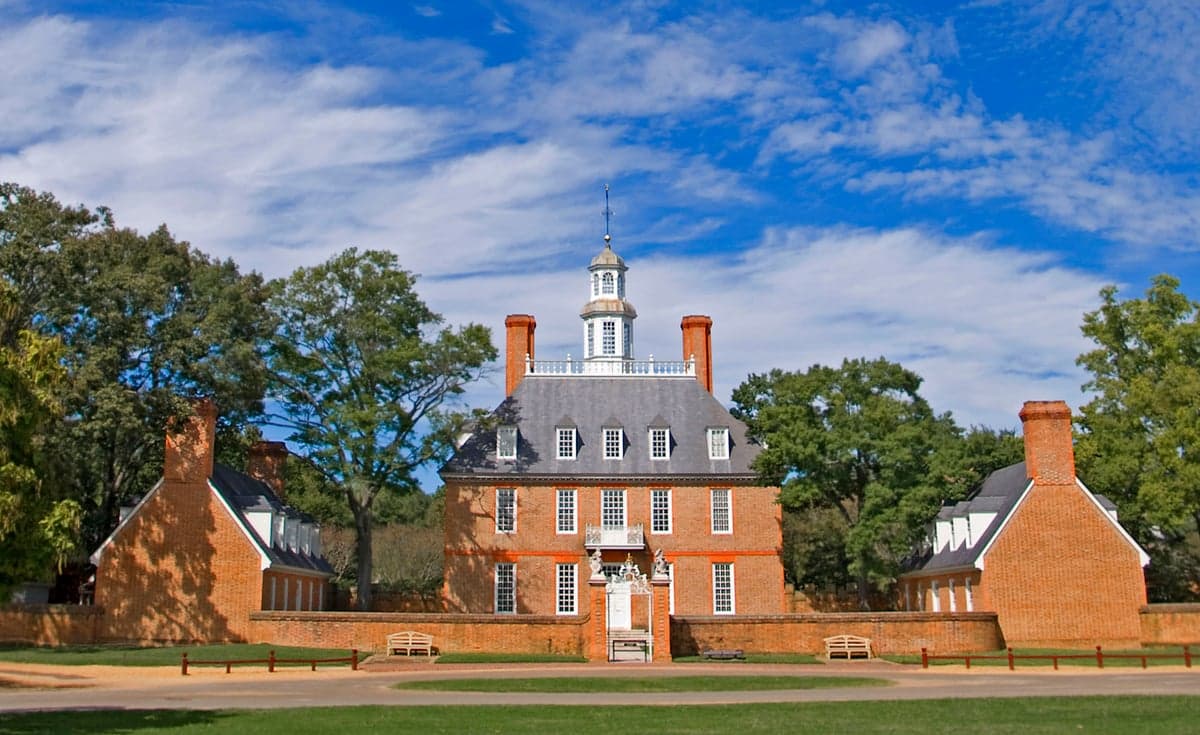

Photo: Wikipedia
Quality of Life in Williamsburg, VA
Above-average quality of iife. The area offers a reasonable cost of living, decent mobility, and a mix of neighborhood amenities.
What does Quality of Life tell us?
Quality of Life blends cost of living, nearby amenities, socioeconomic signals, and neighborhood character. City-level scores represent the whole municipality; individual neighborhoods can differ.
What does this tell us?
Quality of Life blends cost of living, nearby amenities, socioeconomic signals, and neighborhood character. City-level scores represent the whole municipality; individual neighborhoods can differ.
Cost of Living
26% above national average
The Real Cost of Living in Williamsburg, VA for 2026
| Tier | Individual | Family (4) |
|---|---|---|
| Survival | $22k | $41k |
| Comfortable | $76k | $112k |
| Luxury | $127k+ | $197k+ |
| Elite (Top 5%) | $196k+ | $304k+ |
63%
The Area Signal
A metric tracking the socioeconomic signals of the area.

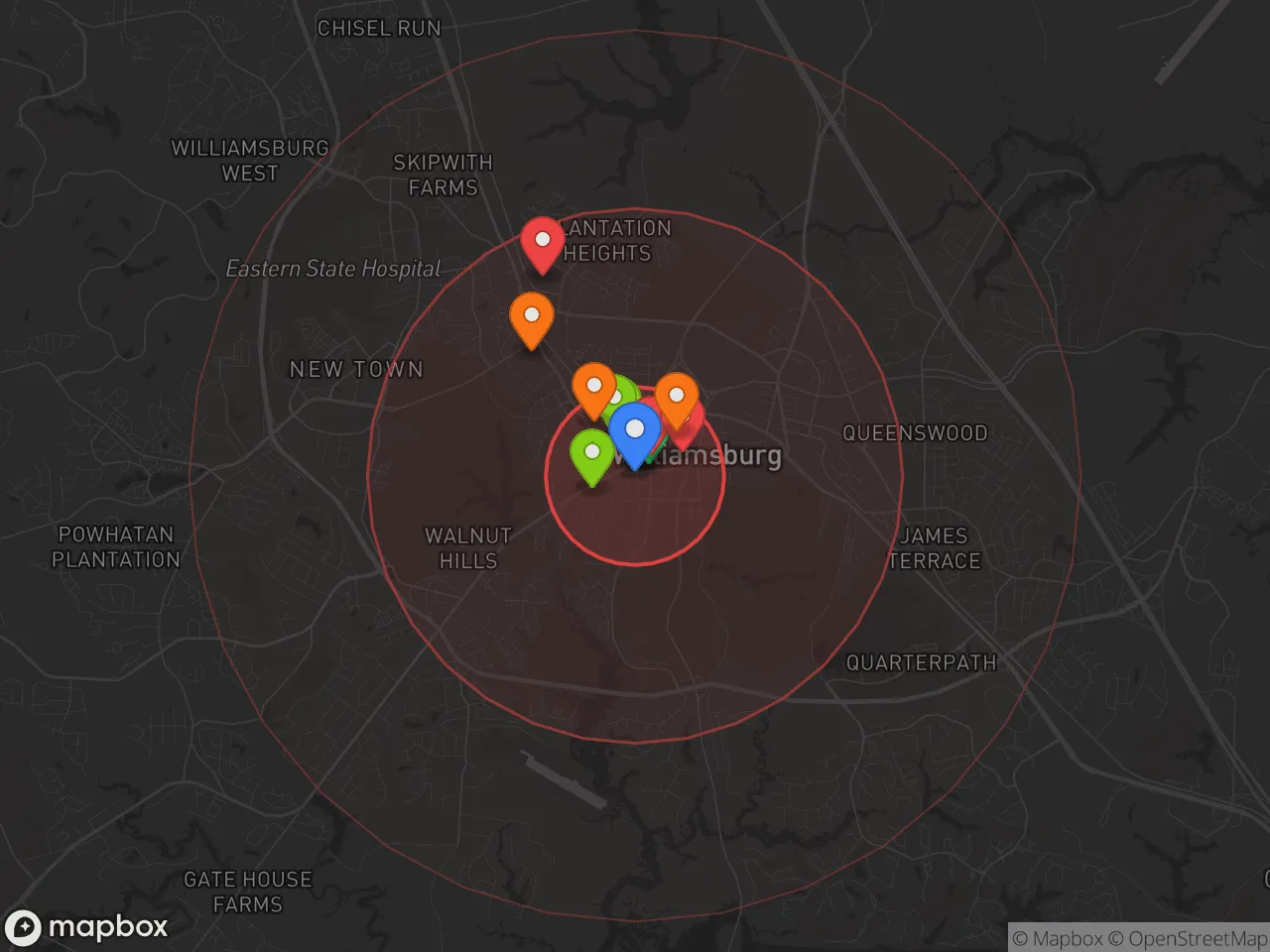
Hobbies
Explore the areaGroceries
7 within 10 miles
Gas
20 within 10 miles
Hospital
10 within 20 miles
Airport
DCA — Ronald Reagan Washington National
Post Office
USPS — Williamsburg, VA
Critical Amenities
Quality-of-Life Analysis
Williamsburg, Virginia, presents a quality of life shaped by its dual identity as a historic colonial capital and a modern college town anchored by William & Mary. The area attracts a mix of academics, retirees, military families connected to nearby Joint Base Langley-Eustis, and professionals in the tourism and healthcare sectors. With a cost of living index of 126 (100 = U.S. average), Williamsburg is notably more expensive than the national norm but remains competitive within the Hampton Roads region, offering a distinct blend of cultural depth and suburban comfort that appeals to those seeking a slower, more educated pace of life.
Cost of living, housing, and affordability compared to nearby areas
Housing is the primary driver of Williamsburg's elevated cost of living. The median home value sits at $393,200, significantly above the national median of roughly $350,000, while the median rent is $1,361 per month. For context, nearby Newport News (COL index 96) and Hampton (COL index 94) offer substantially lower housing costs, with median home values around $250,000 and $230,000 respectively. However, Williamsburg's premium buys into a tighter housing market with limited new construction due to historic preservation zones and the protected Colonial Parkway corridor. Renters face a vacancy rate below 4%, making competition for apartments near campus or the Merchants Square area fierce. The average commute of 17 minutes is a standout advantage—far shorter than the national average of 26 minutes—meaning residents save both time and transportation costs, partially offsetting the higher housing expense. Utility costs are in line with state averages, but property taxes in James City County (where most of Williamsburg lies) are moderate at roughly 0.84% of assessed value, offering some relief compared to Northern Virginia.
What daily life is like for families, retirees, and professionals
Daily life in Williamsburg revolves around a walkable historic core, a robust public school system, and a calendar packed with festivals and reenactments. The Williamsburg-James City County Public Schools system consistently ranks among Virginia's top 20 districts, with Jamestown High School and Lafayette High School both earning GreatSchools ratings of 8 out of 10. For families, the area offers extensive youth sports leagues through the Williamsburg Recreation Center and proximity to Busch Gardens Williamsburg and Water Country USA. Retirees are drawn to the College of William & Mary's lifelong learning programs (the Christopher Wren Association) and the Sentara Williamsburg Regional Medical Center, a top-tier hospital with a Level III trauma center. Professionals benefit from a growing tech and defense sector, with employers like the Colonial Williamsburg Foundation, William & Mary, and nearby Newport News Shipbuilding providing stable white-collar employment. The rhythm is notably unhurried—restaurants on Duke of Gloucester Street close early, traffic jams are rare outside of peak tourist weekends, and the lack of a major airport (nearest is Newport News/Williamsburg International, 20 minutes away) keeps the pace local. Walk Score is low outside the historic triangle, so a car is essential for errands, but the short commute means more time for the area's 40+ miles of hiking and biking trails.
Williamsburg is best suited for those who prioritize history, education, and a predictable, low-stress environment over urban nightlife or rapid career advancement. Families will thrive thanks to strong schools and safe neighborhoods (violent crime rates are roughly half the national average), while retirees appreciate the medical access and cultural enrichment. Professionals should note that salaries in the region lag behind the COL—the median household income of $72,000 is only 10% above the national median—so the area works best for remote workers earning higher wages or those already embedded in the local university or healthcare systems. For anyone seeking a quieter, historically rich alternative to the sprawl of Richmond or Virginia Beach, Williamsburg delivers a premium but balanced quality of life.

Crime in Williamsburg, VA
Lower crime rates than 80% of comparable U.S. locations.
Violent CrimeViolent Crime Analysis
Property CrimeProperty Crime Analysis
Crime Analysis
Williamsburg, Virginia, presents a mixed safety profile that requires careful consideration for potential residents. The city’s violent crime rate stands at 166.5 incidents per 100,000 residents, which is notably lower than both the Virginia state average and the national median, placing it among the safer communities for violent offenses. However, the property crime rate of 1,116.2 per 100,000 residents is elevated, exceeding the national average and signaling a more persistent problem with theft, burglary, and vehicle-related crimes that demands attention from anyone moving to the area.
Crime in context
When compared to broader benchmarks, Williamsburg’s violent crime rate is roughly half the national average, a statistic that aligns with its reputation as a historic college town and tourist destination. The property crime rate, however, tells a different story: it is approximately 20% higher than the national average and significantly above the Virginia state rate of roughly 1,800 per 100,000 for all property crimes. This disparity is common in cities that host large transient populations—Williamsburg sees millions of tourists annually and is home to the College of William & Mary—which creates more opportunities for theft from vehicles, shoplifting, and residential burglaries. The city’s proximity to the Hampton Roads metropolitan area also means it is part of a larger regional crime ecosystem, where property crime trends in nearby Newport News and Norfolk can spill over into Williamsburg’s quieter neighborhoods.
What residents experience
For daily life, the low violent crime rate means residents generally feel safe walking downtown, visiting Colonial Williamsburg, or using the city’s parks and trails. The most common safety complaints involve property crimes such as package theft, bicycle theft, and vehicle break-ins, particularly in areas near campus, apartment complexes, and tourist-heavy zones like Merchants Square. Residents also report concerns about the local justice system’s approach to these offenses. Williamsburg falls within the 9th Judicial Circuit of Virginia, and like many jurisdictions in the Hampton Roads region, it has seen a shift toward progressive prosecution policies. Critics argue that lenient sentencing and diversion programs for repeat property offenders contribute to a cycle of recidivism, undermining public confidence and leaving victims without adequate restitution. This ideological tilt in the judiciary is a factor that conservative-leaning readers should weigh heavily, as it can result in more offenders remaining on the street rather than facing meaningful consequences.
Neighborhood-level variation is significant. The historic district and areas near the College of William & Mary experience higher property crime due to foot traffic and student turnover. Suburban neighborhoods like Kingsmill, Ford’s Colony, and Powhatan Secondary are generally safer, with lower incident rates and stronger neighborhood watch programs. The city’s police department maintains a visible presence, but the broader regional context—including the influence of progressive district attorneys in adjacent cities—means that property crime trends may not improve without systemic changes in how repeat offenders are handled. Prospective residents should research specific block-level crime maps and consider that the city’s overall safety is heavily dependent on which neighborhood they choose and how the local justice system evolves.
* Values derived from national, state, county, city and local statistics and may differ in a specific area. Last updated: 2026-04-23T04:44:28.000Z
Narrative content on this page is AI-generated and may contain mistakes. Verify any details that matter before acting on them.
ReloMaps may earn a commission from affiliate links at no extra cost to you.

