
Photo: Wikipedia
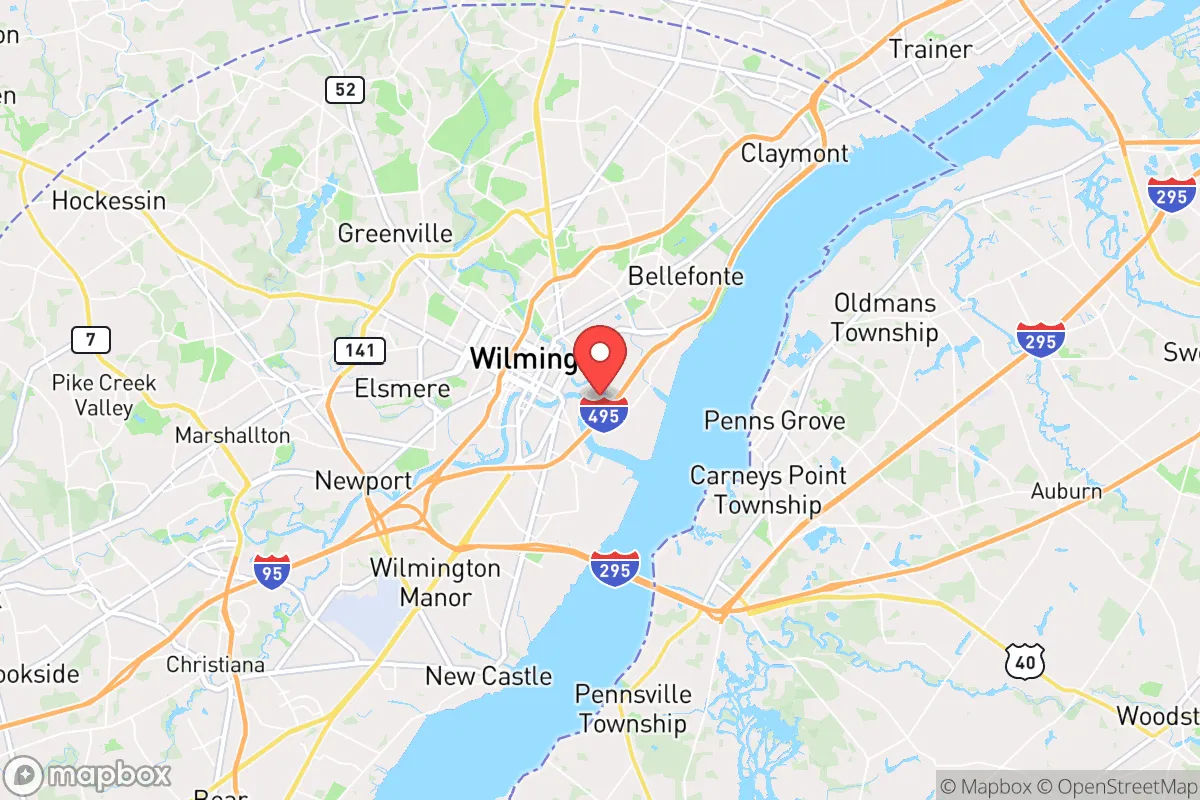
Personal Sovereignty in Wilmington, DE
Viable for self-reliance. Generally workable, though some barriers may limit total independence.
What does Personal Sovereignty tell us?
Personal Sovereignty measures your capacity for self-reliance and independence with minimal government friction. Higher scores mean fewer barriers between you and the way you want to live... but it assumes you have the space you need and good neighbors.
What does this tell us?
Personal Sovereignty measures your capacity for self-reliance and independence with minimal government friction. Higher scores mean fewer barriers between you and the way you want to live... but it assumes you have the space you need and good neighbors.
State Policy
Energy independence: Importer (2% of energy produced in-state)
Personal Liberty
Homesteading

Personal Liberty Analysis
Wilmington, Delaware, presents a complex picture for those prioritizing personal sovereignty, where the state’s historically business-friendly corporate laws clash with a dense, urban regulatory environment that can feel restrictive for individualists and preppers. As a strategic relocation consideration, the city offers a unique legal shell for asset protection through Delaware’s Court of Chancery, but daily life involves navigating a high tax burden, strict gun laws, and limited space for self-reliant living. For a conservative-leaning individual or family weighing autonomy against convenience, Wilmington demands a clear-eyed assessment of where the state’s power ends and your personal freedom begins.
Tax burden and regulatory posture: How Delaware’s policies affect your wallet and autonomy
Delaware’s tax structure is a double-edged sword for sovereignty-minded residents. On one hand, the state has no sales tax, which can reduce the cost of everyday purchases and prepping supplies like bulk food, tools, and ammunition. On the other hand, Wilmington residents face a combined state and local income tax rate that can exceed 6.6%, with the city itself imposing a 1.25% earned income tax on top of state rates. Property taxes in New Castle County are moderate, averaging around 0.55% of assessed value, but the state’s overall tax burden ranks in the middle of the pack nationally. For a prepper focused on financial independence, the lack of sales tax is a genuine win, but the income tax bite reduces the capital available for land, gear, or savings. Regulatory posture in Wilmington leans heavily toward state control: the city has strict rental licensing, building codes, and environmental regulations that can complicate off-grid modifications or even simple home repairs without permits. The state’s corporate-friendly reputation does not extend to individual homeowners—expect bureaucratic friction if you attempt to install solar panels, rainwater catchment, or a backup generator without navigating city approval processes.
Self-defense and gun law specifics: What Wilmington’s restrictions mean for your right to carry
For those who view firearm ownership as a cornerstone of personal sovereignty, Delaware’s gun laws are a significant downgrade from more permissive states. Wilmington, as the state’s largest city, operates under these same restrictions but with added urban enforcement pressures. Delaware requires a permit to purchase a handgun, which involves a background check, fingerprinting, and a 7-day waiting period. The state also has a “may-issue” concealed carry system, meaning local authorities have discretion in granting permits, and Wilmington’s police department has historically been cautious in approvals. Open carry is legal without a permit for long guns, but in a dense city, this invites unwanted attention and potential legal scrutiny. Magazine capacity is limited to 17 rounds for handguns and 15 for rifles under state law, which directly impacts preppers who prefer standard-capacity magazines for defensive scenarios. Stand-your-ground laws do not exist in Delaware; instead, the state imposes a duty to retreat in public spaces before using deadly force, which can complicate self-defense claims. For a survivalist mindset, these restrictions mean Wilmington is not a sanctuary for gun rights—you will face more hoops and less legal certainty than in states like Texas or Florida.
Self-reliance and homesteading viability: Lot sizes, zoning, and off-grid feasibility in Wilmington
Wilmington’s urban density severely limits traditional homesteading and off-grid living. The typical residential lot in the city is small—often less than 0.1 acres in older neighborhoods like Trolley Square or the Highlands—with zoning codes that prohibit livestock, extensive gardening, or major structural modifications without variances. Backyard chickens are technically allowed with a permit, but the city caps flock size at four hens and requires a 25-foot setback from neighboring structures, which is impractical on most standard lots. Rainwater collection is not explicitly prohibited, but state water rights laws complicate large-scale systems, and the city’s stormwater regulations require permits for any significant diversion. Solar panels are allowed but subject to historic district approvals in many areas, and battery storage for off-grid backup faces fire code restrictions. For a prepper seeking true self-reliance, Wilmington is a poor fit—you will be dependent on municipal water, grid electricity, and grocery stores. However, the surrounding New Castle County suburbs and rural areas like Hockessin or Middletown offer larger lots (0.5–2 acres) with more lenient zoning, where you can keep goats, install a well, and build a root cellar. If you must be near Wilmington for work, consider a 20–30 minute commute to these outer zones for any serious homesteading ambitions.
Personal liberties: Parental rights, medical autonomy, speech, and property protections
Delaware’s track record on personal liberties is mixed, with some protections and notable overreaches. Parental rights in education have been a flashpoint: the state mandates comprehensive sex education in public schools, and parents cannot opt out of all content—only specific lessons. School mask and vaccine mandates have been enforced in recent years, and Wilmington’s public school district (Red Clay Consolidated) has a history of strict health policies. Medical autonomy is similarly constrained—Delaware has a universal vaccine requirement for school attendance with limited religious exemptions, and the state’s health department has broad emergency powers that were exercised during the pandemic. Free speech is protected under the First Amendment, but Wilmington’s city ordinances restrict public demonstrations near schools, hospitals, and government buildings, and noise complaints can be used to shut down protests. Property rights are relatively strong for homeowners, but the city’s rental inspection program and code enforcement can feel intrusive, with fines for overgrown grass, peeling paint, or unapproved modifications. For a conservative individual, the overall liberty environment in Wilmington feels more managed than free—the state and city assume a regulatory role in many aspects of daily life that would be left to personal choice in less interventionist jurisdictions.
Compared to other mid-Atlantic cities, Wilmington offers a moderate level of personal sovereignty that falls short for serious preppers or libertarian-minded individuals. The lack of sales tax and strong corporate legal protections are genuine advantages, but they are outweighed by restrictive gun laws, limited homesteading potential, and a regulatory culture that prioritizes state control over individual autonomy. For a family or single person willing to live in the outer suburbs and commute, the calculus improves, but within city limits, you are trading sovereignty for convenience. If your priority is maximum personal freedom with minimal government interference, Wilmington is not the answer—look to states like New Hampshire or Idaho. But if you need the East Coast corporate infrastructure and can accept a managed liberty environment, the city can work with careful planning and a defensive legal posture.

* Values derived from national, state, county, city and local statistics and may differ in a specific area. Last updated: 2026-04-29T17:53:39.000Z
Narrative content on this page is AI-generated and may contain mistakes. Verify any details that matter before acting on them.
ReloMaps may earn a commission from affiliate links at no extra cost to you.

