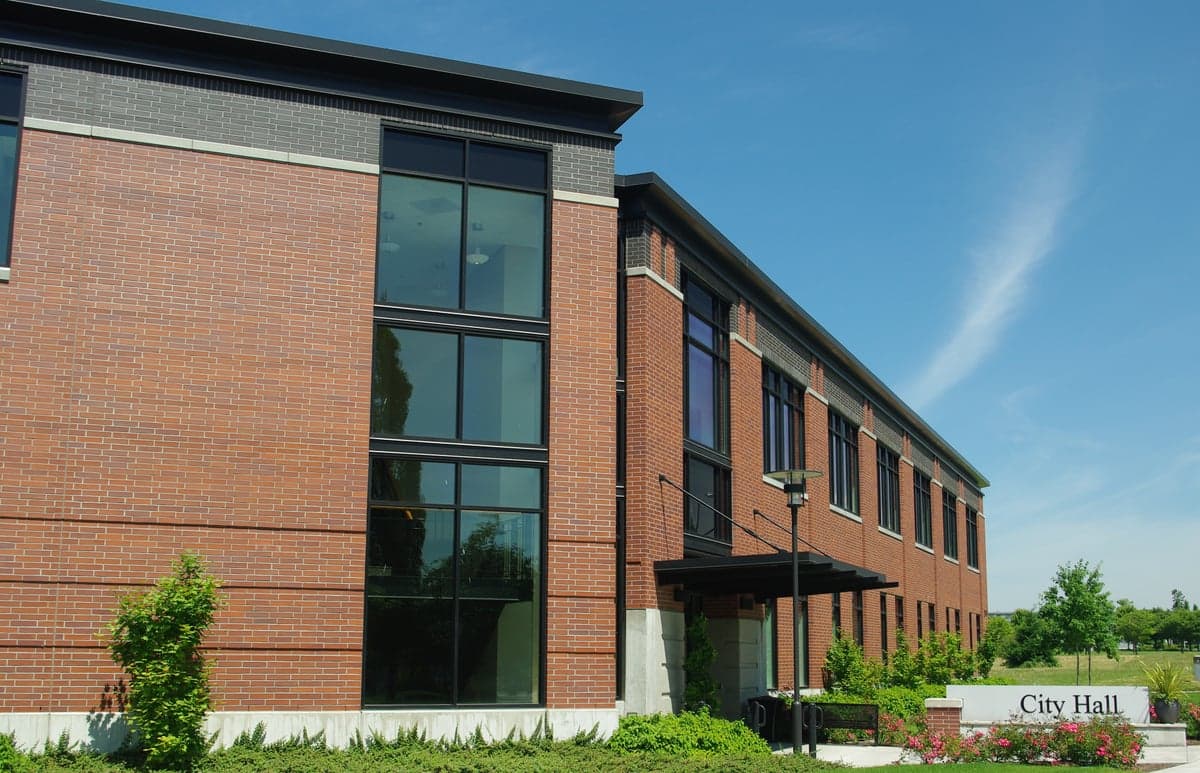
Photo: Wikipedia
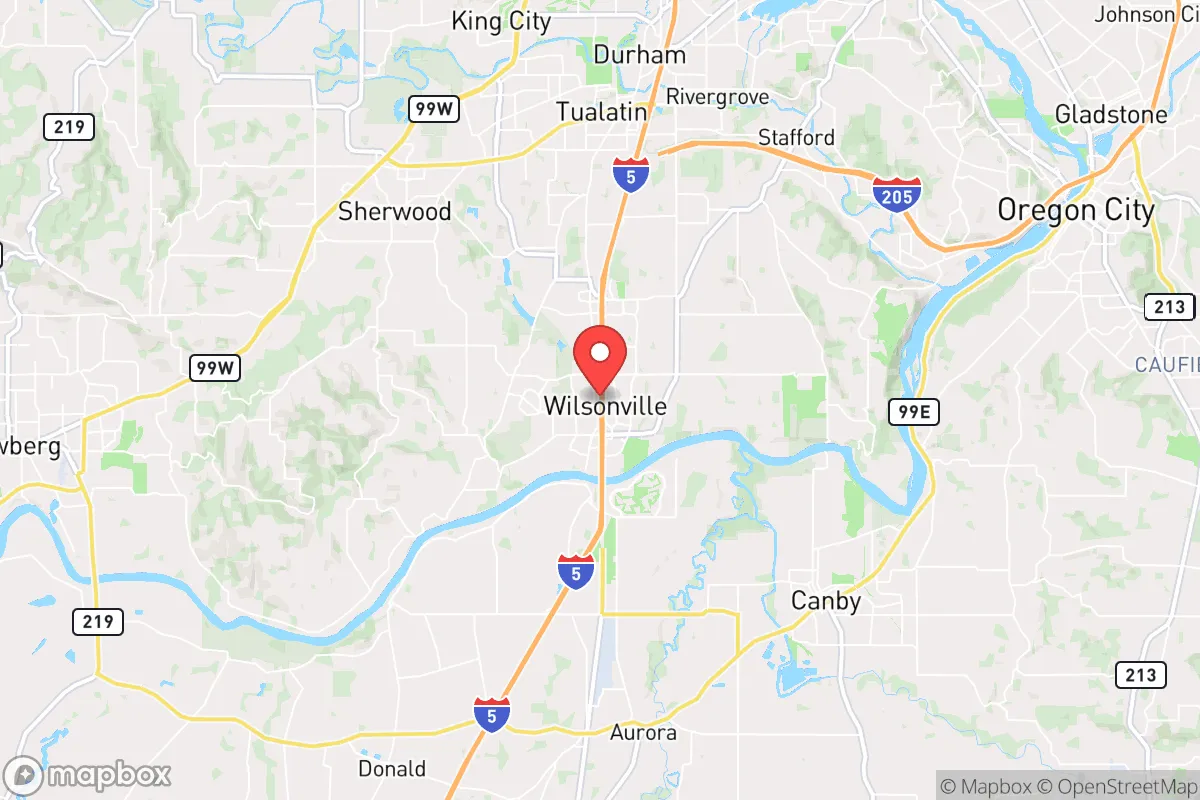
Personal Sovereignty in Wilsonville, OR
Viable for self-reliance. Generally workable, though some barriers may limit total independence.
What does Personal Sovereignty tell us?
Personal Sovereignty measures your capacity for self-reliance and independence with minimal government friction. Higher scores mean fewer barriers between you and the way you want to live... but it assumes you have the space you need and good neighbors.
What does this tell us?
Personal Sovereignty measures your capacity for self-reliance and independence with minimal government friction. Higher scores mean fewer barriers between you and the way you want to live... but it assumes you have the space you need and good neighbors.
State Policy
Energy independence: Importer (35% of energy produced in-state)
Personal Liberty
Homesteading

Personal Liberty Analysis
Wilsonville, Oregon, presents a mixed picture for those prioritizing personal sovereignty, where the state's progressive legal framework often collides with the town's more pragmatic, suburban character. While Oregon's overall regulatory environment leans heavily toward collective governance, Wilsonville's specific geography—a fast-growing corridor between Portland and Salem—offers strategic advantages for those seeking to maintain autonomy without complete isolation. The reality is that personal freedom here requires constant vigilance against state-level overreach, particularly in areas of property rights, self-defense, and medical choice, though the local community's ethos of self-reliance provides a meaningful counterbalance.
Tax burden and regulatory posture in Oregon's corridor
Oregon's tax structure is a double-edged sword for sovereignty-minded individuals. There is no state sales tax, which preserves purchasing power and simplifies transactions, a clear win for those who resent government taking a cut of every exchange. However, the trade-off comes in the form of one of the highest state income tax rates in the country, with a top marginal rate of 9.9% that kicks in at relatively modest income levels. Property taxes in Wilsonville are moderate by national standards but are subject to the state's unique compression system, which can limit local control over rates. The regulatory posture in Oregon is characterized by extensive land use planning under Senate Bill 100, which imposes strict urban growth boundaries that constrain development and property rights. For a prepper or survivalist, this means that buying land with the intention of building independent infrastructure requires navigating a dense web of permits and restrictions, particularly around water rights, septic systems, and building codes. The state's regulatory appetite for environmental and labor mandates also adds friction to any attempt at self-sufficient enterprise or homesteading.
Self-defense and gun law specifics in a restrictive state
Oregon's gun laws have become increasingly restrictive, and Wilsonville residents must operate within this tightening framework. The state enacted Measure 114, which mandates universal background checks and requires a permit to purchase a firearm, though its implementation has been delayed by legal challenges. Magazine capacity is limited to 10 rounds for new purchases, and the state has a red flag law that allows for temporary seizure of firearms based on court orders. For those committed to self-defense, the practical reality is that obtaining firearms and ammunition requires more time, paperwork, and expense than in freer states. Concealed carry permits are issued at the county level—Clackamas County for Wilsonville—and the process is shall-issue, meaning applicants who meet criteria generally receive permits, but the training and background check requirements add layers of bureaucracy. Open carry is legal in most areas but becomes restricted in public buildings and certain zones. For the survivalist mindset, the key takeaway is that Oregon's legal environment treats the right to bear arms as a heavily regulated privilege rather than a fundamental right, and any serious preparation plan must account for these constraints.
Self-reliance and homesteading viability in a suburban growth zone
Wilsonville's zoning and lot sizes present significant challenges for those seeking true self-reliance. The city is largely built on suburban residential lots averaging one-quarter to one-half acre, which limits space for gardens, livestock, or water storage. Agricultural zoning exists in the surrounding unincorporated areas of Clackamas and Washington counties, but these parcels are expensive and subject to the state's strict farm use regulations. Off-grid living is effectively illegal within city limits, as all residences must connect to municipal water and sewer systems, and building codes require grid-tied electrical infrastructure. Rainwater collection is permitted but regulated, and solar panel installation requires permits and utility approval. For those serious about homesteading, the realistic approach is to purchase land in the nearby rural areas of Yamhill or Marion counties, where lot sizes of 5 to 20 acres are available and zoning is more permissive. However, even there, Oregon's land use laws limit the number of structures, restrict commercial activity, and require adherence to state-level environmental standards. The survivalist must view Wilsonville as a base of operations rather than a self-sufficient homestead, using its access to supply chains and medical facilities while maintaining a separate rural property for serious preparedness activities.
Personal liberties in a state with expanding government reach
Parental rights in Oregon have been a flashpoint, with state law increasingly asserting authority over educational and medical decisions. The state has mandated comprehensive sex education in public schools, and parents have limited ability to opt their children out of specific content. Medical autonomy for adults is also constrained, with Oregon having legalized assisted suicide and maintaining strict vaccine mandates for school attendance and healthcare workers. Free speech protections exist on paper, but local ordinances and state laws regarding hate speech, public assembly, and online conduct create a chilling effect for those expressing dissenting views on controversial topics. Property rights are perhaps the most eroded area, with Oregon's land use system giving the state government significant control over what landowners can do with their property. The urban growth boundary effectively caps the value of rural land and forces development into designated areas, limiting the ability to build independent communities. For the sovereignty-minded individual, the cumulative effect is that Oregon treats personal liberty as a conditional grant from the state rather than an inherent right, requiring constant engagement with the political and legal system to preserve even basic freedoms.
Compared to states in the Mountain West or Southeast, Wilsonville offers a compromised version of personal sovereignty that demands strategic adaptation. The area's strengths lie in its economic opportunities, access to diverse supply chains, and a local culture that still values neighborly self-reliance despite state-level pressures. For the survivalist or prepper, the calculus is clear: Wilsonville can serve as a viable base for those willing to fight for their freedoms through local engagement, legal compliance, and careful property selection outside city limits. The overall sovereignty environment here is below average for the United States, but for those tied to the Pacific Northwest for family or career reasons, it represents one of the more workable options in a state that increasingly prioritizes collective control over individual autonomy. The key is to enter with eyes open, build relationships with like-minded locals, and maintain a low profile while pursuing independence within the system's constraints.

* Values derived from national, state, county, city and local statistics and may differ in a specific area. Last updated: 2026-05-14T20:57:32.000Z
Narrative content on this page is AI-generated and may contain mistakes. Verify any details that matter before acting on them.
ReloMaps may earn a commission from affiliate links at no extra cost to you.

