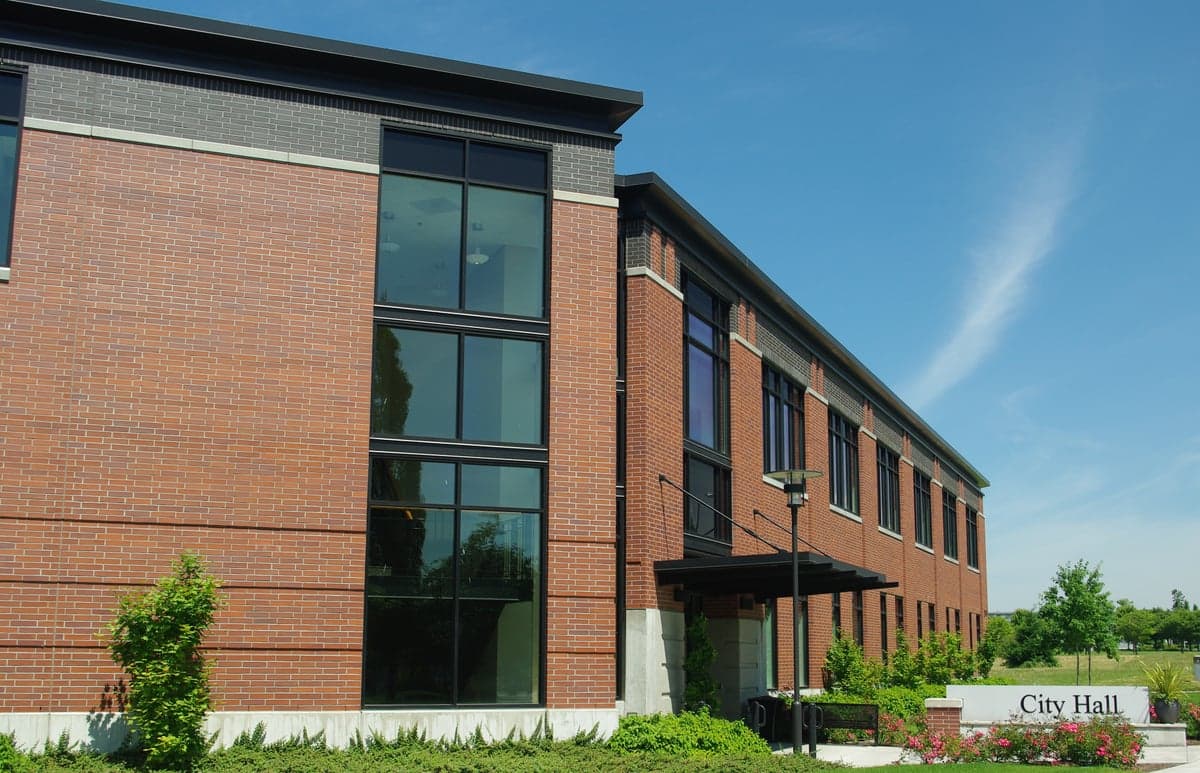
Photo: Wikipedia
Quality of Life in Wilsonville, OR
A high quality of life with strong walkability, manageable living costs, healthy neighborhood signals, and solid amenity access.
What does Quality of Life tell us?
Quality of Life blends cost of living, nearby amenities, socioeconomic signals, and neighborhood character. City-level scores represent the whole municipality; individual neighborhoods can differ.
What does this tell us?
Quality of Life blends cost of living, nearby amenities, socioeconomic signals, and neighborhood character. City-level scores represent the whole municipality; individual neighborhoods can differ.
Cost of Living
78% above national average
The Real Cost of Living in Wilsonville, OR for 2026
| Tier | Individual | Family (4) |
|---|---|---|
| Survival | $29k | $55k |
| Comfortable | $110k | $162k |
| Luxury | $158k+ | $245k+ |
| Elite (Top 5%) | $190k+ | $294k+ |
54%
The Area Signal
A metric tracking the socioeconomic signals of the area.
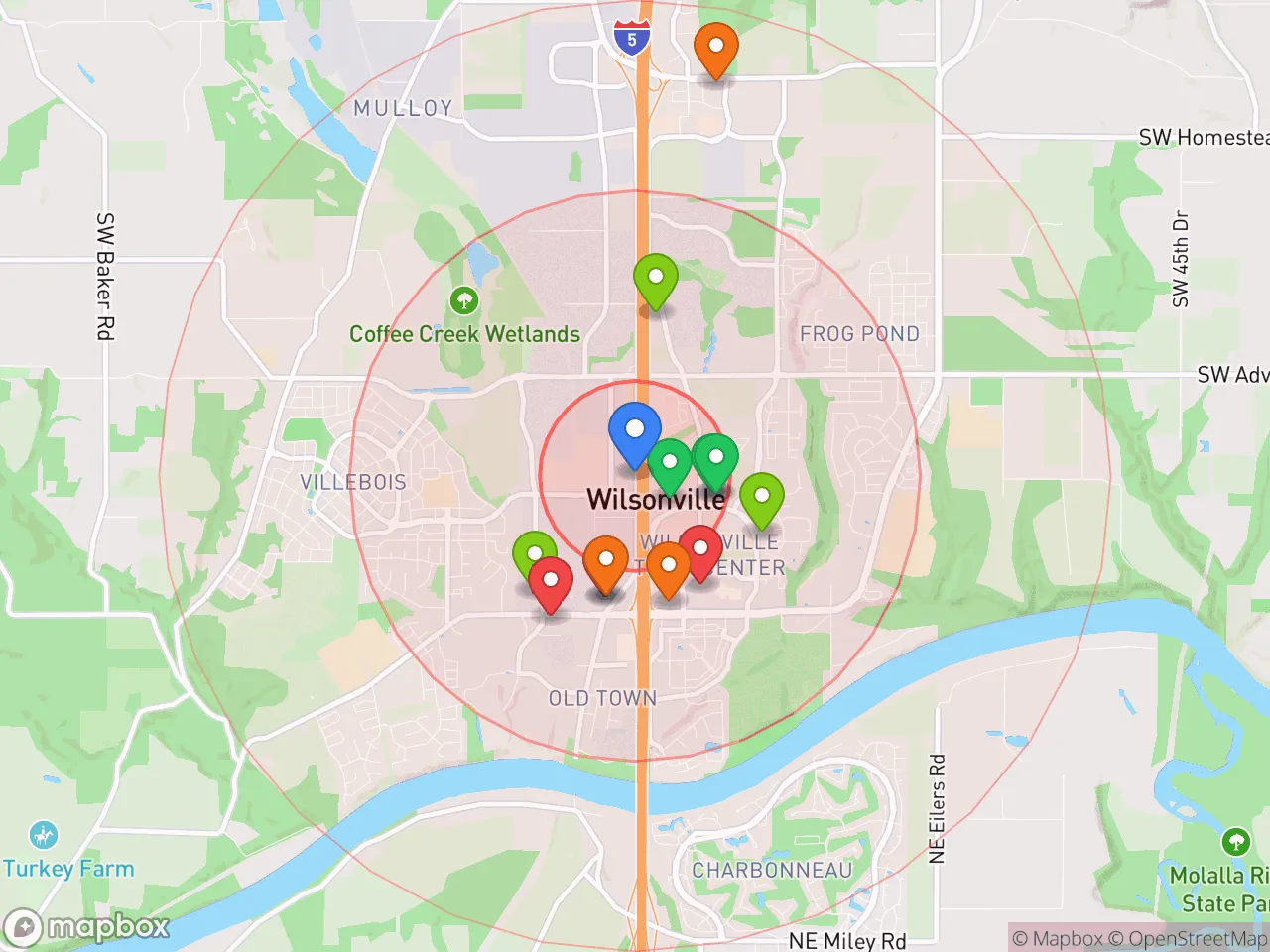
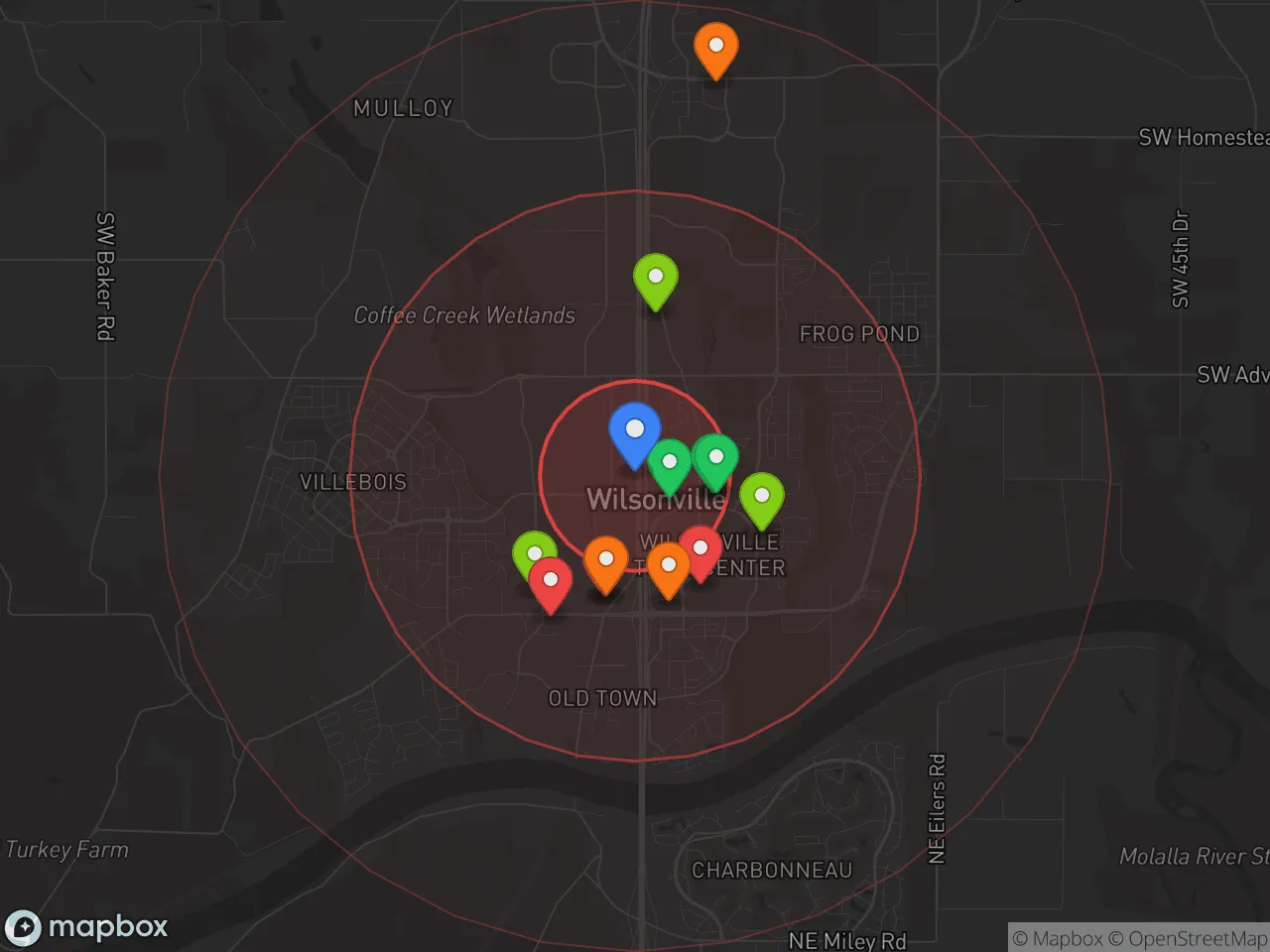
Hobbies
Explore the areaGroceries
6 within 10 miles
Gas
20 within 10 miles
Hospital
20 within 20 miles
Airport
PDX — Portland International
Post Office
USPS — Wilsonville, OR
Critical Amenities
Quality-of-Life Analysis
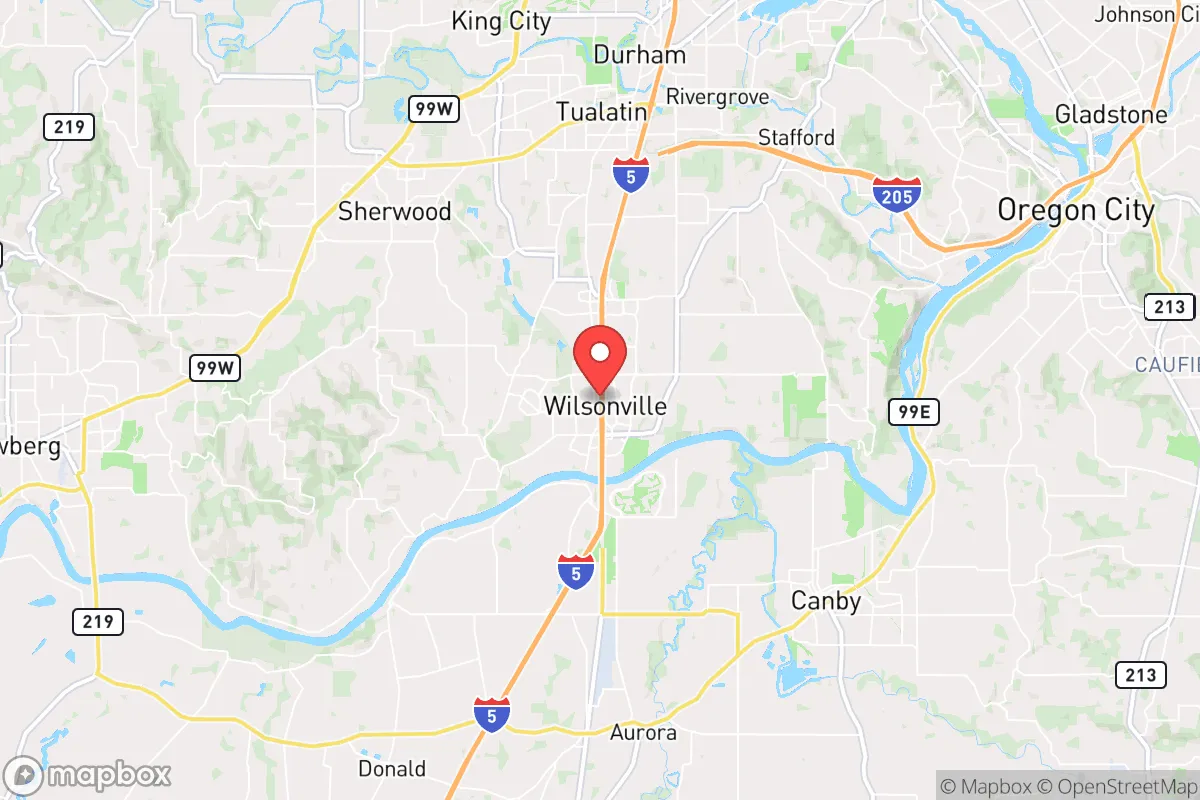
Wilsonville, Oregon, stands as one of the Portland metro area’s most affluent suburbs, with a cost-of-living index of 178 (78% above the U.S. average) that reflects its concentration of well-compensated professionals, tech workers, and executives. The city’s population of roughly 27,000 skews toward families and mid-career households drawn by strong local employment—major employers include Mentor Graphics (Siemens EDA), Daimler Trucks North America, and Xerox—and a suburban lifestyle that balances proximity to Portland (about 20 miles south) with a distinct small-city identity. Median household income exceeds $90,000, reinforcing Wilsonville’s reputation as a place where high earners trade lower housing costs than Portland proper for a quieter, amenity-rich environment.
Cost of living, housing prices, and how Wilsonville compares to Portland and Lake Oswego
Wilsonville’s cost of living is steep by national standards but moderate relative to its immediate neighbors. The median home value of $584,700 is roughly $100,000 less than Lake Oswego’s median and about $50,000 below Portland’s citywide figure, though it has risen sharply since 2020. Median rent of $1,839 undercuts Portland’s average by roughly $200, making Wilsonville a practical choice for renters who want access to the metro without downtown prices. The average commute of 25 minutes is shorter than the regional average, thanks to Wilsonville’s position at the junction of I-5 and OR-213 and its dedicated WES commuter rail line to Beaverton. Property taxes in Clackamas County hover near the state’s 1% effective rate, and no local sales tax applies. For buyers, the trade-off is clear: Wilsonville offers newer housing stock—many subdivisions built after 2000—and more square footage per dollar than Portland’s older, smaller homes, but at a premium over more distant suburbs like Woodburn or Canby.
What daily life is like for families: schools, parks, and local amenities
Daily life in Wilsonville centers on the West Linn-Wilsonville School District, consistently ranked among Oregon’s top districts, with Wilsonville High School posting graduation rates above 95% and strong Advanced Placement participation. The city’s 20+ parks include the 90-acre Memorial Park with sports fields, a dog park, and the Wilsonville Community Center, while the nearby Willamette River offers kayaking and fishing access at Boones Ferry Park. Retail anchors like the Wilsonville Town Center (Target, Fred Meyer, and a multiplex cinema) and the Charbonneau District provide everyday shopping without leaving city limits. Dining leans toward chain restaurants and fast-casual spots, though a handful of independent eateries—such as McMenamins Old Church & Pub and Brick House Coffee—add local character. The city’s bike and pedestrian network is improving, but most errands still require a car. Commuters appreciate the Wilsonville Transit Center, a hub for TriMet buses and the WES train, which cuts drive-time stress for those heading to Beaverton or downtown Portland.
Wilsonville is best suited for professionals and families who prioritize strong schools, newer housing, and a short commute over urban nightlife or walkable density. Empty-nesters downsizing from larger homes in Lake Oswego or West Linn also find value here, as do remote workers who want a quieter base with easy I-5 access. Renters and first-time buyers should budget carefully—the COL index of 178 means everyday expenses from groceries to healthcare run well above national averages—but for households earning $100,000 or more, Wilsonville delivers a balanced, low-crime suburban lifestyle with direct links to the region’s job centers.

Crime in Wilsonville, OR
Crime rates similar to the national median for U.S. locations.
Violent CrimeViolent Crime Analysis
Property CrimeProperty Crime Analysis
Crime Analysis
Wilsonville, Oregon, presents a mixed safety picture for prospective residents. The city’s violent crime rate of 306.9 incidents per 100,000 people sits slightly below the national average of 380 per 100K, while its property crime rate of 2,110.8 per 100K exceeds the national figure of 1,954 per 100K. However, these numbers must be weighed against the broader context of the Portland metropolitan area, where progressive district attorneys and judges have adopted policies that critics argue prioritize offender rehabilitation over public safety—a dynamic that directly affects Wilsonville’s crime environment.
Crime in context
Compared to Oregon’s statewide violent crime rate of 290 per 100K, Wilsonville is slightly higher, but still well below the U.S. average. Property crime, however, is a more pressing concern: the city’s rate is roughly 8% above the national benchmark and significantly higher than the Oregon average of 1,850 per 100K. Much of this property crime is driven by theft from vehicles and package theft, common issues in suburban communities near major highways like I-5. The presence of Clackamas County’s progressive justice system—including a district attorney who has publicly supported bail reform and reduced sentencing for nonviolent offenses—means that repeat property offenders often cycle back onto the street quickly, a pattern that frustrates local law enforcement and residents alike.
What residents experience
Daily life in Wilsonville is generally safe, but residents report a noticeable uptick in car break-ins and porch thefts, especially near shopping centers and apartment complexes. Violent crime is rare and typically confined to domestic incidents or isolated disputes, not random attacks. The Wilsonville Police Department emphasizes community policing and has a relatively low officer-to-resident ratio, but the department’s effectiveness is constrained by county-level policies that limit how long suspects can be held for low-level property crimes. For families and retirees, the main day-to-day concern is securing vehicles and packages rather than personal safety. Neighborhood watch programs are active in subdivisions like Charbonneau and Villebois, where residents coordinate to report suspicious activity.
Neighborhood-level variation in Wilsonville is modest. Older areas near the city center and along the Willamette River see slightly higher property crime, while newer master-planned communities like Coffee Creek have lower incident rates due to better lighting and private security patrols. Overall, Wilsonville’s crime profile is typical of a Portland suburb: moderate property crime driven by regional justice policies, with violent crime remaining below national averages. Prospective residents should factor in the metro area’s progressive judicial philosophy when evaluating long-term safety trends.
* Values derived from national, state, county, city and local statistics and may differ in a specific area. Last updated: 2026-05-14T20:57:32.000Z
Narrative content on this page is AI-generated and may contain mistakes. Verify any details that matter before acting on them.
ReloMaps may earn a commission from affiliate links at no extra cost to you.

