Photo: Wikipedia
Quality of Life in Winchester, VA
Above-average quality of iife. The area offers a reasonable cost of living, decent mobility, and a mix of neighborhood amenities.
What does Quality of Life tell us?
Quality of Life blends cost of living, nearby amenities, socioeconomic signals, and neighborhood character. City-level scores represent the whole municipality; individual neighborhoods can differ.
What does this tell us?
Quality of Life blends cost of living, nearby amenities, socioeconomic signals, and neighborhood character. City-level scores represent the whole municipality; individual neighborhoods can differ.
Cost of Living
13% above national average
The Real Cost of Living in Winchester, VA for 2026
| Tier | Individual | Family (4) |
|---|---|---|
| Survival | $21k | $39k |
| Comfortable | $63k | $93k |
| Luxury | $117k+ | $181k+ |
| Elite (Top 5%) | $139k+ | $215k+ |
69%
The Area Signal
A metric tracking the socioeconomic signals of the area.
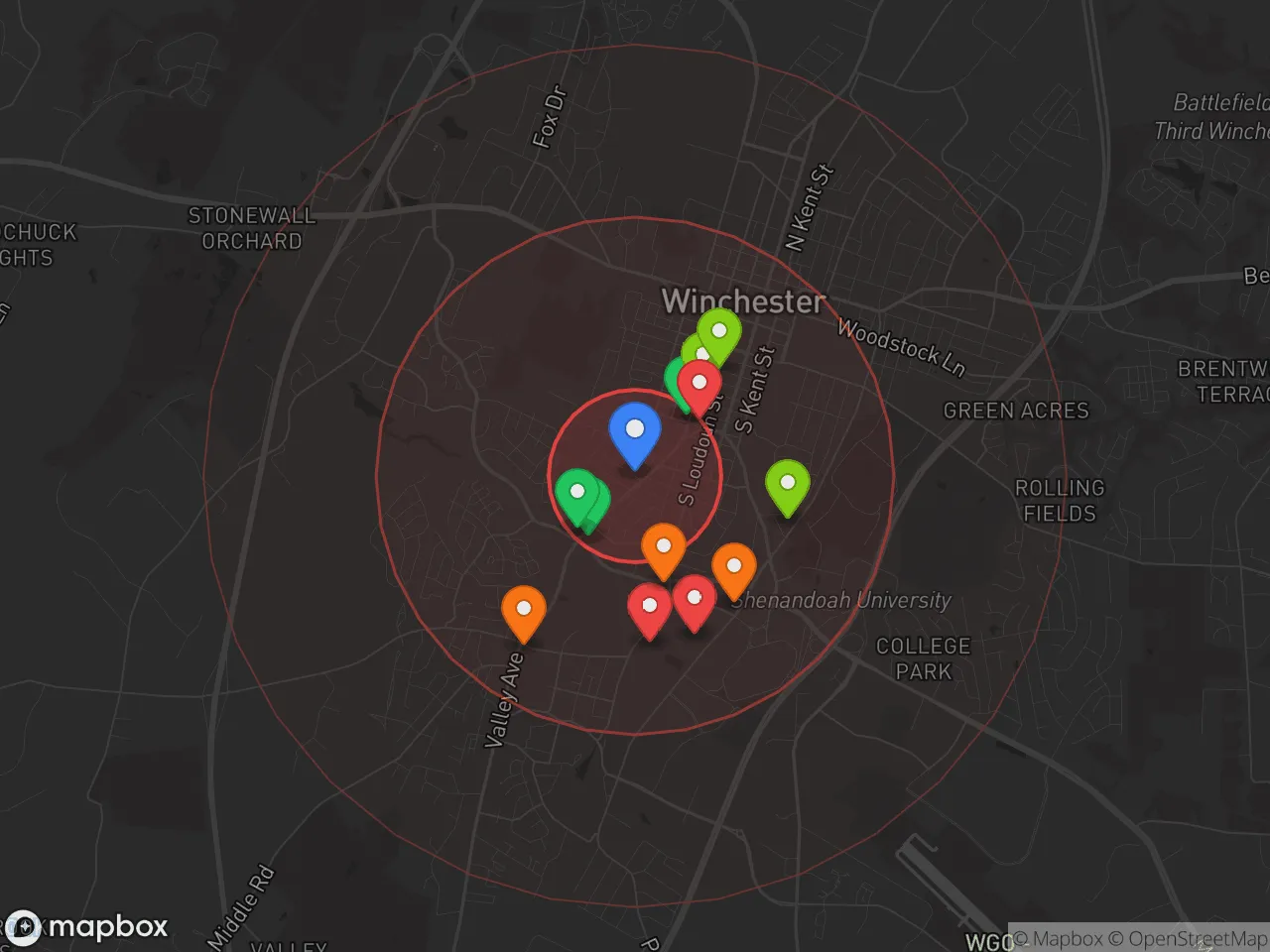
Hobbies
Explore the areaGroceries
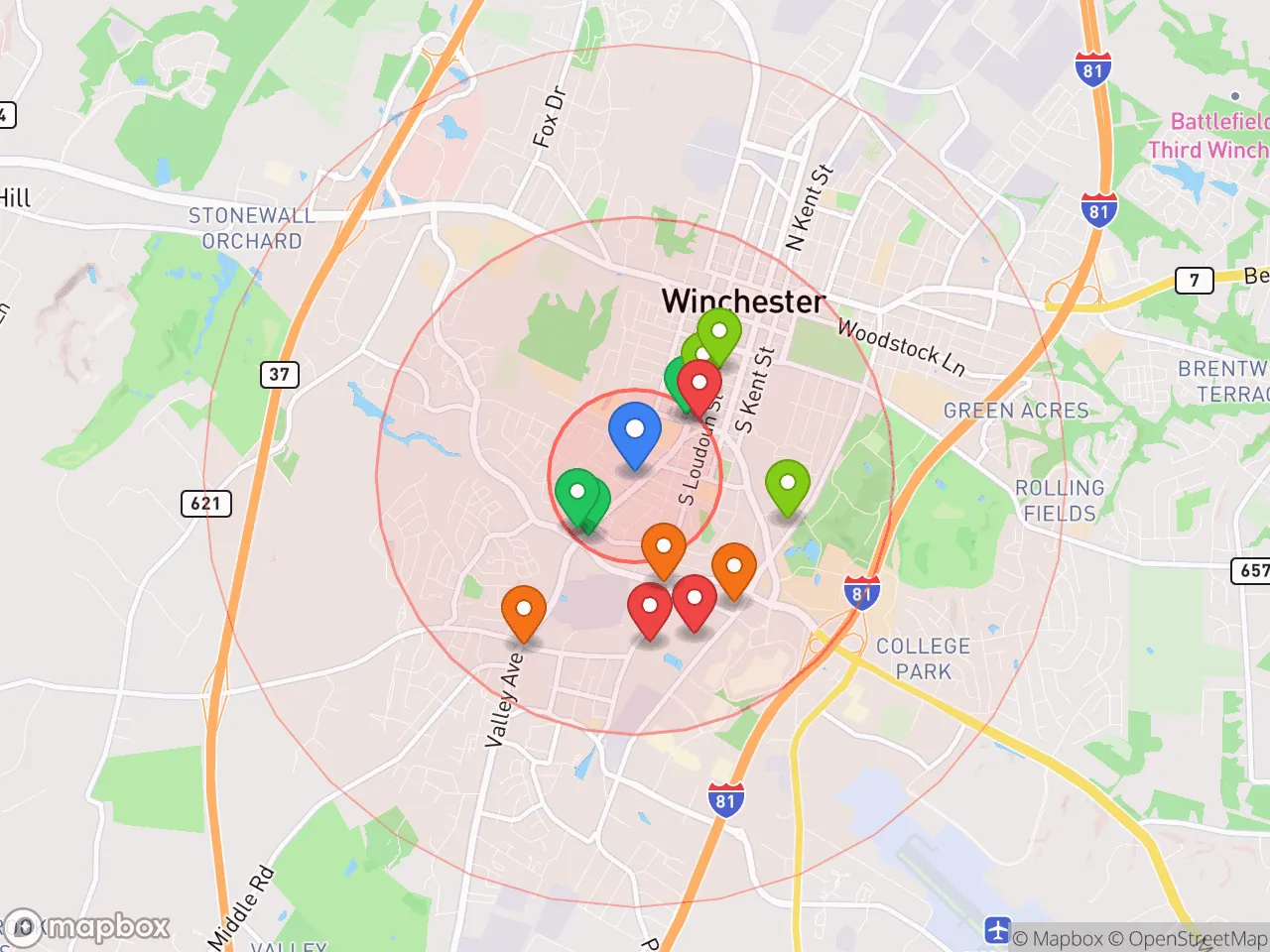
4 within 10 miles
Gas
20 within 10 miles
Hospital
3 within 20 miles
Airport
IAD — Washington Dulles International
Post Office
USPS — Winchester, VA
Critical Amenities
Quality-of-Life Analysis
Winchester, Virginia, presents a quality of life defined by moderate affluence and a strong sense of community, attracting a mix of young professionals, families, and retirees who value historic charm over suburban sprawl. With a cost of living index of 113 (13% above the national average), the city sits at a notable price premium compared to the broader Shenandoah Valley, yet remains significantly more affordable than the Washington, D.C. suburbs just 75 miles east. The population skews slightly older and more educated than the state average, with a growing number of remote workers drawn by the area's slower pace and lower housing costs relative to Northern Virginia.
Cost of living, housing affordability, and how Winchester compares to nearby areas
Winchester's housing market is the primary driver of its above-average cost of living. The median home value of $325,900 is roughly 15% lower than the Virginia state median but about 40% higher than in rural Frederick County just outside the city limits. Renters face a median monthly rent of $1,298, which is competitive with Harrisonburg (about $1,200) but notably cheaper than Leesburg (over $1,800). The average commute time of 20.7 minutes is a standout advantage—far below the 35-minute average for the D.C. metro area—allowing residents to live affordably without sacrificing hours to traffic. However, property taxes in Winchester (around 0.87% of assessed value) are slightly higher than in surrounding Frederick County (0.72%), a factor that can add several hundred dollars annually for homeowners. For renters, the market has tightened since 2020, with vacancy rates below 4%, pushing rents up roughly 8% over the past two years.
Local amenities, schools, and the daily rhythm of life in Winchester
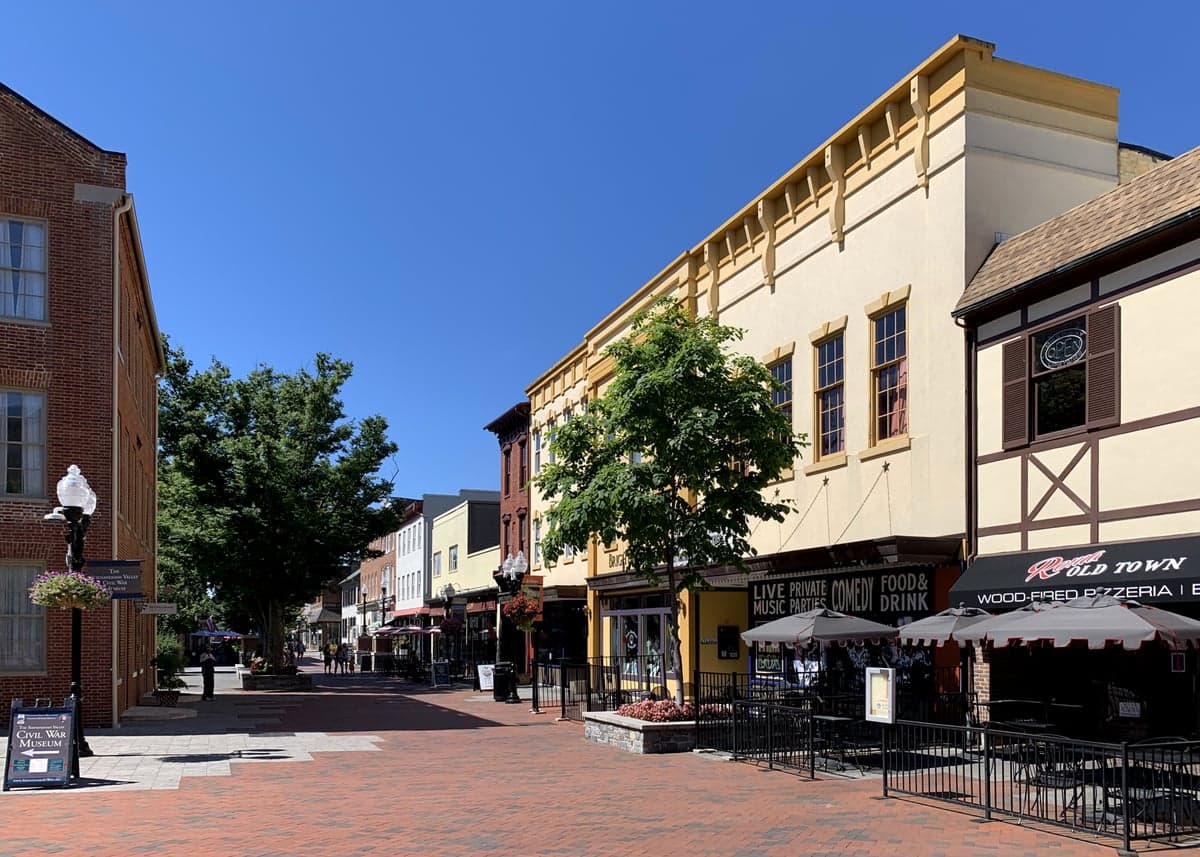
Daily life in Winchester revolves around its walkable historic downtown, anchored by the Old Town Walking Mall and a calendar of festivals including the Shenandoah Apple Blossom Festival each spring. The city's public schools, operated by Winchester Public Schools, serve about 4,000 students and generally perform above state averages in reading and math proficiency, though they lag behind the top-tier systems in nearby Loudoun County. For families, the presence of Shenandoah University adds cultural programming, concerts, and a Division III athletics scene that enriches the community calendar. Groceries and everyday shopping are concentrated along the Route 50/522 corridor, with a mix of national chains and local markets like the Winchester Farmers Market (April through October). Healthcare access is solid, anchored by Valley Health's Winchester Medical Center, a 445-bed regional referral center that employs over 3,000 people. The daily rhythm is notably quieter than in the D.C. suburbs—restaurants close earlier, nightlife is limited to a handful of breweries and wine bars, and the dominant outdoor activities are hiking in the nearby George Washington National Forest and exploring the Shenandoah River.
Winchester is best suited for those who prioritize a lower-stress commute, historic character, and a tight-knit community over the fast-paced amenities of a major metro area. Remote workers and retirees from Northern Virginia will find the most value, as they can leverage D.C.-area salaries against Winchester's more moderate housing costs. Families should weigh the solid but not elite public schools against the city's safe neighborhoods and abundant outdoor recreation. Those seeking vibrant nightlife, cutting-edge dining, or a highly diverse population may find Winchester too quiet. For anyone who values a walkable historic core, a 20-minute commute, and a cost of living that undercuts the D.C. suburbs by 30-40%, Winchester offers a compelling, grounded quality of life.

Crime in Winchester, VA
Generally safer than 71% of comparable U.S. locations.
Violent CrimeViolent Crime Analysis
Property CrimeProperty Crime Analysis
Crime Analysis
Winchester, Virginia, reports a violent crime rate of 208.5 incidents per 100,000 residents, which is notably lower than the national average but slightly above the Virginia state average. However, the city's property crime rate stands at 2,170.8 per 100,000, significantly exceeding both state and national benchmarks. This mixed safety profile places Winchester in a challenging position for prospective residents, particularly given its proximity to the Washington, D.C. metro area and the policy environment of the broader region.
Crime in context
Winchester's violent crime rate is roughly 40% below the national average of approximately 370 per 100,000, making it safer than many comparably sized cities. However, property crime—including burglary, theft, and motor vehicle theft—runs about 30% above the national average of roughly 1,950 per 100,000. This disparity is common in cities near large metro areas, where transient populations and economic pressures elevate property offenses. The city's location along the I-81 corridor also contributes to regional crime patterns, as property crimes often correlate with higher traffic and tourism flows.
What residents experience
For daily life, Winchester residents face a higher likelihood of property-related incidents than violent confrontations. Car break-ins, package thefts, and residential burglaries are the most frequently reported crimes, particularly in areas near the downtown core and along major thoroughfares like Valley Avenue. Violent crime is concentrated in specific pockets, with the majority of incidents involving domestic disputes or drug-related activity rather than random attacks. Residents consistently cite property crime as their top safety concern in community surveys, with many investing in home security systems and neighborhood watch programs.
A significant factor influencing Winchester's safety outlook is the judicial philosophy of the surrounding region. As part of the broader Northern Virginia and Shenandoah Valley legal system, Winchester falls under the jurisdiction of courts that have increasingly adopted progressive criminal justice reforms. These include reduced bail requirements, diversion programs for property offenders, and sentencing guidelines that prioritize rehabilitation over incarceration. While these policies aim to reduce recidivism, critics argue they result in shorter sentences and quicker release cycles for repeat property offenders, directly contributing to the city's elevated property crime rate. Residents should be aware that the local justice system's emphasis on offender rehabilitation may mean that individuals arrested for theft or burglary are returned to the community more rapidly than in more conservative jurisdictions.
Neighborhood-level variation
Safety conditions vary considerably across Winchester's neighborhoods. The historic downtown and areas near Shenandoah University experience higher foot traffic and correspondingly more property crime, while suburban developments like the Apple Blossom Corridor and residential zones west of I-81 report lower incident rates. The city's eastern neighborhoods, particularly those along the Route 7 corridor, see elevated property crime due to proximity to commercial districts and highway access. Prospective residents should consult the Winchester Police Department's online crime mapping tool and consider visiting neighborhoods at different times of day to assess real-world conditions. Overall, while Winchester's violent crime is manageable, the combination of high property crime and a progressive judicial environment warrants careful consideration for those prioritizing personal and property security.
* Values derived from national, state, county, city and local statistics and may differ in a specific area. Last updated: 2026-05-01T01:48:50.000Z
Narrative content on this page is AI-generated and may contain mistakes. Verify any details that matter before acting on them.
ReloMaps may earn a commission from affiliate links at no extra cost to you.

