Photo: Wikipedia
Political ClimatePolitical Climate in Winchester, VA
District shown is the primary district for this city’s centroid. Cities may span multiple districts.
Inherited from parent state — no local data available.
Local Political AnalysisPolitical Analysis of Winchester, VA
Winchester, Virginia, and the surrounding Frederick County have long been a reliably conservative area, anchored by a Cook PVI of R+12 that reflects a deep-rooted preference for limited government and personal responsibility. For decades, this was a place where folks minded their own business, the Second Amendment was a given, and local leaders focused on keeping taxes low and regulations light. But if you’ve been around as long as I have, you’ve seen the winds start to shift, especially as the D.C. exodus brings new neighbors who sometimes bring big-government habits with them. The core remains solidly red, but there’s a growing undercurrent of progressive influence that’s worth keeping an eye on.
How it compares
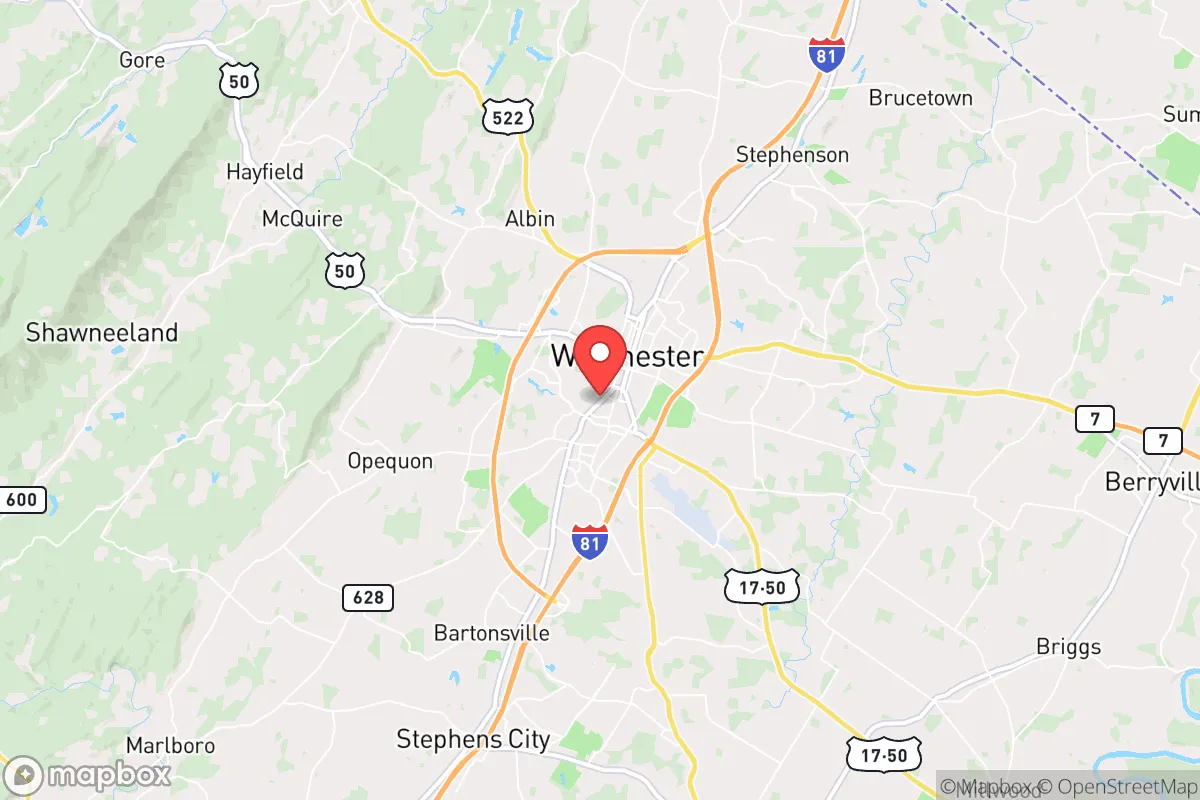
Winchester sits in a unique political pocket. Drive 20 miles east to Leesburg in Loudoun County, and you’re in a completely different world—one that’s gone from rural to deep blue in a generation, with all the zoning overreach and tax hikes that come with it. Head south to Harrisonburg, and you’ll find a more moderate but still left-leaning college town. Winchester, by contrast, has held the line. Frederick County consistently votes Republican by double digits, and the city council still leans conservative, though not as overwhelmingly as it did 20 years ago. The real contrast is with the surrounding rural areas like Clarke County or even parts of Warren County, where the conservative culture is even more pronounced and less diluted by newcomers. If you want to see what Winchester might become if it loses its way, just look at what happened to Front Royal when it started chasing grant money and woke policies—it’s a cautionary tale.
What this means for residents
For now, living in Winchester means you still enjoy a relatively light touch from local government. Property taxes are reasonable, business permits aren’t a nightmare, and you won’t find the kind of overbearing HOA-style ordinances that plague Northern Virginia. But the warning signs are there. The school board has seen some contentious battles over curriculum transparency and parental rights, and there’s a persistent push from a vocal minority to adopt “equity” policies that sound a lot like government overreach into how kids are taught. The biggest concern for long-time residents is the creeping influence of state-level mandates from Richmond, which have tried to preempt local control on everything from zoning to gun laws. If you value the freedom to live your life without a bureaucrat’s permission, Winchester is still a good bet—but you have to stay engaged, because the progressive playbook is the same everywhere: start with the schools, then the zoning board, then the tax code.
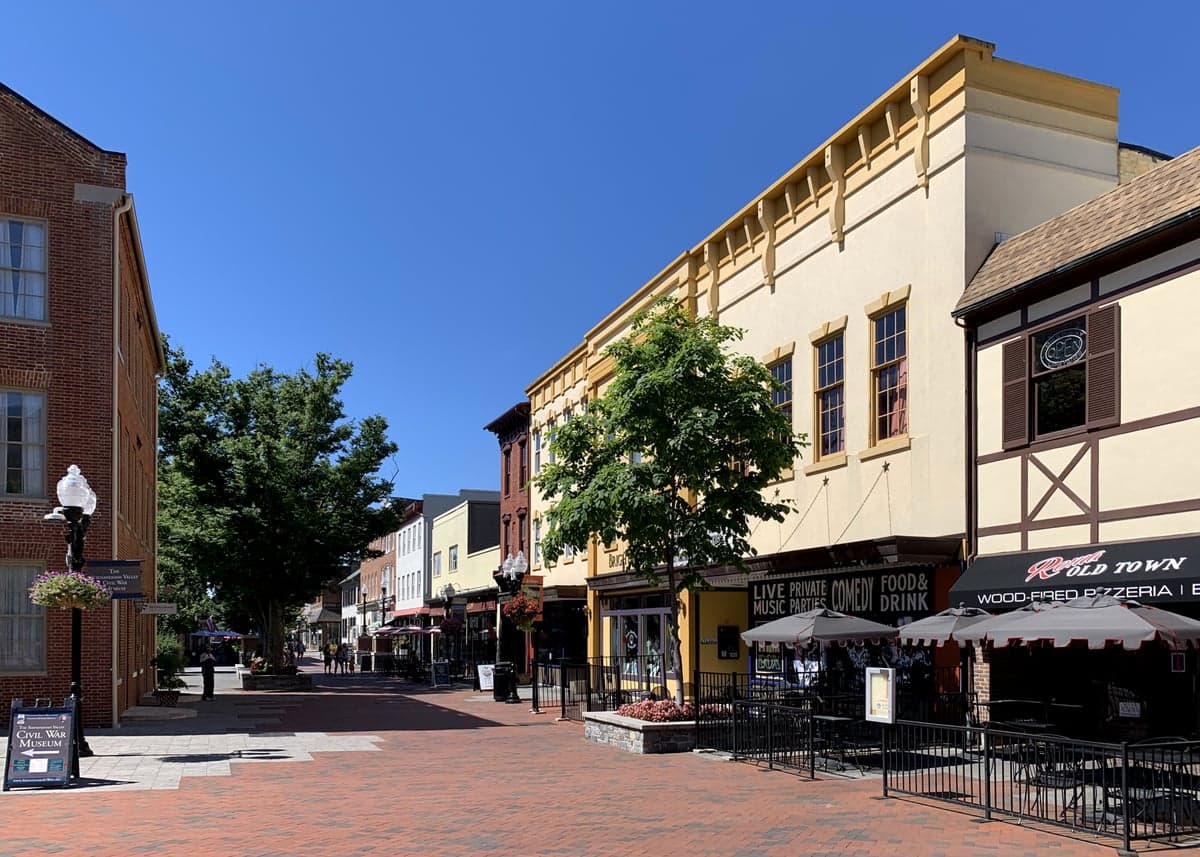
One cultural distinction that still holds strong here is the local gun culture. Winchester is a place where responsible gun ownership is the norm, not a political statement, and you’ll see more “Come and Take It” bumper stickers than “Coexist” ones. The city’s historic downtown has managed to stay charming without becoming a sanitized, corporate-friendly tourist trap, largely because the local business community still pushes back against over-regulation. That said, the long-term trajectory depends on whether the next wave of transplants assimilates or tries to remake the town in the image of the places they fled. For now, Winchester remains a solid conservative haven in a state that’s trending the wrong way, but it’s a fight that requires vigilance—because once you lose that local control, it’s nearly impossible to get back.

State Political ClimatePolitical Climate in Virginia
State Political AnalysisPolitical Environment in the State
Virginia has shifted from a reliably purple swing state to a solidly blue one over the past two decades, driven largely by explosive growth in the Washington, D.C. suburbs. The state’s overall partisan lean now favors Democrats by roughly 5-7 points in statewide races, a dramatic reversal from the 2000s when it voted Republican in four of five presidential elections. This transformation is almost entirely a story of population change: Northern Virginia’s population has surged by over 30% since 2010, bringing in a highly educated, affluent, and increasingly progressive electorate that now dominates the state’s political calculus.
Urban vs. rural divide
The political map of Virginia is a tale of two commonwealths. The urban crescent stretching from Arlington and Alexandria through Richmond to Norfolk and Virginia Beach is overwhelmingly Democratic, with Fairfax County alone delivering more votes than many rural districts combined. Northern Virginia is the engine: Loudoun County, once a Republican stronghold, flipped blue in the 2010s and now votes Democratic by double digits. Meanwhile, rural and exurban areas like Roanoke, Lynchburg, and the Shenandoah Valley remain deeply red, with many counties voting 70%+ Republican. The divide is starkest in the Hampton Roads region, where Virginia Beach’s military and conservative-leaning suburbs are increasingly being outvoted by the growing progressive population in Norfolk and Newport News. This geographic split means that statewide elections are effectively decided in the D.C. suburbs, leaving rural conservatives feeling politically powerless.
Policy environment
Virginia’s policy environment has shifted sharply left since Democrats took full control of state government in 2019. The tax burden is moderate but rising: the state income tax tops out at 5.75%, and property taxes vary wildly by locality, with Arlington and Alexandria imposing some of the highest rates in the state. The regulatory posture has become increasingly aggressive, particularly on environmental and labor issues. The Virginia Clean Economy Act of 2020 mandates a 100% carbon-free electricity grid by 2050, driving up energy costs and forcing early retirement of coal and natural gas plants. Education policy has been a flashpoint: the state eliminated its charter school cap in 2021 but has done little to expand school choice, and the Virginia Department of Education has pushed critical race theory-adjacent materials into K-12 curricula, sparking fierce parental backlash. Healthcare is dominated by the expansion of Medicaid under the Affordable Care Act, which now covers over 500,000 Virginians. Election laws have been loosened significantly: no-excuse absentee voting, same-day registration, and a permanent absentee voter list were all enacted after 2020, making Virginia one of the easiest states to vote in—but also raising concerns about election integrity among conservatives.
Trajectory & freedom
Virginia is becoming less free by any objective measure, particularly on Second Amendment and parental rights issues. The 2020 gun control package—including universal background checks, a red flag law, and a one-handgun-per-month limit—was the most aggressive in the South. The 2021 repeal of the state’s right-to-work law for public employees was a major blow to economic freedom. On the parental rights front, the 2022 “Model Policies” from the Virginia Department of Education effectively mandated transgender accommodation policies in schools without parental consent, leading to mass protests in Loudoun County and Chesterfield County. The 2023 election saw Governor Glenn Youngkin win on a parental rights platform, but the Democrat-controlled Senate blocked his efforts to restore school choice and limit transgender policies. Property rights have been eroded by aggressive zoning changes in Northern Virginia, where localities have imposed mandatory affordable housing quotas and density increases. Medical autonomy took a hit with the 2020 repeal of the state’s certificate-of-need laws for certain medical facilities, but the state still maintains heavy regulation on abortion, with a 26-week limit that is more restrictive than many blue states but less restrictive than most red ones.
Civil unrest & political movements
Virginia has been a battleground for political movements on both sides. The 2017 Unite the Right rally in Charlottesville remains a defining moment, leading to a statewide ban on firearms at public demonstrations and a push to remove Confederate monuments. The 2020 Black Lives Matter protests in Richmond saw the toppling of the Robert E. Lee statue, and the city has since become a symbol of progressive activism. On the right, the 2021 “Parents Matter” movement in Loudoun County and Fairfax County mobilized thousands of parents against school board policies on critical race theory and transgender accommodations. Immigration politics are relatively quiet compared to border states, but Northern Virginia’s sanctuary city policies—where localities refuse to cooperate with ICE detainers—have drawn criticism from conservatives. Election integrity remains a hot-button issue: the 2020 election saw no major fraud, but the 2021 gubernatorial race was decided by just 2 points, and many conservatives remain skeptical of the state’s mail-in voting system. The 2023 legislative session saw a failed attempt to create a voter ID law, and the issue is likely to resurface.
Projection
Over the next 5-10 years, Virginia will continue to drift leftward as Northern Virginia’s population growth shows no signs of slowing. The 2030 census is expected to shift two congressional seats from rural areas to the D.C. suburbs, further entrenching Democratic control. In-migration from blue states like New York and California is accelerating, particularly in Loudoun County and Prince William County, bringing voters who are even more progressive than current residents. The Republican Party’s only hope is to hold onto the exurban and rural vote while making inroads with Hispanic and Asian voters in Northern Virginia, but demographic trends are not favorable. A new resident moving in now should expect to see continued expansion of government programs, higher taxes, and tighter regulations on guns, energy, and education. The state’s economic competitiveness will likely suffer as businesses weigh the costs of compliance with progressive policies, though the presence of the federal government in Northern Virginia provides a buffer. For conservatives, the best-case scenario is a Republican governor in 2025 who can veto the worst legislation, but the long-term trajectory is clear: Virginia is becoming a blue state in the mold of Maryland or New Jersey.
For a new resident, the bottom line is this: if you value low taxes, gun rights, school choice, and limited government, Virginia is a state in decline. The rural areas and smaller cities like Roanoke and Lynchburg still offer a conservative lifestyle, but you will be fighting an uphill battle against the political machine in Richmond. If you are moving for a job in the D.C. area, be prepared for high housing costs, heavy traffic, and a political culture that is increasingly hostile to traditional values. The state’s natural beauty and historic charm remain, but the freedom to live as you see fit is eroding year by year. Choose your county carefully—and expect to be outvoted if you settle in the urban crescent.
* Values derived from national, state, county, city and local statistics and may differ in a specific area. Last updated: 2026-05-01T01:48:50.000Z
Narrative content on this page is AI-generated and may contain mistakes. Verify any details that matter before acting on them.
ReloMaps may earn a commission from affiliate links at no extra cost to you.

