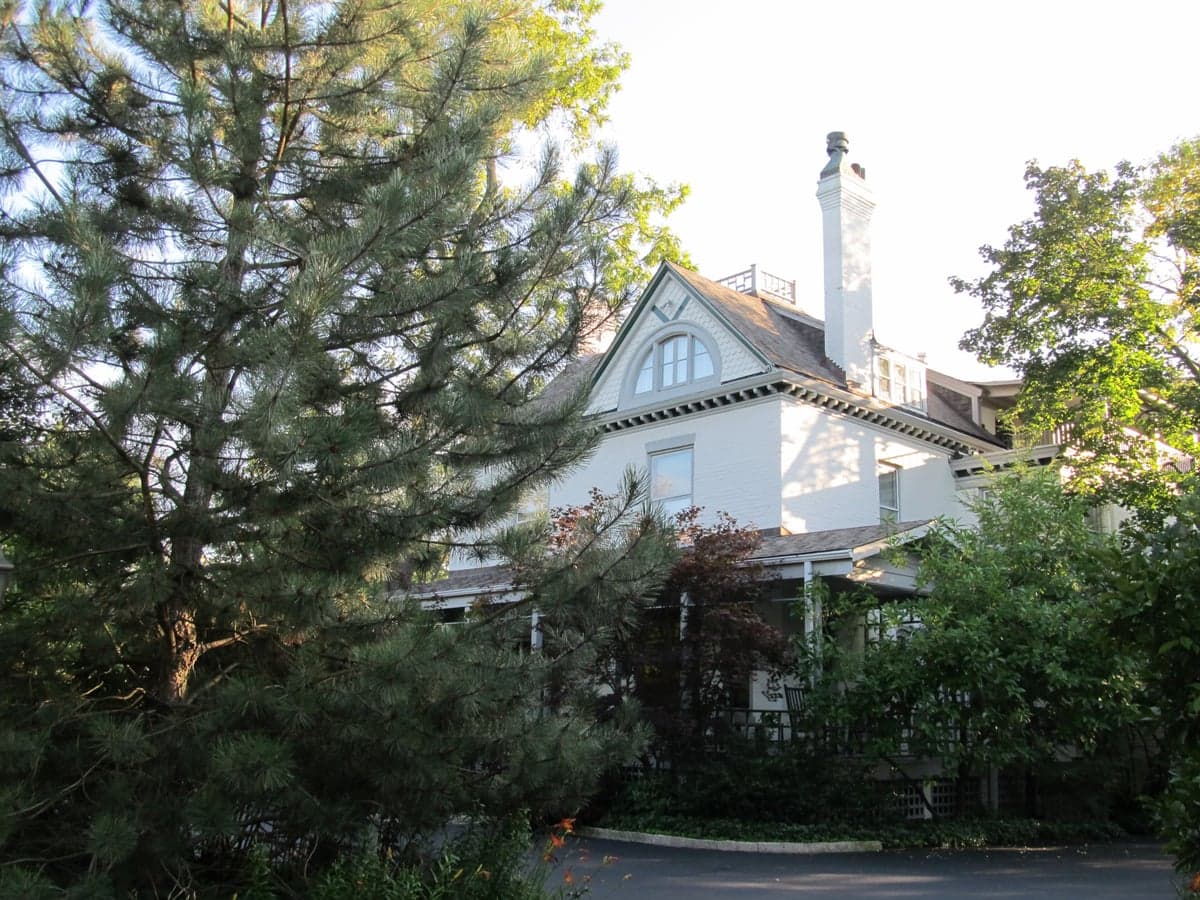
Photo: Wikipedia
Strategic Assessment of Winnetka, IL
Multiple tactical vulnerabilities. Population density, target proximity, or disaster risk are likely compounding. A retreat property and exit planning is required.
What does the Strategic Assessment tell us?
Our Strategic Assessment grades tactical survivability of an area. Major population centers, military targets, fallout zones, natural disasters, and border exposure all drive risk — lower exposure means a more defensible position in a crisis.
This is heavily inspired by Joel Skousen's Strategic Relocation book. Highly recommended you checkout the book ($)What does this tell us?
Our Strategic Assessment grades tactical survivability of an area. Major population centers, military targets, fallout zones, natural disasters, and border exposure all drive risk — lower exposure means a more defensible position in a crisis.
This is heavily inspired by Joel Skousen's Strategic Relocation book. Highly recommended you checkout the book ($)Strategic Pillars

Key Distances
Regional Safe Places
Below is our recommended "safe zones" in Illinois and the surrounding area based on our strategic heuristics. For most people, it's unrealistic to live in a “safe zone” full-time due to work, family or other personal reasons. They tend to be more rural. However, many of these areas are perfect for second homes and retreat properties that double as a vacation home or even a short-term rental.
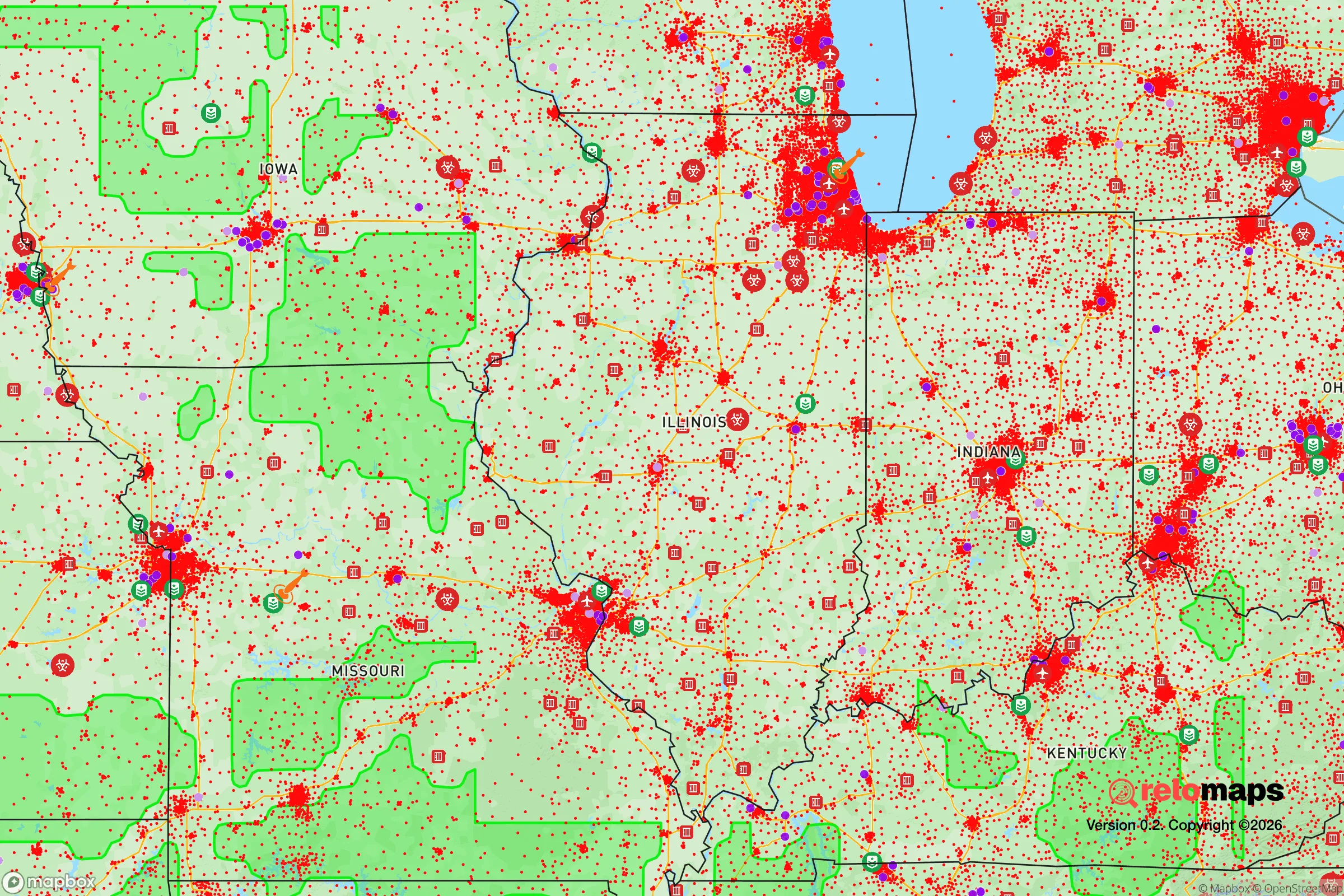
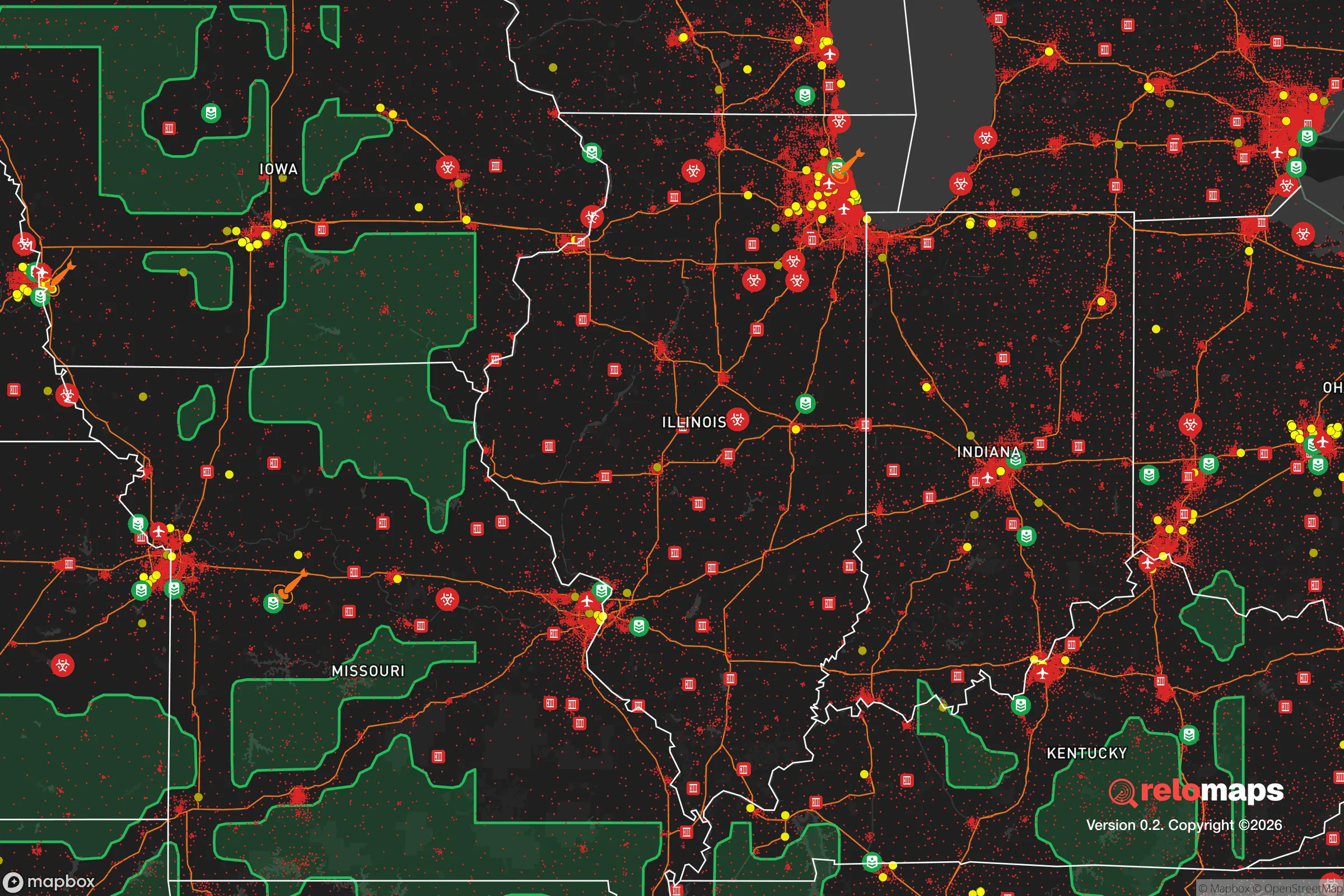


Important Note: For informational purposes only. This does not mean nothing bad ever happens in the green zones. Please use common sense. This is based on public data and modeled with AI. We tried to take a conservative approach but mistakes happen. We update this regularly as new information becomes available.
Solar Generator Recommendations
Backup power matters more here than in safer locations. We've picked three solar generators across budgets and capacity tiers — start with the budget unit if you only need a few essentials, or step up if you want to run a fridge and HVAC for days at a time.

Jackery Portable Power Station Explorer 300
Budget OptionPower on the Go: Weighing only 11 lbs, it's convenient to set up and store with book-sized foldable solar panels

BLUETTI Portable Power Station AC180
Designed for both indoor and outdoor scenarios, AC180 is highly capable as it has a robost capacity and continuous output power.

EF ECOFLOW DELTA Pro Ultra Power Station
Upgraded PickEcoFlow DELTA Pro Ultra is a whole-home energy system designed to grow with your family. Integrated with the Smart Home Panel 2, it scales to meet your evolving energy needs — keeping your home powered, intelligent, and secure through every stage of life.
We earn a commission, at no additional cost to you.
Strategic Assessment Analysis
Winnetka, Illinois, presents a complex strategic picture for the conservative prepper or survivalist. While its affluence and North Shore location offer certain logistical advantages, its proximity to Chicago—a major population center and likely epicenter of any large-scale civil unrest or mass casualty event—introduces significant vulnerabilities. The village’s resilience is not found in its isolation, but in its ability to leverage local resources, community networks, and geographic chokepoints, provided a relocator understands the trade-offs between comfort and true strategic depth.
Geographic position and natural advantages for long-term stability
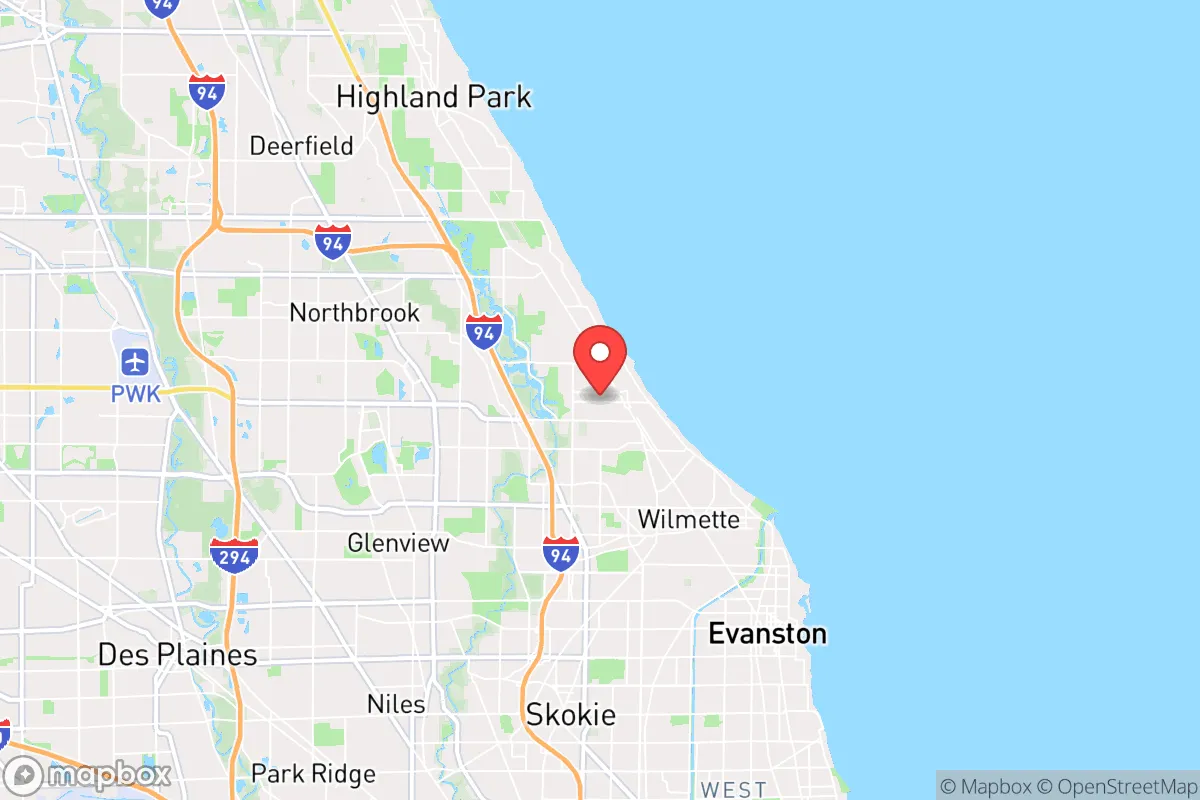
Winnetka sits on the western shore of Lake Michigan, roughly 16 miles north of downtown Chicago. This lakefront position provides a critical, non-potable water source—a massive strategic asset in any grid-down scenario where municipal water treatment fails. The lake’s sheer volume means that, with proper filtration and boiling, a resident can secure water indefinitely. The village itself is part of the North Shore, a string of affluent suburbs that benefit from a relatively low crime rate compared to the city, and a population that is, on average, older and more established. The terrain is flat, which is a double-edged sword: it makes foot or bike travel easy, but offers little natural cover or defensible high ground. The tree canopy, however, is dense in many residential areas, providing some visual screening from aerial observation. The village’s layout, with its winding streets and limited through-roads, creates natural chokepoints that could be monitored or defended by a prepared neighborhood watch. The proximity to the lake also moderates temperatures slightly, reducing the severity of winter survival challenges compared to inland areas.
Risks, exposures, and proximity to fallout-relevant landmarks
The single greatest strategic liability for Winnetka is its proximity to Chicago. In a mass casualty event—whether from a terrorist attack, a biological outbreak, or a nuclear detonation—the city would become a source of refugees, looters, and contaminated individuals. Winnetka is directly downwind of Chicago’s prevailing westerly winds, meaning fallout from a dirty bomb or a limited nuclear strike on the Loop would drift over the North Shore. The village is also within the blast radius of a major conventional attack on the city’s critical infrastructure, such as the O’Hare International Airport (12 miles southwest) or the region’s major rail and power hubs. The Edens Expressway (I-94) and the Metra commuter rail line run through or near Winnetka, providing evacuation routes for city dwellers but also funneling chaos directly into the village. The area’s high property values also make it a target for looting during civil unrest, as seen in nearby suburbs during the 2020 riots. The presence of wealthy, high-profile residents could also make the village a symbolic target for ideological attacks. Finally, the lake itself, while a water source, is also a potential vector for contamination from upstream industrial sites or a biological attack on the city’s water intake.
Practical resilience for a relocator: food, water, energy, and defensibility
For a relocator with a prepper mindset, Winnetka requires a proactive, rather than reactive, approach. Water is the strongest asset: Lake Michigan is an inexhaustible source, but you must have your own filtration system (e.g., a Berkey or a Sawyer filter) and a means to haul water from the shore to your home, as municipal pumps will fail. Food security is weak: The village has no significant agricultural land; it is a bedroom community. You would need to stockpile at least 3-6 months of food, as local grocery stores would be emptied within hours of a crisis. There are no large-scale farms or community gardens within walking distance. Energy is a vulnerability: The grid is reliable in normal times, but the area is prone to winter storms that can knock out power for days. A whole-house generator with a buried propane tank is a near-necessity. Solar is possible but limited by tree cover and winter cloud. Defensibility is moderate: The village’s layout, with its cul-de-sacs and limited access points, can be secured by a small, organized group. However, the homes themselves—many with large glass windows and open floor plans—are not designed for defense. A strategic relocator would want a home on a corner lot or at the end of a dead-end street, with a basement for shelter. The local police force is well-funded and professional, but in a widespread collapse, they will be overwhelmed. The best defense is a strong neighborhood association that coordinates watch schedules and shares resources. Medical care is excellent in normal times, with NorthShore University HealthSystem nearby, but in a crisis, you will need your own trauma kit and training, as hospitals will be overrun. The village’s location also offers a potential maritime escape route via the lake, if you have a boat and a destination in mind (e.g., Michigan’s Upper Peninsula).
The overall strategic picture for Winnetka is one of high comfort in peacetime, but high risk in crisis. It is not a bug-out location; it is a stay-put location for those who can afford to harden their home, stockpile supplies, and build a trusted local network. The advantages—lake water, community cohesion, and geographic chokepoints—are real, but they are offset by the overwhelming proximity to a major city that will become a disaster magnet. For the conservative relocator who values a strong local school system and a low-crime environment during normal times, and who is willing to invest heavily in self-sufficiency, Winnetka can work. But for those seeking true strategic depth—isolation, defensible terrain, and food independence—the North Shore is a compromise. It is a place to ride out a short-term crisis, not a long-term collapse. If you choose it, do so with eyes open: you are betting that the lake and your neighbors will be enough to insulate you from the storm that will inevitably come from the south.

* Values derived from national, state, county, city and local statistics and may differ in a specific area. Last updated: 2026-04-27T14:45:29.000Z
Narrative content on this page is AI-generated and may contain mistakes. Verify any details that matter before acting on them.
ReloMaps may earn a commission from affiliate links at no extra cost to you.

