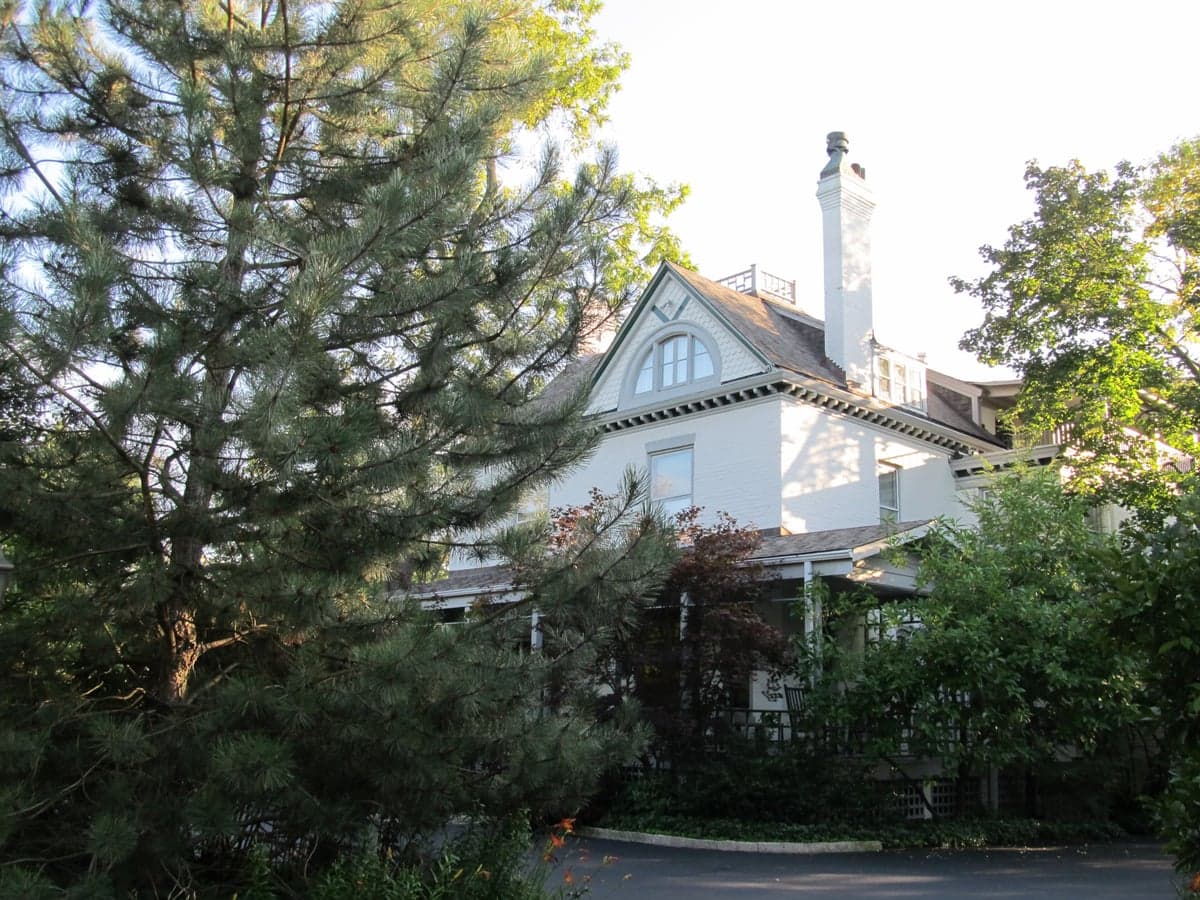
Photo: Wikipedia
Personal Sovereignty in Winnetka, IL
Viable for self-reliance. Generally workable, though some barriers may limit total independence.
What does Personal Sovereignty tell us?
Personal Sovereignty measures your capacity for self-reliance and independence with minimal government friction. Higher scores mean fewer barriers between you and the way you want to live... but it assumes you have the space you need and good neighbors.
What does this tell us?
Personal Sovereignty measures your capacity for self-reliance and independence with minimal government friction. Higher scores mean fewer barriers between you and the way you want to live... but it assumes you have the space you need and good neighbors.
State Policy
Energy independence: Importer (45% of energy produced in-state)
Personal Liberty
Homesteading

Personal Liberty Analysis
Winnetka, Illinois presents a complex and often contradictory environment for personal sovereignty, one that demands a clear-eyed assessment from anyone prioritizing autonomy, self-reliance, and minimal government overreach. While the village itself offers a high degree of local control and a community ethos of self-governance, it sits squarely within a state that has aggressively expanded its authority into nearly every domain of personal life—from taxation and property rights to self-defense and medical decision-making. For the survivalist or prepper, Winnetka is a study in trade-offs: exceptional local resources and community resilience are constantly undermined by a state-level apparatus that views individual liberty as secondary to collective mandates. The net result is a location that requires constant vigilance and proactive legal and financial planning to preserve even a baseline of personal freedom.
Tax burden and regulatory posture: the cost of living under state control
The most immediate and persistent challenge to personal sovereignty in Winnetka is the crushing tax burden, which directly reduces the resources available for self-reliant living. Property taxes in Cook County are among the highest in the nation, with effective rates often exceeding 2% of a home's assessed value annually—meaning a $1 million home can carry a tax bill of $20,000 or more per year. This is not a fee for services; it is a permanent extraction that funds a sprawling state bureaucracy, generous public employee pensions, and a school system that, while excellent, operates under state-mandated curricula and testing regimes that leave parents with little say. The state income tax, at a flat 4.95%, further erodes disposable income, and Illinois’s overall tax burden ranks near the top nationally. For the prepper, this financial drain is a direct threat to the ability to stockpile supplies, invest in land improvements, or maintain a financial buffer against emergencies. The regulatory posture is equally hostile to autonomy. Illinois has some of the strictest building codes, environmental regulations, and land-use rules in the Midwest. Permitting for even minor structural changes can be a months-long ordeal, and the state’s aggressive enforcement of energy codes and stormwater management mandates leaves little room for off-grid modifications without explicit government approval. The message is clear: the state owns a significant portion of your income and controls how you can use your property.
Self-defense and gun law specifics: navigating a hostile legal landscape
For those who view the right to keep and bear arms as a cornerstone of personal sovereignty, Illinois—and by extension Winnetka—is a deeply problematic jurisdiction. The state operates under a "may-issue" concealed carry framework that, while technically shall-issue after the Moore v. Madigan ruling, still imposes a burdensome 16-hour training requirement, a $150 application fee, and a 90-120 day processing time. More critically, the 2023 passage of the Protect Illinois Communities Act banned the sale and possession of a wide range of semi-automatic rifles, standard-capacity magazines over 10 rounds, and certain handgun features. This law is currently under legal challenge, but as of 2026, it remains in effect, meaning that acquiring or even possessing common defensive firearms is now a felony. The state also maintains a Firearm Owners Identification (FOID) card system, a separate database that creates a de facto registry and can be revoked without due process. For the prepper, this means that the defensive capabilities available in a free state like Texas or Florida are simply illegal here. Self-defense in the home is still legally protected under the Castle Doctrine, but Illinois has no "Stand Your Ground" law, imposing a duty to retreat in public spaces. The practical reality is that Winnetka residents must rely on less-lethal options, legal compliance strategies, and community-based security networks—all while the state actively works to disarm law-abiding citizens.
Self-reliance and homesteading viability: lot sizes, zoning, and off-grid feasibility
Winnetka’s physical environment offers a mixed bag for those seeking self-reliance. The village is characterized by large, wooded lots—typically half an acre to several acres—which provide significant privacy and space for gardening, small-scale livestock (chickens are generally permitted), and rainwater collection. The soil is fertile, and the climate supports a robust growing season from April to October. However, the zoning code is restrictive. The village strictly enforces setback requirements, building height limits, and aesthetic standards through its Architectural Review Board. Off-grid systems like solar panels are permitted but must be hidden from street view, and battery storage is subject to fire code inspections. Composting toilets and greywater systems are not explicitly prohibited but require a variance that is rarely granted. The village’s water supply comes from Lake Michigan via the City of Chicago, meaning residents have no control over their primary water source and are subject to rate increases and treatment decisions made miles away. For the serious homesteader, the lot sizes are a major asset, but the regulatory overhead is a constant friction. A more viable path for self-reliance in Winnetka is to use the property as a base for financial independence—growing food, raising small animals, and maintaining a workshop—while accepting that true off-grid living is effectively illegal within village limits.
Personal liberties: parental rights, medical autonomy, speech, and property
On the spectrum of personal liberties, Winnetka and Illinois present a stark divide between local culture and state law. Parental rights are under active assault. Illinois was one of the first states to mandate that public schools cannot notify parents if a child changes their gender identity or pronouns, effectively creating a secrecy policy that undermines the family unit. The state also mandates comprehensive sex education that includes topics many conservative parents find objectionable, with no opt-out for individual lessons—only for the entire program. Medical autonomy has been severely curtailed. Illinois has some of the most aggressive vaccine mandates in the country, including for school attendance, and during public health emergencies, the governor has broad authority to mandate treatments. The state also maintains a prescription drug monitoring program that tracks all controlled substance prescriptions, creating a de facto medical database. Free speech is nominally protected, but Illinois has a broad hate speech statute and a history of using "disorderly conduct" charges against protesters. Property rights are the most compromised. The state’s use of eminent domain is aggressive, and Cook County’s property tax system is notoriously opaque, with assessments that can spike unpredictably. For the prepper, the most concerning trend is the erosion of medical privacy and parental authority—both are essential for maintaining a family’s ability to make independent decisions about health, education, and lifestyle without state interference.
In the final analysis, Winnetka offers a high degree of personal sovereignty at the local level—strong community bonds, large private lots, and a culture of self-governance—but it is fundamentally constrained by a state government that views individual autonomy as a threat to its power. Compared to areas in the South or Mountain West, where property taxes are lower, gun laws are permissive, and parental rights are legally protected, Winnetka requires a defensive posture. The prepper or survivalist who chooses this area must be prepared to fight legal battles, pay a heavy tax premium, and accept that certain freedoms—like carrying a standard-capacity firearm or building an off-grid cabin—are simply not available. For those willing to work within these constraints, the community and land are exceptional. But for anyone seeking true sovereignty, the state of Illinois is a chain that will always pull tight.

* Values derived from national, state, county, city and local statistics and may differ in a specific area. Last updated: 2026-04-27T14:45:29.000Z
Narrative content on this page is AI-generated and may contain mistakes. Verify any details that matter before acting on them.
ReloMaps may earn a commission from affiliate links at no extra cost to you.

