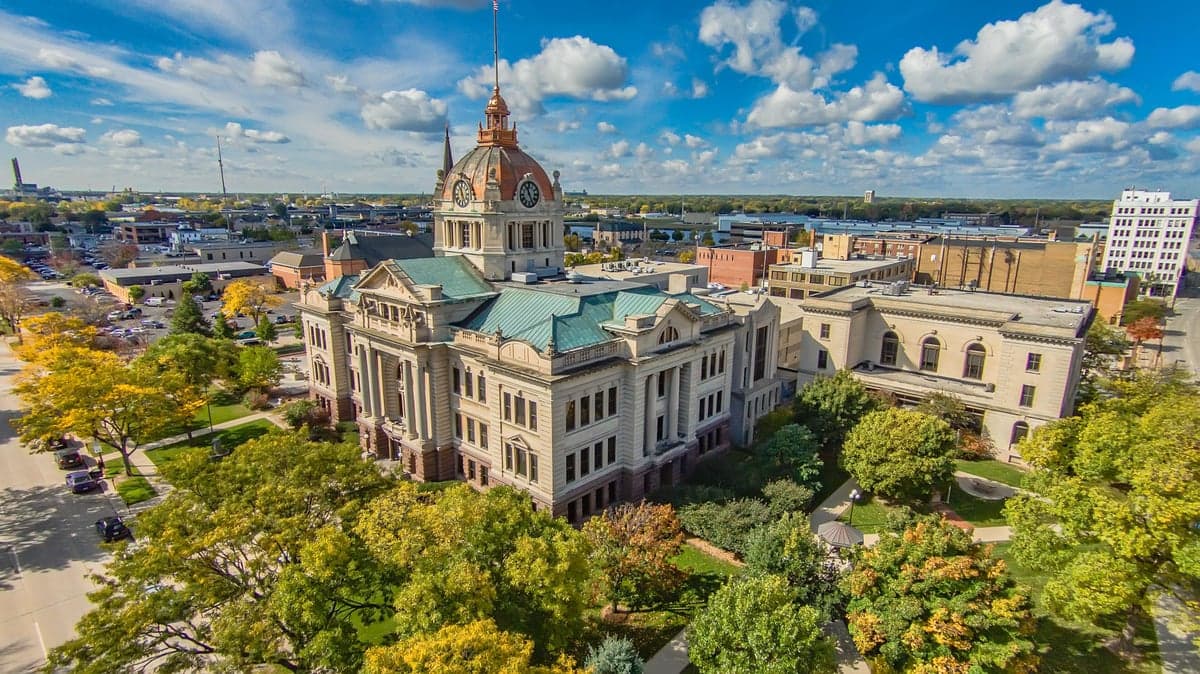
Photo: Wikipedia
Quality of Life in Brown County
A livable area that tracks near national norms for affordability, walkability, and neighborhood health.
What does Quality of Life tell us?
Quality of Life measures an area by evaluating factors like cost of living, nearby amenities, country club access, airport proximity, socioeconomic signals and neighborhood character. For large states, this is a general average — quality of life can vary dramatically between metro areas, suburbs, and rural communities within the same state.
What does this tell us?
Quality of Life measures an area by evaluating factors like cost of living, nearby amenities, country club access, airport proximity, socioeconomic signals and neighborhood character. For large states, this is a general average — quality of life can vary dramatically between metro areas, suburbs, and rural communities within the same state.
Cost of Living
15% below national average
110%
The Real Cost of Living in Brown County for 2026
| Tier | Individual | Family (4) |
|---|---|---|
| Survival | $16k | $29k |
| Comfortable | $48k | $70k |
| Luxury | $129k+ | $200k+ |
| Elite (Top 5%) | $152k+ | $236k+ |
Quality-of-Life Analysis
Brown County, Wisconsin offers a broad quality-of-life spectrum that ranges from the urban energy of Green Bay to the quiet farmlands and lakeside villages of its outer townships. The county’s character shifts noticeably within a 20-minute drive: residents in the city core enjoy dense amenities and a walkable downtown, while those in communities like Suamico or Wrightstown experience suburban sprawl and rural solitude. This mix attracts everyone from young professionals and university students to retirees seeking lower taxes and families wanting acreage without losing access to a metro job market.
Largest town(s) & population centers
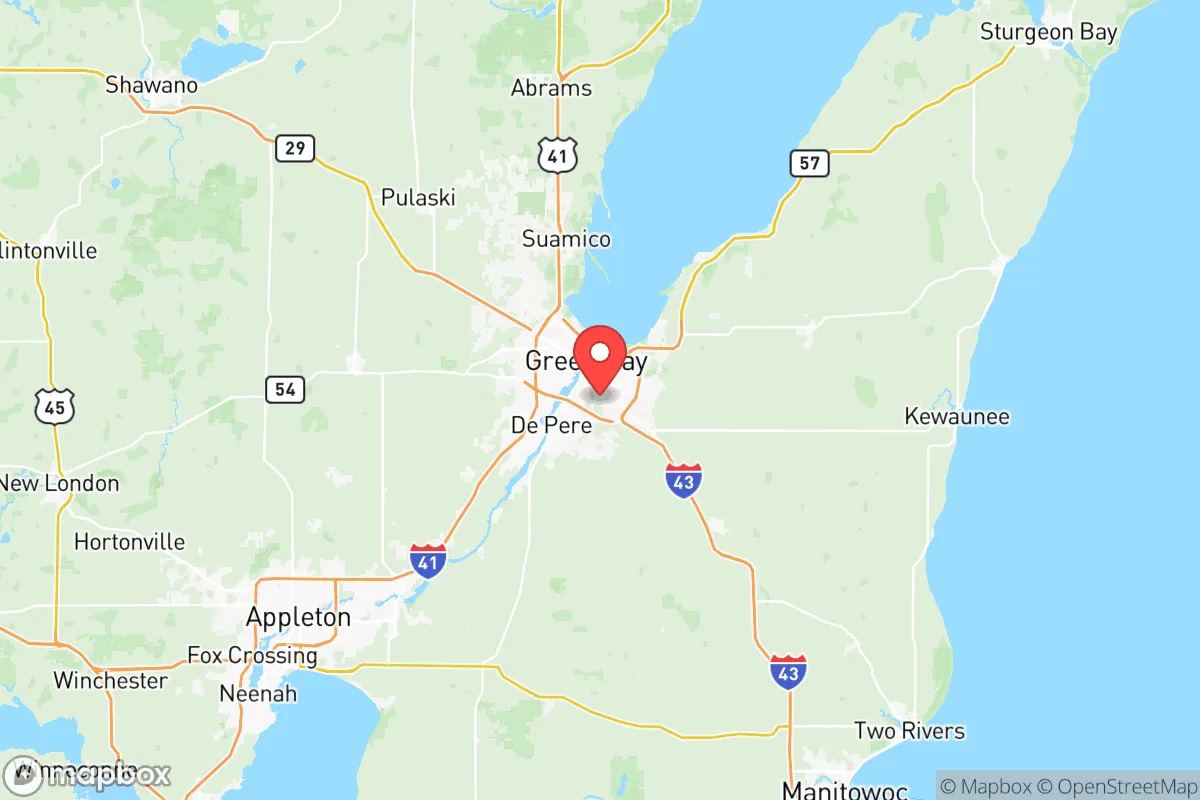
Green Bay is the county’s undisputed hub, home to roughly 107,000 residents and the anchor of the region’s economy. Daily life here revolves around the Lambeau Field corridor, the University of Wisconsin-Green Bay campus, and a growing downtown scene with breweries, the KI Convention Center, and the Fox River Trail. The city offers the highest density of retail, healthcare (Bellin Health, HSHS St. Vincent Hospital), and entertainment options in the county. Suburban towns like Ashwaubenon (pop. 17,000) and De Pere (pop. 25,000) function as bedroom communities with strong school systems and their own commercial strips—De Pere’s historic downtown along the Fox River is particularly popular with families. Howard and Suamico (combined pop. ~25,000) round out the northern suburban ring, offering newer housing developments and easy access to Highway 41 for commutes averaging just 19 minutes countywide.
Smaller towns & rural pockets
Beyond the suburban ring, Brown County’s smaller communities preserve a distinctly rural character. Wrightstown (pop. 3,000) sits along the Fox River in the county’s southwest corner, known for its tight-knit village feel and the Wrightstown School District. Denmark (pop. 2,300) anchors the eastern farmlands near the Kewaunee County line, with a small downtown and strong agricultural ties. New Franken (unincorporated, ~3,500) and Greenleaf (unincorporated, ~700) are crossroads hamlets where residents live on acreage and commute to Green Bay or work in dairy farming. The unincorporated area of Champion, near the Brown/Calumet county line, is a quiet rural pocket with scattered homes and farmland. These areas lack the retail density of Green Bay but offer lower land prices and a slower pace of life, with residents often driving 15–20 minutes to reach a grocery store or pharmacy.
Cost & lifestyle range
The cost-of-living index for Brown County sits at 85 (100 = U.S. average), making it significantly cheaper than the national norm, but the spread within the county is notable. At the low end, older neighborhoods in Green Bay’s near-east side (e.g., the Broadway District) and parts of Ashwaubenon offer median home values around $245,900 and median rents of $973—well below the national median. These areas provide walkable access to jobs and amenities but may have older housing stock and higher property taxes relative to home value. At the high end, lakefront properties on Green Bay’s east shore (towns of Scott and Humboldt) and newer subdivisions in Suamico and Hobart push home values above $400,000, with larger lots and lower density. Rural areas like Wrightstown and Denmark sit in the middle: land is affordable (often $5,000–$10,000 per acre), but commuting costs and limited services offset the lower home prices. The average commute of 19 minutes is a key advantage—even residents in the most rural pockets can reach Green Bay’s job centers in under 30 minutes, a rarity in many Midwest counties.
Brown County works best for people who want a genuine choice between urban, suburban, and rural living without sacrificing job access. Young professionals and students gravitate to Green Bay’s core for nightlife and walkability; families settle in De Pere or Suamico for schools and space; farmers and hobbyists choose Wrightstown or Denmark for land and quiet. The county’s low cost of living and short commutes make it especially attractive to remote workers and retirees who want to stretch their dollars while staying close to a regional hospital and airport. Anyone seeking a true rural lifestyle with no metro ties should look farther north, but for those who want a balanced mix of city and country, Brown County delivers a rare range of options within a single, compact geography.

Crime in Brown County
Generally safer than 61% of comparable U.S. locations.
Violent CrimeViolent Crime Analysis
Property CrimeProperty Crime Analysis
Crime Analysis
Brown County, Wisconsin, reports a violent crime rate of 237.4 incidents per 100,000 residents and a property crime rate of 1,002.8 per 100,000, placing it slightly above the national average for property offenses but below the national violent crime average. The county’s overall safety picture is shaped by a mix of urban density in Green Bay, suburban communities like De Pere and Howard, and rural towns such as Wrightstown and Denmark. While the county is not among the most dangerous in Wisconsin, localized crime patterns and the influence of the local justice system warrant close attention from prospective residents.
Crime in context
Brown County’s violent crime rate of 237.4 per 100,000 is roughly 32% lower than the national average of about 380 per 100,000, but it is higher than the Wisconsin state average of approximately 290 per 100,000. Property crime in the county, at 1,002.8 per 100,000, exceeds both the national average (around 1,954 per 100,000) and the Wisconsin average (roughly 1,100 per 100,000), indicating that theft and burglary are more pressing concerns than violent offenses. Green Bay accounts for the majority of reported crime in the county, as the city’s population density and economic disparities drive higher incident numbers. In contrast, communities like De Pere and Suamico consistently report lower crime rates, often falling below both state and national averages for violent and property crime. The disparity between urban and suburban areas is significant: Green Bay’s violent crime rate is roughly double that of the county as a whole, while property crime in the city is also elevated. Brown County’s overall crime index is about 15% higher than the Wisconsin average, but this is largely attributable to the concentration of incidents in the county’s most populous city.
What residents experience
Residents of Brown County experience crime differently depending on where they live. In Green Bay, property crime—particularly motor vehicle theft and burglary—is the most common concern, with rates that can be 50% higher than in the surrounding suburbs. Violent crime in the city is concentrated in specific neighborhoods, including parts of the near-east side and areas near the downtown core, where incidents of assault and robbery are more frequent. De Pere and Howard are consistently cited as safer alternatives, with property crime rates roughly half of Green Bay’s and violent crime rates that are statistically negligible. In rural towns like Wrightstown and Denmark, crime is rare, and residents report feeling safe walking at night and leaving doors unlocked. However, the county’s justice system has come under scrutiny: Brown County’s district attorney and local judges have been criticized for progressive sentencing policies, including a preference for diversion programs and reduced bail for repeat offenders. Critics argue that these policies, while intended to reduce incarceration, have led to a revolving-door effect for property criminals and have undermined public confidence in the system. Residents in Green Bay have expressed frustration with the perceived leniency of the courts, particularly in cases involving theft and drug-related offenses, which some believe emboldens offenders and contributes to higher property crime rates.
Neighborhood-level variation is pronounced in Brown County. Ashwaubenon and Allouez are among the safest areas, with crime rates that are 60-70% lower than Green Bay’s average, making them popular choices for families and retirees. In contrast, parts of Green Bay’s east side and the area around the University of Wisconsin-Green Bay campus see elevated rates of theft and vandalism, driven by transient populations and student housing. The county’s rural towns, including Pulaski and Hobart, report negligible crime, though residents must travel farther for services. For those considering a move, the choice between urban, suburban, and rural living in Brown County directly correlates with exposure to crime, and the local justice system’s approach to prosecution and sentencing remains a point of concern for safety-conscious buyers.
* Values derived from national, state, county, city and local statistics and may differ in a specific area. Last updated: 2026-08-23T03:15:36.000Z
Narrative content on this page is AI-generated and may contain mistakes. Verify any details that matter before acting on them.
ReloMaps may earn a commission from affiliate links at no extra cost to you.

