
Photo: Wikipedia
Strategic Assessment of Brown County
Meaningful friction. Expect exposure to either population pressure, blast zones, or natural disaster risk. Consider buying a retreat property.
What does the Strategic Assessment tell us?
Our Strategic Assessment grades tactical survivability of an area. Major population centers, military targets, fallout zones, natural disasters, and border exposure all drive risk — lower exposure means a more defensible position in a crisis.
This is heavily inspired by Joel Skousen's Strategic Relocation book. Highly recommended you checkout the book ($)What does this tell us?
Our Strategic Assessment grades tactical survivability of an area. Major population centers, military targets, fallout zones, natural disasters, and border exposure all drive risk — lower exposure means a more defensible position in a crisis.
This is heavily inspired by Joel Skousen's Strategic Relocation book. Highly recommended you checkout the book ($)Strategic Pillars

Key Distances
Strategic Assessment Analysis
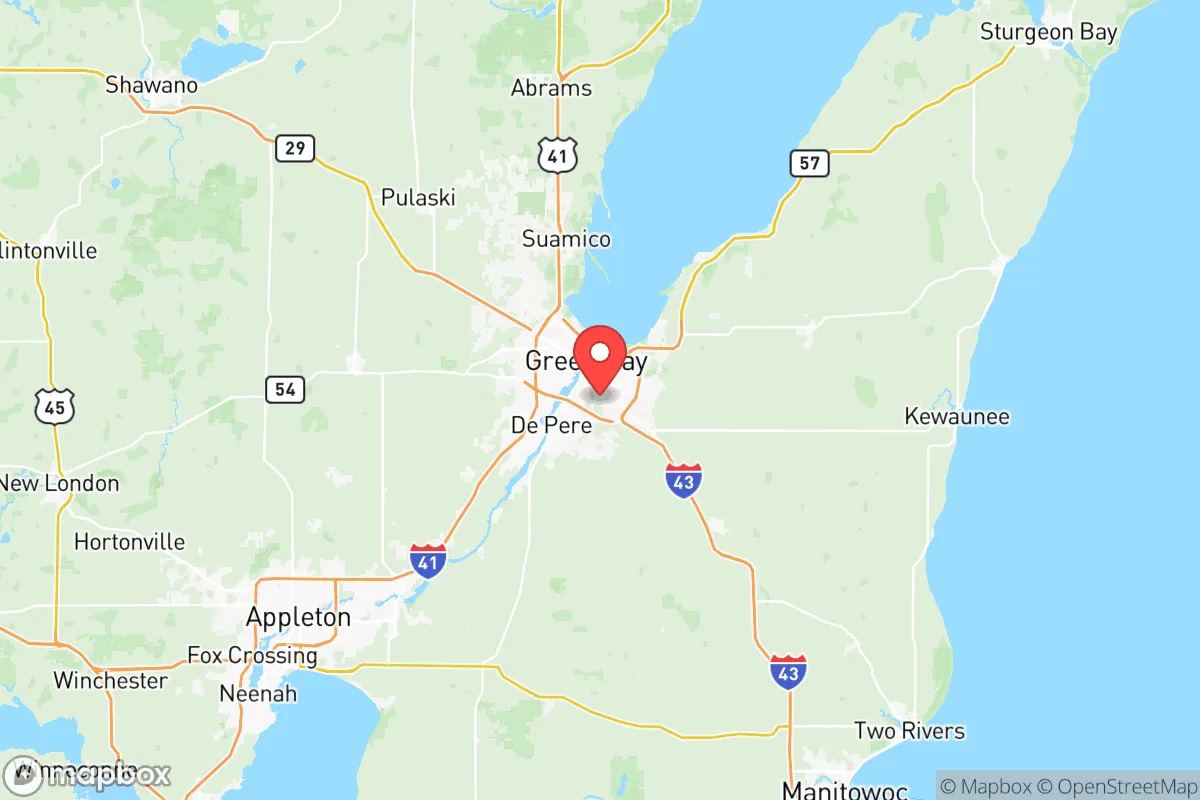
Brown County, Wisconsin, occupies a strategic position in the Great Lakes region that balances access to major urban resources with a degree of geographic insulation that appeals to relocation-minded individuals and families focused on resilience and self-sufficiency. The county’s anchor city, Green Bay, provides a robust economic and logistical hub, while the surrounding towns—De Pere, Allouez, Howard, and Suamico—offer a range of suburban and semi-rural living options that can support a more independent lifestyle. The area’s location on the western shore of Lake Michigan, at the mouth of the Fox River, gives it a unique set of natural advantages and vulnerabilities that a serious relocator should weigh carefully.
Geographic position and natural advantages for long-term stability
Brown County’s most significant geographic asset is its position along Lake Michigan, which moderates the local climate and provides an immense, reliable freshwater resource. The lake’s thermal mass keeps winters slightly milder and summers cooler than inland areas, reducing the severity of extreme temperature events. The Fox River, which flows through the heart of the county, adds a secondary water source and historically supported the region’s paper and manufacturing industries. The terrain is generally flat to gently rolling, with fertile soils that support agriculture—a key consideration for anyone thinking about local food security. The county sits well inland from any major seismic zones, hurricane tracks, or wildfire corridors, and its northern latitude means it is less exposed to the kind of heat extremes that stress power grids and water supplies in the southern U.S. For a relocator prioritizing natural stability, Brown County offers a lower baseline risk profile than many coastal or sunbelt destinations.
Risks, exposures, and proximity to fallout-relevant landmarks
No location is without risk, and Brown County has specific exposures that a resilience-minded relocator must account for. The most obvious is the county’s proximity to Green Bay’s industrial and infrastructure assets, which include the JBS Green Bay meatpacking plant, several paper mills (such as the Georgia-Pacific facility), and the Green Bay Austin Straubel International Airport. These are potential targets for both physical disruption and, in a worst-case scenario, fallout-related events. The county is also home to the Brown County Veterans Memorial Arena and the Lambeau Field complex, which could become congregation points during emergencies. On the natural hazard side, the primary concern is winter storms and lake-effect snow, which can dump several feet of snow in a single event, paralyzing transportation and straining power infrastructure. Flooding along the Fox River and its tributaries is a recurring issue, particularly in low-lying areas of Green Bay and De Pere. The county is not near any active military bases, nuclear power plants, or major petrochemical refineries, which reduces its exposure to certain man-made risks, but the concentration of food processing and industrial facilities in the Green Bay metro area means that a localized disruption could have cascading effects on supply chains.
Practical resilience for a relocator: food, water, energy, and defensibility
For someone serious about self-sufficiency, Brown County offers a mixed but generally favorable picture. Water is abundant: Lake Michigan provides an essentially limitless supply for those with the means to access and treat it, and groundwater is plentiful in most parts of the county. Municipal water systems in Green Bay, De Pere, and Howard are well-maintained, but a relocator looking for true independence should consider a property with a private well and a backup treatment system. Food security is strong due to the county’s agricultural base—dairy, livestock, and row crops are common in the rural townships, and farmers’ markets are widespread. The presence of the JBS plant means local meat processing capacity, though reliance on a single large facility is a vulnerability. Energy infrastructure is moderately resilient: the grid is served by Wisconsin Public Service, which has invested in tree-trimming and pole hardening, but winter storms regularly cause outages. Solar potential is lower than in the Sun Belt, but wind and small-scale hydro are viable options for off-grid setups. Defensibility is a mixed bag: the flat terrain offers few natural chokepoints, and the dense suburban development around Green Bay makes perimeter security difficult. However, the more rural townships—Suamico, Wrightstown, and parts of Eaton—offer larger lots, lower population density, and better sightlines, making them more suitable for a relocator prioritizing security. The county’s road network is well-maintained but can become impassable during heavy snow, so a vehicle with four-wheel drive and winter tires is essential.
Overall, Brown County presents a balanced strategic picture for the resilience-focused relocator. Its greatest strengths are its abundant freshwater, agricultural capacity, and low exposure to catastrophic natural disasters. Its main weaknesses are the industrial concentration in Green Bay, the winter weather burden, and the lack of natural defensibility in the more populated areas. For a single individual or family willing to settle in the outer townships, invest in backup power and water systems, and maintain a stockpile of supplies for winter storms, the county offers a viable long-term base. The key is to avoid the urban core and focus on the semi-rural fringe, where the advantages of the region can be enjoyed without the vulnerabilities of density. Brown County is not a survivalist paradise, but it is a solid, practical choice for someone who wants a stable, resource-rich environment with manageable risks.

* Values derived from national, state, county, city and local statistics and may differ in a specific area. Last updated: 2026-08-23T03:15:36.000Z
Narrative content on this page is AI-generated and may contain mistakes. Verify any details that matter before acting on them.
ReloMaps may earn a commission from affiliate links at no extra cost to you.

