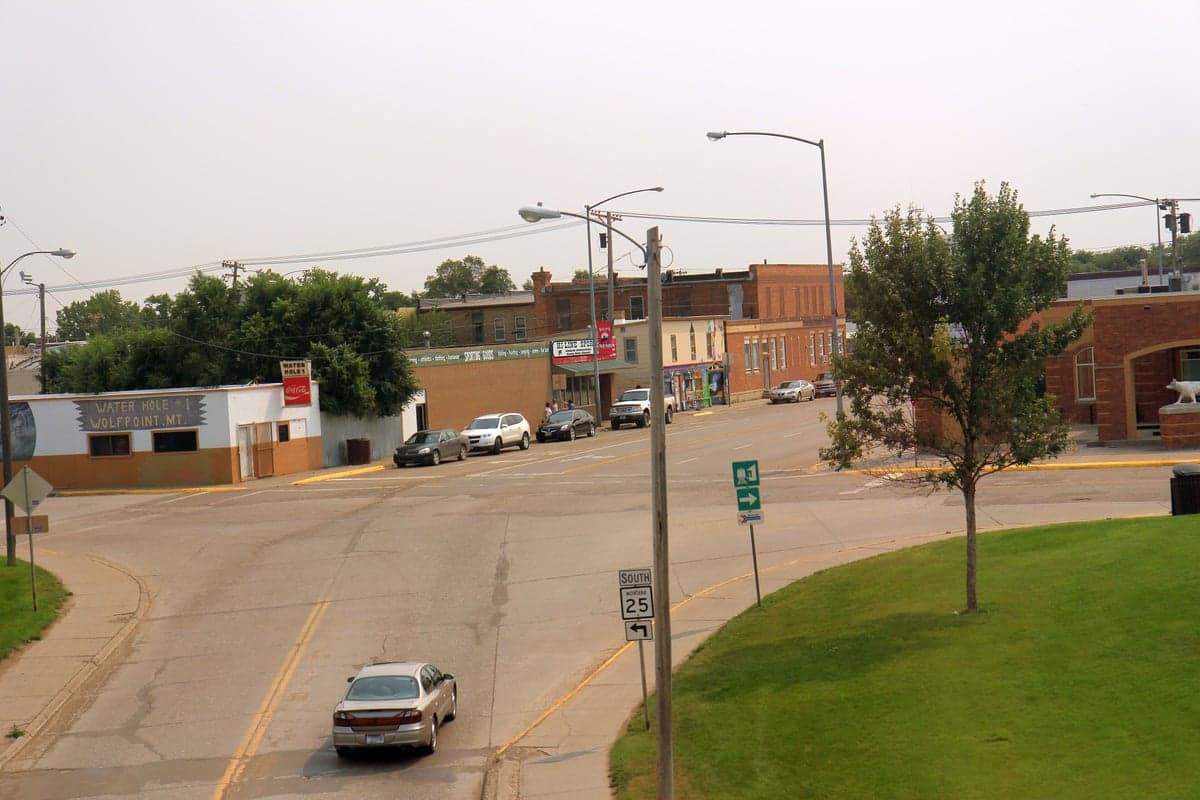
Photo: Wikipedia
Personal Sovereignty in Wolf Point, MT
Viable for self-reliance. Generally workable, though some barriers may limit total independence.
What does Personal Sovereignty tell us?
Personal Sovereignty measures your capacity for self-reliance and independence with minimal government friction. Higher scores mean fewer barriers between you and the way you want to live... but it assumes you have the space you need and good neighbors.
What does this tell us?
Personal Sovereignty measures your capacity for self-reliance and independence with minimal government friction. Higher scores mean fewer barriers between you and the way you want to live... but it assumes you have the space you need and good neighbors.
State Policy
Energy independence: Net exporter (120% of energy produced in-state)
Personal Liberty
Homesteading

Personal Liberty Analysis
Wolf Point, Montana, offers one of the most uncompromising personal sovereignty environments in the lower 48, largely because Roosevelt County sits at the far northeastern edge of the state where state-level protections still hold strong against federal overreach. The combination of Montana’s constitutional right to privacy, minimal county-level zoning enforcement, and a culture of self-reliance means that a single individual or family relocating here can expect a level of autonomy that is increasingly rare in the West. For those who view personal sovereignty as the ability to live, defend, and provide for themselves without government interference, Wolf Point represents a strategic outpost rather than a compromise.
Tax burden and regulatory posture: How Montana’s fiscal policies protect your autonomy
Montana has no state sales tax, which immediately removes one of the most regressive and intrusive layers of state-level revenue collection. Wolf Point residents pay a state income tax that is flat at 5.9% as of 2026, but the state’s overall tax burden ranks among the lowest in the nation—roughly 35th lowest overall when factoring in property taxes. Roosevelt County’s property tax rates are below the Montana average, with agricultural and undeveloped land assessed at very low rates, making it feasible to hold acreage without being taxed out of existence. The regulatory posture in Wolf Point is equally favorable: the city has no building codes for single-family homes outside the limited city limits, and Roosevelt County enforces no county-wide zoning. This means you can build a shop, a root cellar, or a detached dwelling on your own land without pulling permits or facing inspector delays. For the prepper or survivalist, this is the difference between a project that takes a weekend and one that takes a year of bureaucratic navigation.
Self-defense and gun law specifics: Montana’s constitutional carry and stand-your-ground protections
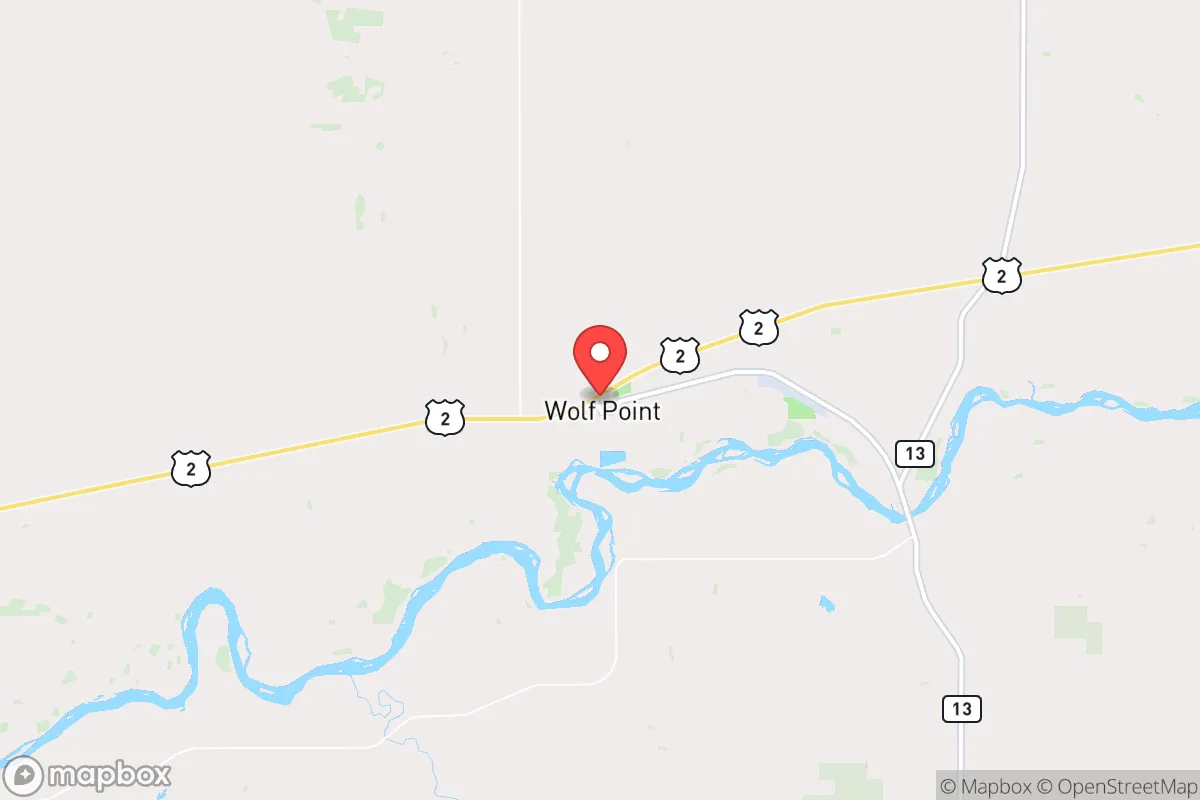
Montana is a constitutional carry state, meaning no permit is required to carry a concealed firearm for anyone legally allowed to possess one. Wolf Point sits in a county where the sheriff’s office is known for a pro-Second Amendment posture, and local law enforcement generally views firearm ownership as a baseline right rather than a privilege to be managed. The state also has a stand-your-ground statute with no duty to retreat, codified in Montana Code Annotated 45-3-110, which applies in any place where a person is lawfully present. This is critical for rural property owners: if someone enters your land or home with criminal intent, you are not required to attempt escape before using deadly force. Magazine capacity restrictions do not exist at the state level, and there are no firearm registration requirements. Wolf Point’s remote location—over 100 miles from the nearest major city (Williston, ND)—means that law enforcement response times can exceed 20 minutes in the county, making personal firearms not just a right but a practical necessity for self-defense.
Self-reliance and homesteading viability: Lot sizes, zoning, and off-grid feasibility in Roosevelt County
Wolf Point’s surrounding area is dominated by agricultural land, with minimum lot sizes outside city limits typically set at 1 acre for residential development, though many parcels available for purchase are 5 to 40 acres. There is no county-wide zoning ordinance in Roosevelt County, which means you can legally build a home, install a septic system (subject to state health department approval), and set up alternative energy systems without conditional use permits or variance hearings. Off-grid living is fully viable: Montana law explicitly protects the right to harvest rainwater, and net metering policies allow grid-tied solar systems to roll back excess generation. Wood stoves are common for primary heat, and the county does not impose restrictions on outdoor burning for land management. The growing season is short (about 110 days), but cold-hardy crops and greenhouse setups are well-established in the region. For the prepper, the key takeaway is that you can buy raw land, build a self-sufficient homestead, and operate it without the county or city inserting itself into your daily decisions about how to live.
Personal liberties: Parental rights, medical autonomy, speech, and property protections
Montana’s constitutional right to privacy, established in the 1970s and repeatedly upheld by the state supreme court, provides a legal foundation for medical autonomy that is stronger than in most states. This has been used to protect parental rights in medical decisions, including the right to refuse vaccines and choose alternative treatments without state interference. Wolf Point’s school district, while small, operates under Montana’s parental choice laws, which allow for open enrollment across district lines and do not mandate controversial curriculum content without parental opt-out options. Speech protections are robust: Montana has no hate speech laws that criminalize political or religious expression, and the state’s preemption laws prevent local governments from enacting ordinances that restrict firearm possession, rental regulation, or energy source choices. Property rights are further protected by Montana’s “takings” laws, which require compensation for any regulation that diminishes property value by more than 30%. For the individual who values the ability to speak, practice medicine, and raise children without government overreach, Wolf Point offers a legal environment that actively resists the trend toward centralized control seen in coastal states.
Compared to other rural relocation destinations like northern Idaho or western South Dakota, Wolf Point offers a lower cost of entry—land prices are roughly half of what you’d pay in Flathead County, Montana—and a regulatory environment that is genuinely hands-off rather than merely permissive. The trade-offs are real: harsh winters, limited healthcare access (the nearest hospital with a surgeon is in Glasgow, 40 miles away), and a population that is politically mixed but leans conservative in practice. For the strategic relocator who prioritizes personal sovereignty above all else, Wolf Point is not a compromise; it is a deliberate choice to live where the state’s role is minimal and your own capability determines your quality of life.

* Values derived from national, state, county, city and local statistics and may differ in a specific area. Last updated: 2026-04-30T00:12:08.000Z
Narrative content on this page is AI-generated and may contain mistakes. Verify any details that matter before acting on them.
ReloMaps may earn a commission from affiliate links at no extra cost to you.

