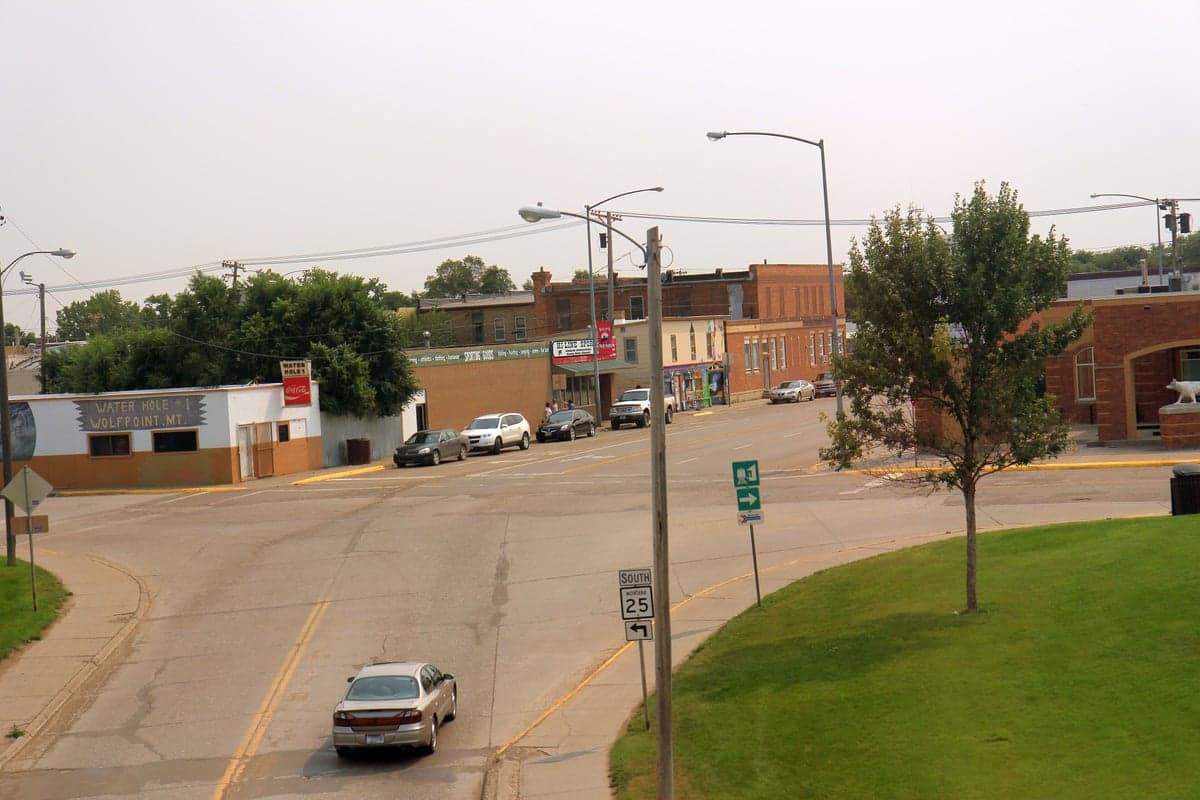
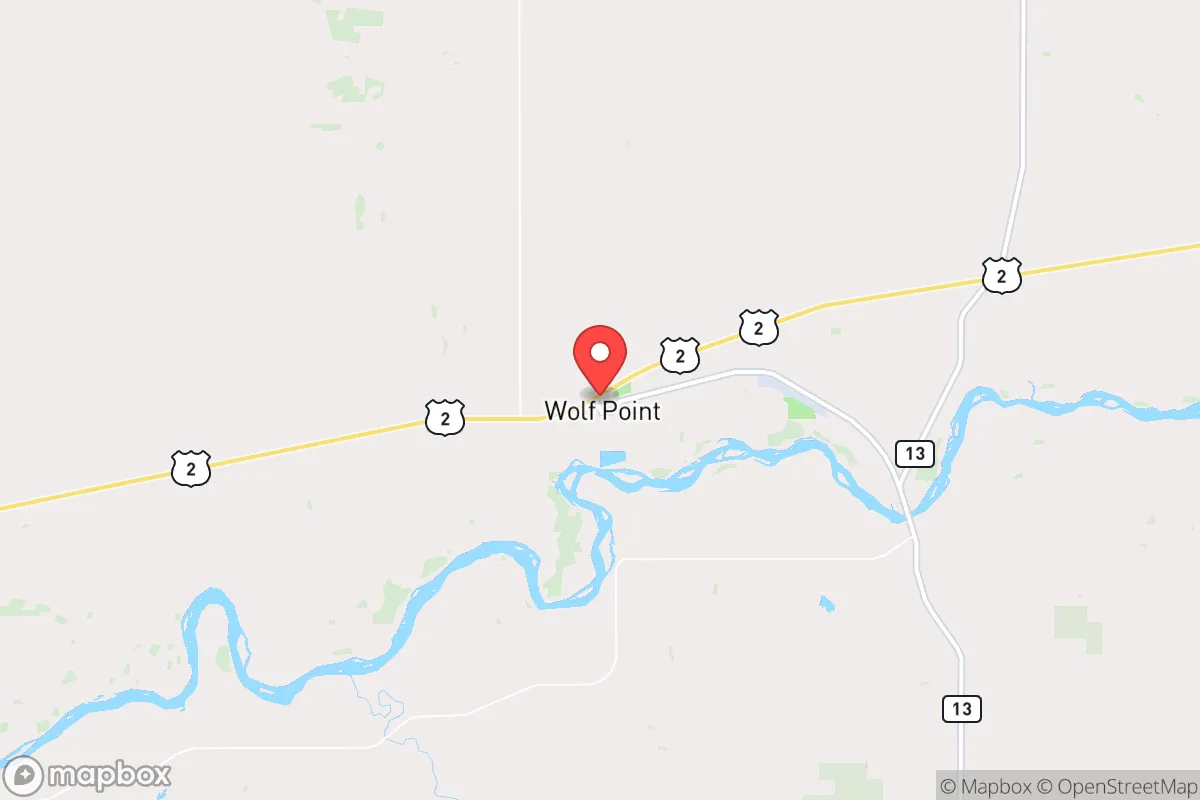
Photo: Wikipedia
Political ClimatePolitical Climate in Wolf Point, MT
District shown is the primary district for this city’s centroid. Cities may span multiple districts.
Local Political AnalysisPolitical Analysis of Wolf Point, MT
Wolf Point, Montana, sits deep in conservative territory, with a Cook PVI of R+15 that reflects a community where traditional values and personal freedoms are still taken seriously. This isn't a place that's suddenly flipped—it's been reliably red for generations, and the local culture is built around self-reliance, limited government, and a healthy skepticism of outside interference. If you're looking at the political climate here, you're looking at a place that votes its conscience, not its party line, but that conscience leans heavily toward individual liberty and local control.
How it compares
Wolf Point is the anchor of Roosevelt County, and while the county itself is more mixed due to the Fort Peck Reservation's population, the town's voting patterns are a stark contrast to places like Missoula or Bozeman. Drive an hour south to Glasgow, and you'll find a similar conservative bent, but Wolf Point feels more insulated from the progressive drift that's crept into larger Montana towns. The nearest real political counterpoint is probably Billings, which is still conservative but has a more corporate, establishment Republican vibe. Here, it's more about ranching, farming, and the kind of independence that doesn't take kindly to mandates from Helena or Washington. The reservation's politics are their own thing—more Democratic-leaning in some precincts—but Wolf Point itself remains a bastion of old-school, limited-government thinking.
What this means for residents
For folks living here, the political climate means fewer headaches from overreach. You won't see the same kind of zoning fights or mask mandates that plague urban areas. Local government tends to stay out of your business, and there's a strong expectation that your property rights come first. That said, there's been a slow creep of progressive ideas filtering in through state-level policies—things like land-use restrictions or environmental regulations that feel like they were written for people who've never worked a ranch. The real concern among long-time residents is that as Montana grows, the pressure to conform to coastal norms will increase. Wolf Point's isolation helps, but it's not a fortress. The community is watching closely, and the general attitude is: we'll adapt, but we won't be pushed around.
Culturally, Wolf Point stands out for its fierce independence and a no-nonsense approach to life. You won't find many "Keep Your Laws Off My Land" signs because that's just assumed. The biggest policy distinction is the strong support for Second Amendment rights—gun laws here are about as loose as they get, and any talk of federal restrictions is met with a collective eye roll. There's also a deep-seated resistance to federal land management, especially around grazing and water rights. The local economy depends on agriculture and energy, so any green-energy mandates or conservation easements are seen as direct threats to livelihoods. In the long term, the worry is that demographic shifts—younger people leaving, some outsiders moving in—could dilute the conservative base. But for now, Wolf Point remains a place where personal freedom isn't just a talking point; it's the way things are done.

State Political ClimatePolitical Climate in Montana
State Political AnalysisPolitical Environment in the State
Montana has long been a reliably Republican state at the presidential level, voting for the GOP candidate in every election since 1968 except for Bill Clinton’s 1992 win, but the real story is the deepening internal divide between a libertarian-leaning, rural conservative base and a rapidly growing, more progressive urban corridor along the Interstate 90/94 spine. Over the past 10-20 years, the state has shifted from a sleepy, low-population western outpost to a destination for out-of-state transplants, many of whom bring blue-state voting habits, while the native rural population has grown more fiercely independent and skeptical of government overreach. The result is a state that still leans red overall—Trump won by 16 points in 2024—but where the margins are tightening in places like Missoula, Bozeman, and Helena, and where the cultural and political battles are becoming more visible and contentious.
Urban vs. rural divide
The political map of Montana is a textbook case of the urban-rural chasm. The state’s largest city, Billings, is a conservative stronghold in Yellowstone County, reliably delivering Republican margins, but it’s the smaller cities that are the real battlegrounds. Missoula County, home to the University of Montana, has become a deep-blue island—Biden won it by 20 points in 2020, and local politics are dominated by progressive activists pushing climate mandates, rent control, and defunding police rhetoric. Bozeman, in Gallatin County, was once a redoubt of ranching and mining conservatism, but the tech and outdoor recreation boom has flipped it purple, with Democrats now competitive in county races. Meanwhile, rural counties like Toole, Liberty, and Powder River vote 80%+ Republican, and their residents view the urban drift with deep suspicion. The divide isn’t just about party—it’s about worldview: rural Montanans see the state’s traditional independence and low regulation as sacred, while urban transplants often push for more government services, zoning restrictions, and environmental controls that feel like a creeping loss of freedom.
Policy environment
Montana’s policy environment is a mixed bag for a conservative relocating here. On the plus side, the state has no sales tax, a flat income tax of 5.9% (recently cut from 6.75%), and property taxes that are moderate by national standards. The regulatory posture is generally light—permitting for new homes or businesses is faster than in most western states, and there’s no state-level rent control or mandatory paid leave. However, the education system is a growing concern: the state’s public schools are underfunded and struggle with rural teacher shortages, while the push for critical race theory and gender ideology curricula has reached even small districts like those in Lewis and Clark County. On healthcare, Montana expanded Medicaid under the Affordable Care Act, which has been a point of contention—many conservatives see it as a federal overreach that creates dependency. Election laws are relatively secure: voter ID is required, and the state has no same-day registration, but mail-in voting is universal, which some worry about for ballot security. The state also has a citizen initiative process that has been used to legalize marijuana and expand Medicaid, bypassing the legislature—a double-edged sword for those who prefer representative government.
Trajectory & freedom
Montana is at a crossroads on personal freedom, and the trajectory is concerning for those who value limited government. On the positive side, the state remains a stronghold for gun rights—constitutional carry is law, and there’s no waiting period or magazine capacity limit. The 2021 passage of the Montana Firearms Freedom Act explicitly exempts firearms made and kept in-state from federal regulation, a bold nullification-style move. Parental rights have also seen wins: the 2023 law requiring parental notification for any medical or mental health treatment of minors, including gender transition procedures, was a major victory for family autonomy. But the dark cloud is the influx of out-of-state money and activism. The 2024 legislative session saw a failed attempt to ban mask and vaccine mandates in schools, and the governor’s office has been fighting a rear-guard action against federal environmental regulations that threaten the state’s timber and mining industries. The real freedom killer is housing: property values in Bozeman and Missoula have doubled since 2020, pricing out native Montanans and forcing them into rentals or out of state entirely—a de facto loss of the freedom to live where you grew up.
Civil unrest & political movements
Montana has a long history of armed self-reliance and anti-government sentiment, but recent years have seen a rise in organized activism on both sides. The 2021 “People’s March” in Helena drew thousands of left-wing protesters demanding climate action and racial equity, while the 2022 “Freedom Rally” at the state capitol saw a smaller but vocal crowd opposing vaccine mandates and election integrity concerns. The most visible flashpoint is the ongoing battle over the Keystone XL pipeline—though canceled, the fight over eminent domain and property rights still simmers in rural areas like Phillips County. Immigration politics are less heated than in border states, but the 2023 law banning sanctuary cities (SB 123) was a clear statement that Montana won’t tolerate jurisdictions that shield illegal immigrants. Election integrity remains a hot-button issue: the 2020 election saw no major fraud, but the 2024 legislative session debated tighter ballot security measures, including a ban on ballot drop boxes, which failed. The most concerning trend for a new resident is the growing presence of Antifa-style agitators in Missoula and Bozeman, who have disrupted conservative events and targeted local businesses with boycotts over political stances.
Projection
Looking ahead 5-10 years, Montana is likely to become more politically contested, not less. The in-migration from California, Washington, and Oregon shows no signs of slowing—Gallatin County alone grew by 30% between 2010 and 2020, and the trend is accelerating. These newcomers tend to be wealthier, more educated, and more progressive, and they are already reshaping local elections: in 2024, Democrats flipped a state house seat in Bozeman for the first time in a decade. The rural counties are losing population, which means their political weight will diminish in the legislature after the 2030 census redistricting. The policy battles will intensify: expect fights over land use regulations, renewable energy mandates, and school curriculum to dominate the next decade. The wild card is the state’s libertarian streak—many rural Montanans are as suspicious of Republican overreach as they are of Democratic control, and a third-party or independent movement could emerge if the GOP fails to hold the line on freedom issues. For a conservative moving in now, the window of opportunity to lock in Montana’s traditional values is closing—the state will likely be purple within 15 years.
For a new resident, the bottom line is that Montana still offers a high degree of personal freedom, low taxes, and a culture of self-reliance, but you need to choose your location carefully. If you want to live in a conservative stronghold, stick to the eastern plains—places like Miles City or Glendive—or the smaller towns in the western valleys like Hamilton or Polson. Avoid Missoula and Bozeman unless you’re prepared for a daily cultural war. The state’s trajectory is toward more government intervention, higher housing costs, and a more polarized political environment, but for now, it remains one of the last bastions of Western independence. Just don’t expect it to stay that way forever—get in while the getting’s good, and get involved in local politics to protect what’s left.
* Values derived from national, state, county, city and local statistics and may differ in a specific area. Last updated: 2026-04-30T00:12:08.000Z
Narrative content on this page is AI-generated and may contain mistakes. Verify any details that matter before acting on them.
ReloMaps may earn a commission from affiliate links at no extra cost to you.

