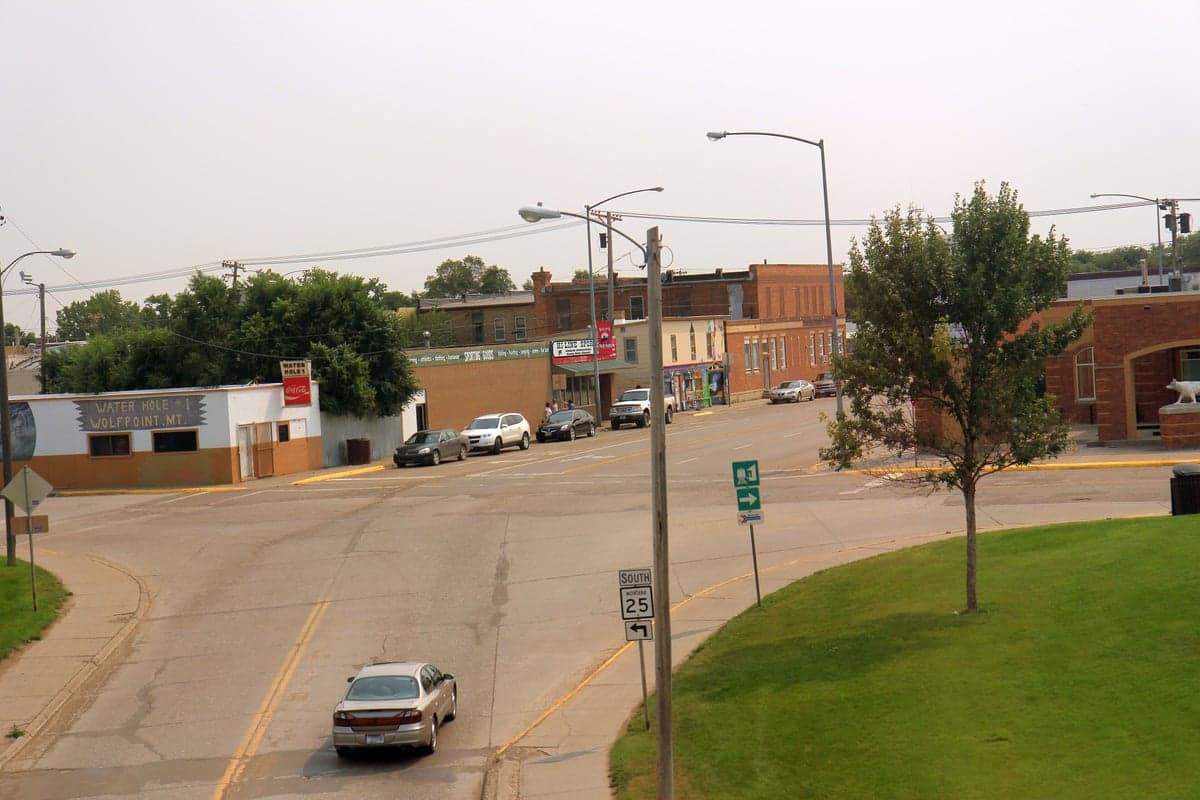
Photo: Wikipedia
Strategic Assessment of Wolf Point, MT
Workable tactical position. Some exposure to population density or targets, but generally defensible in a crisis.
What does the Strategic Assessment tell us?
Our Strategic Assessment grades tactical survivability of an area. Major population centers, military targets, fallout zones, natural disasters, and border exposure all drive risk — lower exposure means a more defensible position in a crisis.
This is heavily inspired by Joel Skousen's Strategic Relocation book. Highly recommended you checkout the book ($)What does this tell us?
Our Strategic Assessment grades tactical survivability of an area. Major population centers, military targets, fallout zones, natural disasters, and border exposure all drive risk — lower exposure means a more defensible position in a crisis.
This is heavily inspired by Joel Skousen's Strategic Relocation book. Highly recommended you checkout the book ($)Strategic Pillars

Key Distances
Regional Safe Places
Below is our recommended "safe zones" in Montana and the surrounding area based on our strategic heuristics. For most people, it's unrealistic to live in a “safe zone” full-time due to work, family or other personal reasons. They tend to be more rural. However, many of these areas are perfect for second homes and retreat properties that double as a vacation home or even a short-term rental.
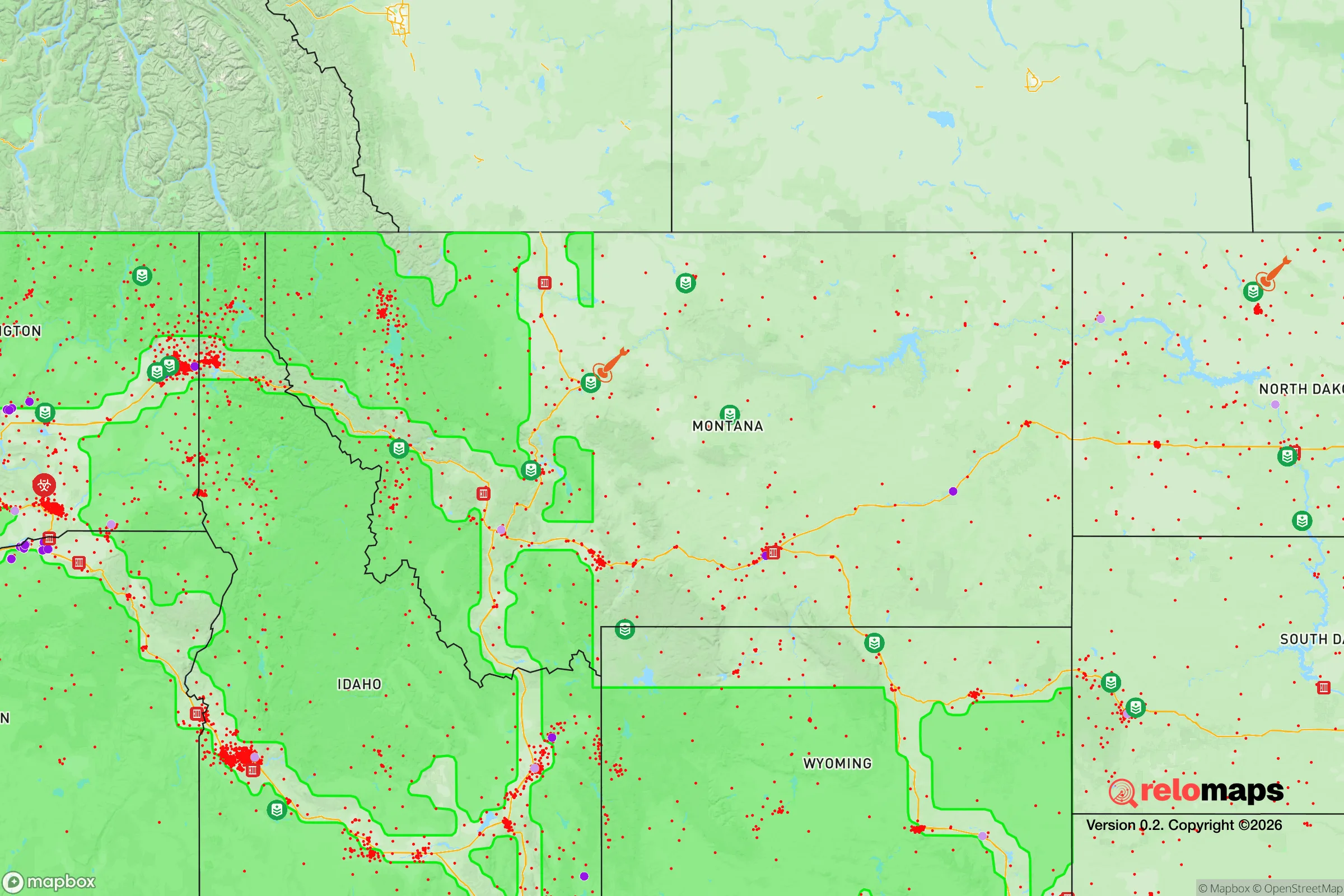


Important Note: For informational purposes only. This does not mean nothing bad ever happens in the green zones. Please use common sense. This is based on public data and modeled with AI. We tried to take a conservative approach but mistakes happen. We update this regularly as new information becomes available.
Solar Generator Recommendations
Backup power matters more here than in safer locations. We've picked three solar generators across budgets and capacity tiers — start with the budget unit if you only need a few essentials, or step up if you want to run a fridge and HVAC for days at a time.

Jackery Portable Power Station Explorer 300
Budget OptionPower on the Go: Weighing only 11 lbs, it's convenient to set up and store with book-sized foldable solar panels

BLUETTI Portable Power Station AC180
Designed for both indoor and outdoor scenarios, AC180 is highly capable as it has a robost capacity and continuous output power.

EF ECOFLOW DELTA Pro Ultra Power Station
Upgraded PickEcoFlow DELTA Pro Ultra is a whole-home energy system designed to grow with your family. Integrated with the Smart Home Panel 2, it scales to meet your evolving energy needs — keeping your home powered, intelligent, and secure through every stage of life.
We earn a commission, at no additional cost to you.
Strategic Assessment Analysis
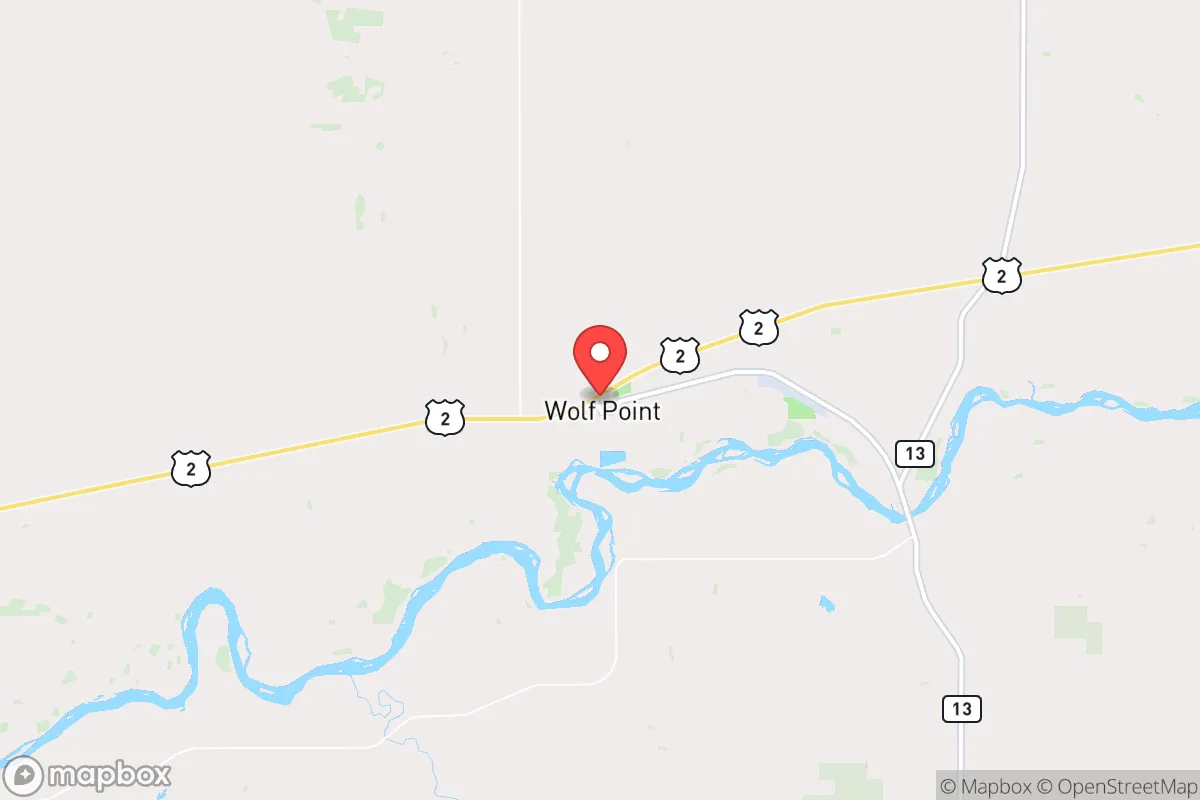
Wolf Point, Montana, sits as a hardscrabble outpost on the Missouri River, roughly 40 miles south of the Canadian border and 250 miles from the nearest major population center (Billings). For a relocator with a prepper mindset, its primary strategic value is raw distance—distance from the coastal grid, distance from the 200-mile blast radius of a major city, and distance from the chokepoints that will turn interstates into parking lots when things go sideways. The town itself is small (around 2,600 people), but it anchors a vast, sparsely populated region where a prepared individual can operate with minimal outside interference. The trade-off is severe isolation, harsh winters, and a local economy that offers few jobs outside of agriculture, tribal government, and energy extraction. If your goal is to be left alone and ride out a collapse, Wolf Point is a candidate worth a hard look—but only if you understand what you're signing up for.
Geographic position and natural advantages for long-term survival
Wolf Point's location is defined by two features: the Missouri River and the vastness of the Fort Peck Indian Reservation. The river provides a reliable surface water source, which is the single most critical resource for any off-grid scenario. The surrounding terrain is high plains—rolling, semi-arid, with cold winters and hot summers. This is not the lush, temperate refuge of the Pacific Northwest; it's a landscape that demands respect for its extremes. The advantage is that the same harshness that makes life uncomfortable also keeps population density low. The nearest city of any size is Williston, North Dakota (about 90 miles east), which is an oil-patch boomtown with its own set of risks. The nearest major medical facility is in Billings, a 4.5-hour drive. For a prepper, this isolation is a double-edged sword: it buys you time and privacy, but it also means you must be entirely self-sufficient for weeks or months at a stretch. The area sits on the Bakken shale formation, meaning there is oil and natural gas in the ground, though extraction is industrial and not something a small landowner can easily tap. The wind is constant, making small-scale wind turbines a viable option for power generation, provided you have the battery storage to handle the intermittency.
Risks, exposures, and proximity to fallout-relevant landmarks
The most significant risk for a Wolf Point relocator is not a direct nuclear strike—the area has no strategic military targets worth a warhead—but rather the fallout and secondary effects from strikes on the Minot Air Force Base in North Dakota, roughly 150 miles northeast. Minot is a primary target for any nuclear exchange, housing B-52 bombers and a significant nuclear weapons storage facility. Depending on wind patterns, a ground burst at Minot could deposit lethal fallout across eastern Montana, including Wolf Point, within 12-24 hours. The prevailing winds in this region are westerly, which offers some protection, but a shift during a crisis could be catastrophic. Additionally, the Fort Peck Dam, located about 30 miles southwest of Wolf Point, is a critical piece of infrastructure. A conventional attack or sabotage on the dam could release a catastrophic flood wave down the Missouri River valley, directly threatening the town. The dam is a hardened structure, but it is not invulnerable. On the positive side, Wolf Point is far from the major population centers that will experience civil unrest, food riots, and disease outbreaks in a collapse scenario. There are no major military bases, no nuclear power plants, and no major chemical storage facilities within a 100-mile radius. The primary risk is fallout from Minot, followed by the dam failure scenario. A prepared relocator should have a fallout shelter plan and a bug-out route to higher ground south of the river.
Practical resilience for a relocator: food, water, energy, and defensibility
Water is the strongest card Wolf Point holds. The Missouri River runs year-round, and with a simple hand pump or a small solar-powered pump, a landowner can draw all the water they need. Filtration and boiling are mandatory—the river carries agricultural runoff and upstream sewage—but the volume is there. Food is a harder proposition. The growing season is short (about 120 frost-free days), and the soil is heavy clay in many areas. You can raise a garden, but it will require irrigation, soil amendment, and cold-hardy crops like potatoes, carrots, and kale. Hunting is viable: deer, pronghorn antelope, and waterfowl are present, and the Missouri River bottomlands hold some game. Fishing is excellent—walleye, northern pike, and catfish are abundant. For protein, a small herd of goats or a few head of cattle is more realistic than relying on wild game alone. Energy is manageable. The area has good wind resources, and solar works in summer but is marginal in winter when days are short and overcast. A combination of wind and solar, with a propane or diesel backup generator, is the standard setup for off-grid homes in this region. Wood is available but not abundant—cottonwood along the river burns poorly; you'll need to source pine or fir from the Missouri Breaks to the south. Defensibility is mixed. The town itself is a grid of streets with limited cover, but the surrounding countryside offers numerous draws, coulees, and river bends where a homestead can be tucked out of sight. The key is to avoid being visible from the main highways (U.S. 2 and MT 13). A property with a long, private driveway and a view of the approach is ideal. The local population is small and generally self-reliant; most people already own firearms and are not inclined to welcome outsiders. If you can integrate into the community, you'll find neighbors who will watch your back. If you come across as a city slicker with a bunker fantasy, you'll be isolated and vulnerable.
The overall strategic picture for Wolf Point is one of high risk and high reward, with the balance tipping in favor of the prepared relocator who understands the trade-offs. You are buying distance from the collapse of the coastal cities and the chaos of the interstate corridors. In exchange, you accept a harsh climate, limited economic opportunity, and a real but manageable fallout risk from Minot. The area is not a bug-out location for a weekend warrior; it is a place to build a life, dig a well, plant a garden, and make yourself useful to a small community that values competence over credentials. If the country holds together, you'll live a quiet, cold, and independent life. If it doesn't, you'll be in one of the few places in the lower 48 where a determined individual can still make their own luck. Wolf Point is not for everyone—and that's exactly the point.

* Values derived from national, state, county, city and local statistics and may differ in a specific area. Last updated: 2026-04-30T00:12:08.000Z
Narrative content on this page is AI-generated and may contain mistakes. Verify any details that matter before acting on them.
ReloMaps may earn a commission from affiliate links at no extra cost to you.

