Strategic Assessment of Wolfforth, TX
Meaningful friction. Expect exposure to either population pressure, blast zones, or natural disaster risk. Consider buying a retreat property.
What does the Strategic Assessment tell us?
Our Strategic Assessment grades tactical survivability of an area. Major population centers, military targets, fallout zones, natural disasters, and border exposure all drive risk — lower exposure means a more defensible position in a crisis.
This is heavily inspired by Joel Skousen's Strategic Relocation book. Highly recommended you checkout the book ($)What does this tell us?
Our Strategic Assessment grades tactical survivability of an area. Major population centers, military targets, fallout zones, natural disasters, and border exposure all drive risk — lower exposure means a more defensible position in a crisis.
This is heavily inspired by Joel Skousen's Strategic Relocation book. Highly recommended you checkout the book ($)Strategic Pillars

Key Distances
Regional Safe Places
Below is our recommended "safe zones" in Texas and the surrounding area based on our strategic heuristics. For most people, it's unrealistic to live in a “safe zone” full-time due to work, family or other personal reasons. They tend to be more rural. However, many of these areas are perfect for second homes and retreat properties that double as a vacation home or even a short-term rental.

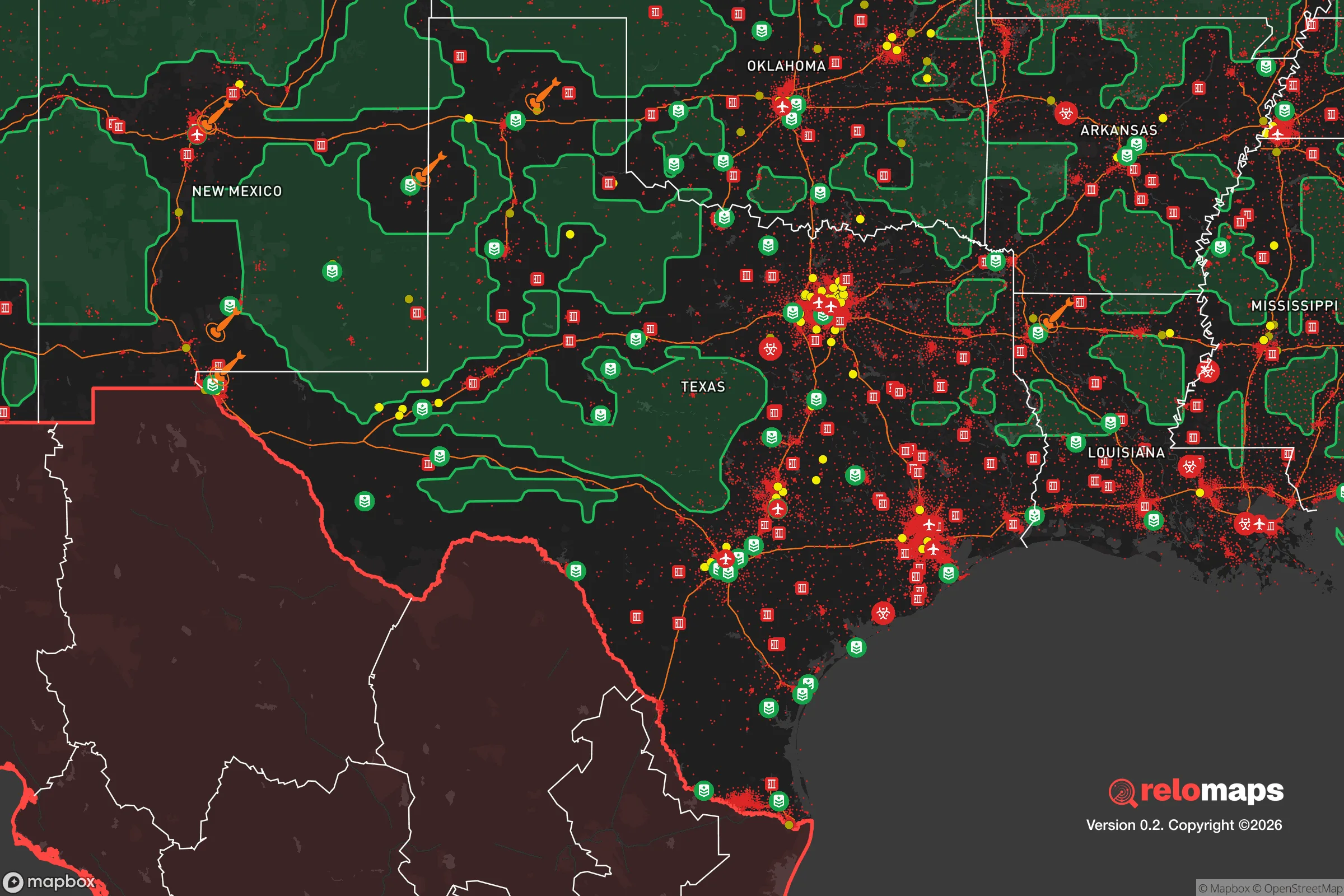


Important Note: For informational purposes only. This does not mean nothing bad ever happens in the green zones. Please use common sense. This is based on public data and modeled with AI. We tried to take a conservative approach but mistakes happen. We update this regularly as new information becomes available.
Solar Generator Recommendations
Backup power matters more here than in safer locations. We've picked three solar generators across budgets and capacity tiers — start with the budget unit if you only need a few essentials, or step up if you want to run a fridge and HVAC for days at a time.

Jackery Portable Power Station Explorer 300
Budget OptionPower on the Go: Weighing only 11 lbs, it's convenient to set up and store with book-sized foldable solar panels

BLUETTI Portable Power Station AC180
Designed for both indoor and outdoor scenarios, AC180 is highly capable as it has a robost capacity and continuous output power.

EF ECOFLOW DELTA Pro Ultra Power Station
Upgraded PickEcoFlow DELTA Pro Ultra is a whole-home energy system designed to grow with your family. Integrated with the Smart Home Panel 2, it scales to meet your evolving energy needs — keeping your home powered, intelligent, and secure through every stage of life.
We earn a commission, at no additional cost to you.
Strategic Assessment Analysis
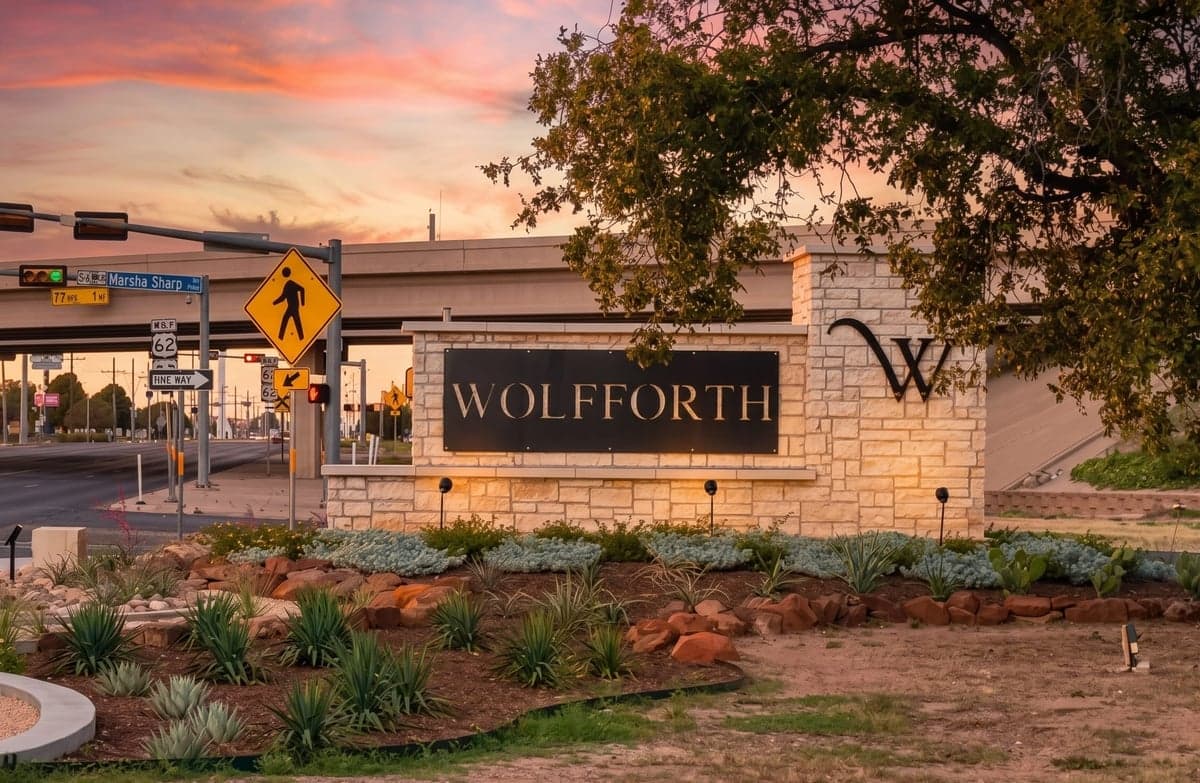
Wolfforth, Texas, presents a mixed strategic picture for the relocation-minded individual or family prioritizing resilience and self-sufficiency. Its primary advantage is a location that balances proximity to the economic engine of Lubbock with a semi-rural buffer, but this same proximity introduces significant vulnerabilities that a serious preparedness-minded relocator must weigh. The area’s flat, arid geography offers few natural defensive features, and its dependence on external infrastructure for water and energy creates a clear set of risks that demand proactive mitigation.
Geographic position and natural advantages for self-sufficiency
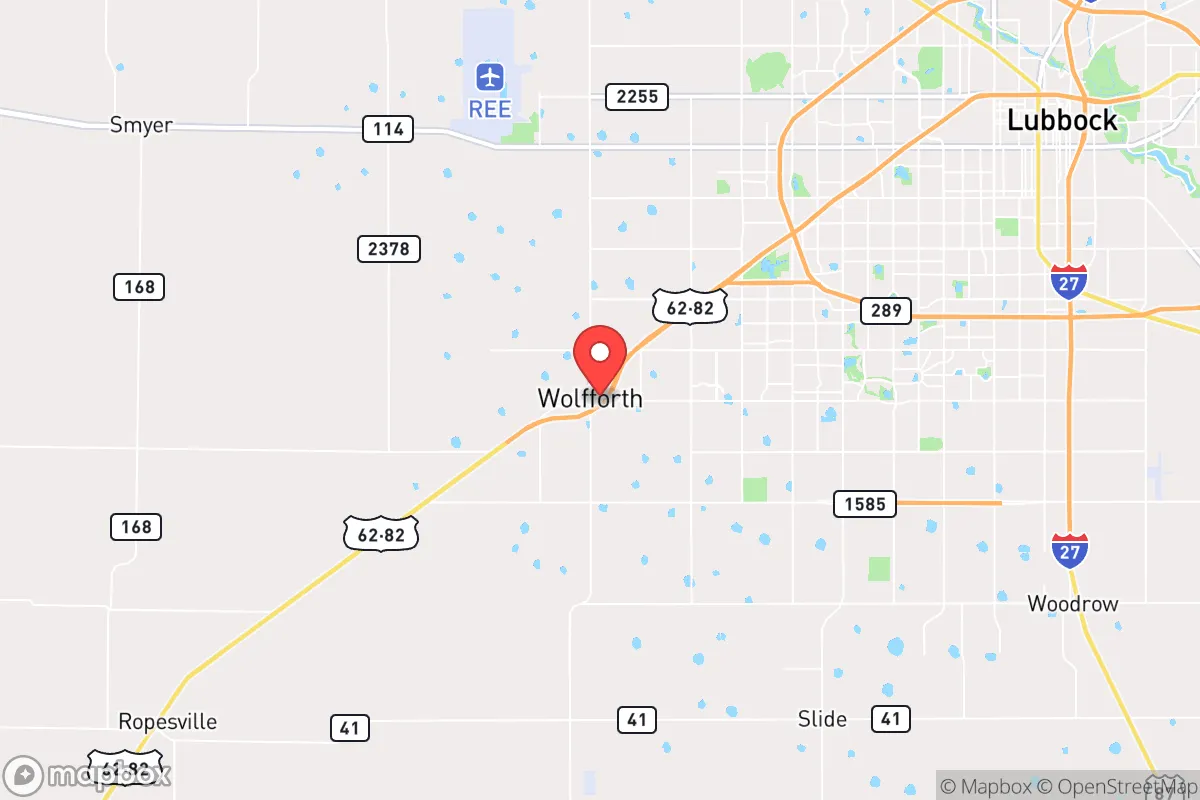
Wolfforth sits on the high plains of the Llano Estacado, roughly 10 miles southwest of downtown Lubbock. This positioning offers a genuine advantage: the city is close enough to a major regional hub for employment, healthcare, and supplies, yet far enough to avoid the densest urban congestion and its associated risks. The surrounding terrain is remarkably flat and open, which provides long sightlines—a modest defensive asset—but offers virtually no natural cover or concealment. The climate is semi-arid, with average annual rainfall around 18 inches, which is low but not desert-level. This aridity reduces risks from flooding (though flash floods can occur in low-lying areas) and limits the spread of wildfire compared to forested regions. The deep, fertile soil of the South Plains is a genuine asset for those serious about food production; with irrigation, the area is highly productive for crops like cotton, sorghum, and wheat. However, the region’s dependence on the Ogallala Aquifer for irrigation is a long-term vulnerability—water tables are declining, and the cost of pumping continues to rise. For a relocator, the flat land and good soil are positives for gardening and small-scale agriculture, but the water reality demands careful planning.
Risks, exposures, and proximity to fallout-relevant landmarks
The most significant risk for Wolfforth is its proximity to Lubbock, a city of roughly 260,000 people. In a major crisis—whether economic collapse, pandemic, or natural disaster—Wolfforth would likely be overwhelmed by refugees from the larger city, straining local resources and potentially creating security issues. The area is also within a few hours’ drive of several high-value strategic targets. Cannon Air Force Base in Clovis, New Mexico (about 90 miles west) is a potential target in a conflict. Reese Technology Center (the former Reese Air Force Base, now a business park) is only about 15 miles northwest of Wolfforth—close enough to be a concern for fallout or secondary effects. Additionally, the Pantex nuclear weapons assembly plant near Amarillo is roughly 120 miles north; while not an immediate fallout risk, it is a high-profile strategic asset. On the natural disaster front, the area is in the heart of Tornado Alley. Wolfforth has a real, annual risk of severe thunderstorms, large hail, and tornadoes. The flat terrain offers no natural shelter from these events, so a reinforced safe room or storm shelter is a near-necessity for any serious preparedness plan. Drought is a persistent, slow-moving threat that affects water availability and local agriculture. Earthquakes are rare but have increased slightly in recent years due to oil and gas activity (wastewater injection) in the broader Permian Basin region, though Wolfforth itself is not in a high-risk zone.
Practical resilience for a relocator: food, water, energy, and defensibility
For a relocator focused on practical resilience, Wolfforth requires deliberate investment. Water is the single most critical vulnerability. The city’s municipal water comes from groundwater wells drawing from the Ogallala Aquifer. While the supply is currently adequate, the aquifer is being depleted at an unsustainable rate. A relocator should plan for a private well (if on acreage) or a robust rainwater catchment system. The average annual rainfall of 18 inches means a 2,000-square-foot roof can collect roughly 22,000 gallons per year—enough for basic household use with careful conservation, but not for irrigation. Food production is viable: the growing season averages 210 days, and the soil, while needing amendment, can support vegetables, fruit trees (with wind protection), and small livestock. Local farmers’ markets and the Lubbock area provide backup supply chains. Energy resilience is straightforward: solar power is highly viable here, with an average of 263 sunny days per year. Net metering policies in Texas are favorable, and battery storage can provide off-grid capability. Natural gas is widely available for heating and cooking, which is a plus. Defensibility is the weakest point. The flat, open terrain means any property is visible from a distance. There are no hills, forests, or natural chokepoints. A relocator would need to create their own perimeter security—fencing, lighting, and possibly a hardened structure. The local law enforcement presence is limited; Wolfforth has its own small police department, but response times in a widespread crisis would be long. The community itself is small (around 5,000 residents) and relatively tight-knit, which can be a social asset for mutual aid, but it also means everyone knows everyone—privacy and anonymity are limited.
The overall strategic picture for Wolfforth is one of calculated trade-offs. It offers genuine advantages for the self-sufficient relocator: affordable land, good soil, abundant sunshine for solar, and a low population density that avoids the worst of urban collapse scenarios. The proximity to Lubbock provides a valuable buffer of resources and employment, but that same proximity is the area’s greatest liability in a major crisis. The lack of natural defensive features and the real risk of tornadoes demand physical hardening and a well-stocked emergency cache. For a family or individual willing to invest in water independence, a storm shelter, and a solid security plan, Wolfforth can be a workable base. It is not a remote, off-grid paradise—it is a semi-rural outpost on the edge of a mid-sized city, with all the strengths and weaknesses that implies. The key is to go in with eyes open, understanding that resilience here is earned through preparation, not gifted by geography.

* Values derived from national, state, county, city and local statistics and may differ in a specific area. Last updated: 2026-08-25T23:28:03.000Z
Narrative content on this page is AI-generated and may contain mistakes. Verify any details that matter before acting on them.
ReloMaps may earn a commission from affiliate links at no extra cost to you.

