
Photo: Wikipedia
Quality of Life in Woodburn, OR
A high quality of life with strong walkability, manageable living costs, healthy neighborhood signals, and solid amenity access.
What does Quality of Life tell us?
Quality of Life blends cost of living, nearby amenities, socioeconomic signals, and neighborhood character. City-level scores represent the whole municipality; individual neighborhoods can differ.
What does this tell us?
Quality of Life blends cost of living, nearby amenities, socioeconomic signals, and neighborhood character. City-level scores represent the whole municipality; individual neighborhoods can differ.
Cost of Living
15% above national average
The Real Cost of Living in Woodburn, OR for 2026
| Tier | Individual | Family (4) |
|---|---|---|
| Survival | $22k | $41k |
| Comfortable | $60k | $88k |
| Luxury | $105k+ | $163k+ |
| Elite (Top 5%) | $124k+ | $192k+ |
77%
The Area Signal
A metric tracking the socioeconomic signals of the area.
Hobbies
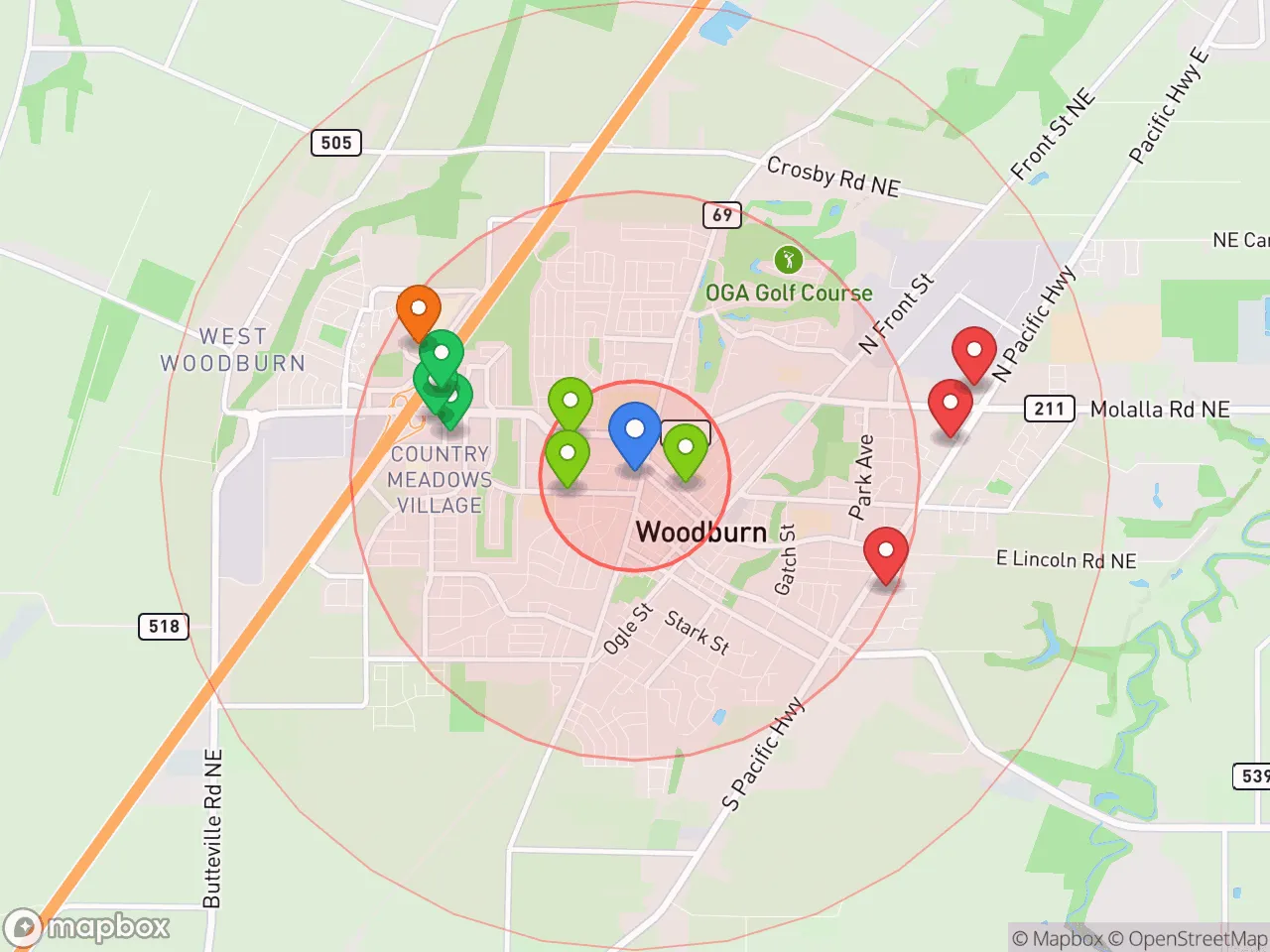
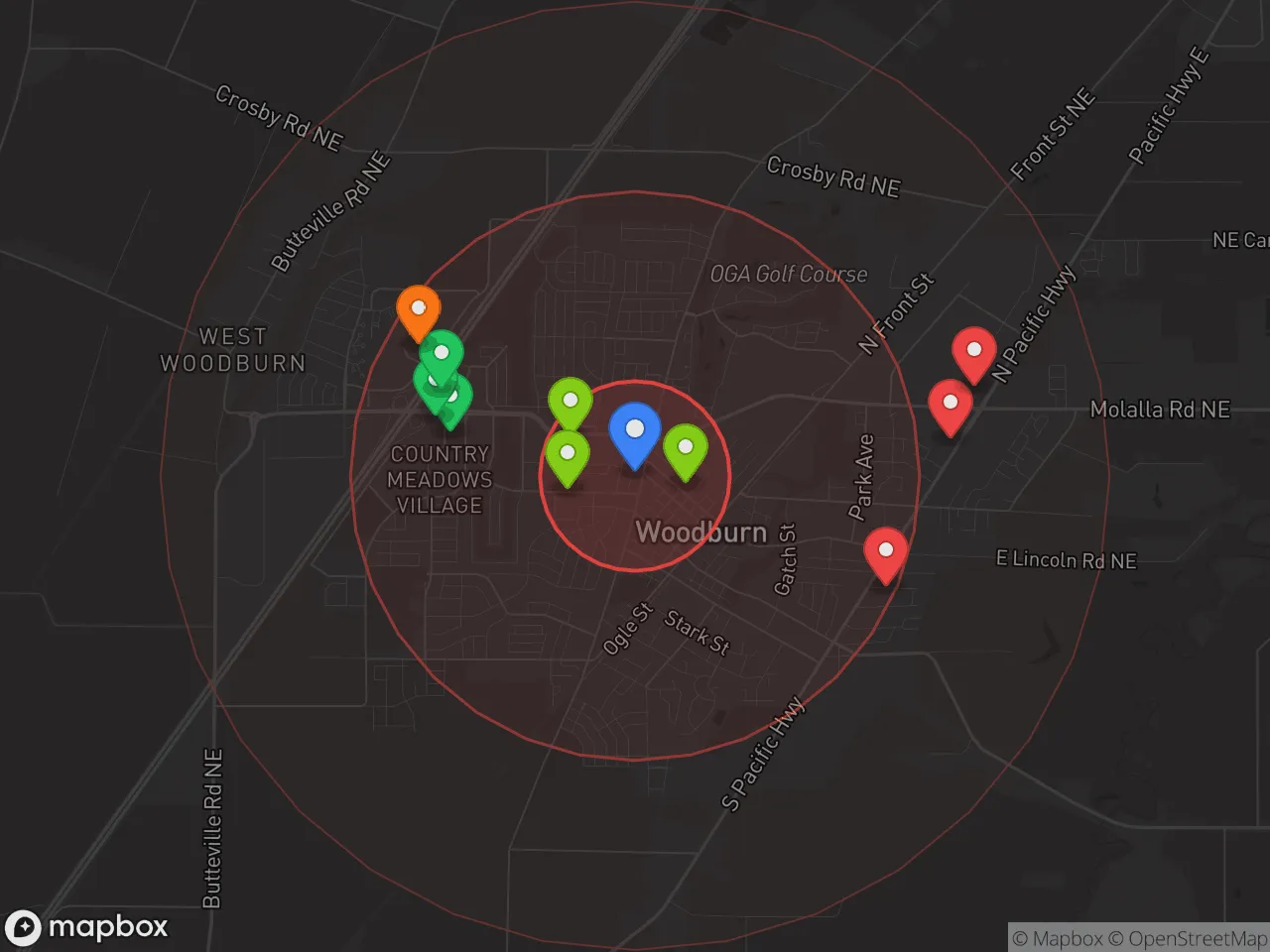
Explore the areaGroceries
2 within 10 miles
Gas
20 within 10 miles
Hospital
8 within 20 miles
Airport
PDX — Portland International
Post Office
USPS — Woodburn, OR
Critical Amenities
Quality-of-Life Analysis
Woodburn, Oregon, presents a middle-market quality of life shaped by its role as a working-class hub in the northern Willamette Valley. With a cost of living index of 115 (15% above the U.S. average), the city attracts a mix of agricultural workers, manufacturing employees, and commuters seeking more affordable housing than in nearby Portland or Salem. The population is notably diverse, with a large Hispanic and Latino community—over 60% of residents—giving the city a distinct cultural character that influences local businesses, festivals, and daily life.
Cost of living, housing, and affordability compared to Portland and Salem
Woodburn’s housing market is a key draw for budget-conscious buyers and renters. The median home value sits at $308,400, roughly half the Portland metro median of $550,000 and about 15% below Salem’s $360,000. Median rent is $1,373, which undercuts Portland’s $1,600 average and is comparable to Salem’s $1,350. However, the overall cost of living index of 115 is driven by higher-than-average grocery and transportation costs, partly due to limited local retail competition. For context, Salem’s COL index is 108, and Portland’s is 130. The average commute of 26.2 minutes is slightly longer than the national average of 25 minutes, reflecting the many residents who drive north to jobs in Wilsonville, Tualatin, or Portland. Woodburn lacks a direct light-rail connection, so a car is essential; the city’s location along Interstate 5 makes commuting feasible but can mean congestion during peak hours.
What daily life is like for families: amenities, schools, and local rhythm
Daily life in Woodburn centers on a compact downtown with a historic train depot, a growing number of taquerias and bakeries, and the Woodburn Premium Outlets, which draw shoppers from across the region. The Woodburn School District serves roughly 5,500 students, with Woodburn High School offering a strong bilingual program and career-technical pathways in agriculture and manufacturing. For recreation, the city maintains over 15 parks, including the 40-acre Woodburn Community Park with sports fields and a splash pad. The nearby Willamette Valley Scenic Bikeway and Champoeg State Heritage Area provide outdoor escapes within a 15-minute drive. Healthcare access is adequate: the Woodburn Health Center (part of the Virginia Garcia network) and a Legacy Health urgent care clinic serve basic needs, while serious cases require a 20-minute drive to Salem Hospital. The city’s rhythm is slower than Portland’s but busier than rural towns like Mount Angel; weekend farmers’ markets and the annual Fiesta Mexicana (one of Oregon’s largest) anchor community life.
Woodburn is best suited for families and workers who prioritize affordability and a slower pace over urban amenities. First-time homebuyers priced out of Portland will find the median home value of $308,400 attainable, especially with Oregon’s first-time homebuyer programs. Commuters willing to drive 25–30 minutes to jobs in the Portland tech corridor or Salem’s state government sector will find the trade-off worthwhile. Retirees on fixed incomes may struggle with the 15% above-average cost of living, but the city’s low crime rate relative to larger metros and strong community ties offer stability. Those seeking nightlife, high-end dining, or rapid transit should look elsewhere; Woodburn delivers a grounded, family-oriented quality of life with clear trade-offs in convenience and cultural variety.

Crime in Woodburn, OR
Crime rates similar to the national median for U.S. locations.
Violent CrimeViolent Crime Analysis
Property CrimeProperty Crime Analysis
Crime Analysis
Woodburn, Oregon, reports a violent crime rate of 306.9 incidents per 100,000 residents and a property crime rate of 2,110.8 per 100,000, placing it above national averages for both categories. As a small city within the Portland metropolitan area, its safety profile is influenced by regional crime trends and the progressive criminal justice policies common in the metro's judicial system. These policies, which prioritize rehabilitation and reduced incarceration, have been linked to higher recidivism and a greater number of offenders remaining on the street, directly impacting public safety and victims' rights.
Crime in context
Woodburn's violent crime rate is roughly 12% higher than the national average of about 274 per 100,000, while its property crime rate exceeds the U.S. norm by approximately 40%. Compared to Oregon's statewide violent crime rate of 290 per 100,000, Woodburn is slightly elevated. The city's proximity to the Portland metro area means it shares in the region's broader challenges, including a justice system that has seen progressive district attorneys and judges implement policies such as reduced bail, deferred prosecution for repeat offenders, and sentencing guidelines that emphasize alternatives to prison. These approaches, while intended to reduce mass incarceration, have been criticized for creating a revolving door that undermines deterrence and leaves victims with little recourse.
What residents experience
Residents report that property crimes—particularly theft, vehicle break-ins, and burglary—are the most common safety concerns, with the rate of 2,110.8 per 100,000 translating to roughly 1 in 48 households affected annually. Violent offenses, including assault and robbery, occur less frequently but are concentrated in specific areas, such as near the downtown core and along Highway 99E. The progressive judicial environment in Marion County, where Woodburn is located, has led to shorter sentences and more diversion programs for non-violent offenders, which some residents argue emboldens repeat property criminals. Community policing efforts exist but are often stretched thin, and the city's growing population—driven by its agricultural and food-processing industries—adds pressure on law enforcement resources.
Neighborhood-level variation
Safety varies noticeably across Woodburn. The newer residential subdivisions on the city's west side, near the Woodburn Premium Outlets, tend to see lower crime rates, while older neighborhoods east of Interstate 5, particularly around the downtown area and the industrial zones along Highway 214, experience higher incident counts. The Woodburn Apartments complex and areas near the Woodburn High School have been flagged in local crime reports for elevated theft and drug-related activity. Prospective residents should research specific blocks and consider that the metro area's progressive justice policies mean that even lower-crime neighborhoods are not insulated from regional recidivism trends. Consulting the Woodburn Police Department's annual report or speaking with local neighborhood watch groups can provide more granular insight.
* Values derived from national, state, county, city and local statistics and may differ in a specific area. Last updated: 2026-05-04T16:15:39.000Z
Narrative content on this page is AI-generated and may contain mistakes. Verify any details that matter before acting on them.
ReloMaps may earn a commission from affiliate links at no extra cost to you.

