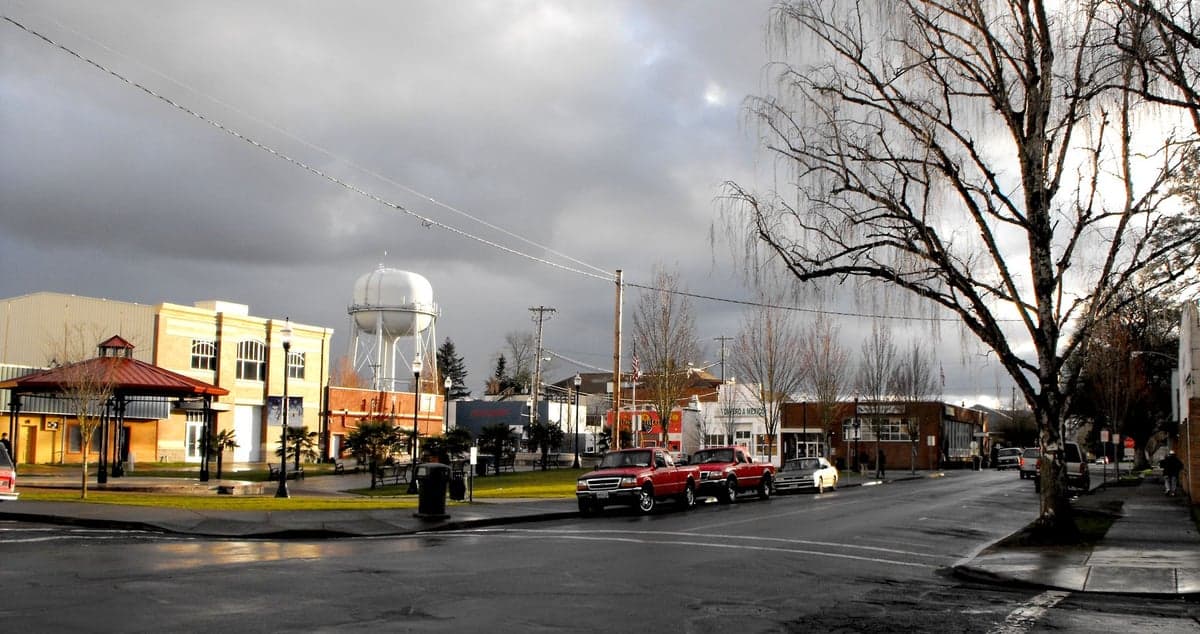
Photo: Wikipedia
Political ClimatePolitical Climate in Woodburn, OR
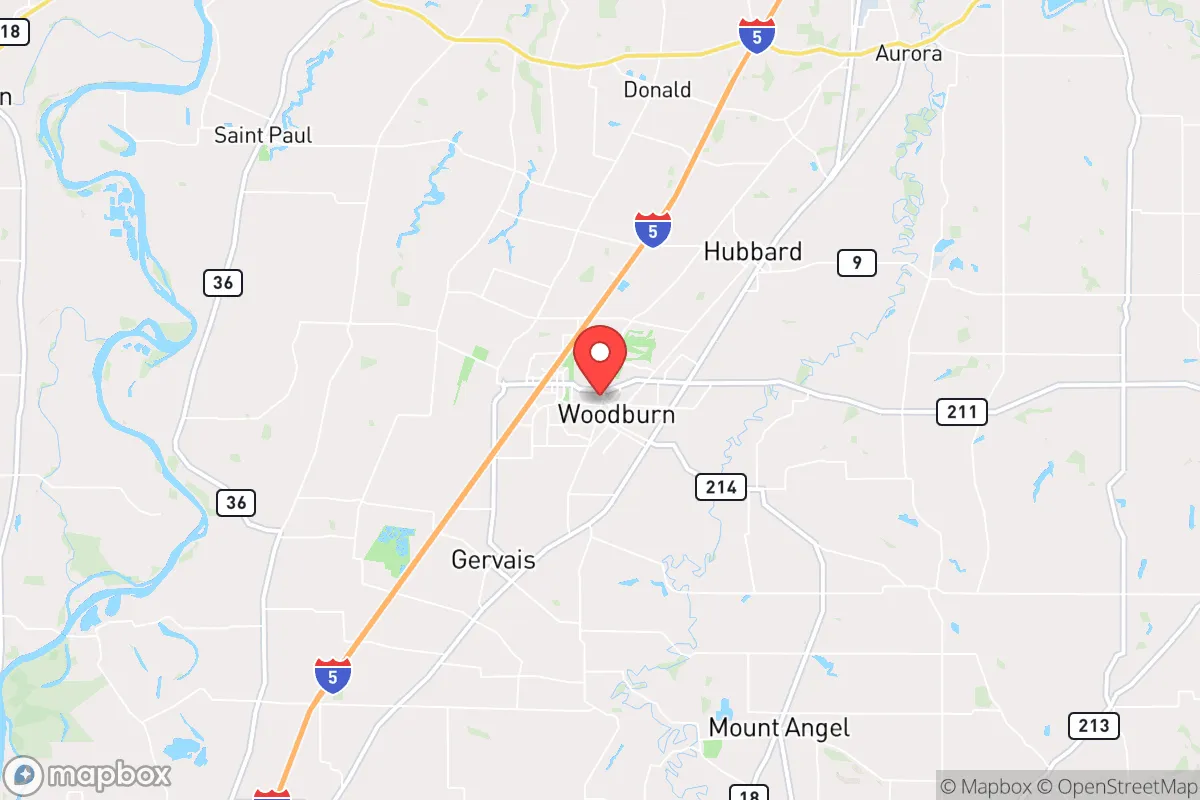
District shown is the primary district for this city’s centroid. Cities may span multiple districts.
Local Political AnalysisPolitical Analysis of Woodburn, OR
Woodburn, Oregon, has historically been a bit of a political outlier in the Willamette Valley, leaning more conservative than its surrounding neighbors, but the recent numbers show it’s been shifting. The area now carries a Cook PVI of D+6, which is still a couple of notches to the right of the state’s overall D+8 rating, but that gap is narrowing fast. If you’ve been around here for a while, you remember when local elections weren’t a foregone conclusion for the left, and you could count on a more balanced, common-sense approach to things like property rights and local business regulations. That’s not the story anymore, and the trend line is concerning for anyone who values personal freedoms over government mandates.
How it compares
When you stack Woodburn up against the rest of Oregon, the difference is subtle but real. The state as a whole is D+8, meaning it’s a solid blue stronghold, driven largely by the Portland metro area and the I-5 corridor. Woodburn’s D+6 rating shows it’s still a little more resistant to the full progressive agenda, but it’s getting pulled along. Drive ten minutes north to Hubbard or fifteen minutes south to Gervais, and you’ll find communities that still vote more red, with a stronger emphasis on local control and less tolerance for the kind of top-down policy-making that’s become the norm in Salem. The contrast is stark: while Portland and Eugene are pushing for things like defunding police and sweeping land-use restrictions, Woodburn’s voters have historically been more skeptical of that. But the last few election cycles show the progressive wave is lapping at our doorstep, and it’s hard to see it reversing.
What this means for residents
For folks living here, the political shift translates directly into daily life. You’re seeing more state-level mandates that override local preferences—things like strict energy codes on new homes, tighter rental regulations, and a growing list of taxes that fund programs you might not agree with. The government overreach is real, and it’s not just a talking point. If you value the right to make your own choices about your property, your business, or your kids’ education, the direction Woodburn is heading should give you pause. The local school board and city council races are becoming battlegrounds, and the progressive candidates are winning more often than they used to. Long-term, if this trend holds, expect more of the same: higher costs of living driven by regulation, less say in how your tax dollars are spent, and a cultural environment that increasingly frowns on traditional values.
One of the biggest cultural distinctions here is the tension between Woodburn’s agricultural roots and the influx of new residents from the Portland area who bring a different set of priorities. The old-timers remember when the biggest issues were water rights and farm labor, not climate action plans and equity audits. That’s changing. The shift towards progressive ideology is accelerating, and it’s not just about politics—it’s about the feel of the place. If you’re looking for a community that still values personal responsibility and limited government, you might find yourself feeling like a stranger in your own town sooner than you’d like. Keep an eye on the next few local elections; they’ll tell you everything you need to know about whether Woodburn can hold the line or if it’s destined to become just another blue dot on the map.

State Political ClimatePolitical Climate in Oregon
State Political AnalysisPolitical Environment in the State
Oregon has a Cook PVI of D+8, meaning it leans about eight points more Democratic than the national average, but that number hides a deeply fractured political landscape. Over the past 20 years, the state has lurched from a purple-trending-blue battleground into a solidly blue stronghold in the Willamette Valley, while the rest of the state has hardened into deep red territory. The shift accelerated after 2016, as Portland’s metro area—Multnomah, Washington, and Clackamas counties—pulled the statewide vote further left, while rural and coastal counties like Douglas, Josephine, and Klamath swung hard in the opposite direction. If you’re a conservative considering a move here, you need to understand that Oregon is effectively two states under one capitol roof.
Urban vs. rural divide
The political map of Oregon is a story of three distinct regions. The Portland metroplex—Portland itself, plus suburbs like Beaverton, Hillsboro, and Gresham—generates roughly 45% of the state’s vote and is overwhelmingly progressive. Multnomah County alone gave Joe Biden 78% of the vote in 2020. Meanwhile, the Willamette Valley south of Portland, including Eugene and Salem, is also reliably blue, though Eugene’s Lane County has a small but vocal libertarian streak. East of the Cascades, the state flips dramatically. Bend in Deschutes County is the only notable blue dot east of the mountains, and even there the county flipped from red to purple only in the last decade. Medford and Ashland in Jackson County show the divide in microcosm: Ashland is a liberal college town, while Medford is conservative-leaning. The rural counties—Lake, Harney, Grant—vote 75-80% Republican, but their populations are too small to offset Portland’s weight. This urban-rural chasm has only widened since the 2020 protests and the 2021 ice storm, when Portland’s response to both crises alienated many outside the metro.
Policy environment
Oregon’s policy environment is a cautionary tale for conservatives. The state has no sales tax, which sounds great, but it has one of the highest combined state and local income tax burdens in the nation—top marginal rates hit 9.9% for individuals and 7.6% for corporations. Property taxes are capped by Measure 50 (1997), but local bond measures and urban renewal districts can still drive them up. The regulatory posture is aggressive: Oregon has some of the strictest land-use laws in the country (Senate Bill 100 from 1973), which limit rural development and drive up housing costs in cities. Education policy is dominated by teachers’ unions, and the state’s graduation rate hovers around 80%, below the national average. Healthcare is heavily regulated, with a state-run insurance exchange and Medicaid expansion under the Oregon Health Plan. Election laws are among the most progressive: Oregon was the first state to vote entirely by mail (1998), and it automatically registers voters through the DMV. For conservatives, the biggest red flag is the lack of a secret ballot in union elections (House Bill 2016, 2023), which makes it easier for unions to organize workplaces without a private vote.
Trajectory & freedom
Oregon is becoming less free by almost any measure of personal liberty, especially for conservatives. On gun rights, the state passed Measure 114 in 2022, which requires a permit to purchase a firearm, bans magazines over ten rounds, and mandates a background check for every sale—even private ones. It’s currently tied up in court, but the trend is clear. On parental rights, Oregon has some of the most permissive laws in the nation regarding gender-affirming care for minors, with no age restrictions and no requirement for parental notification if a child seeks treatment through certain programs. On speech, the state has no hate speech law, but Portland’s city council has repeatedly tried to restrict public demonstrations near schools and libraries. On medical autonomy, Oregon was the first state to legalize assisted suicide (Death with Dignity Act, 1997) and has decriminalized hard drugs (Measure 110, 2020), though the latter was partially rolled back in 2024 after a surge in overdose deaths. Property rights are under constant pressure from land-use regulations and rent control (statewide rent cap of 7% plus inflation, passed in 2019). The overall trajectory is toward more government control over daily life, not less.
Civil unrest & political movements
Oregon has a long history of civil unrest, and the last five years have been particularly volatile. The 2020 George Floyd protests in Portland lasted for months, with nightly clashes between demonstrators and federal officers, leading to millions in property damage and a lasting reputation for lawlessness. The city’s sanctuary status (first declared in 1986, codified statewide in 1987) means local police generally do not cooperate with federal immigration enforcement, which has drawn both praise and criticism. On the right, the Walmart parking lot protests in rural towns like Roseburg and Grants Pass have been smaller but persistent, often focused on mask mandates and school board decisions. The Greater Idaho movement, which proposes moving 13 rural Oregon counties into Idaho, has gained traction in places like Lakeview and Burns, with several counties voting in favor of exploring the idea. Election integrity has been a flashpoint: Oregon’s all-mail system has been praised for high turnout but criticized for ballot harvesting concerns, especially after the 2020 election when a few counties reported minor irregularities. A new resident would notice the political tension most acutely in the difference between a Portland coffee shop and a Burns diner—the two worlds barely acknowledge each other.
Projection
Over the next 5-10 years, Oregon will likely become more polarized, not less. Demographic trends favor the left: Portland’s suburbs are growing faster than rural areas, and in-migration from California (which has slowed but not stopped) tends to bring progressive voters. However, there are countercurrents. The 2024 partial repeal of Measure 110 suggests that even liberal voters are tired of open drug use and property crime. The Greater Idaho movement, while unlikely to succeed, reflects a real desire for rural counties to escape Portland’s policy dominance. Housing costs in Portland and Bend are pushing some families to cheaper, redder areas like Klamath Falls or Ontario, which could slowly shift the balance in those regions. But the state’s political structure—with its strong urban majority and gerrymandered legislative districts—means that statewide policy will continue to lean left. A conservative moving here in 2026 should expect to live in a state where their vote for president or governor is effectively irrelevant, but where local elections in their county or city can still matter a great deal.
For a new resident, the bottom line is this: Oregon offers stunning natural beauty and a relatively mild climate, but it comes with a high cost in taxes, regulation, and cultural alienation if you’re conservative. If you’re moving here, choose your location carefully. Bend is a purple oasis with a growing conservative presence, but it’s expensive. Medford and Grants Pass are more affordable and red-leaning, but they’re far from Portland’s job market. Portland itself is a no-go for most conservatives unless your career demands it. The state’s trajectory is toward more government control, not less, but the rural areas still offer a taste of the old Oregon—if you can afford the commute and the property taxes. Come for the mountains, stay for the community, but keep your eyes open.
* Values derived from national, state, county, city and local statistics and may differ in a specific area. Last updated: 2026-05-04T16:15:39.000Z
Narrative content on this page is AI-generated and may contain mistakes. Verify any details that matter before acting on them.
ReloMaps may earn a commission from affiliate links at no extra cost to you.

