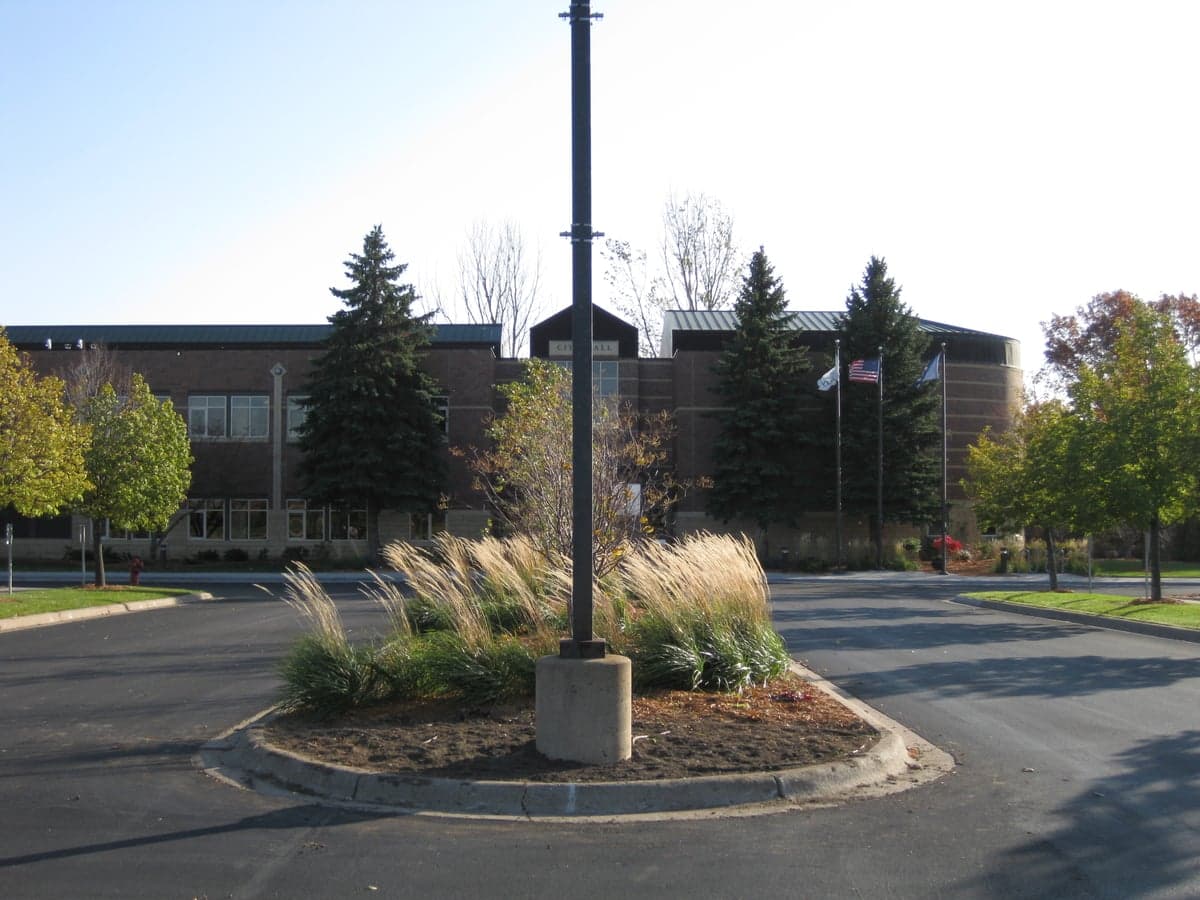
Photo: Wikipedia
Political ClimatePolitical Climate in Woodbury, MN
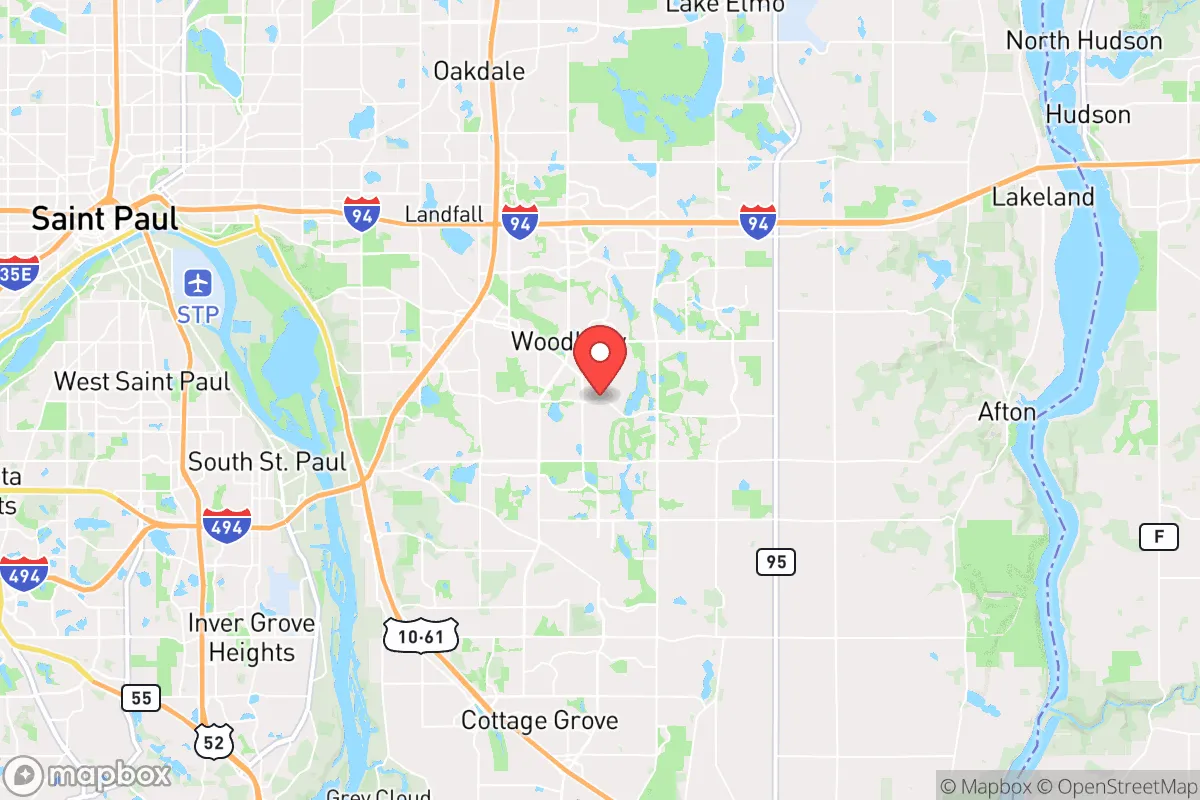
District shown is the primary district for this city’s centroid. Cities may span multiple districts.
Local Political AnalysisPolitical Analysis of Woodbury, MN
Woodbury, Minnesota, leans heavily Democratic, with a Cook PVI of D+18, meaning it votes about 18 points more Democratic than the national average. This wasn't always the case—twenty years ago, this was a reliably purple, fiscally conservative suburb where folks just wanted good schools and low taxes. But over the last decade, the political shift has been dramatic, driven by an influx of younger, more progressive families from Minneapolis and St. Paul, and a local government that’s increasingly comfortable with expanding its reach into daily life. If you’re looking for a place where the government stays out of your business, Woodbury is not that place anymore.
How it compares
To understand Woodbury’s politics, you have to look at its neighbors. Drive 15 minutes south to Cottage Grove or east to Hudson, Wisconsin, and you’ll find communities that still lean center-right, with lower taxes and a more hands-off approach to local ordinances. Woodbury, by contrast, has embraced a more activist local government—think stricter zoning, higher fees for new development, and a city council that’s quick to adopt state-level progressive mandates. Even within Washington County, Woodbury stands out as the most liberal hub; nearby Stillwater and Lake Elmo are more mixed, with a stronger independent streak. The D+18 rating isn’t just a number—it reflects a real cultural divide between Woodbury and the surrounding exurbs.
What this means for residents
For a longtime resident, the biggest concern is how much the local government has inserted itself into personal choices. Property taxes have climbed steadily, funding expanded public services and green initiatives that not everyone asked for. The city has also pushed for higher-density housing and transit-oriented development, which sounds good on paper but often means less privacy, more traffic, and a loss of that suburban feel. If you value the freedom to modify your home, run a small business from your garage, or simply be left alone, you’ll find the local bureaucracy increasingly intrusive. The school board, too, has leaned progressive, with curriculum changes and equity programs that some parents feel prioritize ideology over academics. It’s not a crisis, but it’s a slow drift toward a more managed, less individualistic community.
Culturally, Woodbury has become a place where progressive values are the default, and dissenting views—especially on fiscal or social issues—can feel unwelcome in public forums. The city’s embrace of sanctuary city policies and its vocal support for state-level gun control measures are clear examples of a government that prioritizes collective goals over individual rights. In the long term, if this trajectory continues, Woodbury could become even more homogenized politically, driving out the moderate and conservative voices that once balanced the community. For now, it’s a comfortable, well-maintained suburb—but the price of that comfort is a steady erosion of the personal freedoms that used to define places like this.

State Political ClimatePolitical Climate in Minnesota
State Political AnalysisPolitical Environment in the State
Minnesota has undergone a dramatic political transformation over the past decade, shifting from a classic purple battleground into a reliably blue state at the presidential level—voting for Democrats in every election since 1976, but with margins tightening from a 7-point win in 2012 to a 7-point win in 2020, then widening to a 7-point win again in 2024. The state’s dominant coalition is now a metro-anchored alliance of urban professionals, younger voters, and racial minorities, concentrated almost entirely in the Twin Cities metro, while the rest of the state has swung hard right. For a conservative considering relocation, the key takeaway is that Minnesota is two states in one: a deep-blue urban core that drives state policy, and a vast, increasingly red rural and exurban expanse that feels like a different country.
Urban vs. rural divide
The political map of Minnesota is a textbook case of the urban-rural chasm. The Twin Cities metro—Hennepin, Ramsey, and Washington counties—generates roughly 55% of the state’s vote and delivers massive Democratic margins. Minneapolis and St. Paul are among the most progressive cities in the Midwest, with rent control, sanctuary city policies, and defund-the-police movements that have reshaped local governance. Meanwhile, Greater Minnesota is overwhelmingly Republican. Counties like Stearns (St. Cloud), Olmsted (Rochester), and Dakota (suburban south metro) have shifted rightward in recent cycles. The Iron Range—historically a DFL stronghold—has flipped dramatically: St. Louis County (Duluth) went from +18 D in 2012 to +4 D in 2024, while rural counties like Mille Lacs, Kanabec, and Pine now vote +40 to +50 points Republican. The only blue outposts outside the metro are college towns like Northfield (Carleton/St. Olaf) and Winona (Winona State), plus the tribal areas of northern Minnesota. For a conservative, living in exurban counties like Wright, Sherburne, or Chisago offers proximity to metro jobs while being surrounded by like-minded neighbors—but you’ll still be governed by a legislature controlled by the metro.
Policy environment
Minnesota’s policy environment has lurched hard left since Democrats seized the trifecta in 2022. The 2023 legislative session was one of the most progressive in state history, passing a laundry list of bills that would make a conservative wince. The state now has a progressive income tax with a top rate of 9.85% (on income over $200k single/$300k married), a statewide rent control law that caps annual increases at 8% (with local opt-ins for stricter limits), and a paid family and medical leave program funded by a 0.7% payroll tax on all workers. Education policy is a flashpoint: Minnesota has open enrollment and charter schools, but the state also passed a “trans refuge” law that shields gender-affirming care for minors from out-of-state legal challenges, and a “parents’ bill of rights” was defeated in 2023. Election laws are among the most accessible in the nation: automatic voter registration, same-day registration, no-excuse absentee voting, and a restored felon voting law (signed in 2023) that lets felons vote upon release from prison, even while on parole. Gun laws are restrictive: universal background checks and a “red flag” law passed in 2023, and a permit-to-purchase requirement for handguns remains. Property taxes are high—the median effective property tax rate is 1.05%, above the national average—and there’s no statewide cap on annual increases. For a conservative, the policy environment feels like a slow-motion erosion of personal autonomy, with the state taking an increasingly active role in your healthcare, your children’s education, and your wallet.
Trajectory & freedom
Minnesota is clearly becoming less free by any conservative measure of personal liberty. The 2023 session was a watershed: the “Driver’s Licenses for All” law (allowing undocumented immigrants to get licenses), the “Trans Refuge” law (protecting providers of gender-affirming care from out-of-state subpoenas), and the “Reproductive Freedom” law (codifying abortion rights and removing nearly all restrictions) all expanded state power over individual choices. On the positive side for conservatives, Minnesota is a “shall issue” state for concealed carry (no permit required for open carry, but a permit is needed for concealed), and preemption laws prevent local gun ordinances. However, the 2023 red flag law and universal background checks represent a significant encroachment on the Second Amendment. Parental rights took a hit: the state now allows minors to consent to gender-affirming care without parental notification in some circumstances, and the “Parents’ Bill of Rights” bill (which would have required schools to notify parents of curriculum changes and medical services) died in committee. Medical freedom is under assault: the state mandated COVID-19 vaccines for healthcare workers (later repealed) and has no religious or philosophical exemptions for school vaccine requirements. Property rights are eroding: the 2023 rent control law, while modest, sets a precedent for state-level interference in private contracts. The trajectory is clear: each legislative session brings new restrictions on personal choice, funded by higher taxes.
Civil unrest & political movements
Minnesota has been a national flashpoint for civil unrest since the 2020 George Floyd protests, which caused an estimated $500 million in damage in Minneapolis and St. Paul. The “Defund the Police” movement had real political power here: the Minneapolis City Council attempted to dismantle the police department (a ballot measure failed in 2021), and the city has since struggled with rising violent crime. On the right, the “Minnesota Freedom Fund” and “Protect Minnesota” are active, but the most visible conservative movement is the “Parents’ Rights” movement, which has organized school board takeovers in suburbs like Anoka, Lakeville, and Prior Lake. Immigration politics are heated: Minneapolis and St. Paul are sanctuary cities, and the 2023 driver’s license law has been a rallying cry for conservatives. Election integrity remains a sore point: Minnesota’s same-day registration and mail-in voting systems were praised by Democrats but criticized by conservatives after the 2020 election, though no widespread fraud was proven. The “Minnesota State Patrol” has been deployed to quell protests, and the “Minnesota National Guard” was activated during the 2020 unrest. A new resident would notice the ubiquitous “Black Lives Matter” murals in Minneapolis, the “Blue Lives Matter” flags in exurban counties, and the constant tension between the metro’s activist culture and the rest of the state’s desire for order.
Projection
Over the next 5-10 years, Minnesota will likely continue its leftward drift at the state level, driven by demographic trends. The Twin Cities metro is growing faster than Greater Minnesota, and the state’s aging rural population is dying off while younger, more diverse voters move into the suburbs. The 2026 gubernatorial election will be a test: if Democrats hold the governorship, expect another wave of progressive legislation—possibly a statewide rent cap, a public option for healthcare, or a wealth tax. If a Republican wins, it will be a temporary brake, not a reversal. The state Supreme Court is now 4-3 Democratic appointees, and the legislative maps are gerrymandered to favor Democrats in the metro. In-migration patterns are mixed: Minnesota is gaining domestic migrants from the coasts (especially California and New York), but losing people to Texas, Florida, and Arizona. The net effect is a slow but steady blue shift. For a conservative moving in now, expect to live in a state where your vote for president is irrelevant, your state legislature is hostile to your values, and your local school board is a battleground. The best you can hope for is a divided government that blocks the worst excesses, but the long-term trend is toward a California-style one-party state.
Bottom line for a new resident: If you’re a conservative considering Minnesota, you need to be strategic. The exurban counties west and north of the metro (Wright, Sherburne, Chisago) offer a high quality of life, good schools, and like-minded neighbors—but you’ll still pay high taxes and live under state laws you disagree with. The Iron Range and rural south are more affordable and deeply red, but job opportunities are limited. The Twin Cities metro is a no-go for most conservatives unless you’re willing to fight constant cultural battles. Minnesota is a beautiful state with great outdoor recreation, strong schools, and a robust economy—but it’s also a state where your personal freedoms are being steadily eroded by a government that doesn’t share your values. Come for the lakes, stay for the community, but be prepared to vote in every local election to protect what’s left.
* Values derived from national, state, county, city and local statistics and may differ in a specific area. Last updated: 2026-04-24T06:38:16.000Z
Narrative content on this page is AI-generated and may contain mistakes. Verify any details that matter before acting on them.
ReloMaps may earn a commission from affiliate links at no extra cost to you.

