 Popular
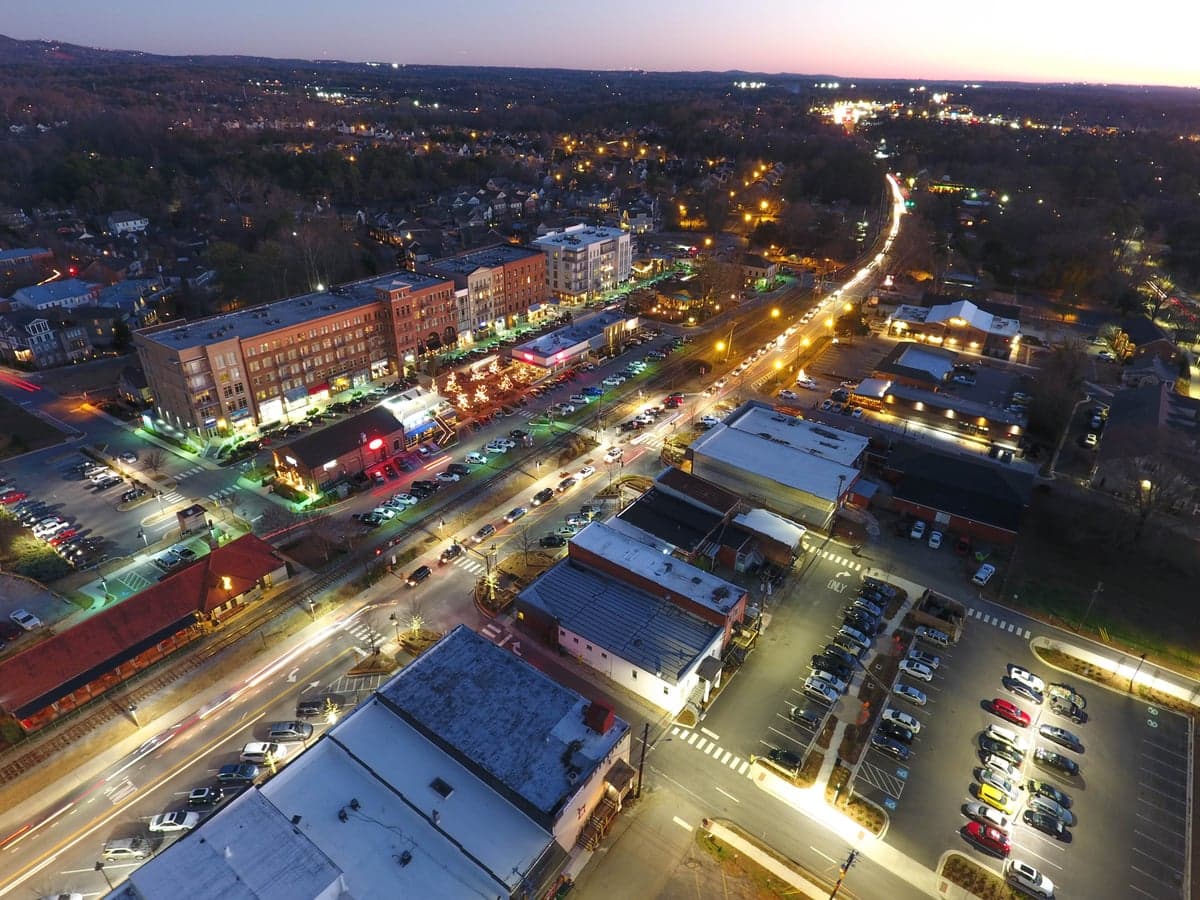
Photo: Wikipedia
Personal Sovereignty in Woodstock, GA
Viable for self-reliance. Generally workable, though some barriers may limit total independence.
What does Personal Sovereignty tell us?
Personal Sovereignty measures your capacity for self-reliance and independence with minimal government friction. Higher scores mean fewer barriers between you and the way you want to live... but it assumes you have the space you need and good neighbors.
What does this tell us?
Personal Sovereignty measures your capacity for self-reliance and independence with minimal government friction. Higher scores mean fewer barriers between you and the way you want to live... but it assumes you have the space you need and good neighbors.
State Policy
Energy independence: Importer (12% of energy produced in-state)
Personal Liberty
Homesteading

Personal Liberty Analysis
Woodstock, Georgia, offers a notably high degree of personal sovereignty relative to many metro-Atlanta suburbs, largely due to Georgia’s strong preemption laws and a state-level political culture that resists local overreach. For the survivalist or prepper-minded individual, this means fewer municipal ordinances that infringe on daily life—no city-level gun bans, no aggressive zoning that blocks self-reliance, and a tax code that doesn’t punish property ownership or income as harshly as neighboring states. The key question isn’t whether Woodstock is a libertarian paradise (it isn’t), but whether it provides enough legal and practical buffer for a family to live with minimal government interference while still having access to regional resources. The answer is a qualified yes, with specific trade-offs in density and land use that matter deeply for those prioritizing autonomy.
Tax burden and regulatory posture: how Georgia’s state-level policies protect local autonomy
Georgia’s tax structure is a net positive for personal sovereignty. The state’s flat income tax rate of 5.49% (as of 2026) is moderate but predictable, and there is no state-level estate or inheritance tax—critical for passing property to the next generation without government seizure. Woodstock itself operates under Cherokee County, which has one of the lowest property tax millage rates in metro Atlanta, typically around 0.8% to 1.0% of assessed value. This is significantly lower than Fulton or DeKalb counties, where rates can exceed 1.5%. More importantly, Georgia’s strong preemption laws prevent cities and counties from enacting their own business regulations, rent control, or minimum wage ordinances that differ from state law. This means Woodstock cannot unilaterally impose burdensome local rules that would choke a home-based business or a small-scale farming operation. The regulatory environment is business-friendly but not lawless; building permits and zoning are enforced, but the process is straightforward compared to jurisdictions like California or New York. For the prepper, the absence of local income taxes and the cap on property tax increases (via the statewide homestead exemption) provide financial predictability that supports long-term self-sufficiency planning.
Self-defense and gun law specifics: what Woodstock allows and what it restricts
Georgia is a constitutional carry state since 2022, meaning no permit is required to carry a concealed firearm for anyone legally allowed to possess one. Woodstock, as a city, cannot override this. There are no local gun registration requirements, no waiting periods, and no bans on standard-capacity magazines or common rifle platforms like AR-15s. The city does have a no-carry zone for city-owned buildings and parks (per state law allowing local governments to restrict carry in government facilities), but this is limited and clearly posted. For the survivalist, the critical detail is that Georgia’s “stand your ground” law is among the strongest in the nation, with no duty to retreat in any place where you are lawfully present. This applies in Woodstock as it does anywhere else in the state. The only notable restriction is that private property owners—including businesses—can post signs prohibiting firearms, and doing so carries force of law (trespassing if you ignore them). In practice, most Woodstock businesses do not post such signs, and the culture is generally pro-2A. For those building a defensive capability, the legal framework is permissive, but you must still be aware of federal restrictions (e.g., NFA items like suppressors require a tax stamp, though Georgia has no state-level ban on them).
Self-reliance and homesteading viability: lot sizes, zoning, and off-grid feasibility
This is where Woodstock’s suburban character creates the most friction for the prepper mindset. The city’s zoning is predominantly R-1 (single-family residential) with minimum lot sizes of 0.25 to 0.5 acres in most subdivisions. While you can own chickens (up to 6 hens, no roosters, with a permit), livestock like goats, pigs, or cattle are prohibited within city limits. Gardening is unrestricted, but HOA covenants in many neighborhoods may impose aesthetic rules that limit visible food production or rainwater collection systems. For true homesteading—think acreage for orchards, livestock, or a substantial off-grid setup—you need to look outside Woodstock proper, into unincorporated Cherokee County or neighboring areas like Ball Ground or Canton, where zoning allows for agricultural use on parcels of 2 acres or more. Off-grid feasibility is mixed: Georgia has no state law prohibiting solar panels or rainwater harvesting, but Woodstock requires connection to municipal water and sewer for any habitable structure, making complete off-grid independence illegal within city limits. You can supplement with solar and well water (if you have the land), but you cannot disconnect from the grid entirely. For the serious prepper, Woodstock is a good base for a suburban retreat—close to supplies and medical care—but not a place for a fully self-sufficient homestead. The trade-off is access to a robust community of like-minded individuals and a low-crime environment that reduces the need for constant vigilance.
Personal liberties: parental rights, medical autonomy, speech, and property
Georgia has been a battleground for parental rights, and the state’s current legal posture is strongly protective. Parents have the right to opt their children out of any curriculum or activity they find objectionable (including sex education and certain health screenings), and the state’s “Parents’ Bill of Rights” (enacted in 2022) explicitly affirms that parental authority is primary in education, healthcare, and religious upbringing. Woodstock’s school system (Cherokee County School District) has been conservative in its approach, with no mask mandates or vaccine requirements for students beyond state minimums. Medical autonomy is more complex: Georgia has not expanded Medicaid, and the state’s certificate-of-need laws limit the number of hospitals and clinics, which can reduce options for alternative or holistic care. However, there are no state-level restrictions on purchasing raw milk, owning medicinal herbs, or practicing home-based apothecary (as long as you don’t make medical claims). Speech is fully protected under the First Amendment, and Woodstock has no local ordinances restricting political signs, leafleting, or public assembly. Property rights are strong: Georgia is a “right-to-farm” state, meaning agricultural operations are protected from nuisance lawsuits, though this applies more to rural areas than suburban Woodstock. Eminent domain is rarely used aggressively here, and property taxes are capped for seniors and disabled veterans. The overall environment is one where a family can live largely unbothered by government intrusion, provided they stay within the bounds of standard suburban codes.
In the broader context of metro Atlanta, Woodstock ranks as a top-tier location for personal sovereignty—not as free as rural North Georgia, but far more permissive than Atlanta proper or its inner-ring suburbs like Decatur or Smyrna. The combination of constitutional carry, low taxes, strong parental rights, and a culture that values self-reliance makes it a viable base for those who want to live with minimal government interference while still having jobs, schools, and healthcare nearby. The main compromises are the inability to go fully off-grid and the need to comply with HOA rules in many neighborhoods. For a single individual or family with a prepper mindset, Woodstock offers a solid foundation: you can defend yourself, keep your earnings, raise your children without state interference, and build a resilient suburban life. Just know that if your vision of sovereignty involves 20 acres and a bunker, you’ll need to look further north—but for daily autonomy in a community that largely shares your values, Woodstock delivers.

* Values derived from national, state, county, city and local statistics and may differ in a specific area. Last updated: 2026-04-30T07:38:47.000Z
Narrative content on this page is AI-generated and may contain mistakes. Verify any details that matter before acting on them.
ReloMaps may earn a commission from affiliate links at no extra cost to you.

