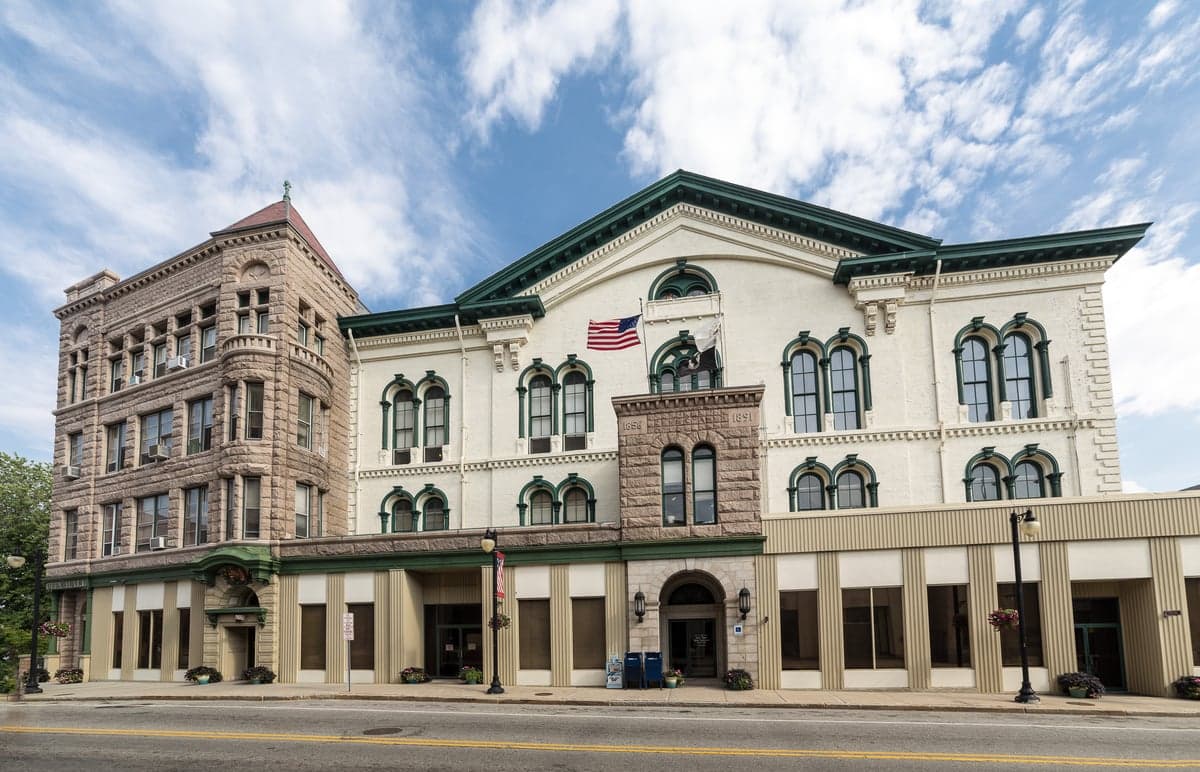
Photo: Wikipedia
Personal Sovereignty in Woonsocket, RI
Viable for self-reliance. Generally workable, though some barriers may limit total independence.
What does Personal Sovereignty tell us?
Personal Sovereignty measures your capacity for self-reliance and independence with minimal government friction. Higher scores mean fewer barriers between you and the way you want to live... but it assumes you have the space you need and good neighbors.
What does this tell us?
Personal Sovereignty measures your capacity for self-reliance and independence with minimal government friction. Higher scores mean fewer barriers between you and the way you want to live... but it assumes you have the space you need and good neighbors.
State Policy
Energy independence: Importer (1% of energy produced in-state)
Personal Liberty
Homesteading

Personal Liberty Analysis
Woonsocket, Rhode Island, presents a mixed picture for those prioritizing personal sovereignty, with the state’s overall regulatory climate and tax burden significantly constraining individual autonomy. While the city itself offers a lower cost of entry than much of New England, the surrounding legal framework—particularly in taxation, self-defense, and property rights—places notable limits on the kind of self-reliant, prepper-minded lifestyle many conservative-leaning individuals seek. For a single person or family weighing relocation, the key question is whether Woonsocket’s affordability and proximity to rural escape routes outweigh the state-level overreach that defines Rhode Island’s governance.
Tax burden and regulatory posture: how Rhode Island’s policies affect your wallet and freedom
Rhode Island’s tax structure is a primary concern for anyone valuing financial sovereignty. The state imposes a progressive income tax with a top marginal rate of 5.99% on income over $166,550 (as of 2026), which is moderate by New England standards but still a significant bite compared to no-income-tax states like New Hampshire or Florida. Property taxes in Woonsocket are notably high, with an effective rate around 1.8% to 2.0% of assessed home value, placing it among the higher-cost areas in the state. This directly impacts the ability to build wealth and maintain self-sufficiency on a fixed plot of land. Additionally, Rhode Island’s regulatory posture is dense: the state has strict environmental and building codes, including a statewide building code that limits off-grid modifications without permits. For a prepper, this means any attempt to install solar panels, rainwater catchment systems, or backup generators must navigate a permitting process that can take months and cost thousands. The state’s sales tax is 7%, applied to most goods, which further erodes purchasing power for bulk supplies and gear. Compared to neighboring Massachusetts, Rhode Island is slightly less burdensome on income tax but worse on property tax, making Woonsocket a tough sell for those seeking to minimize government extraction from their earnings.
Self-defense and gun law specifics: what you can and cannot do in Rhode Island
For the survivalist-minded, Rhode Island’s gun laws are a significant red flag. The state requires a purchase permit for handguns and a separate concealed carry permit, both of which involve background checks, fingerprinting, and a waiting period. As of 2026, Rhode Island is a “may-issue” state for concealed carry, meaning local authorities have discretion to deny permits even if you meet basic requirements—a far cry from the constitutional carry found in over half the country. Magazine capacity is limited to 10 rounds, and “assault weapons” as defined by state law are banned, including many common semi-automatic rifles like the AR-15. This directly impacts a prepper’s ability to stockpile standard defensive and hunting tools. Stand-your-ground laws do not exist in Rhode Island; instead, the state imposes a duty to retreat if safely possible before using deadly force, even in your own home in some interpretations. For a family concerned with home defense, this legal framework creates a chilling effect: you may face prosecution for defending your property or family in a way that would be legally protected in Texas or Florida. The state also has a red flag law allowing temporary firearm seizure based on a complaint, which raises concerns about due process and government overreach. If self-defense autonomy is a top priority, Woonsocket—and Rhode Island as a whole—ranks poorly compared to most of the South, Midwest, or Mountain West.
Self-reliance and homesteading viability: lot sizes, zoning, and off-grid feasibility
Woonsocket is an urbanized mill city, which inherently limits homesteading potential. The typical residential lot size in the city is 0.1 to 0.25 acres, with most homes built on small, narrow plots. Zoning is predominantly residential, with strict rules against keeping livestock, chickens, or bees in many neighborhoods—though some single-family zones allow up to six hens with a permit. Off-grid living is effectively illegal in Woonsocket: the city requires connection to municipal water and sewer, and any attempt to go fully off-grid with solar, composting toilets, or well water would violate building codes and health regulations. For a prepper seeking true self-reliance, this means you’re tied to the grid and vulnerable to municipal failures. However, the surrounding Blackstone Valley and rural towns like Burrillville or Glocester, within a 20-minute drive, offer 1- to 5-acre parcels with more permissive zoning for small-scale agriculture, rainwater collection, and even limited off-grid setups. The trade-off is that those areas have even higher property taxes and fewer services. For a single person or family willing to commute, Woonsocket’s lower home prices (median around $280,000 in 2026) can serve as a base while you scout rural land for a future bug-out location. But for immediate homesteading, the city itself is a poor fit.
Personal liberties: parental rights, medical autonomy, speech, and property
Rhode Island’s track record on personal liberties is mixed, with some bright spots and several areas of concern for conservative-leaning residents. On parental rights, the state has been proactive in mandating school curricula that include LGBTQ+ topics and comprehensive sex education, which some parents view as overreach into family values. Rhode Island does not have a parental bill of rights law, meaning schools can make decisions about a child’s gender identity or medical care without notifying parents in some cases—a major red flag for families prioritizing parental authority. On medical autonomy, the state imposed strict COVID-19 vaccine mandates for healthcare workers and state employees, and while those have been relaxed, the precedent for government-mandated medical interventions remains. Rhode Island also has a robust vaccine requirement for school attendance, with limited philosophical exemptions. Property rights are constrained by the state’s strong environmental regulations, including the Rhode Island Coastal Resources Management Council, which can restrict development even on private land near wetlands. Free speech is generally protected, but the state has enacted laws against “hate speech” in public spaces and online that some critics argue chill political expression. For a prepper concerned about government overreach, these policies signal a state that is willing to intervene in personal decisions—from what you teach your kids to what medical treatments you accept—which undermines the core principle of individual sovereignty.
Overall, Woonsocket offers a low-cost entry point into a region with some natural escape routes, but the state-level constraints on taxation, self-defense, homesteading, and personal liberties make it a poor choice for those seeking maximum personal sovereignty. Compared to states like New Hampshire (no income tax, constitutional carry, strong property rights) or even parts of upstate New York, Rhode Island’s regulatory density and progressive governance create a environment where the government’s hand is felt in nearly every aspect of daily life. For a survivalist or prepper, Woonsocket might work as a temporary base while building resources for a move to a freer jurisdiction, but as a long-term home for self-reliant individuals or families, it falls short of the autonomy many conservative-leaning relocators demand.

* Values derived from national, state, county, city and local statistics and may differ in a specific area. Last updated: 2026-04-30T05:28:22.000Z
Narrative content on this page is AI-generated and may contain mistakes. Verify any details that matter before acting on them.
ReloMaps may earn a commission from affiliate links at no extra cost to you.

