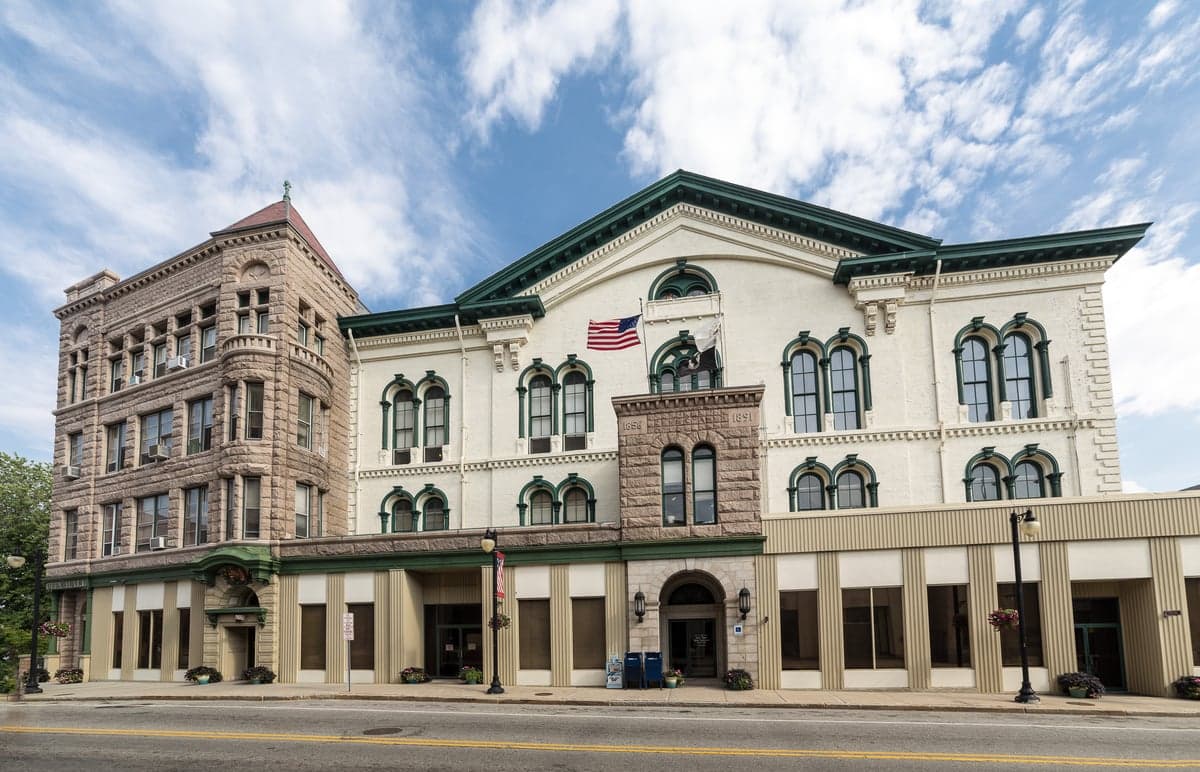
Photo: Wikipedia
Political ClimatePolitical Climate in Woonsocket, RI
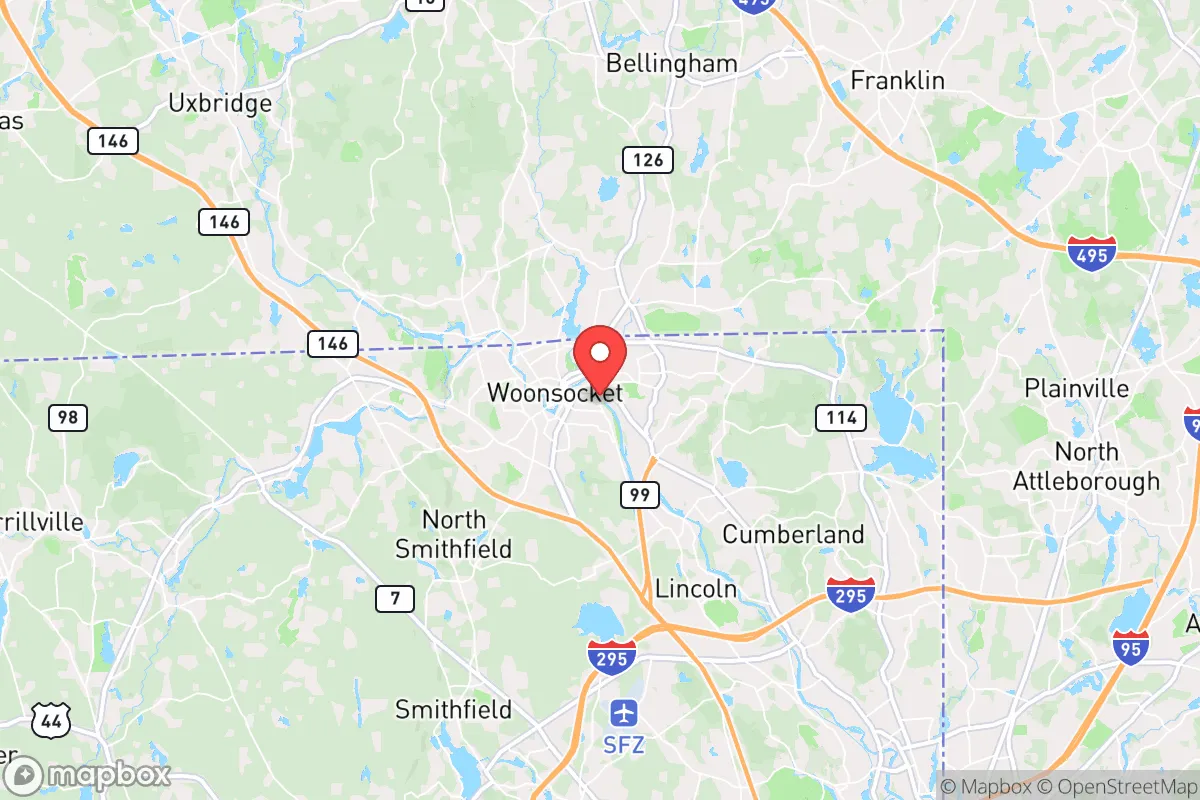
District shown is the primary district for this city’s centroid. Cities may span multiple districts.
Local Political AnalysisPolitical Analysis of Woonsocket, RI
Woonsocket, Rhode Island, is a deeply blue city with a Cook PVI of D+12, meaning it votes about 12 points more Democratic than the national average. This isn't a recent shift; the city has been a Democratic stronghold for decades, but the character of that politics has changed. In the past, you had a lot of working-class, union Democrats—folks who were fiscally liberal but socially moderate or even conservative. Now, you're seeing a much more progressive, activist-driven politics take hold, and that's where the concern really sets in for anyone who values personal freedom and local control.
How it compares
Drive just a few miles west into the rural towns of Burrillville or North Smithfield, and you'll find a completely different political world. Those areas are reliably Republican, with voters who are skeptical of state mandates and high taxes. Even neighboring Cumberland, while still Democratic, is much more moderate than Woonsocket. The contrast is stark: Woonsocket's city council and school committee are dominated by progressive Democrats who push policies like sanctuary city status and equity initiatives, while the surrounding towns are fighting to keep property taxes low and local police departments independent. This creates a real cultural and political divide, even within the same county. You used to be able to have a reasonable conversation about fiscal responsibility or property rights at a local diner; now, it feels like you're speaking a different language if you question the direction of the city's leadership.
What this means for residents
For a long-time resident, the most visible change is the feeling that government is getting into every corner of your life. The city has embraced state-level progressive policies on housing, zoning, and education that often override local input. There's a push for higher density housing mandates, which sounds good on paper but often means less say for existing homeowners about what gets built on their street. The school system has shifted focus toward social-emotional learning and diversity training, sometimes at the expense of core academics and parental rights. If you're a small business owner, you're dealing with a growing list of regulations and fees that make it harder to just run your shop. The tax burden is already high, and with a progressive majority, there's little appetite for cutting spending. It feels like the city government is more interested in making a political statement than in making sure the potholes get filled or the police have the resources they need.
Looking ahead, the trajectory is concerning. The same progressive energy that dominates the city council is also influencing the state legislature, which means Woonsocket is often a testing ground for new state-level mandates. The long-term risk is that the city becomes less attractive for families and businesses who want a simpler, more hands-off government. The old Woonsocket was a place where people worked hard, kept their heads down, and expected the city to stay out of their way. That's fading. If you value personal freedom, low taxes, and a government that respects your right to live your life without constant interference, Woonsocket is becoming a harder place to call home. The political climate here isn't just blue—it's actively pushing a progressive agenda that many long-time residents find out of step with the values that built this community.

State Political ClimatePolitical Climate in Rhode Island
State Political AnalysisPolitical Environment in the State
Rhode Island has long been a Democratic stronghold, but its politics are more complicated than the state’s deep-blue registration numbers suggest. The Ocean State has voted for the Democratic presidential candidate by double digits in every election since 2008, but a closer look reveals a state where the urban machine politics of Providence clash with a more independent, tax-sensitive suburban and rural electorate. Over the past 20 years, the state has drifted left on social issues while maintaining a surprisingly pragmatic, sometimes conservative, streak on fiscal matters—though recent progressive waves in Providence and Newport have begun to erode that balance.
Urban vs. rural divide
The political map of Rhode Island is a tale of two worlds. Providence, the capital and largest city, is the engine of the state’s Democratic dominance, with precincts routinely delivering 80-90% of the vote to Democratic candidates. The city’s political machine, long associated with the late Mayor Buddy Cianci, still exerts influence, though a new generation of progressive activists has pushed the city council further left on issues like rent control and police reform. Just 15 minutes south, Cranston and Warwick—the second and third largest cities—are more moderate, often serving as the battleground for state legislative races. In 2022, Republican candidate Ashley Kalus won Warwick by a narrow margin in the gubernatorial race, a sign of the city’s swing potential. The rural western half of the state, including towns like Foster, Scituate, and West Greenwich, votes reliably Republican, with some precincts going 65-70% for GOP candidates. Even in deep-blue Washington County, the coastal towns of Narragansett and South Kingstown lean left, while inland Exeter and Richmond remain conservative. The divide isn’t just about geography—it’s about density. The state’s 39 cities and towns each have their own political identity, and a move from Providence to Foster is a move into a completely different political universe.
Policy environment
Rhode Island’s policy environment is a mixed bag that should give any conservative pause. The state has one of the highest combined state and local tax burdens in the nation, with a progressive income tax topping out at 5.99% on income over $155,050. Property taxes are notoriously high, especially in Providence and Pawtucket, where rates can exceed $20 per $1,000 of assessed value. The regulatory climate is heavy, with a minimum wage that hit $14.00 in 2024 and is scheduled to rise to $15.00 by 2025. The state’s education system is a study in contrasts: wealthy suburbs like Barrington and East Greenwich boast top-tier public schools, while Providence’s schools remain chronically underfunded and underperforming, leading to a growing school choice movement that has been met with fierce resistance from the teachers’ union. Healthcare is dominated by Lifespan and Care New England, two large hospital systems that have effectively created a quasi-monopoly, driving up costs. Election laws are relatively accessible, with same-day voter registration and no-excuse mail voting, which has raised concerns among conservatives about election integrity. The state’s gun laws are among the strictest in the nation, including a ban on “assault weapons,” a 10-round magazine limit, and a “red flag” law that allows for temporary firearm seizure without a criminal conviction.
Trajectory & freedom
Rhode Island is moving in a decidedly less free direction, and the trend has accelerated in the last five years. In 2022, the state passed a law requiring all new residential and commercial buildings to be “electric-ready,” effectively phasing out natural gas hookups—a direct government mandate on personal property choices. The same year, the General Assembly overrode Governor Dan McKee’s veto to pass the “Rhode Island Right to Contraception Act,” which, while popular, was seen by many conservatives as a slippery slope toward codifying abortion access without limits. On the parental rights front, the state’s Department of Education has pushed for LGBTQ+ inclusive curricula in public schools, with no opt-out provision for parents who object. Gun rights have been steadily eroded: in 2023, the state banned carrying firearms on school grounds and in state parks, and a 2024 bill to require liability insurance for gun owners is gaining traction. Property rights are under threat from a 2023 law that allows municipalities to impose rent control on mobile home parks, a precedent that could expand. The state’s tax burden continues to rise, with no serious effort at comprehensive tax reform. For a conservative, the trajectory is clear: more mandates, less personal autonomy, and a government that increasingly sees itself as the arbiter of daily life.
Civil unrest & political movements
Rhode Island has seen its share of political flashpoints, though they tend to be more bureaucratic than violent. In 2020, Providence was the site of large Black Lives Matter protests, some of which turned destructive, leading to a city council push to defund the police—a move that ultimately failed but left lasting tensions. The state’s sanctuary status, codified by a 2014 executive order and expanded in 2021, has made it a destination for illegal immigrants, straining social services in places like Central Falls and Pawtucket. In 2023, a controversy erupted in Cranston when the school committee voted to remove a book about gender identity from elementary school libraries, sparking a heated debate over parental rights that drew national attention. The Rhode Island Republican Party remains a small but vocal minority, with its strongest base in the rural towns and among the state’s Italian-American and Portuguese-American communities in places like Johnston and North Providence. There is no serious secession or nullification movement, but a growing number of residents are exploring the “Free State Project” model, with some moving to New Hampshire. Election integrity remains a concern for conservatives, particularly after the 2020 election saw a surge in mail-in ballots with no meaningful signature verification. The state’s political culture is one of insular, machine-style politics, where a small group of insiders—often union leaders and Providence-based lobbyists—wield outsized influence.
Projection
Over the next 5-10 years, Rhode Island is likely to become more progressive, not less. The state’s population is aging and declining, with the highest median age in New England and a net domestic out-migration that has been negative for years. The people leaving are disproportionately younger, more conservative-leaning families seeking lower taxes and more freedom in states like Florida, Texas, and New Hampshire. Those moving in are often drawn to Providence’s urban amenities or the coastal lifestyle of Newport and Narragansett, and they tend to be more liberal. The Democratic Party’s dominance is unlikely to be seriously challenged, as the GOP remains organizationally weak and ideologically fractured. However, there is a wild card: the growing dissatisfaction with high taxes and overregulation could fuel a populist backlash, particularly if the state’s economy continues to underperform. A conservative moving in now should expect to be a permanent minority, with limited political influence, but with the consolation that the state’s small size means that individual voices can still have an outsized impact at the local level.
For a conservative considering a move to Rhode Island, the bottom line is this: you will be swimming against the political current. The state offers beautiful coastlines, historic charm, and a strong sense of community, but it comes with a heavy tax burden, a growing regulatory state, and a political culture that is increasingly hostile to traditional values. If you value personal freedom, low taxes, and a government that stays out of your life, Rhode Island is likely not the right fit. But if you’re willing to fight for your principles at the town council level and can afford the cost of living, you’ll find a small but resilient community of like-minded individuals who have made the state their home despite the odds.
* Values derived from national, state, county, city and local statistics and may differ in a specific area. Last updated: 2026-04-30T05:28:22.000Z
Narrative content on this page is AI-generated and may contain mistakes. Verify any details that matter before acting on them.
ReloMaps may earn a commission from affiliate links at no extra cost to you.

