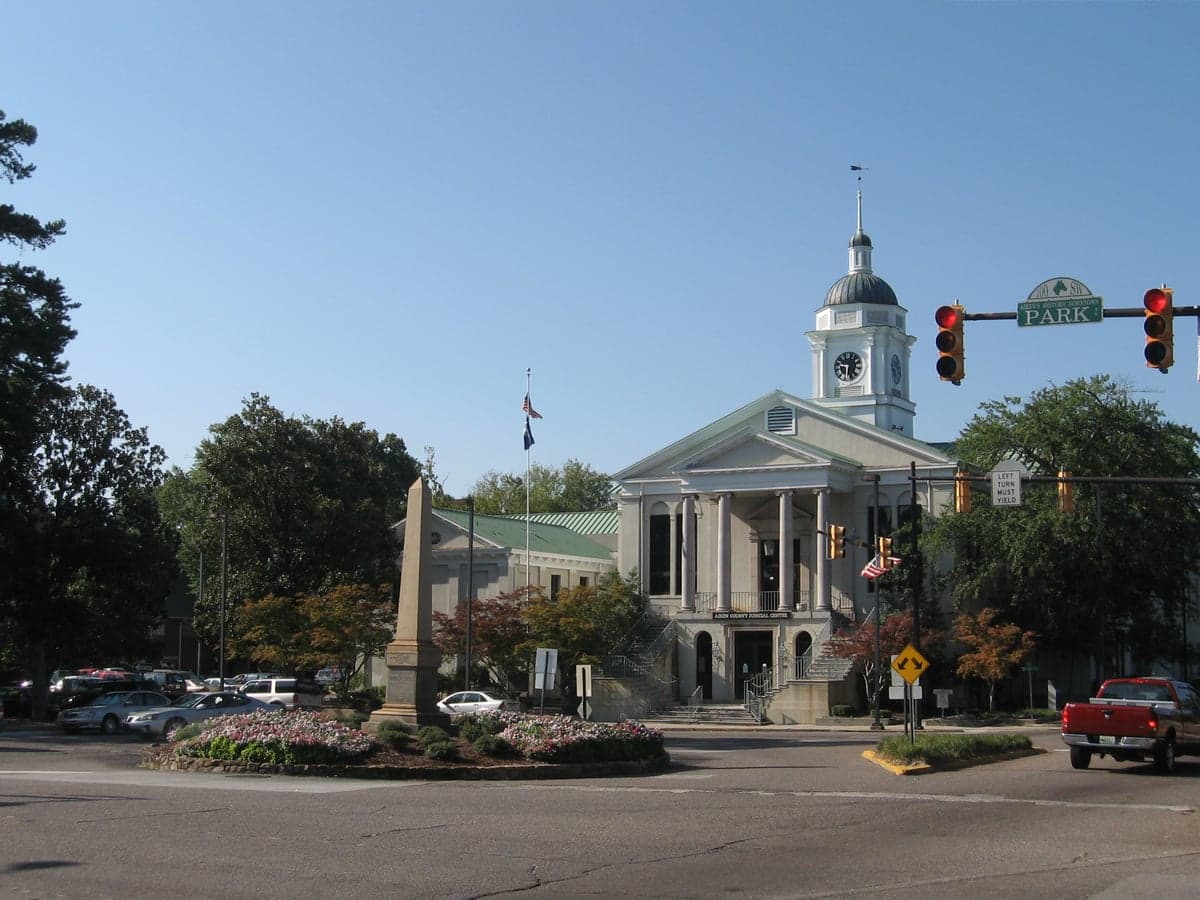
Photo: Wikipedia
Political ClimatePolitical Climate in Aiken, SC
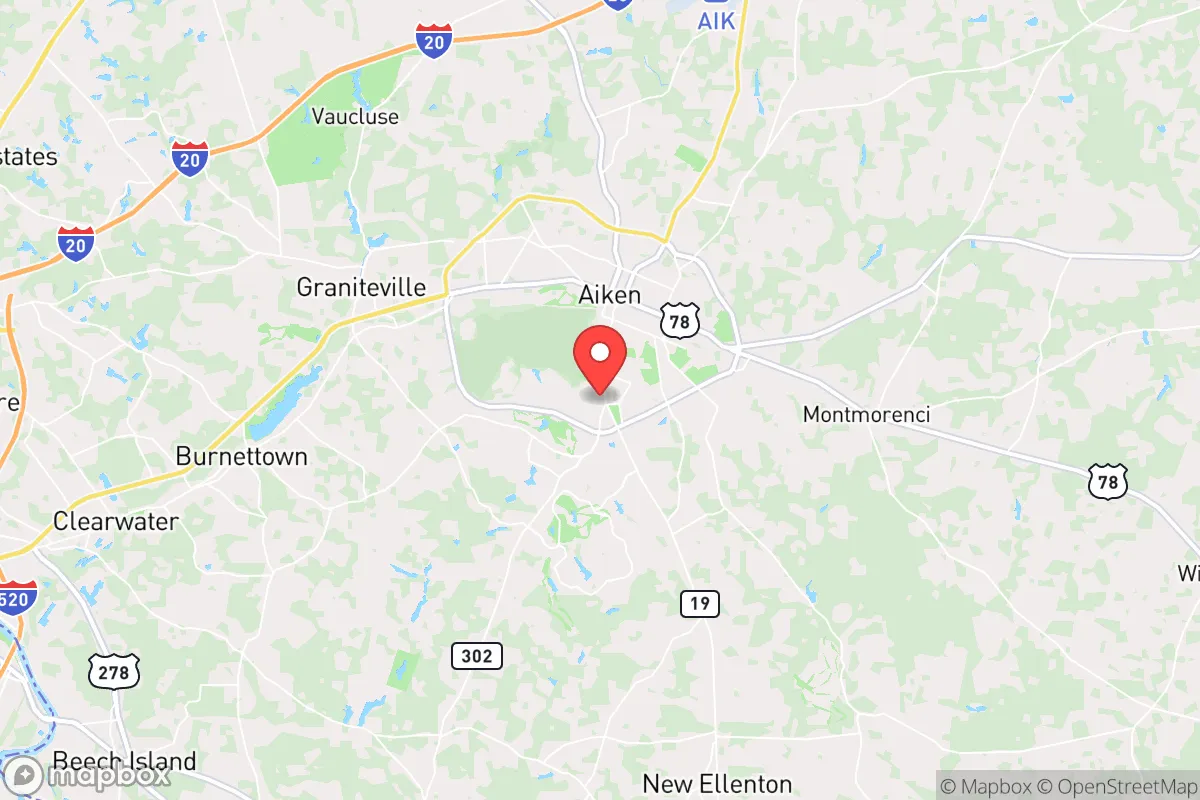
District shown is the primary district for this city’s centroid. Cities may span multiple districts.
Local Political AnalysisPolitical Analysis of Aiken, SC
Aiken sits solidly in the conservative column, with a Cook PVI of R+7 that reflects decades of consistent Republican voting at the federal level. Locally, the city and surrounding Aiken County have trended red in every presidential election since 2000, often by margins wider than the national average. That said, there’s a quiet undercurrent of change—newer residents from places like Columbia, Augusta, and even out-of-state transplants are starting to nudge local primaries and school board races in a more moderate direction. If you’ve been here a while, you’ve probably noticed the old guard still holds the line, but the conversations at the coffee shop are shifting.
How it compares
Drive 20 minutes east and you hit Lexington County, which is even redder—think R+12 or so—with a more suburban, family-oriented conservatism. Head south toward the Savannah River and you’ll find North Augusta, which leans similar to Aiken but with a slightly younger, more transient population tied to the Savannah River Site. The real contrast is 30 miles north to Columbia, a blue dot in a red state where the university and state government pull politics left. Aiken sits in that sweet spot: conservative enough that you don’t feel like an outlier, but with enough diversity of thought that you’re not living in an echo chamber. The county commission and city council have remained reliably Republican for years, but you’ll see a few more contested races now than you did a decade ago.
What this means for residents
For the most part, Aiken’s political climate means lower taxes and fewer regulations than you’d find in more progressive parts of the state. Property taxes are modest, zoning is relatively light, and the local government tends to stay out of your business—whether that’s running a home-based business, keeping a few chickens in the backyard, or exercising your Second Amendment rights. The downside? Public services like roads and schools can feel underfunded, and there’s a persistent resistance to any kind of regional planning that might feel like “government overreach.” If you value personal freedom and local control, you’ll feel at home. But if you’re hoping for rapid infrastructure improvements or progressive social programs, you’ll likely be frustrated. The long-term trend is a slow creep toward more moderate policies, especially as younger families move in, but the core conservative identity remains strong.
Culturally, Aiken still carries that old-South horse-and-hunt country vibe, which comes with a deep respect for tradition and a wariness of outside influence. You’ll see more Confederate flags than you would in Charleston, and the local politics reflect that—there’s a strong resistance to anything perceived as “woke” or top-down mandates from Washington or Columbia. The biggest policy fights in recent years have been over school curriculum transparency, mask mandates, and land use—all issues where the local instinct is to push back against perceived overreach. If you’re looking for a place where your vote actually counts and your voice carries weight at town hall, Aiken delivers. Just don’t expect the political winds to shift anytime soon—this is still a place where “leave us alone” is a winning platform.

State Political ClimatePolitical Climate in South Carolina
State Political AnalysisPolitical Environment in the State
South Carolina has long been a reliably red state, but the flavor of that conservatism has shifted noticeably over the past 15-20 years. The old-school, establishment-friendly Republicanism that dominated Columbia and Charleston is giving way to a more populist, liberty-minded strain, driven by explosive growth in the Upstate and along the coast. While the state hasn't flipped blue in a presidential race since 1976, the margins have tightened in some suburban areas, even as the rural vote has hardened. The dominant coalition today is a mix of traditional fiscal conservatives, evangelical voters, and a growing number of transplants from the North and Midwest who moved here specifically for lower taxes and fewer restrictions.
Urban vs. rural divide
The political map of South Carolina is a study in contrasts. The state's two major metros, Charleston and Greenville, are both growing fast, but they lean in opposite directions. Charleston County has trended purple for a decade, with the city itself becoming increasingly progressive, driven by tourism wealth, tech transplants, and the College of Charleston. In 2020, Charleston County went for Biden by about 8 points. Meanwhile, Greenville County remains a Republican stronghold, though the city of Greenville itself has a growing liberal enclave. The real action is in the suburbs: Lexington and Fort Mill (just south of Charlotte) are among the fastest-growing conservative suburbs in the country, with families fleeing higher taxes in North Carolina and the Northeast. The rural "Corridor of Shame" counties along I-95, like Allendale and Marlboro, are deeply impoverished and vote overwhelmingly Democrat, but their populations are shrinking. The political center of gravity has shifted decisively to the Upstate and the coastal suburbs, where the growth is.
Policy environment
South Carolina's policy environment is broadly friendly to conservative priorities, but with some notable wrinkles. The state has a flat income tax rate of 6.4% (set to drop to 6.0% by 2026), and no state tax on Social Security benefits, which is a huge draw for retirees. Property taxes are among the lowest in the country, especially for primary residences, thanks to a 6% assessment cap. On education, the state passed a universal school voucher program in 2023 (the Education Scholarship Trust Fund Program), allowing any family to use state funds for private school or homeschooling. This was a major win for parental rights advocates. Healthcare is a mixed bag: the state refused Medicaid expansion, keeping the system lean, but rural hospital closures remain a real concern. Election laws are strict—voter ID is required, and early voting was expanded in 2022 to two weeks, but same-day registration is not allowed. The state also has a near-total abortion ban with exceptions only for rape, incest, and the life of the mother, passed in 2023.
Trajectory & freedom
On the whole, South Carolina has been moving in a more liberty-oriented direction over the past five years, but not without some backsliding. The biggest win for personal freedom was the 2023 permitless carry law (Constitutional Carry), which allows any law-abiding adult to carry a concealed firearm without a permit. This was a long-fought victory for gun rights advocates. On the other hand, the state legislature has been aggressive on social issues: the 2021 "Fetal Heartbeat" law and the 2023 near-total abortion ban represent a significant expansion of government power over personal medical decisions. The parental rights movement scored a major victory with the 2023 "Parents' Bill of Rights," which requires schools to notify parents about curriculum changes and prohibits instruction on sexual orientation in K-5. Property rights remain strong, with no statewide rent control and minimal zoning restrictions outside of Charleston and Greenville city limits. The biggest looming threat to freedom is the rapid influx of out-of-state money and people, which is driving up home prices and putting pressure on local governments to impose growth controls.
Civil unrest & political movements
South Carolina has not seen the kind of large-scale civil unrest that has hit other states, but there have been flashpoints. The 2020 Black Lives Matter protests in Columbia and Charleston were relatively small and peaceful compared to Portland or Seattle, but they did lead to the removal of the Confederate flag from the State House grounds in 2015 after the Mother Emanuel shooting. That decision still divides many conservatives. The immigration debate is less heated here than in border states, but there is a growing grassroots movement pushing for state-level immigration enforcement, particularly in Spartanburg and Greenville, where the Hispanic population has grown significantly. Election integrity remains a hot-button issue: the 2020 election was secure here, but the legislature passed stricter voter ID laws and banned ballot drop boxes in 2021. There is a small but vocal secessionist movement (the "Nullification" crowd), but it has no real political power. Overall, the political climate is stable, but the cultural tensions are rising as the state becomes more diverse and urbanized.
Projection
Looking ahead 5-10 years, South Carolina is likely to become more conservative in some ways and less in others. The in-migration from blue states will continue to fuel growth in the suburbs of Greenville, Charleston, and Myrtle Beach, but these newcomers are often moderate Republicans or libertarian-leaning independents, not hardcore progressives. They want low taxes, good schools, and less government—which aligns with the state's current trajectory. However, the urban cores of Charleston and Columbia will continue to drift left, and the state's growing Hispanic and Asian populations may shift the electorate slightly. The biggest wild card is the state's ability to manage growth without imposing the kind of zoning and tax increases that drove people out of the Northeast. If the legislature stays the course on school choice, tax cuts, and gun rights, South Carolina will remain a top destination for freedom-seeking families. If it starts to cave to developer interests or federal pressure, the edge will dull.
For a new resident, the bottom line is this: South Carolina is a solid bet for anyone looking to escape high taxes, heavy regulation, and progressive social engineering. The state is still small enough that your vote matters, and the culture is friendly and family-oriented. But don't expect a libertarian paradise—the government is still deeply involved in your personal life on issues like abortion and alcohol sales (blue laws are still a thing in many counties). If you're moving here, aim for the suburbs of Greenville or Lexington if you want the most freedom-friendly environment. Avoid Charleston city limits unless you're okay with rising taxes and progressive city council politics. The state is on a good trajectory, but it requires vigilance to keep it that way.
* Values derived from national, state, county, city and local statistics and may differ in a specific area. Last updated: 2026-04-29T19:51:31.000Z
Narrative content on this page is AI-generated and may contain mistakes. Verify any details that matter before acting on them.
ReloMaps may earn a commission from affiliate links at no extra cost to you.

