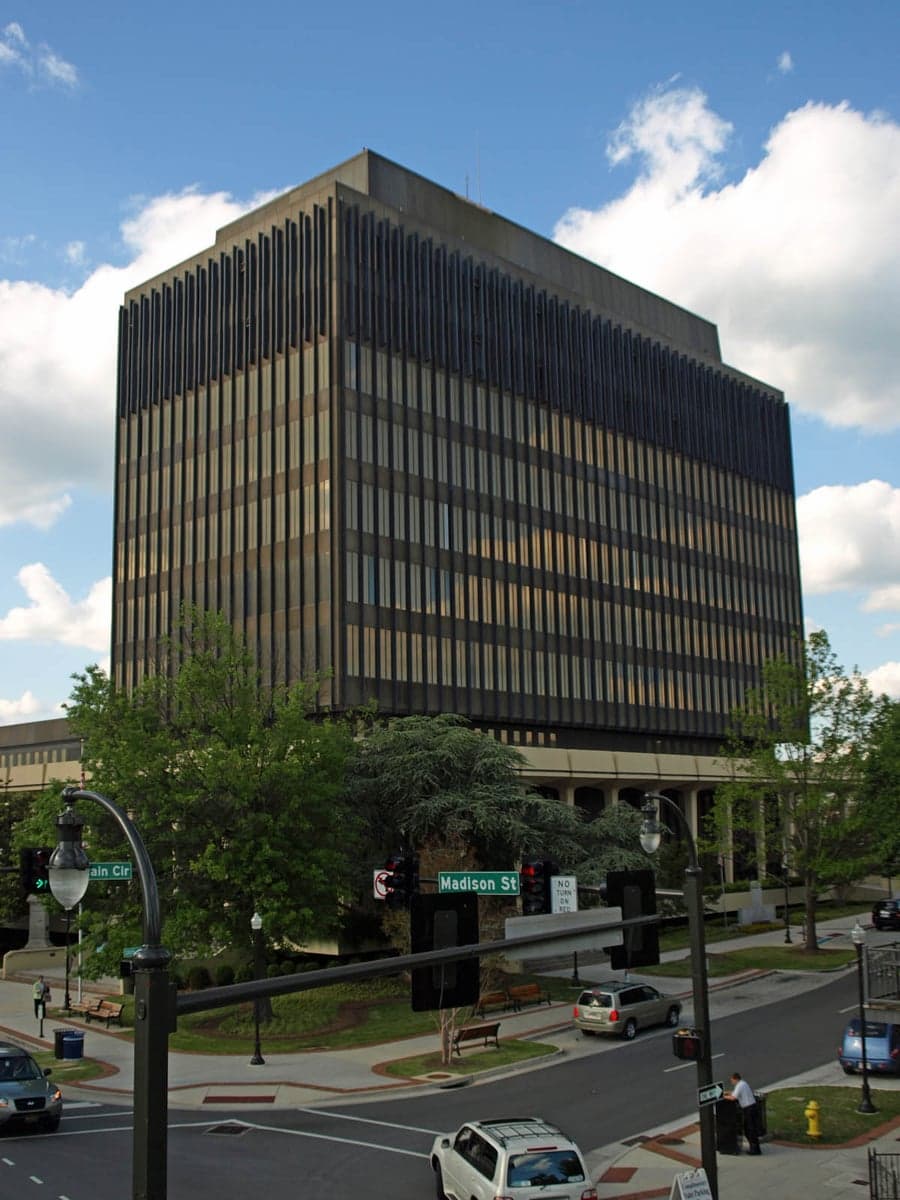
Photo: Wikipedia
Personal Sovereignty in Madison County
Viable for self-reliance. Generally workable, though some barriers may limit total independence.
What does Personal Sovereignty tell us?
Personal Sovereignty measures your capacity for self-reliance and independence with minimal government friction. Higher scores mean fewer barriers between you and the way you want to live... but it assumes you have the space you need and good neighbors.
What does this tell us?
Personal Sovereignty measures your capacity for self-reliance and independence with minimal government friction. Higher scores mean fewer barriers between you and the way you want to live... but it assumes you have the space you need and good neighbors.
State Policy
Energy independence: Importer (45% of energy produced in-state)
Personal Liberty
Homesteading
Personal Liberty Analysis
Madison County, Alabama offers residents a notably high degree of personal sovereignty, shaped by a state-level commitment to limited government, strong gun rights, and an expanding economic environment that encourages self-reliance. The county's autonomy environment is distinct from the more restrictive policies found in neighboring Tennessee or in metros like Nashville and Atlanta, making it appealing for conservative-leaning individuals and families who prioritize individual freedom over regulatory oversight. Huntsville serves as the county's major economic and population hub, but the regulatory posture and lifestyle freedoms vary significantly between its dense urban core and the more rural communities like New Market, Gurley, and Owens Cross Roads, where traditional independence is more pronounced.
Tax burden and regulatory posture in Madison County
Alabama ranks among the lowest-tax states in the nation, and Madison County residents benefit directly from this framework. There is no state income tax on wages; instead, the state collects a low 2.0–5.0% marginal rate on earnings, plus a flat 4.0% corporate rate. Property taxes are exceptionally low, typically averaging about 0.40% of assessed home value, which is less than a third of the national average. Sales tax in Huntsville is 9.0% (4.0% state + 5.0% local), while unincorporated areas of the county often see slightly lower combined rates. The regulatory environment is light-touch compared to states like California or New York; zoning is minimal in rural areas, business licensing requirements are straightforward, and there are no state-level rent control laws. For a self-employed individual or small business owner, this translates to lower overhead and fewer compliance hurdles. The county's pro-business posture is evident in Huntsville's rapid growth — a sprawling tech and defense corridor — but the regulatory ethos remains consistently hands-off even in the city limits, though some urban planning rules apply in subdivisions.
Self-defense and gun law specifics in Madison County
Alabama is a constitutional carry state, meaning residents 21 and older may carry a concealed firearm without a permit. Madison County law enforcement, including the Sheriff's Office, is known for a generally supportive stance toward the Second Amendment. There is no state-level permit required to purchase rifles, shotguns, or handguns from private sellers, though federal background checks apply at licensed dealers. Stand-your-ground and castle doctrine protections are codified in state law, giving individuals the legal right to use deadly force if they reasonably believe it is necessary to prevent imminent death, great bodily harm, or forcible felony. Huntsville does have a city ordinance against discharging firearms within city limits except on recognized shooting ranges, which does not apply in the county's unincorporated areas. For self-defense training, facilities like the Huntsville Gun & Tactical range operate openly. The overall environment is permissive: no firearm registration, no assault weapons ban, and no magazine capacity restrictions. Families moving from states with restrictive gun laws often find the transition seamless.
Self-reliance and homesteading viability in Madison County
Madison County presents a mixed but generally favorable landscape for homesteading and off-grid living, with clear geographic differences. Rural areas like New Market, Gurley, and Owens Cross Roads offer available land parcels typically ranging from 1 to 10 acres, often with permissive zoning that allows for livestock, gardens, and small-scale agriculture. In these unincorporated zones, building permits are required for new structures, but the county's building code is minimal compared to urban jurisdictions. Off-grid feasibility is good: while the county requires connection to a septic system, there is no comprehensive ban on solar panels, and rainwater collection is allowed. Some areas outside Huntsville city limits have no public water or sewer, forcing self-reliance but also granting independence. However, within Huntsville's city limits and its newer subdivisions (like those in Madison city or Harvest), homeowners associations often restrict livestock, solar panel visibility, and even clotheslines. For a family seeking true independence, purchasing land in New Market or along the rural edges of Gurley is far more viable than a subdivision inside Huntsville. The county's agricultural extension office offers resources for small-scale farming, and local ordinances do not hinder beekeeping or backyard chickens in unincorporated areas.
Personal liberties in Madison County
Parental rights are strongly protected in Madison County. Alabama law gives parents broad authority over their children's education, medical decisions, and religious upbringing. The state's "parental bill of rights" (enacted in 2024) explicitly prohibits government interference with parental direction, making it a favorable environment for homeschooling, private schooling, or microschooling. Medical autonomy is more limited; Alabama does maintain some vaccine requirements for school entry (though exemptions exist for religious or philosophical reasons), and the state has some of the most restrictive abortion laws in the nation. Free speech and property rights are robust: no local ordinances restrict political signage beyond typical time/place rules, and property owners can generally use their land as they see fit as long as it does not create a public nuisance. The county's overall posture on personal liberties is consistent with its political lean — the area consistently votes Republican, and local officials typically defer to individual choice over collective regulation. Compared to counties in California, Colorado, or Oregon, Madison County offers a markedly higher degree of personal sovereignty.
In sum, Madison County embodies a high-sovereignty environment that aligns well with conservative-leaning families and individuals. The combination of low taxation, constitutional carry, minimal zoning in rural areas, and strong parental rights creates a baseline of personal freedom that is increasingly rare in the Southeastern United States. For those seeking maximum autonomy, the rural northern and eastern stretches — especially New Market, Gurley, and Owens Cross Roads — offer the most flexibility, while the urbanized corridor through Huntsville, Madison, and Harvest still provides a supportive legal framework but with more HOA involvement. For a relocation decision centered on personal sovereignty, Madison County ranks among the top choices in the region.

* Values derived from national, state, county, city and local statistics and may differ in a specific area. Last updated: 2026-09-13T18:42:45.000Z
Narrative content on this page is AI-generated and may contain mistakes. Verify any details that matter before acting on them.
ReloMaps may earn a commission from affiliate links at no extra cost to you.

