Photo: Wikipedia
Political ClimatePolitical Climate in Anchorage County
Showing state-level results — no local-only data available.
Local Political AnalysisPolitical Analysis of Anchorage County
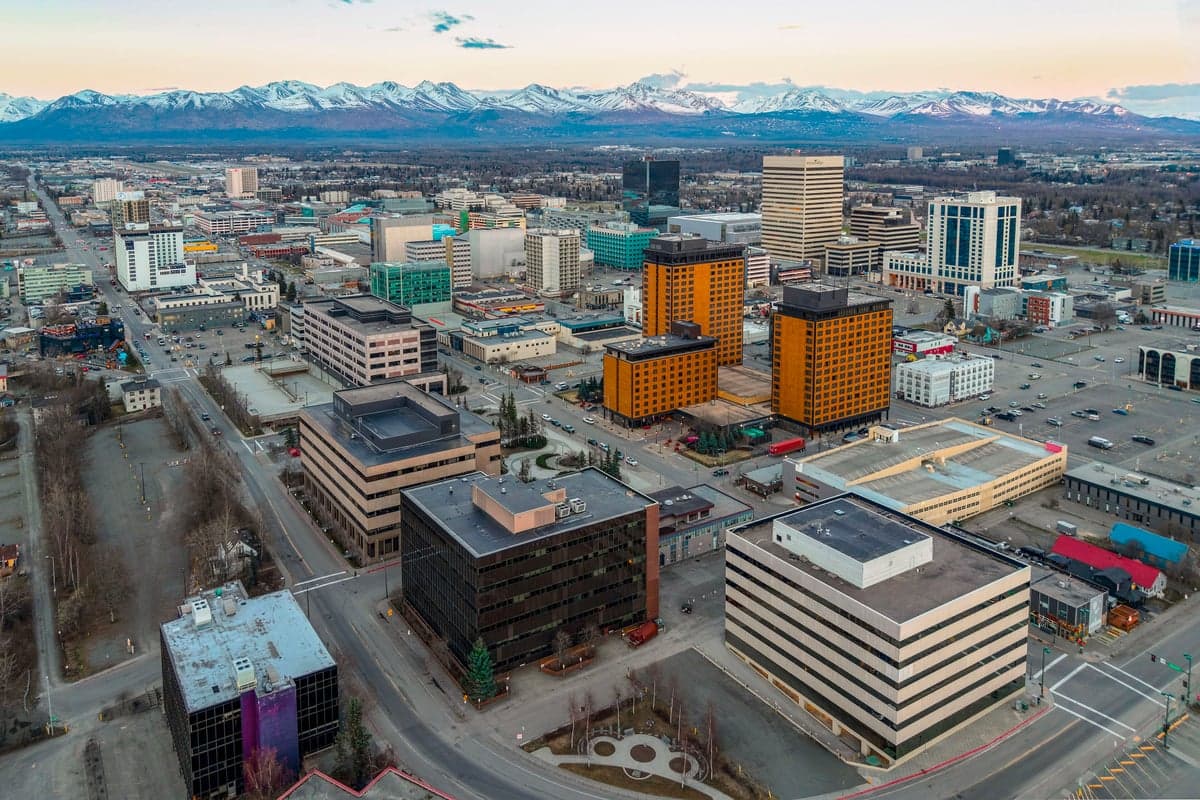
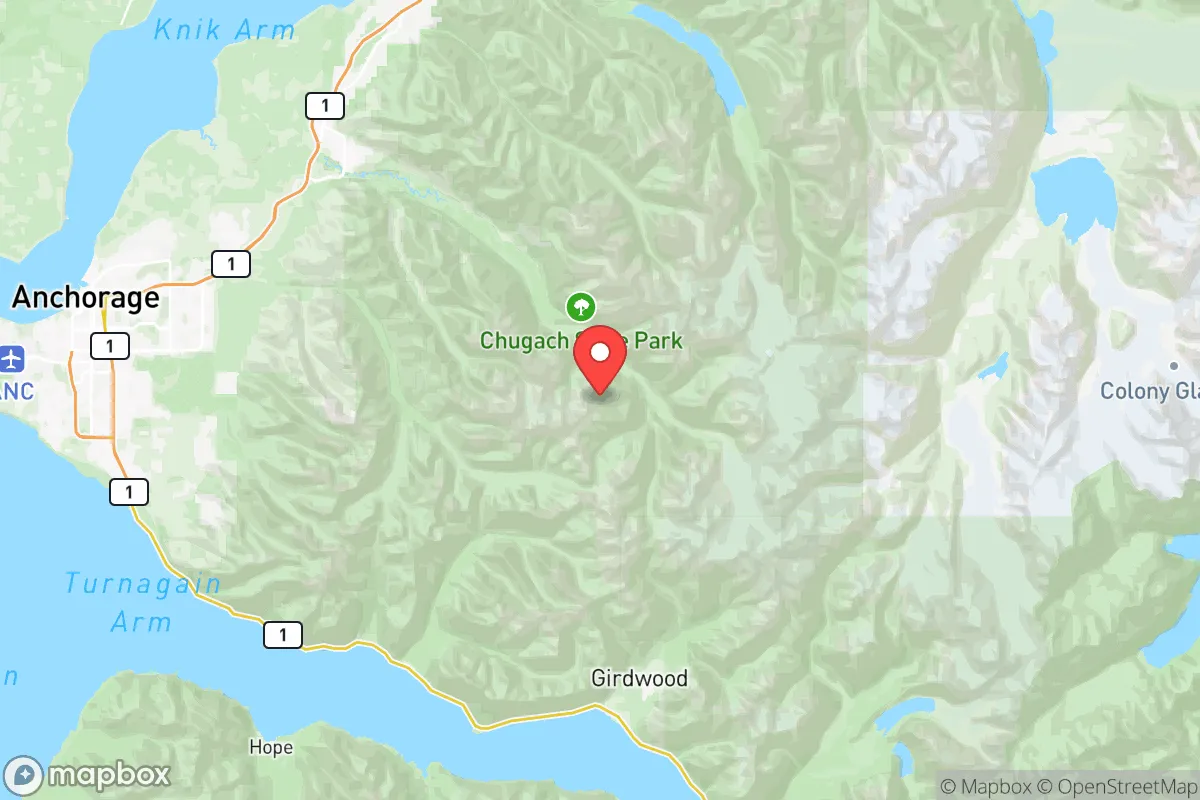
Anchorage County, which is coterminous with the Municipality of Anchorage, leans Republican with a Cook PVI of R+6, matching the statewide Alaska PVI of R+6. However, that single number masks a deeply split electorate: the city of Anchorage itself is a blue island in a red state, while the county’s outlying areas—like Eagle River, Chugiak, and Girdwood—pull the overall lean rightward. The trajectory here is one of slow polarization: the urban core has become more reliably Democratic over the past decade, while the suburban and exurban precincts have hardened their Republican allegiance, making the county a true battleground within a reliably red state.
How it compares
Anchorage County’s R+6 PVI is identical to Alaska’s statewide PVI, but that parity is deceptive. The county contains roughly 40% of the state’s population, and its voting patterns are far more volatile than the rest of Alaska. In the 2022 U.S. Senate race, for example, Anchorage voters split almost evenly between Republican incumbent Lisa Murkowski and Democrat Pat Chesbro, while the rest of the state gave Murkowski a wider margin. Within the county, the contrast is stark: precincts in downtown Anchorage and the University area (around UAA) lean blue by 10–15 points, while Eagle River and Chugiak vote red by 20–25 points. The swing precincts are in midtown and the Hillside neighborhoods, where independent and moderate voters decide close races. This internal divide means Anchorage County often mirrors the state’s final result, but with more drama—it’s the closest thing Alaska has to a purple jurisdiction.
What this means for residents
For conservative residents, Anchorage County offers a familiar political environment: the state legislature and local assembly are reliably center-right, and the county’s delegation to Juneau is dominated by Republicans. Property taxes remain low compared to the Lower 48, and the county’s zoning and land-use policies tend to favor development in outlying areas like Eagle River. For liberal residents, the picture is more mixed. While the Anchorage Assembly has a progressive majority on some issues—like housing density and climate resilience—state preemption often overrides local ordinances. The practical effect is that progressive policies are possible at the municipal level (e.g., the city’s 2023 ban on no-cause evictions), but they can be undone by the state legislature. Both sides experience a constant tug-of-war between the blue city and the red state, which makes local elections unusually consequential.
Culturally, Anchorage County is distinct from the rest of Alaska in its diversity and urban amenities. The county is home to the state’s largest immigrant communities (Samoan, Filipino, and Hispanic), and its politics reflect that: issues like language access in schools and police-community relations are front-burner here, not in rural Alaska. The county also has a stronger environmentalist streak, with active groups pushing for stricter air quality rules and preservation of the Chugach State Park buffer zones. Policy-wise, the county’s biggest distinction is its tax structure: Anchorage has a municipal sales tax (currently 3.5%) that the rest of the state lacks, which funds services like snow removal and public transit. This creates a different fiscal reality for residents—higher sales taxes but no local income tax—compared to the boroughs outside Anchorage. For anyone moving here, the key takeaway is that Anchorage County is not a monolith: your experience will depend heavily on whether you settle in the urban core, the red-leaning suburbs, or the liberal-leaning ski town of Girdwood.

State Political ClimatePolitical Climate in Alaska
State Political AnalysisPolitical Environment in the State
Alaska has long been a Republican-leaning state with a fiercely independent streak, carrying a Cook PVI of R+6, but its politics are far from a simple red-state monolith. Over the past 10-20 years, the state has shifted from reliably conservative to a more volatile mix where libertarian-leaning individualism, resource extraction interests, and a growing urban-liberal bloc in Anchorage collide. The result is a political climate that can feel unpredictable — Alaska voted for Trump twice but also elected an independent governor and a Democratic U.S. House member in recent cycles, reflecting a deep skepticism of party machinery.
Urban vs. rural divide
The political map of Alaska is defined by the chasm between its few population centers and the vast, resource-dependent bush. Anchorage, home to roughly 40% of the state's population, is the swing region — its more liberal Assembly districts in midtown and downtown reliably vote blue, while the suburban Hillside, Eagle River, and Chugiak areas lean heavily red. The Matanuska-Susitna Borough, just north of Anchorage, is the state's conservative heartland, with towns like Wasilla and Palmer producing some of the most Republican margins in the nation. Fairbanks, the interior hub, is more mixed but leans right, especially in its outlying areas, while Juneau, the capital, is a Democratic stronghold driven by state workers and a younger, more progressive population. The rural bush — places like Bethel, Nome, and Utqiaġvik — votes overwhelmingly Democratic in state races due to strong support for the Alaska Democratic Party's alliance with Alaska Native corporations and subsistence rights, though these areas often have low turnout and are culturally conservative on social issues.
Policy environment
Alaska's policy environment is shaped by its unique reliance on oil revenue and a deep-seated aversion to broad-based taxes. There is no state income tax and no statewide sales tax, though local municipalities can levy sales taxes — Juneau's is 5%, Anchorage's is 0%. Property taxes are relatively low, but the state's budget is chronically volatile due to oil price swings. The Permanent Fund Dividend (PFD), an annual check paid to every resident from oil royalties, is a sacred political third rail — politicians who threaten its size rarely survive. Education policy is decentralized; the state funds a base student allocation that has not kept pace with inflation, leading to frequent battles between rural districts and the legislature. Healthcare is a mixed bag: Alaska expanded Medicaid under the Affordable Care Act in 2015, but the state has among the highest healthcare costs in the nation due to its remote geography. Election laws are relatively accessible — Alaska uses a top-four nonpartisan primary and ranked-choice voting for general elections, a system voters narrowly approved in 2020 and defended in a 2024 repeal attempt.
Recent policy direction
Alaska's recent legislative direction reflects a tug-of-war between libertarian impulses and pragmatic governance. On gun rights, the state is among the most permissive in the nation — constitutional carry became law in 2022, allowing permitless concealed carry, and there are no magazine capacity limits or universal background checks. Parental rights in education gained traction with a 2024 law requiring schools to notify parents of curriculum changes involving sexuality or gender identity, though it stopped short of Florida-style bans. On speech and privacy, Alaska has no broad surveillance law, but the state's small population means government overreach is less of a daily concern than in denser states. Medical and bodily autonomy is a flashpoint: abortion remains legal up to viability under a 1997 Alaska Supreme Court ruling, but the legislature has passed parental consent requirements for minors, and a 2023 bill to restrict late-term abortions failed narrowly. Property rights are strong, with no statewide zoning and minimal land-use regulation outside incorporated cities, though the federal government owns roughly 60% of Alaska's land, creating constant friction over access and development. Taxation remains the defining issue — the legislature has repeatedly failed to pass an income or sales tax, instead drawing down the Constitutional Budget Reserve to cover deficits, a practice that is not sustainable long-term. Voting access is a bright spot: ranked-choice voting survived a repeal attempt in 2024, and voter turnout in Alaska consistently ranks above the national average.
Civil unrest & political movements
Alaska's political movements are less about street protests and more about organized advocacy around resource extraction and subsistence rights. The most visible flashpoint in recent years has been the debate over the Pebble Mine in the Bristol Bay region — a proposed copper and gold mine that has pitted pro-development conservatives and labor unions against a coalition of Alaska Native tribes, commercial fishermen, and environmentalists. Protests in Anchorage and Juneau have been modest by national standards, typically drawing a few hundred people on either side. The Alaska Independence Party, which advocates for a vote on secession from the United States, remains a fringe but persistent presence, regularly fielding candidates for governor and legislature. Election integrity controversies have been muted compared to the Lower 48 — Alaska's ranked-choice system drew legal challenges from conservative groups, but no widespread fraud allegations have taken hold. Immigration politics are largely absent, as Alaska has a tiny foreign-born population (around 7%) and no sanctuary city policies. A new resident would notice the absence of visible partisan street conflict; political energy here is channeled into legislative lobbying, local borough assembly meetings, and the annual PFD application season.
Projection
Over the next 5-10 years, Alaska's political trajectory points toward continued volatility rather than a clear partisan shift. In-migration is modest and skewed toward retirees and remote workers drawn by the lack of income tax, which tends to reinforce the state's libertarian-conservative lean. However, Anchorage is slowly becoming more diverse and younger, which could nudge the state's largest city leftward. The wild card is the state's fiscal crisis — if oil revenues continue to decline and the legislature is forced to enact a broad-based tax, it could realign the political coalitions, potentially pushing the state toward a more pragmatic, centrist governance model. The ranked-choice voting system is likely to survive, which will continue to empower independent and moderate candidates over party-line ideologues. Someone moving to Alaska now should expect a decade of messy, coalition-driven politics where no single faction dominates, and where the PFD remains the central obsession of every election cycle.
For a new resident, the bottom line is that Alaska offers a political environment that rewards independence and local engagement over party loyalty. Conservatives will find a state that protects gun rights, keeps taxes low, and respects property rights, but they will also encounter a system that has expanded Medicaid and protects abortion access. Liberals will appreciate the ranked-choice voting, the strong union presence in public sector jobs, and the state's commitment to subsistence rights, but they will face a legislature that is reliably Republican on most social and economic issues. The practical takeaway: Alaska is not a place where you can assume your neighbors share your politics, and that is precisely what makes it work.
* Values derived from national, state, county, city and local statistics and may differ in a specific area. Last updated: 2026-08-04T14:15:39.000Z
Narrative content on this page is AI-generated and may contain mistakes. Verify any details that matter before acting on them.
ReloMaps may earn a commission from affiliate links at no extra cost to you.

