Photo: Wikipedia
Quality of Life in Anchorage County
A livable area that tracks near national norms for affordability, walkability, and neighborhood health.
What does Quality of Life tell us?
Quality of Life measures an area by evaluating factors like cost of living, nearby amenities, country club access, airport proximity, socioeconomic signals and neighborhood character. For large states, this is a general average — quality of life can vary dramatically between metro areas, suburbs, and rural communities within the same state.
What does this tell us?
Quality of Life measures an area by evaluating factors like cost of living, nearby amenities, country club access, airport proximity, socioeconomic signals and neighborhood character. For large states, this is a general average — quality of life can vary dramatically between metro areas, suburbs, and rural communities within the same state.
Cost of Living
28% above national average
91%
The Real Cost of Living in Anchorage County for 2026
| Tier | Individual | Family (4) |
|---|---|---|
| Survival | $23k | $44k |
| Comfortable | $73k | $107k |
| Luxury | $165k+ | $256k+ |
| Elite (Top 5%) | $195k+ | $302k+ |
Quality-of-Life Analysis
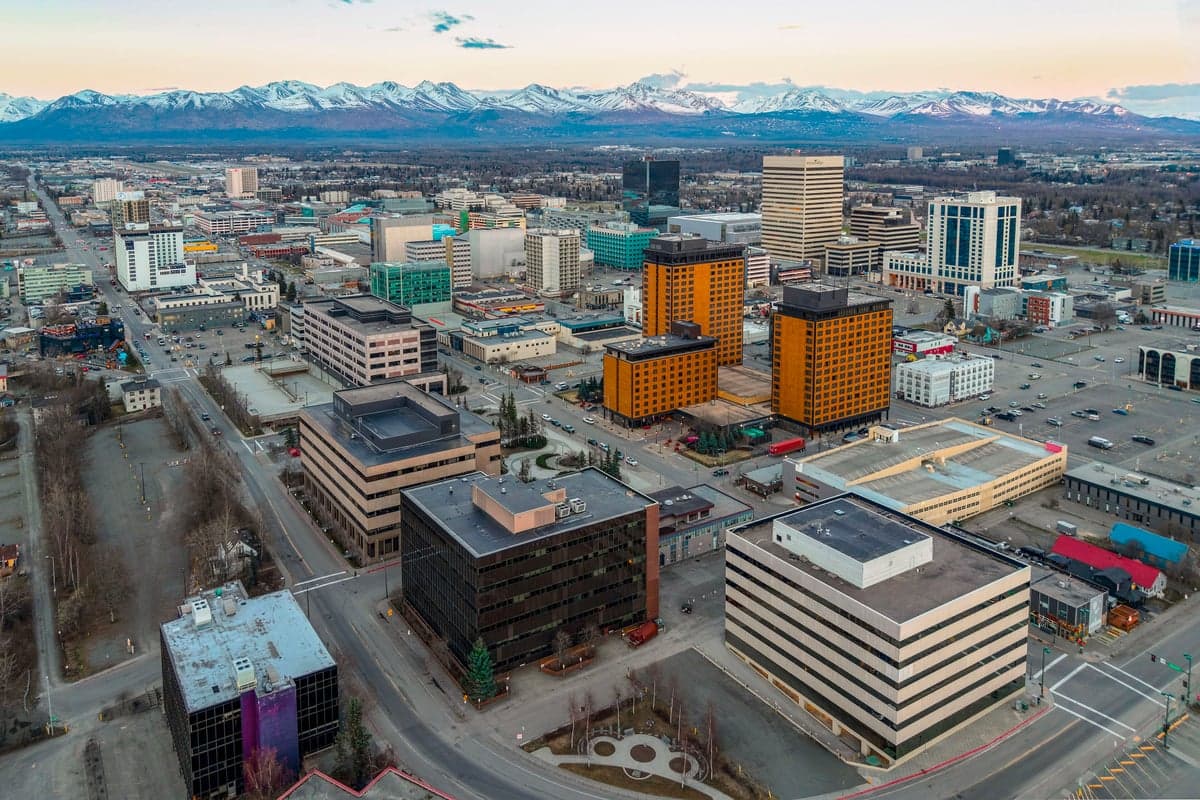
Anchorage County, Alaska, presents a unique quality-of-life spectrum that ranges from the dense urban core of Alaska's largest city to remote, off-grid homesteads accessible only by air or seasonal road. The county, which is consolidated with the Municipality of Anchorage, draws a diverse mix of residents: professionals and government workers seeking urban amenities, outdoor enthusiasts who want trail access from their doorstep, and self-sufficient individuals seeking true wilderness living. The county's character shifts dramatically across its roughly 1,900 square miles, with each zone offering a distinct trade-off between convenience, space, and connection to nature.
Largest town(s) & population centers
The Municipality of Anchorage itself is the dominant population center, housing roughly 290,000 of the county's 295,000 residents. Daily life in Anchorage proper centers on a compact urban grid with a walkable downtown core along 4th Avenue and the Delaney Park Strip. The city offers the full spectrum of urban amenities — from the Alaska Railroad Depot and the Anchorage Museum to the Dimond Center and 5th Avenue Mall shopping districts. Residential neighborhoods vary widely: the Hillside area offers large lots with mountain views and direct trail access, while midtown and Spenard provide more affordable, denser housing near commercial corridors. The average commute of 19 minutes is remarkably short for a city of this size, largely because the road system is constrained by the Chugach Mountains to the east and Cook Inlet to the west. The urban core is served by the People Mover bus system, though most residents rely on personal vehicles. Anchorage's population is notably transient, with a heavy presence of military personnel from Joint Base Elmendorf-Richardson and oil industry workers on rotational schedules.
Smaller towns & rural pockets
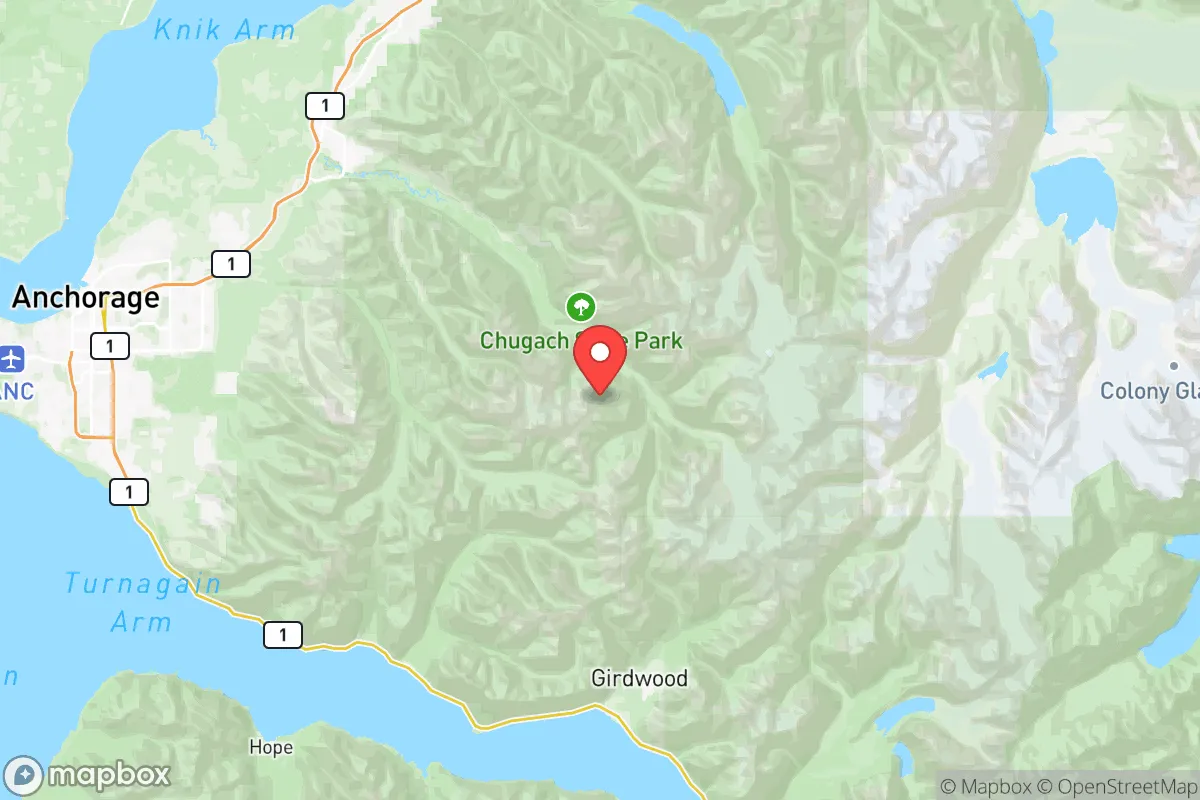
Beyond the urban grid, Anchorage County includes several distinct communities that feel worlds apart from the city. Girdwood, 40 miles south of downtown along the Seward Highway, is a year-round resort town of roughly 2,300 residents centered on the Alyeska Resort ski area. Daily life here revolves around tourism, outdoor recreation, and a tight-knit community of guides, ski patrollers, and remote workers. Eagle River, 15 miles north of downtown, is a fast-growing bedroom community of about 10,000 that offers larger lots, newer subdivisions, and a small-town Main Street feel while still being a 20-minute commute to Anchorage. Indian and Bird Creek are unincorporated hamlets along the Turnagain Arm with fewer than 100 year-round residents each, where homes are often off-grid or on well-and-septic systems. The Chugach State Park and Chugach National Forest boundaries create a hard edge to development, meaning rural pockets are isolated by geography rather than sprawl.
Cost & lifestyle range
The county's overall cost of living index of 128 (28% above the US average) masks significant internal variation. At the high end, the Hillside and Rabbit Creek neighborhoods of Anchorage feature homes valued at $600,000 to $1.5 million, with large lots, panoramic mountain views, and direct access to the 500-mile trail network of the Chugach State Park. At the low end, the Mountain View and Fairview neighborhoods offer median home values closer to $280,000, with older housing stock and higher crime rates. The countywide median home value of $375,900 and median rent of $1,453 reflect Anchorage's relatively affordable housing compared to other West Coast cities, but utility costs — especially heating and electricity — can add $300–$600 monthly to living expenses. Girdwood sits at the premium end of the lifestyle spectrum, with a median home value near $500,000 and a resort-town cost structure, while Eagle River offers a middle ground with newer construction and lower property taxes than Anchorage proper. The most affordable rural option is typically raw land in the Peters Creek or Eklutna areas, where buyers can find undeveloped parcels for under $50,000 but must budget for well, septic, and road access.
Anchorage County best suits residents who value outdoor recreation access as a primary lifestyle feature and are comfortable with the trade-offs of a northern latitude — long winter darkness, variable road conditions, and a relatively small job market concentrated in government, healthcare, and resource extraction. Families with school-age children often gravitate to Eagle River or the South Anchorage neighborhoods for their highly rated schools and lower crime rates, while young professionals and creatives prefer the urban core's walkability and nightlife. The county's unique geography means that even the most urban resident is never more than 30 minutes from true wilderness, making it a compelling choice for those who want both a professional career and a backcountry lifestyle.

Crime in Anchorage County
Higher crime rates than 66% of comparable U.S. locations.
Violent CrimeViolent Crime Analysis
Property CrimeProperty Crime Analysis
Crime Analysis
Anchorage County, which is consolidated with the Municipality of Anchorage, presents a mixed safety picture that demands careful consideration from potential residents. With a violent crime rate of 726.6 per 100,000 residents and a property crime rate of 1,909.5 per 100,000, the area significantly exceeds national averages, placing it among the higher-crime metropolitan regions in the United States. These figures reflect real risks that vary substantially across the county's diverse neighborhoods, from downtown Anchorage to suburban communities like Eagle River and Girdwood.
Crime in context
Anchorage County's violent crime rate is roughly double the national average, while property crime rates also run well above typical U.S. figures. Compared to the rest of Alaska, Anchorage's rates are elevated, though the state as a whole struggles with high crime statistics. The county's crime challenges are concentrated in specific areas and crime types. Property crime, including theft and vehicle break-ins, is the most common concern for residents. Violent crime, while less frequent, remains a serious issue, particularly in certain downtown and midtown corridors. The local justice system, influenced by progressive prosecutorial policies in recent years, has faced criticism for prioritizing offender rehabilitation over public safety, a philosophy that critics argue has contributed to repeat offenses and a perception of leniency that emboldens criminal activity.
What residents experience
Daily life in Anchorage County involves navigating a heightened awareness of property crime. Vehicle break-ins, package theft, and home burglaries are common complaints, especially in neighborhoods with easy access to major roads. Areas like Mountain View and Fairview report some of the highest concentrations of both violent and property crime, while Spenard has a reputation for drug-related activity and property offenses. In contrast, communities like Eagle River and Girdwood experience significantly lower crime rates, offering a safer suburban or semi-rural lifestyle within the county. The downtown core and the Muldoon area also see elevated crime statistics, driven in part by homelessness and substance abuse issues. Residents in higher-crime areas often invest in security systems, steering wheel locks, and neighborhood watch participation as routine precautions. The presence of progressive district attorneys in Anchorage has led to policies such as reduced bail requirements and diversion programs for property offenders, which some residents and business owners believe have worsened the property crime cycle by quickly returning offenders to the streets.
Neighborhood-level variation is stark within Anchorage County. The safest residential enclaves are typically found in the Hillside area, Eagle River, and Girdwood, where crime rates approach or fall below national averages. These areas benefit from lower population density, stronger community cohesion, and less exposure to the transient populations that contribute to crime in central Anchorage. Conversely, neighborhoods near the Anchorage Jail and along the Glenn Highway corridor tend to have higher crime exposure. Prospective residents should research specific census tracts and consult local crime mapping tools, as block-by-block variation can be significant. The county's overall statistics, while concerning, do not reflect a uniformly dangerous environment; rather, they highlight the importance of choosing a neighborhood carefully and understanding the local justice system's approach to crime and punishment.
* Values derived from national, state, county, city and local statistics and may differ in a specific area. Last updated: 2026-08-04T14:15:39.000Z
Narrative content on this page is AI-generated and may contain mistakes. Verify any details that matter before acting on them.
ReloMaps may earn a commission from affiliate links at no extra cost to you.

