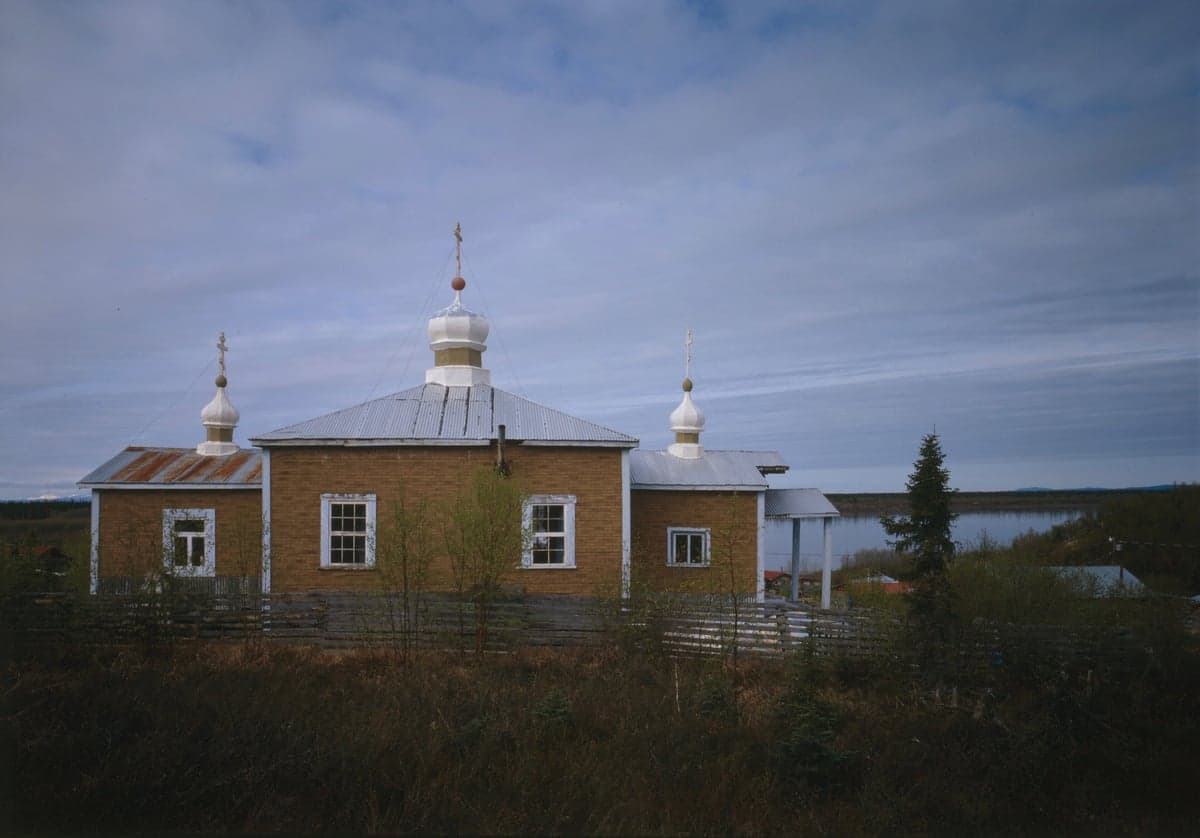
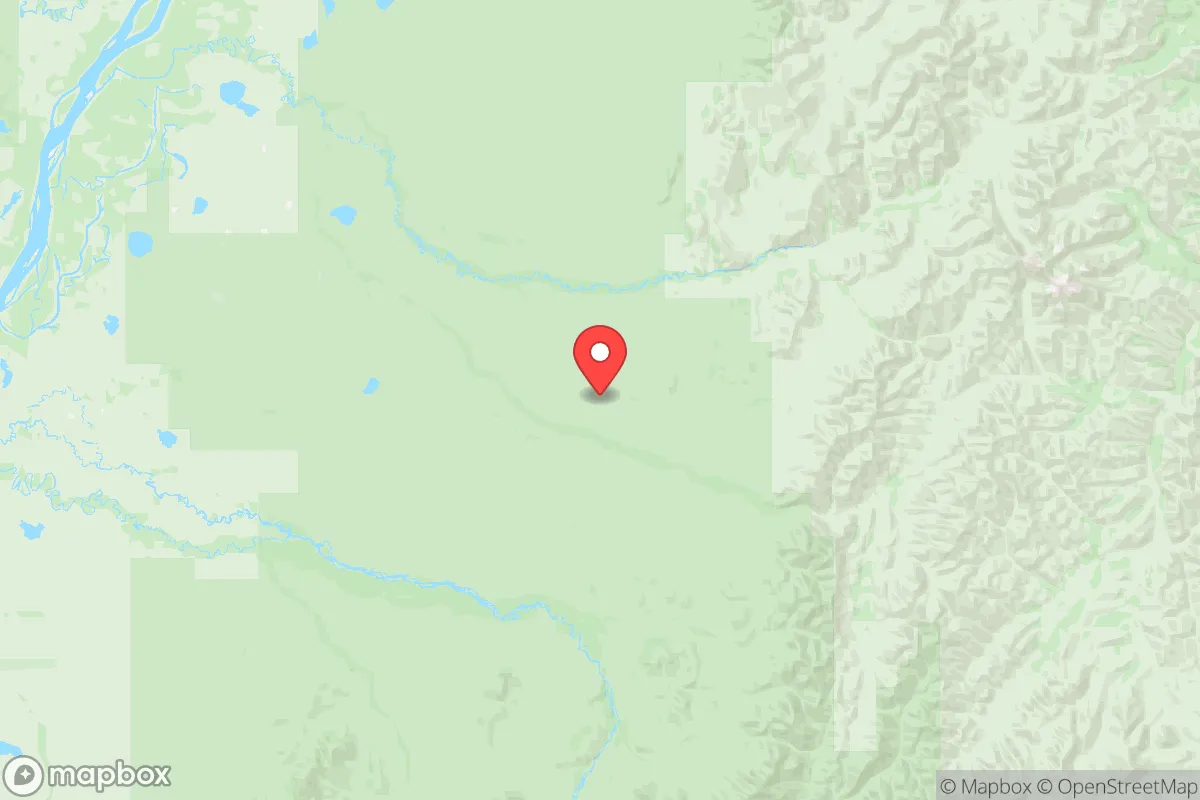
Photo: Wikipedia
Personal Sovereignty in Bethel County
Strong independent fundamentals that actively favor personal liberty and low regulation.
What does Personal Sovereignty tell us?
Personal Sovereignty measures your capacity for self-reliance and independence with minimal government friction. Higher scores mean fewer barriers between you and the way you want to live... but it assumes you have the space you need and good neighbors.
What does this tell us?
Personal Sovereignty measures your capacity for self-reliance and independence with minimal government friction. Higher scores mean fewer barriers between you and the way you want to live... but it assumes you have the space you need and good neighbors.
State Policy
Energy independence: Net exporter (350% of energy produced in-state)
Personal Liberty
Homesteading

Personal Liberty Analysis
Bethel County, Alaska, offers an environment of personal sovereignty that is among the most expansive in the United States, shaped by its remote geography, sparse population, and the state’s constitutional commitment to individual rights. The county, encompassing the Yukon-Kuskokwim Delta, is a region where formal government oversight is minimal by necessity, and daily life demands a high degree of self-reliance. For individuals and families prioritizing autonomy, Bethel County presents a unique trade-off: extraordinary personal freedom in exchange for limited infrastructure, extreme isolation, and the need to provide for one’s own security, utilities, and governance. This analysis examines the specific dimensions of that sovereignty, from tax policy to self-defense law to the practical realities of off-grid living, with attention to how conditions vary across the county’s communities.
Tax burden and regulatory posture: How Alaska’s state policies shape Bethel County
Alaska’s state-level tax and regulatory framework is among the most favorable in the nation for personal sovereignty, and Bethel County operates within that context. There is no state income tax and no state sales tax, though local municipalities may levy their own sales taxes. In Bethel, the county’s only incorporated city, the sales tax rate is 7%, which funds local services like schools and public safety. Outside city limits, in unincorporated areas such as Napakiak, Kwethluk, or Aniak, there is no local sales tax, and property taxes are effectively nonexistent for most residents, as the county does not impose a property tax on owner-occupied homes. The regulatory posture is correspondingly light: there are no state-level building codes for most rural areas, no mandatory vehicle inspections, and minimal zoning enforcement outside city limits. The Alaska Department of Environmental Conservation does regulate water and waste systems, but enforcement is often complaint-driven and slow. For a reader accustomed to the regulatory density of the Lower 48, Bethel County represents a near-total absence of bureaucratic friction in daily life, though this comes with the trade-off of minimal public services and infrastructure.
Self-defense and gun law specifics: What the Second Amendment looks like in the Delta
Alaska is a constitutional carry state, and Bethel County reflects that fully. No permit is required to carry a concealed firearm for anyone legally allowed to possess one, and open carry is unrestricted. The state preempts local gun ordinances, meaning Bethel city cannot impose its own restrictions beyond state law. There is no waiting period, no firearm registration, and no permit-to-purchase requirement. Magazine capacity and assault weapon bans do not exist at the state level. For self-defense, Alaska’s “Stand Your Ground” law applies, with no duty to retreat in any place where a person has a legal right to be. In practice, firearms are a near-universal tool for subsistence hunting and personal protection in the Delta, given the presence of bears and moose and the extreme distances from law enforcement. In villages like Mekoryuk or Toksook Bay, the nearest state trooper may be hours away by plane or boat, making personal firearm ownership a practical necessity rather than a political statement. The only notable restriction is that firearms are prohibited in K-12 schools, though this is rarely enforced in remote villages where school buildings double as community centers. For a conservative-leaning reader, Bethel County’s gun culture is as permissive as any place in the United States.
Self-reliance and homesteading viability: Lot sizes, zoning, and off-grid feasibility
Bethel County is one of the few places in the United States where true off-grid homesteading remains viable and legally straightforward. Outside the city limits of Bethel, there is no zoning, no building permits, and no requirement for utility connections. Lot sizes in unincorporated areas are effectively unlimited; state land sales through the Alaska Department of Natural Resources offer parcels of 40 acres or more for a few hundred dollars, with no requirement to develop or improve the land. In villages like Chefornak or Eek, residents commonly build their own homes using locally milled lumber or prefabricated kits, with no inspections or code compliance checks. Off-grid power is standard: most households use diesel generators, solar panels, or small wind turbines, as the electrical grid only serves Bethet city and a few nearby villages. Water is typically drawn from wells or hauled from rivers, with outhouses or composting toilets for sanitation. The Alaska Department of Environmental Conservation does require septic systems to be permitted, but enforcement is minimal in remote areas. For a family seeking to live with minimal government oversight, the Delta offers a level of homesteading freedom that is nearly extinct in the contiguous United States. The trade-off is extreme logistical difficulty: all materials must be barged or flown in, fuel costs are among the highest in the nation, and medical emergencies require medevac flights that can cost tens of thousands of dollars.
Personal liberties: Parental rights, medical autonomy, speech, and property
Alaska law provides strong protections for personal liberties that directly affect Bethel County residents. Parental rights are explicitly protected under state statute, with a presumption that parents have the right to direct their children’s education, healthcare, and religious upbringing. Homeschooling is unrestricted, and the state’s correspondence school program allows families to receive funding for curriculum and materials while teaching at home. Medical autonomy is similarly broad: Alaska has no state-level vaccine mandate for adults, and while school immunization requirements exist, parents can claim medical or religious exemptions with minimal documentation. The state’s Health Insurance Portability and Accountability Act (HIPAA) protections are enforced, and there is no state database tracking private medical choices. Free speech is protected under the Alaska Constitution, which has a stronger free-expression clause than the U.S. Constitution, and there are no local hate speech or social media content laws in Bethel County. Property rights are robust: the state’s “right to farm” law protects agricultural activities from nuisance lawsuits, and there is no statewide property tax on owner-occupied homes. In villages like Quinhagak or Tuntutuliak, land is often held under Native allotment or village corporation ownership, which adds a layer of tribal governance but typically respects individual use rights. For a reader prioritizing personal sovereignty, Bethel County’s legal environment is among the most permissive in the nation, though the practical constraints of geography and climate temper that freedom.
Overall, Bethel County offers a level of personal sovereignty that is rare even by Alaska standards, and virtually unmatched in the Lower 48. The combination of no income tax, constitutional carry, minimal zoning, and strong parental and property rights creates an environment where individuals and families can live with minimal government interference. However, this sovereignty is not abstract—it is earned through extreme self-reliance, isolation, and the acceptance of risks that most Americans would find untenable. For a conservative-leaning reader who values freedom above convenience and is willing to trade infrastructure for autonomy, Bethel County represents one of the last frontiers of genuine personal sovereignty in the United States. For those who require reliable healthcare, schools, or emergency services, the trade-off may be too steep. The choice is stark, and the county makes no apologies for it.

* Values derived from national, state, county, city and local statistics and may differ in a specific area. Last updated: 2026-06-12T19:53:16.000Z
Narrative content on this page is AI-generated and may contain mistakes. Verify any details that matter before acting on them.
ReloMaps may earn a commission from affiliate links at no extra cost to you.

