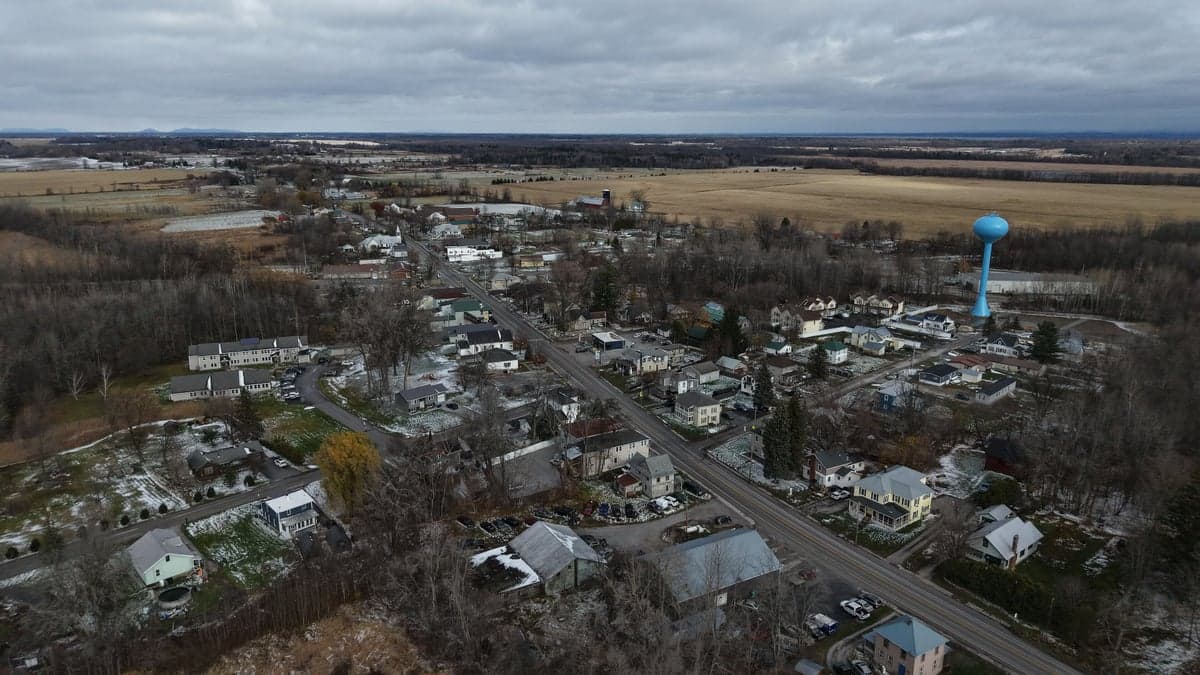
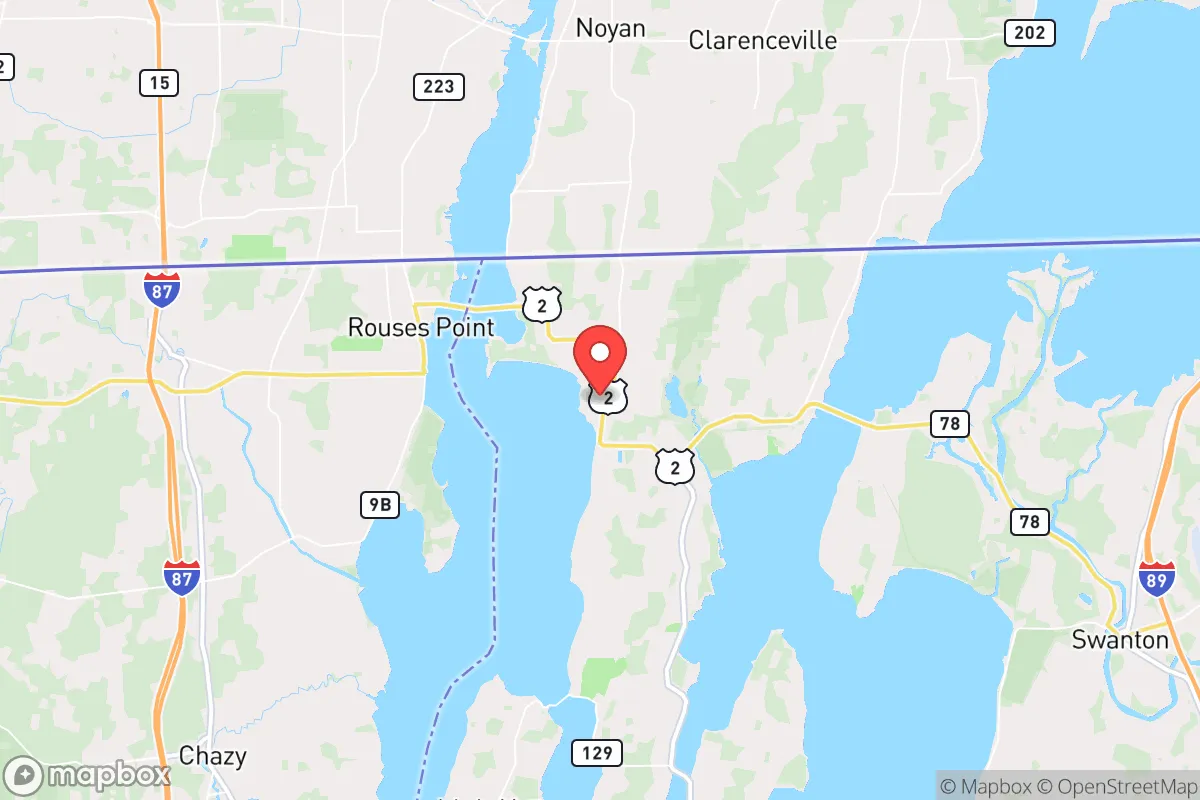
Photo: Wikipedia
Political ClimatePolitical Climate in Alburgh, VT
District shown is the primary district for this city’s centroid. Cities may span multiple districts.
Inherited from parent state — no local data available.
Local Political AnalysisPolitical Analysis of Alburgh, VT
Alburgh, Vermont, sits in a unique political pocket, but don't let the Cook PVI of D+17 fool you into thinking it’s a monolith. While the state as a whole leans heavily blue, Alburgh—a peninsula jutting into Lake Champlain—has historically been a bit more of a mixed bag, with a strong independent streak and a healthy skepticism of Burlington’s progressive agenda. In recent years, though, the national Democratic brand has tightened its grip here, and the shift is palpable if you’ve been around long enough to remember when local elections were decided on local issues, not party-line votes.
How it compares
Drive ten miles south to St. Albans, and you’ll find a town that still votes more conservatively, especially in Franklin County’s rural precincts. Alburgh, by contrast, has absorbed more of the Chittenden County influence—think South Burlington and Winooski—where housing pressures and remote workers have brought in a younger, more progressive demographic. The contrast is stark: St. Albans still elects Republicans to local office and the statehouse, while Alburgh’s representation has trended solidly blue in the last three cycles. Even neighboring Swanton, just across the Missisquoi River, feels more moderate, with a stronger tax-revolt sentiment that Alburgh’s newer arrivals don’t seem to share. The D+17 rating reflects a county that’s now reliably Democratic, but it masks the quiet frustration of longtime residents who feel their voices are being drowned out by out-of-state transplants and party machinery.
What this means for residents
For those of us who value personal freedoms—like deciding how to heat our homes, what to teach our kids, or whether to carry a firearm—the political drift in Alburgh is a real concern. The state legislature in Montpelier has pushed through strict gun control laws (Act 69, Act 70) that many locals see as an overreach, and Alburgh’s representatives have largely supported them. Property taxes are another sore spot: Vermont’s highest-in-the-nation property tax rates are a direct result of progressive spending priorities, and Alburgh residents are feeling the pinch, especially with rising lakefront assessments. The push for mandatory renewable energy standards and land-use restrictions has also made it harder for farmers and small business owners to operate without government red tape. If you value being left alone to live your life without a state agency looking over your shoulder, the trend here is heading in the wrong direction.
On the cultural side, Alburgh still has a strong sense of community—the volunteer fire department, the town suppers, the fishing derbies—but the political climate is becoming more polarized. The local school board and selectboard meetings, once sleepy affairs, now see heated debates over curriculum transparency and vaccine mandates. In the long term, if the progressive wave continues, expect more state-level mandates on housing density, energy efficiency, and even local business operations. For now, Alburgh remains a beautiful, quiet place to live, but the political winds are shifting, and not in a direction that favors individual liberty or fiscal restraint. If you’re considering a move here, come for the lake views and the tight-knit vibe—just know that the political landscape is changing faster than the shoreline.

State Political ClimatePolitical Climate in Vermont
State Political AnalysisPolitical Environment in the State
Vermont has long been known as one of the most reliably progressive states in the nation, but the reality on the ground is far more divided than the national reputation suggests. The state’s overall partisan lean is solidly Democratic at the presidential level — Joe Biden won by over 35 points in 2020 — but that top-line number masks a deep and growing urban-rural split that has been widening for two decades. While Burlington and Chittenden County drive the state’s blue vote, much of the rest of Vermont remains politically mixed, with many towns still holding onto a tradition of fiscal conservatism and fierce independence. Over the last 10-20 years, the state has shifted leftward on social and environmental policy, but that shift has been met with increasing resistance in rural areas, creating a political landscape that feels less like a monolith and more like a patchwork of competing visions.
Urban vs. rural divide
The political map of Vermont is essentially a story of Chittenden County versus everywhere else. Burlington, the state’s largest city, is a deep-blue stronghold where progressive Democrats and even democratic socialists hold sway — the city’s current mayor, Miro Weinberger, is a Democrat, but the city council has seen strong progressive influence. Surrounding towns like South Burlington, Winooski, and Essex Junction also lean heavily Democratic, driven by a concentration of college-educated professionals, University of Vermont faculty, and state government workers. Drive 30 minutes south to Rutland or north to St. Albans, and the political complexion changes dramatically. Rutland County has trended more Republican in recent cycles, with Donald Trump improving his margins there in both 2016 and 2020. The Northeast Kingdom — including towns like Newport, St. Johnsbury, and Lyndonville — is the most reliably Republican region in the state, with many precincts voting +20 to +30 points for Trump. Even within Chittenden County, there are outliers: the town of Hinesburg, for example, is more moderate than Burlington, and the rural parts of the county often vote more conservatively than their urban neighbors. The divide isn’t just about party registration — it’s about worldview. In the rural towns, you’ll find a deep skepticism of Montpelier’s one-size-fits-all mandates, while in the urban core, there’s a strong appetite for aggressive state-level action on climate, housing, and social justice.
Policy environment
Vermont’s policy environment is a mixed bag that will give a conservative-leaning newcomer serious pause. On the tax front, the state is one of the highest-taxed in the nation, with a progressive income tax that tops out at 8.75% and property taxes that are among the highest per capita in the country. The state has no sales tax, which sounds good until you realize that property taxes are effectively the backdoor way of funding everything — schools, municipal services, and even some state programs. The regulatory posture is aggressive, particularly on environmental and land-use matters. Act 250, the state’s landmark development review law, has been used for decades to block or slow housing projects, and recent updates have only tightened the screws. On education, Vermont spends more per pupil than almost any other state, but the results are middling, and the system is heavily centralized — the state board of education has broad authority over curriculum and standards. Healthcare is dominated by the state’s all-payer model, which gives the government significant leverage over pricing and reimbursement. Election laws are among the most liberal in the country: universal mail-in voting, same-day registration, and no voter ID requirement. For a conservative, the cumulative effect is a state where the government is deeply involved in nearly every aspect of daily life, from how you build a shed to how you pay for your child’s education.
Trajectory & freedom
On the question of personal freedom, Vermont’s trajectory over the last decade is concerning for anyone who values limited government. The state has moved aggressively on gun control, passing universal background checks, a 10-round magazine limit, a red flag law, and a ban on carrying firearms in public buildings and on public transit — all since 2018. The 2023 passage of S.4, which bans the manufacture and sale of many semi-automatic firearms, was a major flashpoint that prompted a wave of town-level Second Amendment sanctuary resolutions in rural counties. On parental rights, the state has moved in the opposite direction of many conservative states: Act 1 of 2024 removed the requirement for schools to notify parents of a student’s gender identity changes, and the state’s education agency has actively promoted LGBTQ+ inclusive curricula without opt-out provisions. Medical autonomy took a hit with the state’s strict vaccine mandates for healthcare workers and schoolchildren, though some of those have been relaxed post-pandemic. Property rights are constrained by Act 250 and local zoning, making it difficult to build or develop without extensive bureaucratic approval. The state has also passed a paid family leave program funded by a payroll tax, and a carbon tax on heating fuels is being debated. For someone moving to Vermont for its natural beauty and rural character, the reality is that the state government is increasingly willing to impose its will on local communities and individual choices.
Civil unrest & political movements
Vermont has seen its share of political activism, though it’s generally more polite than in other states. The most visible flashpoint in recent years has been the gun control debate. After the passage of S.4, thousands of gun owners descended on the Statehouse in Montpelier, and the Vermont Federation of Sportsmen’s Clubs has been a persistent voice against further restrictions. The Second Amendment sanctuary movement has spread to over 100 towns, with local resolutions declaring that town funds and resources won’t be used to enforce certain state gun laws. On the left, the Sunrise Movement and Extinction Rebellion have held protests in Burlington and Montpelier, pushing for more aggressive climate action. Immigration politics are relatively quiet — Vermont has no major sanctuary city policies, though Burlington has a “welcoming city” ordinance. Election integrity has not been a major controversy here, largely because the state’s universal mail-in system has been in place for years and is broadly accepted. That said, the lack of voter ID requirements and the ease of same-day registration do raise eyebrows among conservatives. The most visible political movement in the state right now is the growing frustration with Act 250 and housing costs, which has created an unusual alliance between libertarians, builders, and some rural Democrats who want to see more development. You’ll see “Build More Housing” signs in some towns, a rare point of cross-aisle agreement.
Projection
Looking ahead 5-10 years, Vermont is likely to become more, not less, progressive on social and environmental policy, but the demographic trends offer some hope for conservatives. The state’s population is aging and shrinking, and the in-migration from out of state — particularly from New York, Massachusetts, and Connecticut — has been a mixed bag. Many newcomers are remote workers who bring progressive politics with them, but a growing number are also conservatives fleeing high taxes and regulation in their home states. The rural towns of the Northeast Kingdom and southern Vermont are seeing an influx of people who want more freedom, not less. The political battle over the next decade will likely center on housing and land use: can the state reform Act 250 to allow more building, or will it double down on environmental restrictions? The carbon tax debate will be a major test. If the state passes a heating fuel tax, it will further alienate rural voters and could trigger a political realignment. The gun control issue isn’t going away, and the Second Amendment sanctuary movement will continue to create friction between local and state authority. For a conservative moving in now, expect to find a state where the urban centers are increasingly progressive, but the rural areas are fighting back — and that fight is only going to intensify.
For a new resident, the bottom line is this: Vermont offers stunning natural beauty, safe communities, and a slower pace of life, but it comes with a heavy price tag in taxes and regulation. If you value personal freedom — especially on guns, education, and property rights — you’ll need to choose your town carefully. The Northeast Kingdom and parts of southern Vermont offer more political breathing room, while Chittenden County will feel like a different country. The state is not going to flip red anytime soon, but the rural resistance is real and growing. If you’re willing to engage locally and push back against Montpelier’s overreach, you’ll find plenty of allies. Just don’t expect the state government to make it easy for you.
* Values derived from national, state, county, city and local statistics and may differ in a specific area. Last updated: 2026-04-30T15:43:22.000Z
Narrative content on this page is AI-generated and may contain mistakes. Verify any details that matter before acting on them.
ReloMaps may earn a commission from affiliate links at no extra cost to you.

