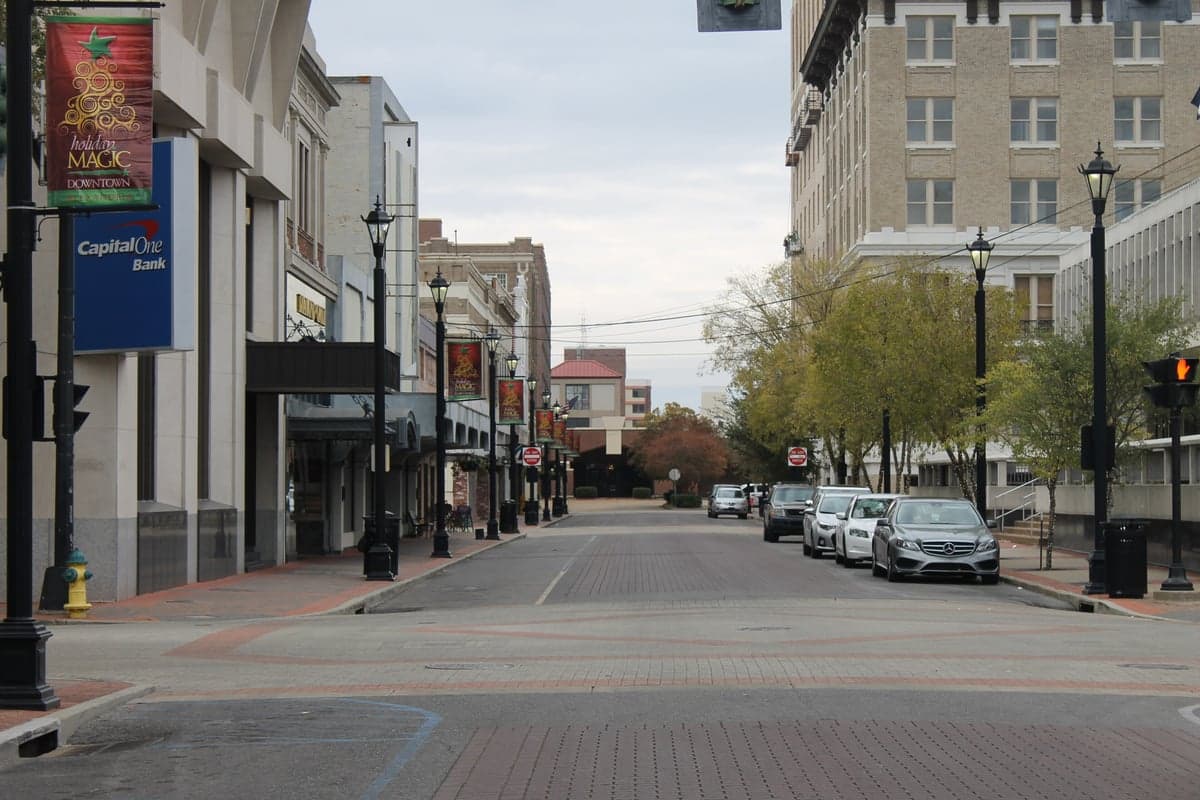
Photo: Wikipedia
Political ClimatePolitical Climate in Alexandria, LA
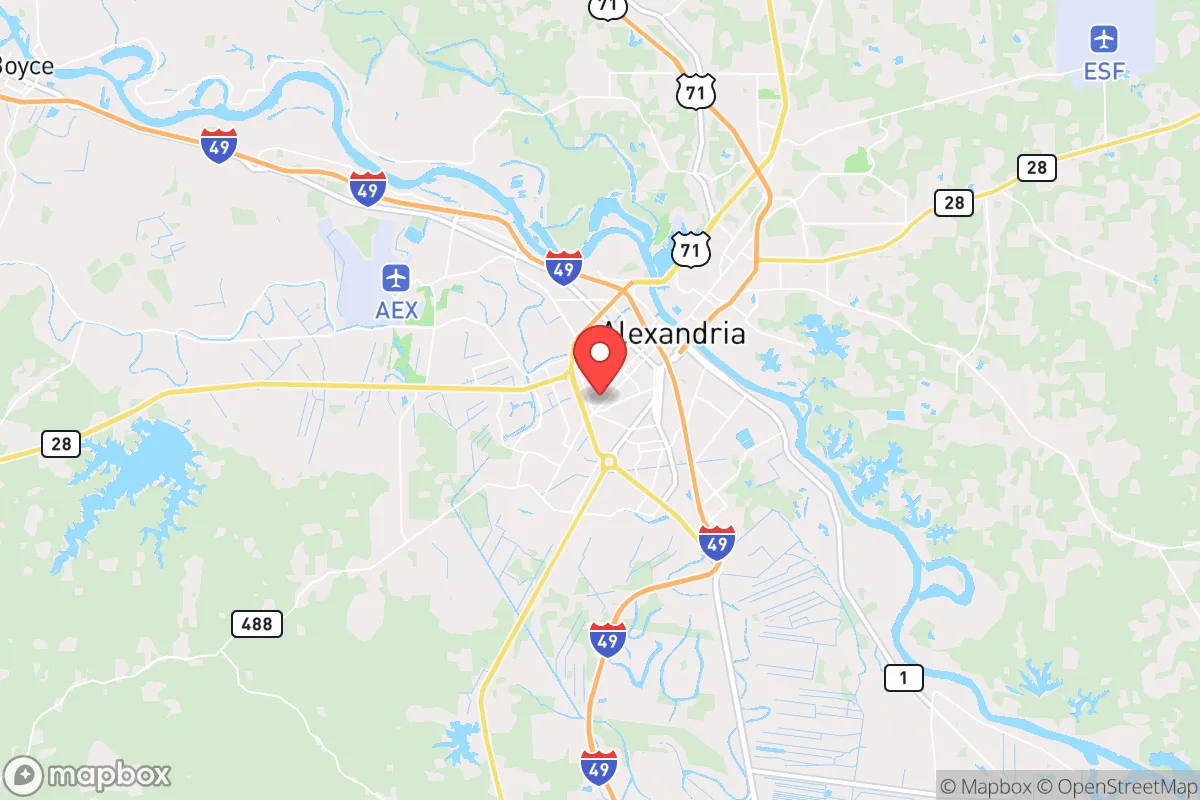
District shown is the primary district for this city’s centroid. Cities may span multiple districts.
Local Political AnalysisPolitical Analysis of Alexandria, LA
Look, I’ve lived in Alexandria my whole life, and I’ve watched this town change. Officially, the area has a Cook PVI of D+8, meaning it leans about 8 points more Democratic than the national average. But that number doesn’t tell the whole story. In practice, Alexandria is a deep-blue island in a sea of red. Rapides Parish as a whole voted for Trump in 2020, but the city itself—especially inside the city limits—has been trending further left for the last decade. What used to be a place where you could have a beer with your neighbor and disagree on politics without it getting personal has turned into something else. The shift isn’t just about party labels; it’s about a growing appetite for government solutions to problems that used to be handled by families, churches, and local civic clubs. That’s what worries me most.
How it compares
Drive 15 minutes in any direction, and you’ll feel like you’re in a different country. Head west to Boyce or north to Tioga, and you’re in solidly conservative territory—places where the Second Amendment is a given, not a debate. Even Pineville, just across the Red River, is noticeably more moderate, with a stronger small-business, low-tax culture. Alexandria, by contrast, has become the regional hub for state and federal employees, Louisiana College faculty, and a growing number of transplants from Baton Rouge and New Orleans who bring their politics with them. The city council has passed ordinances in recent years that feel like they’re testing the limits of local control—things like stricter rental inspection rules and a push for “equity” language in city contracts. Compare that to Colfax or Marksville, where the county commissions barely touch anything beyond roads and drainage. The contrast is stark, and it’s widening every election cycle.
What this means for residents
For folks who value personal freedom—whether that’s keeping more of your paycheck, choosing your own healthcare, or not having a city inspector in your backyard—the trend here is concerning. The local school board has been a battleground over curriculum transparency, and the city’s push for “affordable housing” mandates has some landlords selling off properties rather than dealing with new red tape. On the plus side, if you’re a progressive activist or a young professional who wants to see more bike lanes and farmers markets, you’ll find kindred spirits. But for a longtime resident like me, the creeping sense is that Alexandria is becoming a place where the government assumes it knows better than you do. The tax burden is moderate compared to Shreveport or New Orleans, but it’s creeping up, and the return on that investment—roads, drainage, public safety—doesn’t always match the rhetoric.
One thing that still sets Alexandria apart culturally is its deep-rooted sense of community—at least in the older neighborhoods. You’ll still find block parties, church fish fries, and a genuine willingness to help a neighbor in need. But that fabric is fraying as politics becomes more polarized. The long-term trajectory, if the current leadership stays in place, points toward more regulation, higher taxes, and a continued exodus of families to the unincorporated areas where they feel they can breathe. If you’re thinking of moving here, I’d say come for the low cost of living and the central location, but keep an eye on the ballot box. The Alexandria of 2030 might not look much like the one I grew up in.

State Political ClimatePolitical Climate in Louisiana
State Political AnalysisPolitical Environment in the State
Louisiana has long been a reliably Republican state at the presidential level, voting for the GOP candidate in every election since 2000, but it’s a more complicated picture down-ballot. The state’s overall partisan lean is solidly red, but it’s a deep shade of crimson that’s been fading slightly in the suburbs while holding firm in rural areas. Over the last 10-20 years, the biggest shift has been the collapse of the old “Blue Dog” Democrat in rural parishes, replaced by a more populist, culturally conservative Republicanism, while the New Orleans and Baton Rouge metros have become the state’s only real Democratic strongholds.
Urban vs. rural divide
The political map of Louisiana is a study in contrasts. The state’s two major urban centers — New Orleans and Baton Rouge — are the engines of the Democratic vote. Orleans Parish (New Orleans) routinely delivers 80%+ of its vote to Democrats, while East Baton Rouge Parish, home to the state capital and LSU, is a competitive but increasingly blue area, especially in the city proper. The suburbs of these cities, however, tell a different story. Places like Mandeville and Covington across Lake Pontchartrain, and Denham Springs and Prairieville outside Baton Rouge, are reliably red and have actually grown more conservative as they’ve absorbed families fleeing the cities. The rural parishes — think Acadia Parish (Crowley), Vernon Parish (Leesville, home to Fort Johnson), and Bienville Parish — are deep red, often voting 75-80% Republican. The only real exception is the southwestern corner around Lafayette, which is a bit more moderate and has a stronger independent streak, but it still leans right overall. The I-10 corridor from the Texas line to New Orleans is the state’s political spine, with the rural stretches between Lafayette and Baton Rouge being the most reliably conservative.
Policy environment
Louisiana’s policy environment is a mixed bag for a conservative. On the plus side, the state has no personal property tax on vehicles or boats, and property taxes overall are among the lowest in the country — about 0.55% of assessed value on average. There’s no state-level estate tax, and the corporate income tax was cut from 8% to 7.5% in 2021, with a flat 4.25% rate for most small businesses. The regulatory posture is generally business-friendly, especially in oil and gas, but the state’s Byzantine tax code and high sales taxes (often 9-10% with local add-ons) are a real pain point. On education, Louisiana has a robust school choice system, including the Louisiana Scholarship Program and a growing charter school presence in New Orleans, which is a major draw for conservative parents. However, the state’s healthcare system is a mess — Medicaid expansion under the ACA was accepted in 2016, and the state-run health department is often criticized for inefficiency. Election laws are solid: voter ID is required, and the state uses a closed primary system for most offices, meaning only registered party members can vote in party primaries. There’s no early voting by mail without an excuse, which is a plus for election integrity.
Trajectory & freedom
On the freedom front, Louisiana has been a mixed bag, but the trend is cautiously positive. The state passed a constitutional carry law in 2021, allowing permitless carry of concealed firearms for anyone 21 or older who can legally possess a gun — a major win for Second Amendment advocates. Parental rights got a boost with the 2023 “Parents’ Bill of Rights,” which requires schools to notify parents of any changes to a child’s mental or physical health and prohibits schools from hiding information about a child’s gender identity. On medical freedom, the state passed a law in 2022 prohibiting vaccine mandates by private employers, though it was later weakened by court challenges. Property rights are generally strong, with no statewide rent control and relatively few zoning restrictions outside of New Orleans. The biggest red flag is the state’s tax burden — while property taxes are low, the combined state and local sales tax rate is the highest in the nation, and the income tax, while recently cut to a flat 3% for individuals, still hits middle-class families hard. The state also has a history of government overreach in the form of the Louisiana Department of Health’s heavy hand in licensing and regulation, which can be a headache for small business owners.
Civil unrest & political movements
Louisiana has seen its share of political flashpoints, but they’re less about organized movements and more about cultural friction. The most visible recent unrest was the 2020 protests in New Orleans and Baton Rouge following the George Floyd killing, which included some property damage and clashes with police, but were smaller and less sustained than in other major cities. The state has a strong, organized conservative grassroots, particularly around the Louisiana Family Forum and the Louisiana Republican Party, which have been effective at pushing legislation on abortion (a near-total ban passed in 2022) and parental rights. Immigration politics are less of a flashpoint here than in border states, but there’s a growing concern about the influx of migrants into New Orleans, which has a sanctuary city policy. The “election integrity” movement is strong, with the state passing a voter ID law and purging inactive voters regularly. There’s also a small but vocal secessionist movement in the rural northern parishes, but it’s more of a cultural expression than a serious political force. The biggest ongoing tension is between the conservative rural parishes and the more liberal urban centers, especially over issues like police funding and school curriculum.
Projection
Looking ahead 5-10 years, Louisiana is likely to remain a red state, but the shade of red will depend on migration patterns. The state is seeing a slow but steady influx of conservative-leaning families from California and the Northeast, drawn by low housing costs and the lack of income tax on retirement income. These newcomers tend to settle in the suburbs of Baton Rouge and the Northshore (Mandeville, Covington), reinforcing the existing conservative base. However, the Democratic strongholds in New Orleans and Baton Rouge are also growing, driven by younger, more progressive transplants and the expansion of the state’s university system. The biggest wild card is the state’s economy — if the oil and gas industry continues to decline, rural parishes could lose population and political clout, while the coastal erosion crisis could force expensive relocation of communities, which would be a huge government overreach issue. The state’s tax structure is likely to see further reform, possibly moving toward a flat income tax or even eliminating it entirely, which would be a major win for freedom. The biggest risk is that the state’s chronic underfunding of infrastructure and healthcare could lead to a push for higher taxes, which would be a step backward.
For a new resident, the bottom line is this: Louisiana offers a genuinely low-cost, low-regulation lifestyle with strong protections for gun rights, parental rights, and school choice. The trade-offs are high sales taxes, a struggling healthcare system, and a political environment where the rural-conservative and urban-liberal divide is real and visible. If you’re looking for a place where your values are respected and your wallet isn’t constantly raided, Louisiana is a solid bet — just be prepared for the humidity and the potholes. The state is moving in the right direction on most freedom issues, but it’s a slow, messy process, and you’ll need to stay engaged to keep it that way.
* Values derived from national, state, county, city and local statistics and may differ in a specific area. Last updated: 2026-04-23T05:01:39.000Z
Narrative content on this page is AI-generated and may contain mistakes. Verify any details that matter before acting on them.
ReloMaps may earn a commission from affiliate links at no extra cost to you.

