Photo: Wikipedia
Quality of Life in Alexandria, LA
A high quality of life with strong walkability, manageable living costs, healthy neighborhood signals, and solid amenity access.
What does Quality of Life tell us?
Quality of Life blends cost of living, nearby amenities, socioeconomic signals, and neighborhood character. City-level scores represent the whole municipality; individual neighborhoods can differ.
What does this tell us?
Quality of Life blends cost of living, nearby amenities, socioeconomic signals, and neighborhood character. City-level scores represent the whole municipality; individual neighborhoods can differ.
Cost of Living
25% below national average
The Real Cost of Living in Alexandria, LA for 2026
| Tier | Individual | Family (4) |
|---|---|---|
| Survival | $15k | $28k |
| Comfortable | $36k | $52k |
| Luxury | $86k+ | $133k+ |
| Elite (Top 5%) | $129k+ | $200k+ |
91%
The Area Signal
A metric tracking the socioeconomic signals of the area.
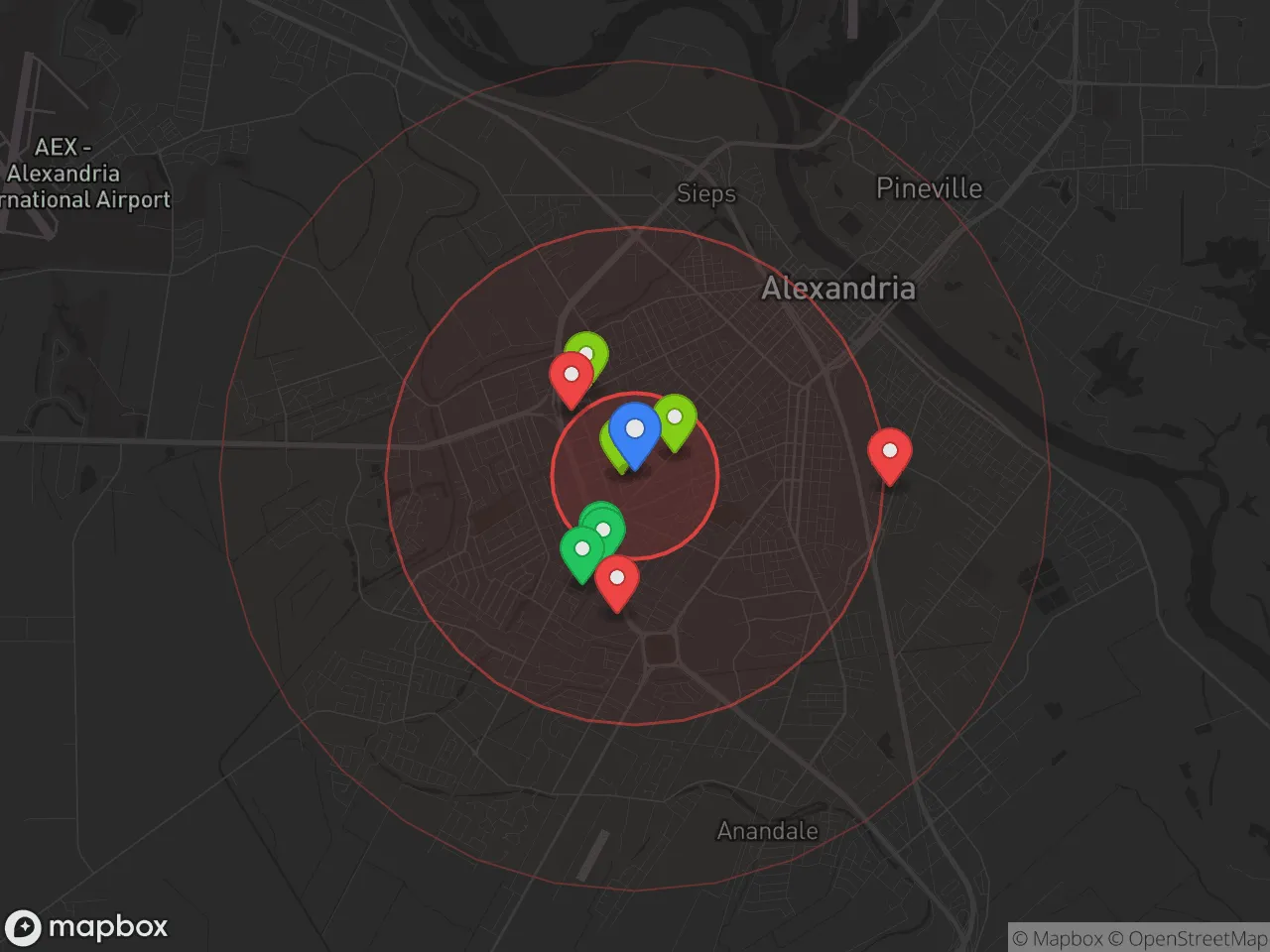
Hobbies
Explore the areaGroceries
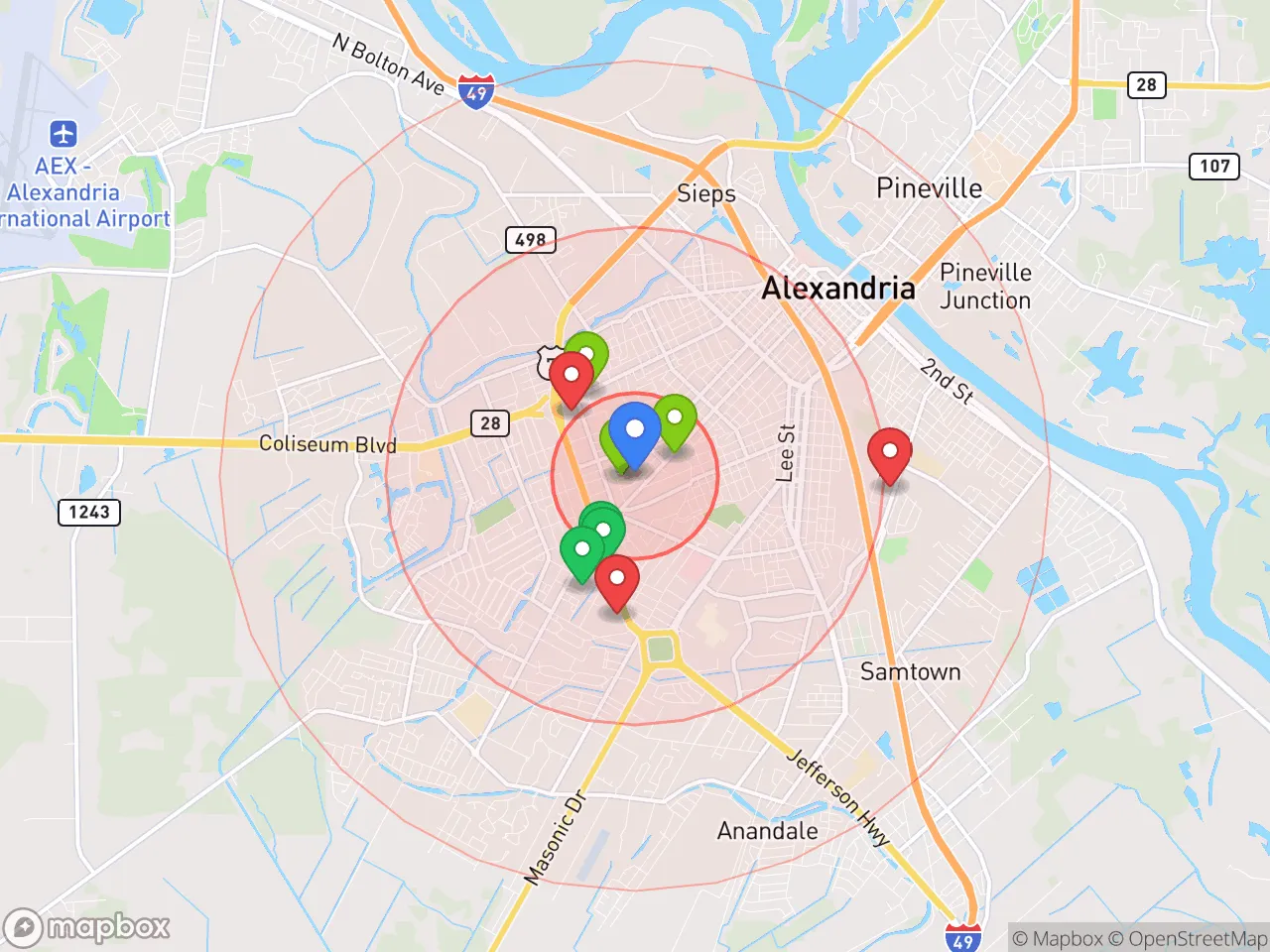
7 within 10 miles
Gas
20 within 10 miles
Hospital
12 within 20 miles
Airport
IAH — George Bush Intercontinental
Post Office
USPS — Alexandria, LA
Critical Amenities
Quality-of-Life Analysis
Alexandria, Louisiana, offers a notably low cost of living that attracts a mix of retirees, military families connected to England Air Force Base, and young professionals seeking affordable entry into homeownership. With a cost of living index of 75 (25% below the U.S. average), the city provides a financial cushion that is increasingly rare in 2026. The population skews slightly older than the national median, and the local economy is anchored by healthcare (CHRISTUS St. Frances Cabrini Hospital), education (Louisiana State University of Alexandria), and a growing logistics sector tied to Interstate 49.
How housing costs and everyday expenses compare to nearby cities
Alexandria’s housing market is a primary draw for newcomers. The median home value sits at $182,800, and the median rent is $946—both well below the national medians and significantly cheaper than larger Louisiana metros like Baton Rouge (where median home values exceed $250,000) or New Orleans (above $300,000). Even compared to nearby Pineville, Alexandria offers slightly lower rents and a wider inventory of older homes under $200,000. The average commute of 19.8 minutes is a full 6 minutes shorter than the national average, meaning residents spend less on gas and vehicle wear-and-tear. Utility costs are roughly on par with the rest of the South, though summer air-conditioning bills can spike. Property taxes are low—Louisiana’s effective rate is about 0.55% of home value—which keeps monthly housing costs manageable even for households earning the area’s median income of roughly $45,000.
What daily life is like for families, retirees, and professionals
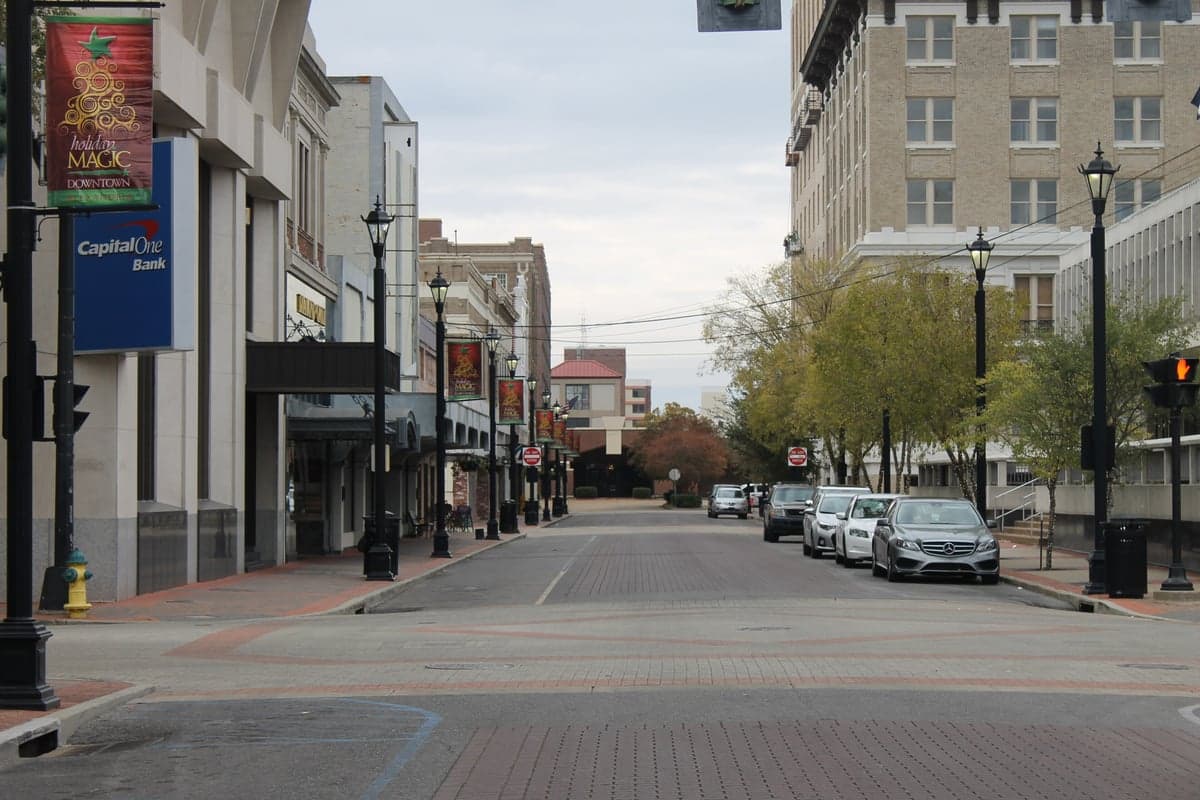
Daily life in Alexandria revolves around a compact, car-dependent layout with most amenities within a 15-minute drive. The Rapides Parish School System serves the city, with standout options like Alexandria Senior High and the magnet-focused Alexandria Country Day School for families seeking alternatives. For recreation, the city offers the Alexandria Zoological Park (home to over 500 animals), the 2.5-mile-long Kincaid Lake hiking and biking trail system, and the historic downtown district along Third Street, which hosts a weekly farmers market from March through November. Healthcare access is solid for a city of its size: Rapides Regional Medical Center and CHRISTUS St. Frances Cabrini Hospital provide two full-service emergency rooms and specialty care that reduces the need to travel to Shreveport or Baton Rouge for routine procedures. Dining leans toward Southern comfort food and Cajun-Creole staples—local favorites include Tunk’s Cypress Inn for fried catfish and The Diamond Grill for upscale steaks. The city lacks a major performing arts venue, but the Coughlin-Saunders Performing Arts Center hosts community theater and concerts.
Alexandria is best suited for those who prioritize affordability and a slower pace over urban amenities and career diversity. Retirees on fixed incomes will find the low housing costs and short commutes especially attractive, while remote workers can stretch a national salary further here than in most U.S. cities. Families with young children may want to research individual school performance closely, as outcomes vary by neighborhood. Professionals in healthcare, education, or logistics will find the most stable local job market, while those in tech or finance may need to commute or work remotely. Overall, Alexandria delivers a solid quality of life for residents who value financial breathing room, outdoor access, and a tight-knit community feel—without the congestion and high prices of Louisiana’s larger metros.

Crime in Alexandria, LA
Significantly higher crime rates than 85% of comparable U.S. locations.
Violent CrimeViolent Crime Analysis
Property CrimeProperty Crime Analysis
Crime Analysis
Alexandria, Louisiana, reports a violent crime rate of 2,447.6 per 100,000 residents and a property crime rate of 5,783.7 per 100,000, placing it among the most dangerous small cities in the state. These figures, drawn from the most recent FBI Uniform Crime Reporting data, indicate that both violent and property offenses occur at rates roughly three to four times higher than the national average. The city's safety challenges are compounded by a local justice system that has adopted progressive prosecutorial policies, which critics argue prioritize offender rehabilitation over public safety and victim accountability.
Crime in context
Alexandria's violent crime rate of 2,447.6 per 100,000 is more than double the Louisiana state average of approximately 560 per 100,000 and far exceeds the U.S. median of 380 per 100,000. Property crime, at 5,783.7 per 100,000, is similarly elevated compared to the state average of roughly 3,200 per 100,000. These numbers place Alexandria in the top 5% of U.S. cities for violent crime and the top 10% for property crime. The disparity is stark when compared to nearby smaller communities like Pineville (across the Red River), which reports significantly lower rates due to more conservative policing and judicial approaches.
What residents experience
Residents report that property crime—particularly vehicle burglaries, theft from porches, and home break-ins—is a near-daily concern in many central neighborhoods. Violent incidents, including aggravated assaults and armed robberies, are concentrated along the MacArthur Drive corridor and in areas near the city's public housing complexes. The presence of a progressive district attorney's office, which has implemented policies such as presumptive diversion for non-violent offenders and reduced cash bail, has been linked by local law enforcement to higher recidivism rates. Victims of property crime often express frustration that repeat offenders are quickly released, undermining deterrence and prolonging neighborhood instability.
Neighborhood-level variation
Safety varies considerably by neighborhood. The historic Garden District and areas near LSU of Alexandria (south of I-49) experience violent crime rates roughly 60% lower than the city average, while the downtown core and areas north of Lee Street see the highest concentrations of both violent and property offenses. The progressive judicial philosophy in Rapides Parish means that even in safer neighborhoods, residents cannot rely on swift or certain consequences for property crimes. Anyone considering relocation should prioritize neighborhoods south of I-49 and west of Highway 1, and should verify specific block-level crime data through local police reports rather than relying solely on citywide averages.
* Values derived from national, state, county, city and local statistics and may differ in a specific area. Last updated: 2026-04-23T05:01:39.000Z
Narrative content on this page is AI-generated and may contain mistakes. Verify any details that matter before acting on them.
ReloMaps may earn a commission from affiliate links at no extra cost to you.

