Photo: Wikipedia
Political ClimatePolitical Climate in Alliance, NE
District shown is the primary district for this city’s centroid. Cities may span multiple districts.
Local Political AnalysisPolitical Analysis of Alliance, NE
Alliance, Nebraska, is about as rock-ribbed conservative as it gets, with a Cook PVI of R+27 that puts it deep in the red. That number isn't just a statistic; it reflects a community where folks have long believed in personal responsibility, limited government, and the right to live your life without a bunch of bureaucrats sticking their noses in. For decades, the political landscape here has been steady as a Nebraska winter—cold to progressive ideas and warm to traditional values. You don't see the wild swings you get in some places; Alliance votes its conscience, and that conscience is consistently conservative.
How it compares
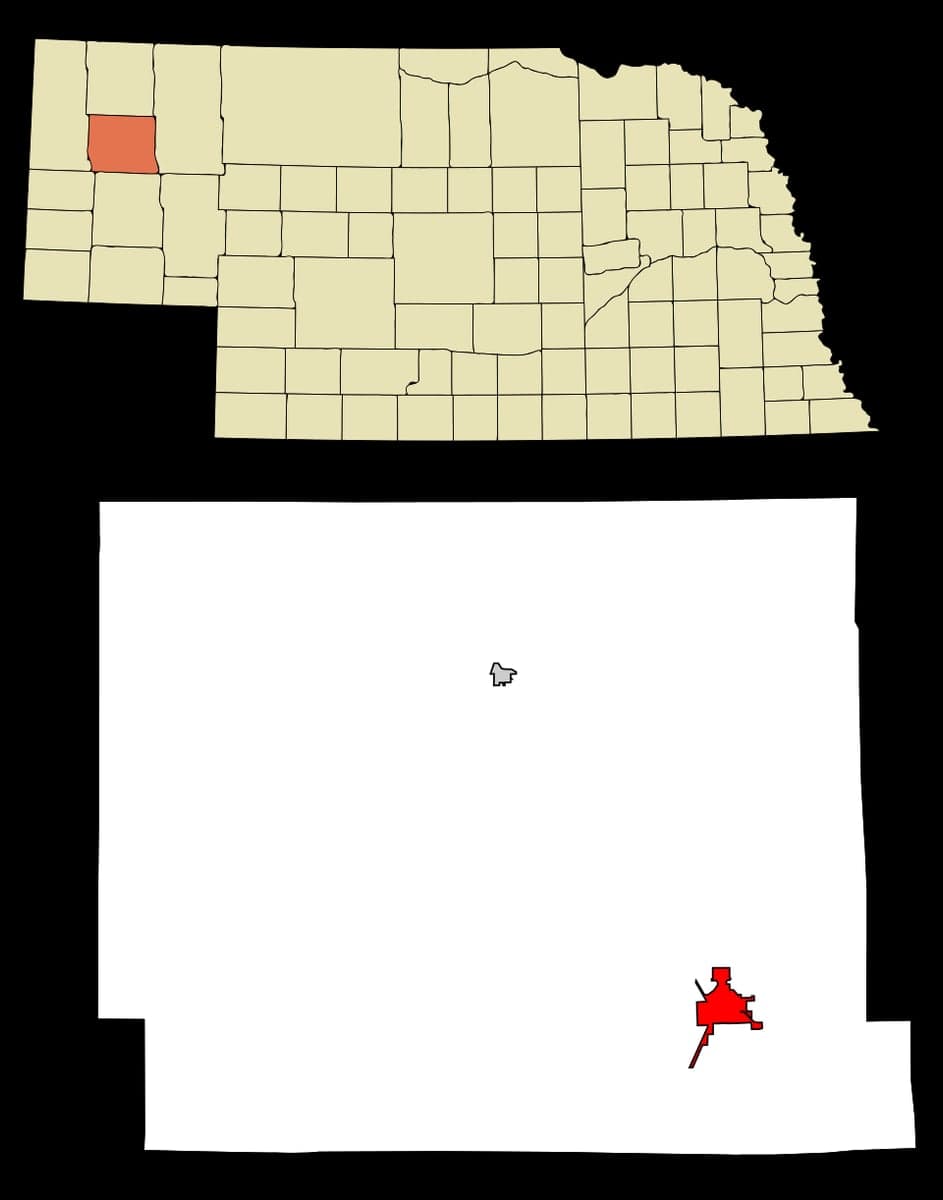
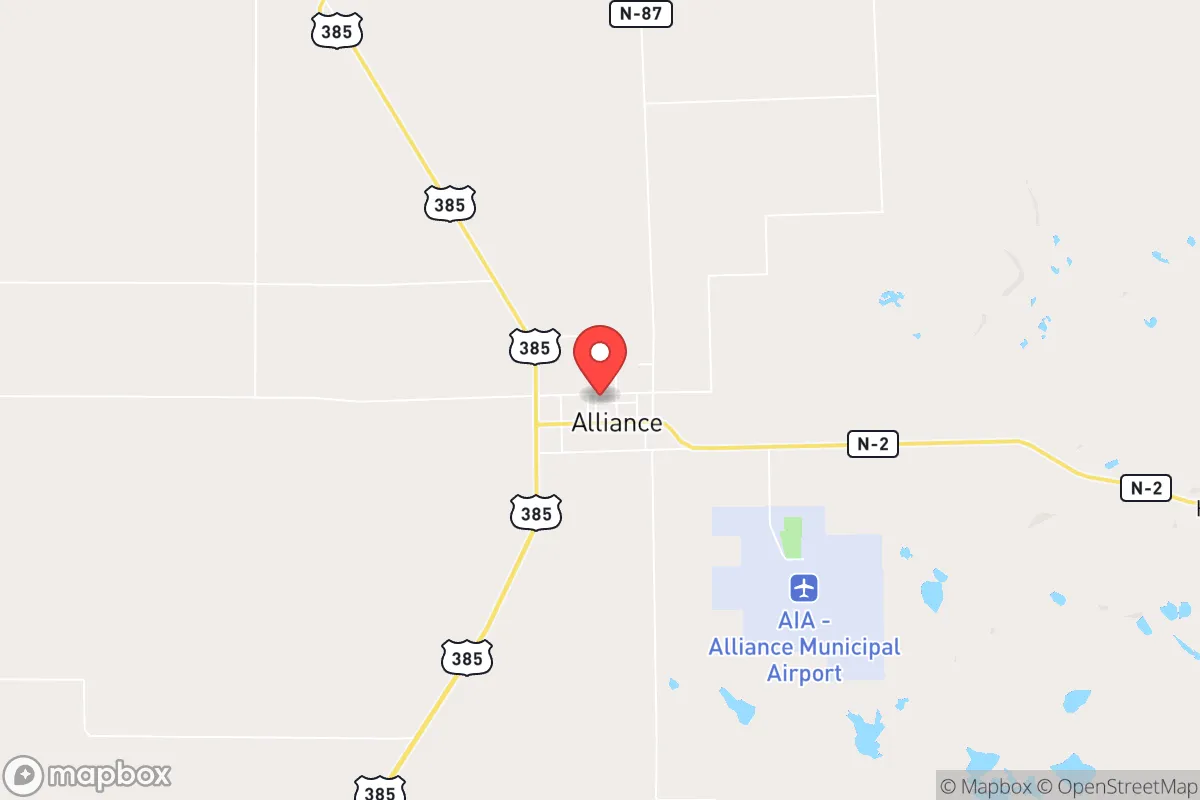
To really understand Alliance, you have to look at what's around it. Drive an hour east to Scottsbluff, and you'll find a slightly more moderate vibe, though still solidly red. But head west into Wyoming, and places like Torrington or Lusk feel like a different world—even more libertarian-leaning, with a "leave me alone" attitude that makes Alliance look almost establishment. The real contrast, though, is with Lincoln or Omaha, six hours east. Those cities are where the state's progressive energy gets concentrated, and you can feel the cultural divide. In Alliance, we watch those places drift leftward on issues like property rights, school curriculum, and gun laws, and it just reinforces why we're happy to be out here. The surrounding Box Butte County area is overwhelmingly agricultural, and that rural perspective—where government overreach hits your bottom line directly—keeps the political climate here skeptical of any new regulations or mandates.
What this means for residents
For someone living in Alliance, the political climate translates into a pretty straightforward daily life. You're not dealing with a lot of red tape. Want to build a shed on your property? Chances are the county's not going to give you a hard time. The local government tends to stay out of the way, which is exactly how most folks want it. There's a strong sense of self-reliance here; people don't look to the state or federal government to solve their problems. That said, there's a growing concern among long-time residents about the slow creep of progressive ideology, even in a place like this. You see it in school board meetings, where debates over library books or curriculum are becoming more frequent. The worry is that the same overreach that's taken hold in blue states is trying to find a foothold here, and the community is on guard. The general feeling is that if you don't push back on the little things, the big things follow.
One thing that sets Alliance apart is its fierce independence, even within the conservative camp. There's a strong streak of "don't tell me what to do" that goes beyond party lines. You'll find folks here who are skeptical of both parties when they start talking about national ID cards, vaccine passports, or federal land grabs. The Chadron area to the north has a similar vibe, but Alliance feels a bit more grounded in its agricultural roots. Culturally, the town holds onto its Western heritage—rodeos, county fairs, and a general distrust of anything that smells like a new tax or a new regulation. The trajectory, as I see it, is that Alliance will remain a conservative stronghold for the foreseeable future, but the fight will be over how much of that local control gets chipped away by state or federal mandates. The younger generation is a mixed bag; some are leaving for the cities, but those who stay tend to be even more committed to the old ways. It's a place where your word is your bond, and your vote is your shield.

State Political ClimatePolitical Climate in Nebraska
State Political AnalysisPolitical Environment in the State
Nebraska has long been a reliably conservative state, but it’s not the monolithic red you might expect from the Cornhusker State. The overall partisan lean is solidly Republican, with the state having voted for the GOP presidential candidate in every election since 1968, except for 2020 when Donald Trump won it by 19 points. However, the real story is the growing urban-rural split, with the state’s two major metros—Omaha and Lincoln—pulling in opposite directions, while the vast rural expanse keeps the state firmly in the red column. Over the last 10-20 years, the trajectory has been a slow but steady shift: the rural areas have become more deeply Republican, while the cities, especially Omaha, have become more competitive, with Douglas County flipping from reliably red to a swing county that went for Joe Biden in 2020. This isn’t a blue wave, but it’s a noticeable crack in the foundation that has long-time residents watching closely.
Urban vs. rural divide
The political map of Nebraska is a textbook case of the urban-rural divide. The state’s two population centers, Omaha (Douglas County) and Lincoln (Lancaster County), are the only real blue-ish spots in a sea of red. Omaha, home to about a third of the state’s population, is the epicenter of the state’s political tension. Douglas County voted for Biden by a 6-point margin in 2020, a stark contrast to the rest of the state. Lincoln, while still more moderate, is trending left, with Lancaster County going for Biden by a smaller 4-point margin. The rest of the state is deeply Republican. The Panhandle, including places like Scottsbluff and Chadron, votes GOP by 30-40 points. The Sandhills and the central part of the state, around Grand Island and Kearney, are similarly red. The one notable exception is the 2nd Congressional District, which includes Omaha and some of its suburbs. This district is a perennial swing seat, having voted for Trump in 2016 and 2020, but also electing a Democrat to the House in 2018 and 2022. The suburbs of Omaha, like Elkhorn and Papillion, are the real battlegrounds—they’re still conservative, but they’re becoming more moderate, especially among younger families moving in from out of state.
Policy environment
Nebraska’s policy environment is a mixed bag for conservatives. On the plus side, the state has a flat income tax rate of 5.58%, which is being phased down to 3.99% by 2027, thanks to LB 754 passed in 2023. Property taxes are a sore spot, though—they’re among the highest in the nation as a percentage of home value, and the state has struggled to provide meaningful relief. The regulatory posture is generally business-friendly, with a right-to-work law and no state-level minimum wage above the federal floor (though a ballot initiative raised it to $15 by 2026). On education, Nebraska has a robust school choice movement, with the passage of LB 753 in 2023, which created a tax-credit scholarship program for private school tuition. However, the state’s public schools are still heavily unionized, and the teachers’ union remains a powerful political force. On healthcare, Nebraska expanded Medicaid under the Affordable Care Act in 2020, a move that was controversial among conservatives but passed via ballot initiative. Election laws are a bright spot: the state has voter ID requirements (passed in 2022), and it’s one of the few states that doesn’t allow same-day voter registration. The state also has a unique unicameral, nonpartisan legislature, which often leads to more pragmatic, less ideological lawmaking than in other states.
Trajectory & freedom
When it comes to personal freedom, Nebraska is on a generally positive trajectory, but there are warning signs. On the good side, the state passed constitutional carry (LB 77) in 2023, allowing law-abiding citizens to carry a concealed firearm without a permit. This was a major win for gun rights advocates. Parental rights were strengthened with LB 1084 in 2023, which requires schools to notify parents if their child requests a name or pronoun change, and it bans instruction on sexual orientation and gender identity in grades K-5. On medical freedom, Nebraska banned COVID-19 vaccine mandates for state employees and contractors in 2021, and it has not implemented any broad-based mask or vaccine mandates since. However, the state’s property rights are under pressure from the growing wind and solar energy industry, with some counties seeing disputes over eminent domain for transmission lines. The biggest red flag for freedom-minded folks is the state’s high property tax burden, which effectively acts as a cap on how much you can truly own your home. The state also has a sales tax on groceries, which hits low-income families hardest. Overall, Nebraska is moving in the right direction on most cultural and Second Amendment issues, but the tax situation remains a drag on economic freedom.
Civil unrest & political movements
Nebraska has not seen the kind of large-scale civil unrest seen in coastal states, but there have been flashpoints. The most notable was the 2020 George Floyd protests in Omaha, which turned violent with looting and fires in the downtown area, leading to a curfew and National Guard deployment. This event galvanized both sides, with a surge in Black Lives Matter activism in Omaha and a corresponding backlash that boosted conservative turnout in the suburbs. On the right, the Nebraska Republican Party has seen a rise in populist, anti-establishment energy, with groups like the Nebraska Freedom Coalition pushing for more aggressive action on election integrity and school curriculum. Immigration politics are a hot-button issue, especially in the rural areas where meatpacking plants employ large numbers of immigrant workers. The town of Schuyler, for example, saw a major ICE raid in 2018, and the issue remains divisive. There is no sanctuary city policy in Nebraska; in fact, the state passed a law in 2023 (LB 133) requiring law enforcement to cooperate with federal immigration authorities. Election integrity is a persistent concern among conservatives, with the 2020 election leading to calls for a forensic audit of the state’s voting machines, though no major irregularities were found. The state’s unique unicameral legislature often prevents the most extreme partisan battles, but the tension is palpable, especially in the Omaha metro.
Projection
Looking ahead 5-10 years, Nebraska is likely to remain a red state, but the margins will continue to tighten. The biggest demographic shift is the in-migration of remote workers and retirees from blue states, particularly to the Omaha suburbs and smaller towns like Fremont and Columbus. These newcomers tend to be more moderate, especially on social issues, which could slowly shift the suburbs leftward. The rural areas, meanwhile, are losing population, which will dilute their electoral power over time. The 2nd Congressional District is likely to remain a swing seat, and if the Democratic Party ever gets its act together, it could become a pickup opportunity. On policy, expect continued battles over property tax reform, with the state likely to shift more of the burden to sales or income taxes. The school choice movement will continue to grow, but it will face fierce opposition from the teachers’ unions. On cultural issues, the state will likely see more fights over library books, transgender policies, and critical race theory in schools. The biggest wildcard is the state’s water rights, as the Ogallala Aquifer continues to be depleted, which could lead to major conflicts between agricultural and urban interests. For a new resident, the Nebraska of 2035 will probably look a lot like today, but with a slightly more purple hue in the cities and a more defensive posture in the countryside.
Bottom line for a new resident: If you’re a conservative looking for a state that respects your gun rights, protects parental authority, and keeps taxes relatively low, Nebraska is a solid choice. But don’t expect a libertarian paradise—property taxes are high, the state has a sales tax on groceries, and the cities are slowly trending left. You’ll find a welcoming community in the rural areas and the suburbs, but you’ll need to be engaged in local politics to keep the state from drifting. The best bet for a conservative family is to look at the smaller towns like Kearney or Norfolk, or the conservative suburbs of Omaha like Bennington or Gretna, where the schools are good, the taxes are manageable, and the values align with yours. Just be prepared for a cold winter and a hot political summer every few years.
* Values derived from national, state, county, city and local statistics and may differ in a specific area. Last updated: 2026-05-03T20:28:40.000Z
Narrative content on this page is AI-generated and may contain mistakes. Verify any details that matter before acting on them.
ReloMaps may earn a commission from affiliate links at no extra cost to you.

