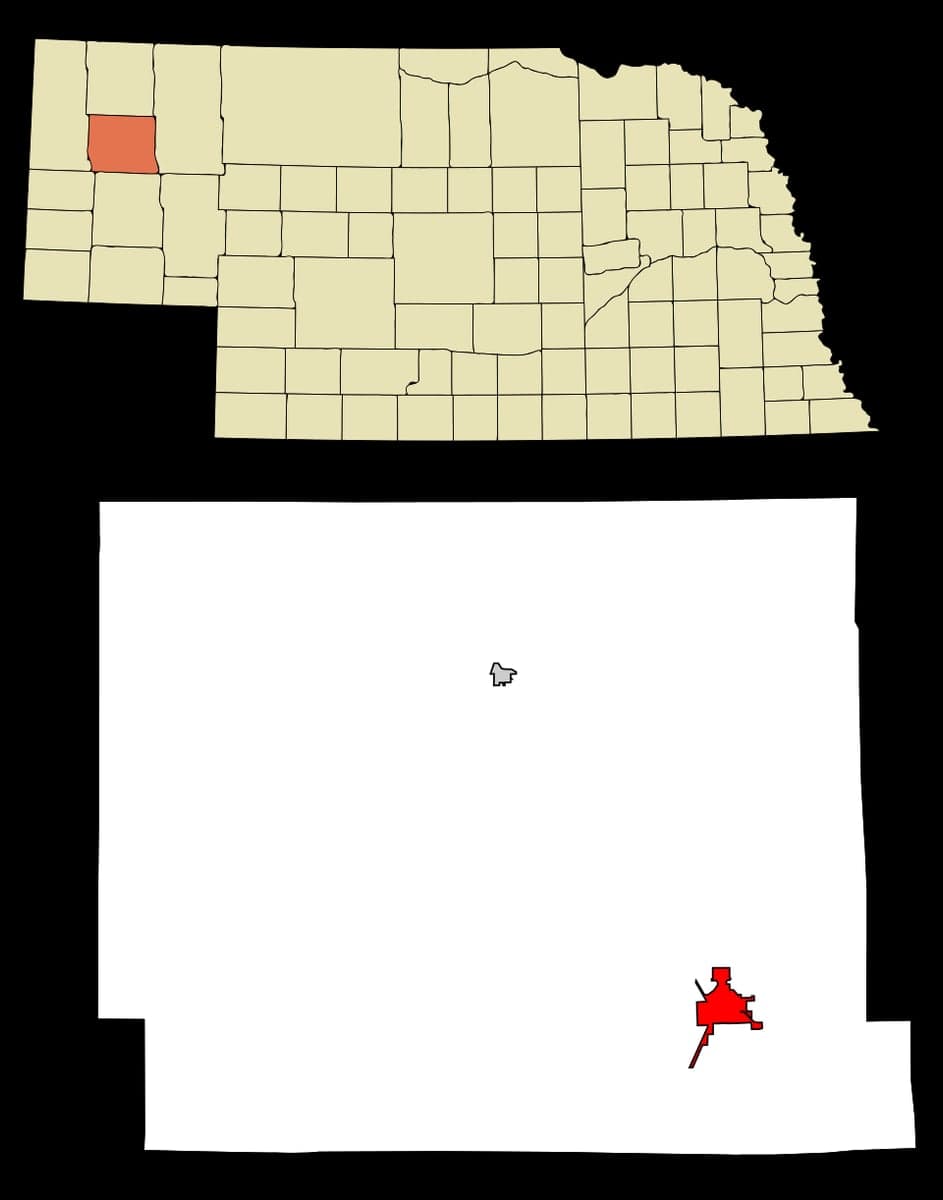
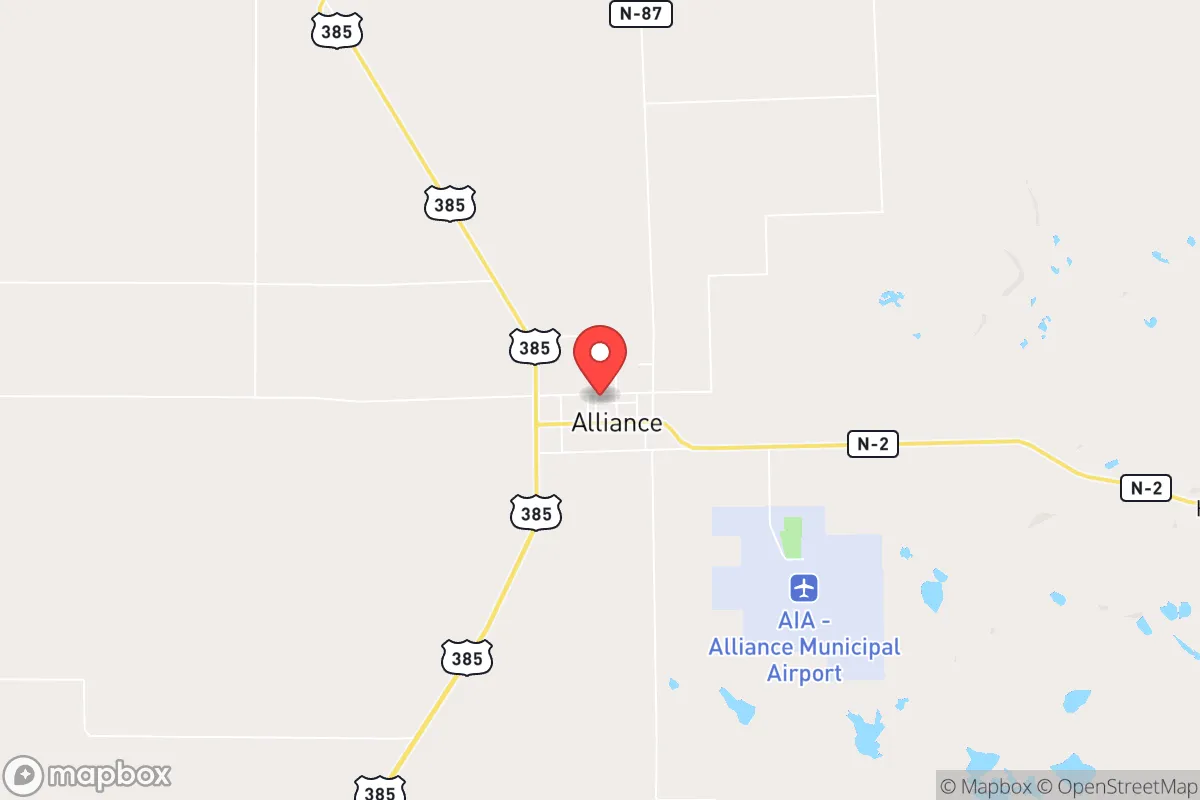
Photo: Wikipedia
Quality of Life in Alliance, NE
A high quality of life with strong walkability, manageable living costs, healthy neighborhood signals, and solid amenity access.
What does Quality of Life tell us?
Quality of Life blends cost of living, nearby amenities, socioeconomic signals, and neighborhood character. City-level scores represent the whole municipality; individual neighborhoods can differ.
What does this tell us?
Quality of Life blends cost of living, nearby amenities, socioeconomic signals, and neighborhood character. City-level scores represent the whole municipality; individual neighborhoods can differ.
Cost of Living
The Real Cost of Living in Alliance, NE for 2026
| Tier | Individual | Family (4) |
|---|---|---|
| Survival | $12k | $22k |
| Comfortable | $30k | $45k |
| Luxury | $84k+ | $130k+ |
| Elite (Top 5%) | $99k+ | $153k+ |
147%
The Area Signal
A metric tracking the socioeconomic signals of the area.
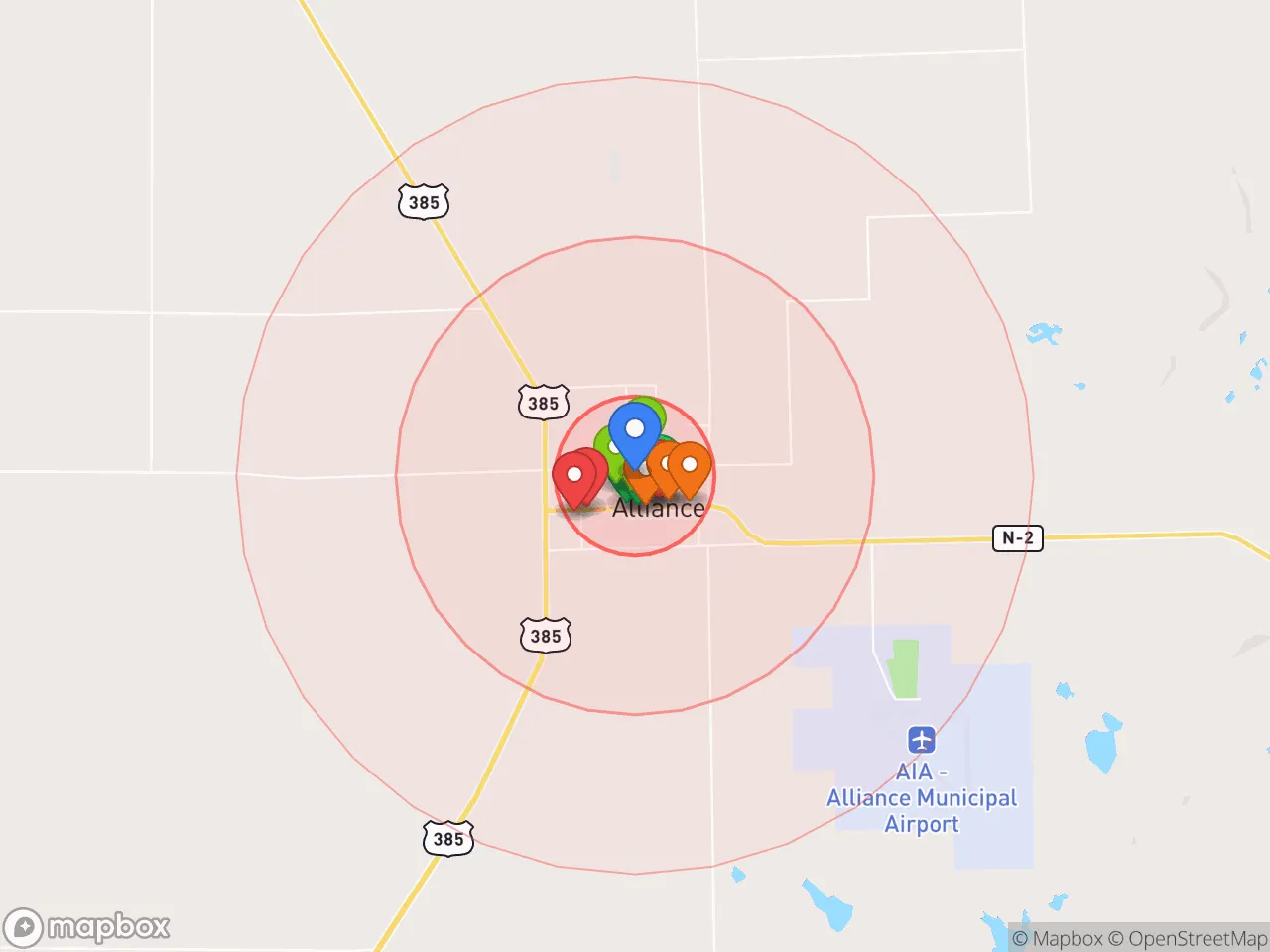
Hobbies
Explore the areaGroceries
1 within 10 miles
Gas
9 within 10 miles
Hospital
1 within 20 miles
Airport
DEN — Denver International
Post Office
USPS — Alliance, NE
Critical Amenities
Quality-of-Life Analysis
Alliance, Nebraska, offers a notably affordable quality of life that attracts a mix of working families, retirees, and agricultural professionals. With a cost of living index of 61—39% below the U.S. average—the community provides a low-stress financial environment where a modest income goes far. The population is predominantly middle-income, with a strong sense of self-reliance and community involvement, reflecting the broader Sandhills region’s ethos of hard work and neighborly support.
How housing costs and everyday expenses compare to nearby towns
Housing in Alliance is the primary driver of its affordability. The median home value sits at $156,300, roughly half the national median, while the median rent of $743 is well below state and national averages. This makes homeownership attainable for first-time buyers and allows renters to save significantly compared to larger Nebraska cities like Lincoln or Omaha, where median rents exceed $1,100. The average commute of just 19 minutes further reduces transportation costs, as most residents work within town or on nearby farms and ranches. Utility costs are moderate, though winter heating can spike due to the region’s cold climate. Groceries and healthcare are slightly below national averages, reinforcing the area’s overall low cost of living. For those comparing Alliance to Scottsbluff (about 45 miles west) or Chadron (60 miles north), Alliance generally offers lower home prices and similar rental rates, making it a budget-friendly anchor in the Panhandle.
What daily life is like for families and professionals in Alliance
Daily life in Alliance centers on a compact, walkable downtown and a calendar of community events. The school system, Alliance Public Schools, serves roughly 1,500 students and maintains solid graduation rates, with extracurriculars like FFA and sports deeply woven into local culture. Amenities include the Carnegie Arts Center, the Knight Museum, and the nearby Box Butte Reservoir for fishing and boating. For shopping and dining, residents rely on local grocery stores, hardware shops, and a handful of family-run restaurants—chain options are limited, which preserves the town’s independent character. Healthcare is provided by Box Butte General Hospital, a critical access facility with emergency services and primary care. The pace of life is unhurried; most errands can be completed in under 15 minutes, and traffic is virtually nonexistent. The absence of major entertainment venues means residents often travel to Scottsbluff or even Denver (about 4 hours south) for concerts, specialty shopping, or major medical appointments.
Alliance is best suited for those who value financial breathing room, a tight-knit social fabric, and outdoor recreation over urban convenience. Families with young children benefit from low crime rates and affordable housing, while retirees appreciate the quiet streets and manageable cost of living. Professionals in agriculture, education, or healthcare will find stable employment, though remote workers may need to rely on Starlink or local cable internet, as fiber-optic coverage is limited. The community’s resilience—evident in its annual NebraskaLand Days celebration and strong volunteer networks—makes it a welcoming place for anyone seeking a slower, more grounded lifestyle away from metropolitan pressures.

Crime in Alliance, NE
Generally safer than 64% of comparable U.S. locations.
Violent CrimeViolent Crime Analysis
Property CrimeProperty Crime Analysis
Crime Analysis
Alliance, Nebraska, presents a mixed safety profile that is notably better than the national average for violent crime but slightly elevated for property crime. With a violent crime rate of 211.2 per 100,000 residents, the city is significantly safer than the U.S. average of roughly 380 per 100,000, though it is higher than Nebraska's statewide rate of about 250 per 100,000. Property crime, at 894.5 per 100,000, sits just above the national average of approximately 1,950 per 100,000, but remains a more common concern for residents than violent offenses.
Crime in context
Alliance’s violent crime rate is roughly 45% lower than the national average, placing it among safer small cities in the Great Plains region. However, the property crime rate of 894.5 per 100,000 is about 10% higher than the Nebraska state average of roughly 810 per 100,000. This means residents face a slightly elevated risk of theft, burglary, and vehicle break-ins compared to other Nebraskans, though still well below the national property crime rate. The city’s location in Box Butte County, far from any major metropolitan area, means it is not influenced by the progressive prosecutorial policies seen in larger urban centers like Omaha or Lincoln, which can lead to higher recidivism and reduced public safety. Alliance’s local justice system tends to follow more traditional, conservative approaches to sentencing and prosecution, which generally correlates with lower crime rates and greater accountability for offenders.
What residents experience
For daily life in Alliance, violent crime is rare. The most common incidents are thefts from vehicles, vandalism, and occasional burglaries. Residents typically feel safe walking downtown and in residential neighborhoods, especially during daylight hours. The city’s small size—around 8,000 people—means neighbors often know each other, and community policing is effective. The Alliance Police Department maintains a visible presence, and neighborhood watch programs are active in several areas. Property crime, while more frequent, is often opportunistic—unlocked cars and garages are the primary targets. Most property crimes are non-confrontational, and the risk of personal harm is low.
Neighborhood-level variation exists but is modest. The area around the downtown core and older housing stock near the railroad tracks sees slightly higher property crime rates, while newer subdivisions on the city’s east and south sides report fewer incidents. The rural outskirts and agricultural properties are generally very safe, with crime largely limited to occasional trespassing or equipment theft. Overall, Alliance offers a secure environment for families and retirees, with the caveat that residents should take standard precautions—locking vehicles, securing outbuildings, and reporting suspicious activity—to minimize property crime risk. The absence of progressive criminal justice policies in the region reinforces a deterrent effect, keeping recidivism lower than in larger, more liberal jurisdictions.
* Values derived from national, state, county, city and local statistics and may differ in a specific area. Last updated: 2026-05-03T20:28:40.000Z
Narrative content on this page is AI-generated and may contain mistakes. Verify any details that matter before acting on them.
ReloMaps may earn a commission from affiliate links at no extra cost to you.

