
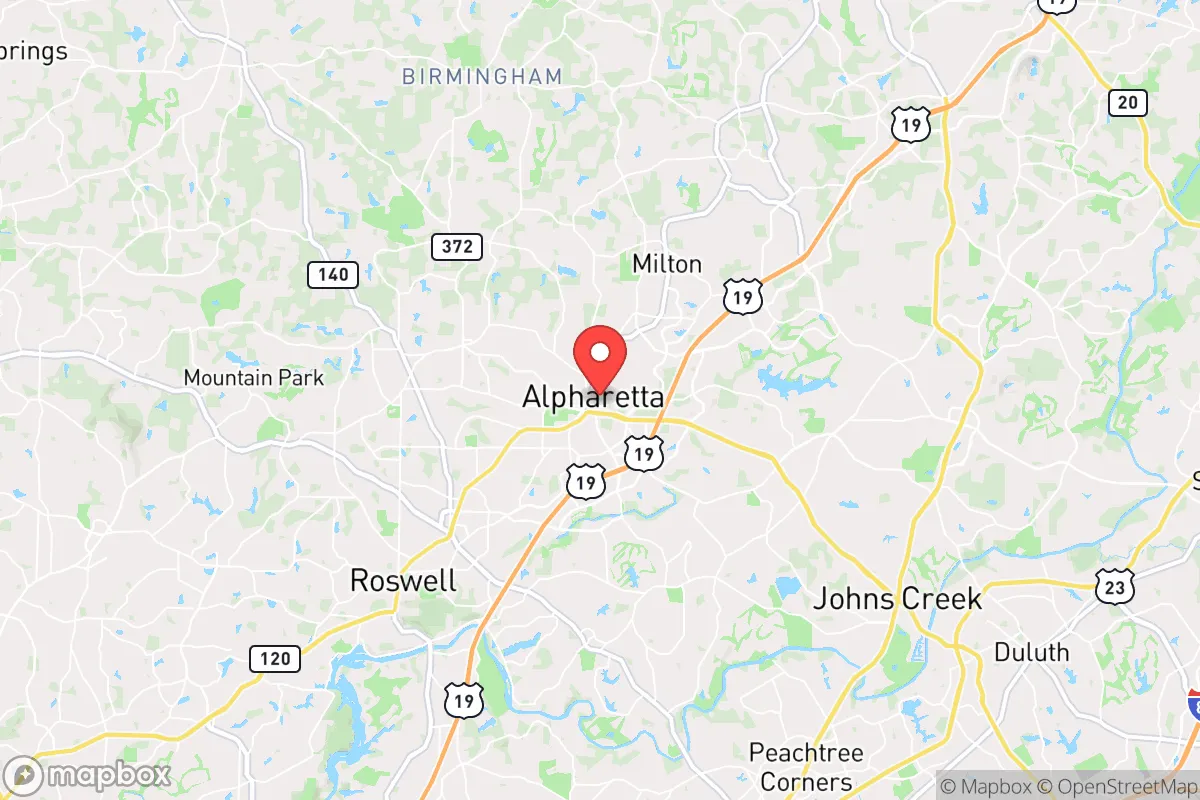
Photo: Wikipedia
Quality of Life in Alpharetta, GA
A high quality of life with strong walkability, manageable living costs, healthy neighborhood signals, and solid amenity access.
What does Quality of Life tell us?
Quality of Life blends cost of living, nearby amenities, socioeconomic signals, and neighborhood character. City-level scores represent the whole municipality; individual neighborhoods can differ.
What does this tell us?
Quality of Life blends cost of living, nearby amenities, socioeconomic signals, and neighborhood character. City-level scores represent the whole municipality; individual neighborhoods can differ.
Cost of Living
83% above national average
The Real Cost of Living in Alpharetta, GA for 2026
| Tier | Individual | Family (4) |
|---|---|---|
| Survival | $30k | $56k |
| Comfortable | $118k | $173k |
| Luxury | $265k+ | $410k+ |
| Elite (Top 5%) | $315k+ | $489k+ |
85%
The Area Signal
A metric tracking the socioeconomic signals of the area.


Hobbies
Explore the areaGroceries
0 within 10 miles
Gas
0 within 10 miles
Hospital
3 within 20 miles
Airport
ATL — Hartsfield-Jackson Atlanta International
Post Office
USPS — Duluth, GA
Critical Amenities
Quality-of-Life Analysis
Alpharetta, Georgia, consistently ranks among the most affluent suburbs in the Atlanta metropolitan area, attracting a population of high-earning professionals, executives, and families drawn by its top-tier schools and robust corporate job market. The city’s median household income exceeds $120,000, and its demographic profile skews heavily toward college-educated residents working in technology, finance, and healthcare. This prosperity shapes nearly every aspect of daily life, from the polished downtown district to the meticulously maintained residential neighborhoods that define the city’s character.
Cost of living and housing affordability compared to nearby suburbs
Alpharetta’s cost of living index sits at 183, meaning it is 83% more expensive than the national average, a figure driven overwhelmingly by housing costs. The median home value is $605,700, which is roughly 30% higher than the Atlanta metro median and significantly pricier than neighboring cities like Cumming (median ~$480,000) or Roswell (~$530,000). Renters face a median monthly rent of $1,874, placing Alpharetta among the priciest rental markets in North Fulton County. While these figures are steep, they are still below the most expensive inner-ring suburbs like Buckhead or Sandy Springs, where median home values often exceed $700,000. For buyers, the trade-off is access to highly rated public schools and low crime rates, which help sustain property values. The average commute of 28 minutes is manageable by metro Atlanta standards, largely thanks to the concentration of major employers—including ADP, Verizon, and McKesson—within the city limits, reducing the need for long drives into downtown Atlanta.
Parks, schools, and the daily rhythm of life in Alpharetta
Daily life in Alpharetta revolves around a blend of outdoor recreation, high-end retail, and community-oriented events. The city operates over 30 parks, with Big Creek Greenway—a 12-mile paved trail—serving as a central hub for walking, cycling, and running. The downtown area, known as Alpharetta City Center, features a weekly farmers market, seasonal concerts, and a dense cluster of restaurants and boutiques that draw residents from across North Fulton. The Fulton County School System is a primary draw: schools like Alpharetta High School and Chattahoochee High School consistently earn top ratings from Niche and GreatSchools, with graduation rates above 95%. For families, the rhythm includes school drop-offs, afternoons at the Avalon mixed-use development, and weekend youth sports leagues. The city’s low violent crime rate—roughly 60% below the national average—reinforces a sense of safety that is a key selling point for parents and retirees alike.
Alpharetta is best suited for professionals and families who prioritize excellent schools, low crime, and a polished suburban environment over urban grit or nightlife. The high cost of entry means that dual-income households earning above $150,000 will find the lifestyle most comfortable, while renters or first-time buyers may need to look to nearby Cumming or Duluth for more affordable options. For those who can afford it, Alpharetta offers a predictable, high-amenity quality of life that consistently ranks among the best in Georgia for raising children and building a career without a punishing commute.

Crime in Alpharetta, GA
Lower crime rates than 81% of comparable U.S. locations.
Violent CrimeViolent Crime Analysis
Property CrimeProperty Crime Analysis
Crime Analysis
Alpharetta, Georgia, consistently ranks among the safest cities in the metro Atlanta area, with violent crime rates well below both state and national averages. However, the broader context of the Atlanta metropolitan region—which includes jurisdictions with progressive district attorneys and lenient judicial philosophies—introduces risks that residents and potential movers should weigh carefully. While Alpharetta’s own policing and local courts maintain a more conservative, victim-centered approach, the city is not immune to spillover crime from surrounding areas where softer-on-crime policies prevail.
Crime in context
Alpharetta’s violent crime rate stands at 218.6 incidents per 100,000 residents, which is roughly half the national average of 380 per 100,000 and significantly lower than Georgia’s state rate of approximately 395 per 100,000. Property crime in Alpharetta is 1,032.5 per 100,000, also below the national figure of 1,954 per 100,000. These numbers reflect a community where proactive policing and strong local ordinances have historically kept serious crime in check. Yet the surrounding metro area—particularly Fulton County, which includes parts of Atlanta—has seen rising recidivism and reduced prosecution rates under progressive district attorneys who prioritize diversion programs over incarceration. This creates a regional environment where offenders released in nearby jurisdictions can easily travel into Alpharetta via GA-400 or local arterials.
What residents experience
Day-to-day life in Alpharetta feels safe, with most crime concentrated in retail corridors and parking lots rather than residential neighborhoods. Theft from vehicles and shoplifting are the most common property crimes, while violent offenses like robbery or aggravated assault are rare and typically isolated incidents. Residents report high satisfaction with the Alpharetta Department of Public Safety, which combines police and fire services and emphasizes community engagement. However, the progressive judicial trends in the broader metro area—such as Fulton County District Attorney Fani Willis’s office, which has faced criticism for declining to prosecute certain non-violent felonies—mean that criminals apprehended in Alpharetta may face reduced consequences if their cases are transferred to county-level courts. This dynamic undermines deterrence and can lead to repeat offenses by the same individuals.
Neighborhood-level variation
Safety in Alpharetta is not uniform. Gated communities and newer subdivisions in the northern and eastern parts of the city, such as those near Windward Parkway and the Country Club of the South, experience virtually no violent crime. Older neighborhoods closer to downtown Alpharetta and the North Point Mall area see slightly higher property crime rates, particularly package theft and car break-ins. Apartment complexes along Haynes Bridge Road and Mansell Road also report more frequent incidents. Prospective residents should prioritize properties with secure parking and neighborhood watch programs, and remain aware that even in a low-crime city, the lenient justice policies of surrounding counties can embolden property criminals who view suburban Alpharetta as a target-rich environment.
* Values derived from national, state, county, city and local statistics and may differ in a specific area. Last updated: 2026-04-16T00:21:24.000Z
Narrative content on this page is AI-generated and may contain mistakes. Verify any details that matter before acting on them.
ReloMaps may earn a commission from affiliate links at no extra cost to you.

