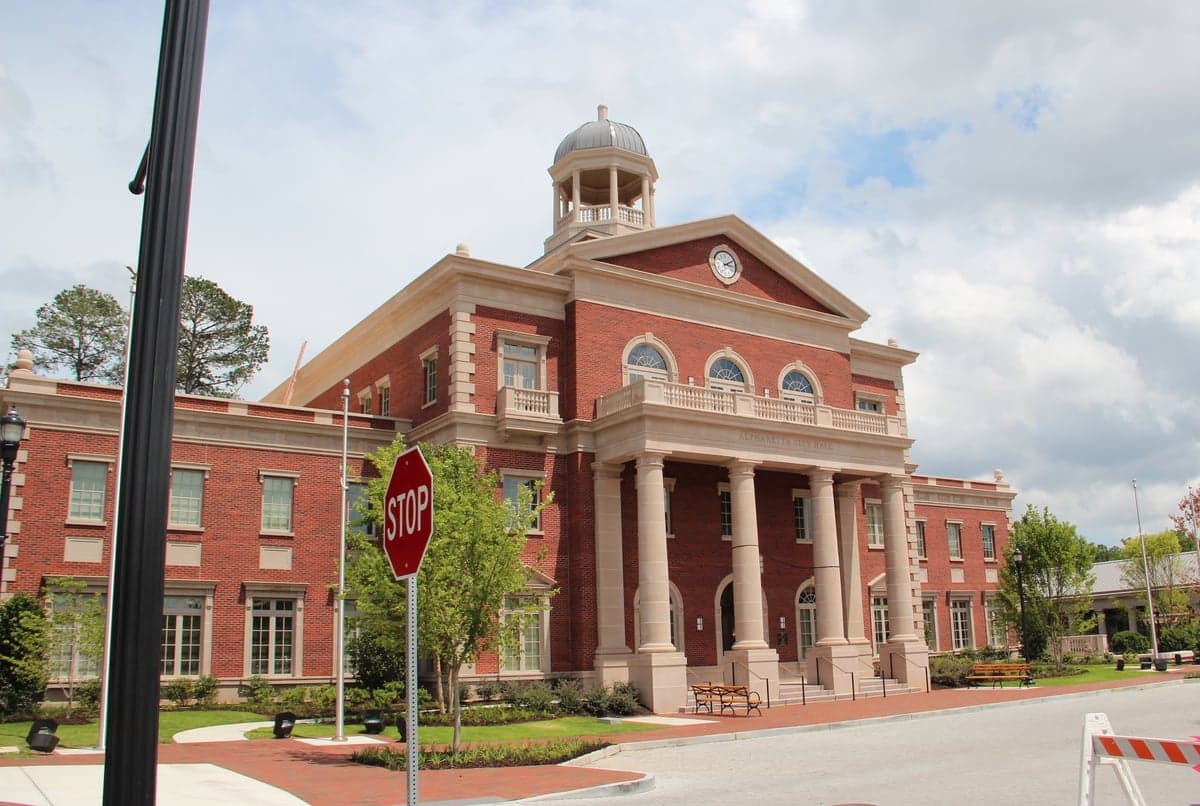
Photo: Wikipedia
Strategic Assessment of Alpharetta, GA
Multiple tactical vulnerabilities. Population density, target proximity, or disaster risk are likely compounding. A retreat property and exit planning is required.
What does the Strategic Assessment tell us?
Our Strategic Assessment grades tactical survivability of an area. Major population centers, military targets, fallout zones, natural disasters, and border exposure all drive risk — lower exposure means a more defensible position in a crisis.
This is heavily inspired by Joel Skousen's Strategic Relocation book. Highly recommended you checkout the book ($)What does this tell us?
Our Strategic Assessment grades tactical survivability of an area. Major population centers, military targets, fallout zones, natural disasters, and border exposure all drive risk — lower exposure means a more defensible position in a crisis.
This is heavily inspired by Joel Skousen's Strategic Relocation book. Highly recommended you checkout the book ($)Strategic Pillars

Key Distances
Regional Safe Places
Below is our recommended "safe zones" in Georgia and the surrounding area based on our strategic heuristics. For most people, it's unrealistic to live in a “safe zone” full-time due to work, family or other personal reasons. They tend to be more rural. However, many of these areas are perfect for second homes and retreat properties that double as a vacation home or even a short-term rental.
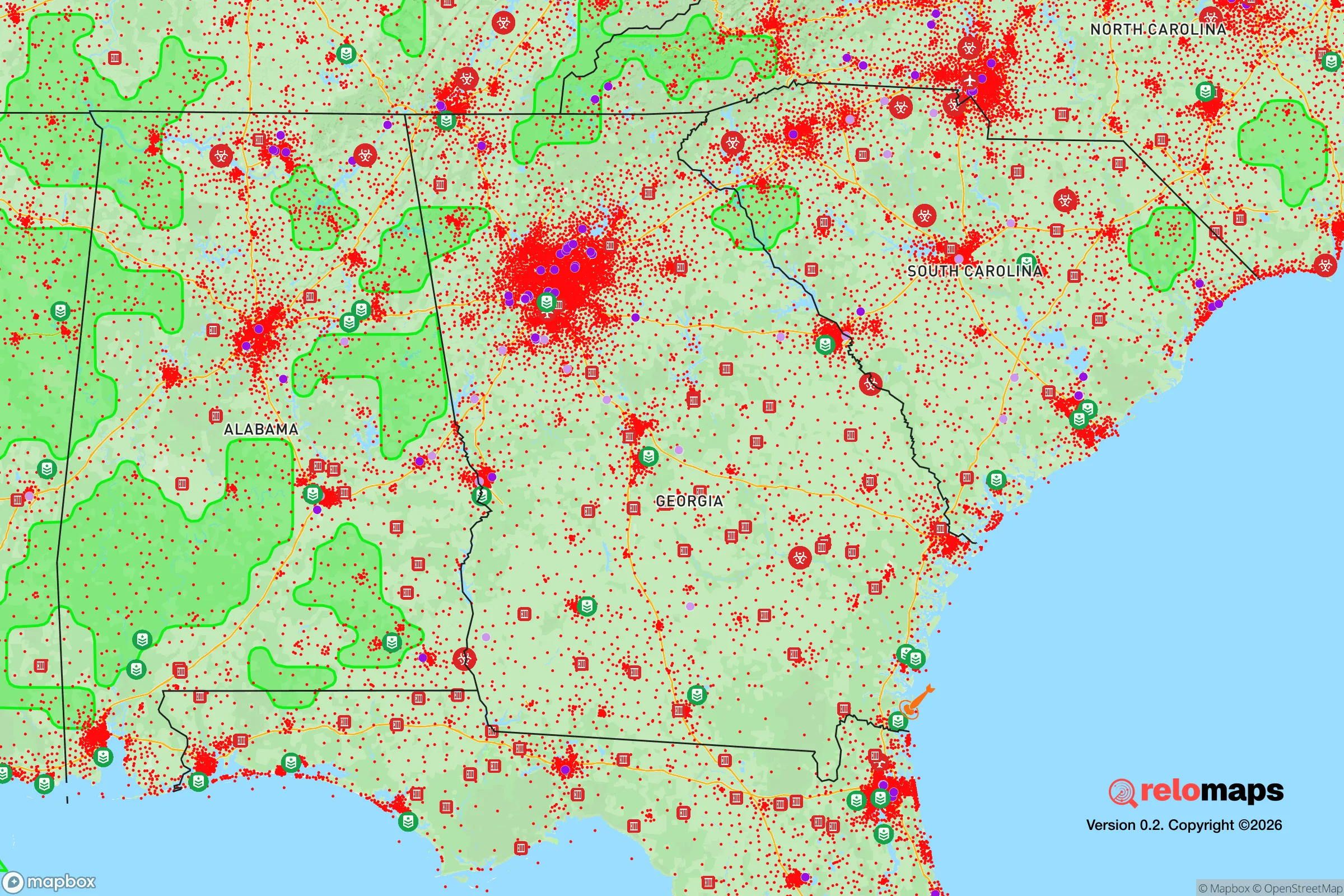
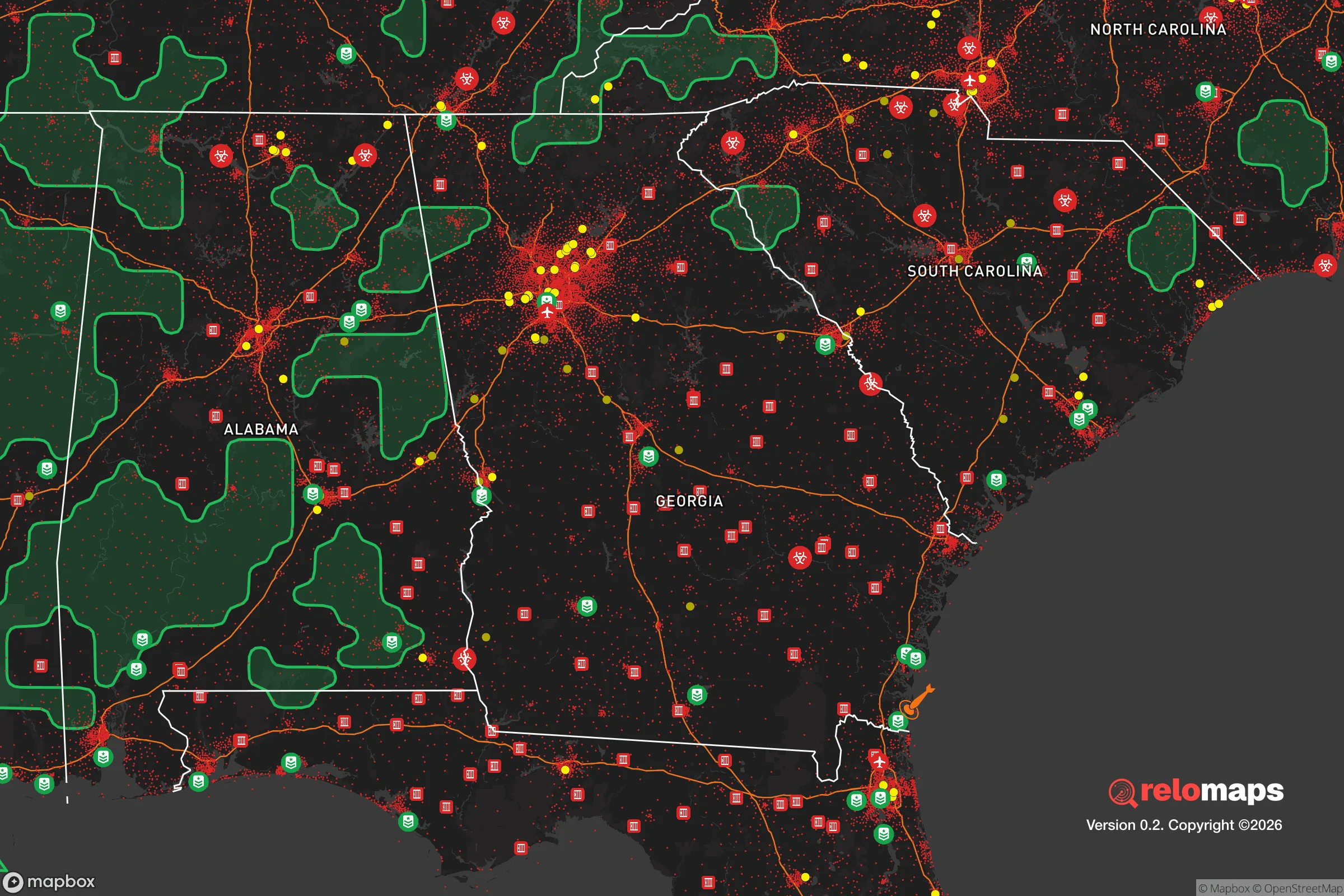


Important Note: For informational purposes only. This does not mean nothing bad ever happens in the green zones. Please use common sense. This is based on public data and modeled with AI. We tried to take a conservative approach but mistakes happen. We update this regularly as new information becomes available.
Solar Generator Recommendations
Backup power matters more here than in safer locations. We've picked three solar generators across budgets and capacity tiers — start with the budget unit if you only need a few essentials, or step up if you want to run a fridge and HVAC for days at a time.

Jackery Portable Power Station Explorer 300
Budget OptionPower on the Go: Weighing only 11 lbs, it's convenient to set up and store with book-sized foldable solar panels

BLUETTI Portable Power Station AC180
Designed for both indoor and outdoor scenarios, AC180 is highly capable as it has a robost capacity and continuous output power.

EF ECOFLOW DELTA Pro Ultra Power Station
Upgraded PickEcoFlow DELTA Pro Ultra is a whole-home energy system designed to grow with your family. Integrated with the Smart Home Panel 2, it scales to meet your evolving energy needs — keeping your home powered, intelligent, and secure through every stage of life.
We earn a commission, at no additional cost to you.
Strategic Assessment Analysis
Alpharetta, Georgia, presents a complex strategic picture for the conservative prepper. On one hand, its position as a wealthy, well-managed northern suburb of Atlanta offers strong economic resilience and community stability. On the other, its deep integration into the metro Atlanta sprawl creates significant exposure to the very risks a survival-minded relocator seeks to avoid — civil unrest, infrastructure collapse, and proximity to high-value targets. The key question is whether Alpharetta’s local advantages can outweigh its geographic liabilities in a serious crisis.
Geographic position and natural advantages for long-term stability
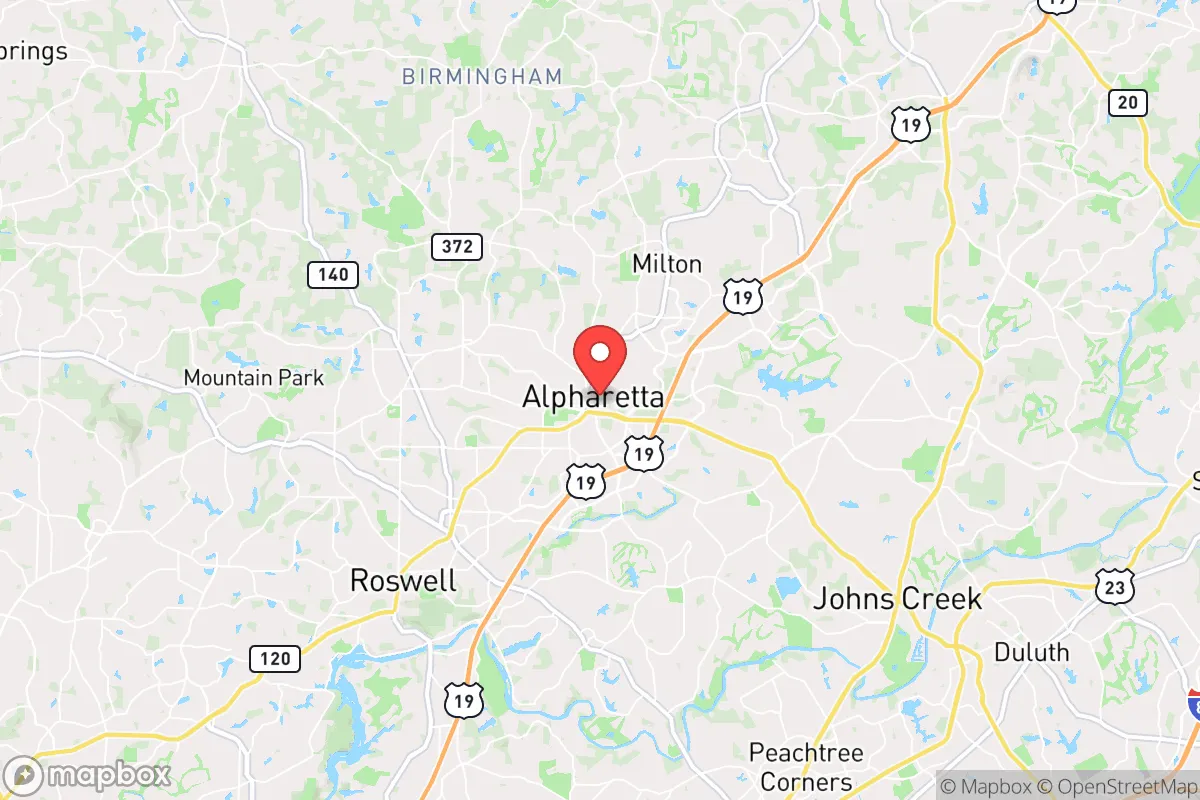
Alpharetta sits roughly 25 miles north of downtown Atlanta, in the foothills of the North Georgia mountains. This location provides a meaningful buffer from the immediate blast radius of any event targeting the city core, but it is not remote. The area’s topography is gently rolling, with the Chattahoochee River forming its western boundary. This river is a critical water source for the entire region, and Alpharetta’s position upstream of Atlanta gives it a slight advantage in water quality and availability during a prolonged disruption. The local climate is temperate, with four distinct seasons and no extreme weather patterns beyond occasional ice storms and summer thunderstorms. The soil is generally clay-heavy, which limits large-scale gardening but supports hardy perennials and tree crops. The natural vegetation — mixed hardwood and pine forests — provides decent cover and raw materials for shelter or fuel, though much of the land is developed. For a relocator, the key natural advantage is access to the Chattahoochee and the proximity to the less densely populated mountain counties to the north, which could serve as a fallback zone if Alpharetta itself becomes compromised.
Risks, exposures, and proximity to fallout-relevant landmarks
The single greatest strategic liability of Alpharetta is its location within the Atlanta metropolitan area, home to over six million people. In the event of a mass casualty event, civil unrest, or grid-down scenario, Alpharetta would face the same cascading failures as the rest of the region: supply chain collapse, overwhelmed hospitals, and potential mass migration from the city core. Alpharetta is also within 30 miles of several high-value targets, including Hartsfield-Jackson Atlanta International Airport (the world’s busiest), the Centers for Disease Control and Prevention (CDC) headquarters, multiple military installations (Dobbins Air Reserve Base, Fort Gillem), and major corporate headquarters like Home Depot, Coca-Cola, and UPS. Any of these could be a primary or secondary target in a conflict or terrorist event. Additionally, the area is crisscrossed by major interstate highways (GA-400, I-285, I-85) that would become choke points or escape corridors during an evacuation. The risk of a nuclear or radiological event is low but not zero, given the proximity to the CDC and the potential for a dirty bomb or industrial accident. For the prepper, Alpharetta’s biggest exposure is its population density and its dependence on a fragile, just-in-time supply chain that serves the entire metro.
Practical resilience for a relocator: food, water, energy, and defensibility
For a single individual or family looking to hunker down, Alpharetta offers mixed prospects. Water: The municipal supply comes from the Chattahoochee River, treated by the city’s own water plant. In a long-term grid failure, this plant would stop operating, making private well water or rainwater catchment essential. Many newer homes in Alpharetta are on city water, so a prepper should prioritize a property with a well or the ability to install one. Food: The city has numerous grocery stores and big-box retailers, but these would empty within 48 hours of a panic event. Local agriculture is minimal; the area is suburban, not rural. Community gardens exist but are not scalable for a crisis. Stockpiling is the only reliable option. Energy: Georgia Power serves the area, with a mix of natural gas, nuclear (Plant Vogtle, 150 miles away), and coal. The grid is moderately reliable but vulnerable to cyberattack and physical sabotage. Solar panels with battery storage are a viable investment, as the region gets ample sun. Defensibility: Alpharetta is not defensible in the traditional sense. It is a sprawling, car-dependent suburb with multiple entry points and no natural barriers. The police department is well-funded and professional, but in a widespread collapse, they would be overwhelmed. A prepper’s best bet is a home in a cul-de-sac or a gated community with a single access point, ideally on the northern edge of town near the Chattahoochee or the Greenway trails that could serve as escape routes. Community: The population is largely white-collar, educated, and politically moderate-to-conservative. This can be a double-edged sword: neighbors are likely to be capable and law-abiding, but also less likely to have prepping skills or a survival mindset. Building a mutual assistance group (MAG) with like-minded locals is critical.
Overall, Alpharetta is a decent strategic choice for a relocator who wants a stable, low-crime base with good economic opportunities, but it is not a retreat. It is a suburb, not a survival homestead. The prudent prepper would treat Alpharetta as a temporary staging area — a place to build resources, skills, and a network — while maintaining a secondary bug-out location in the North Georgia mountains, within a two-hour drive. The area’s strengths are its wealth, infrastructure, and community stability during normal times. Its weaknesses are its population density, proximity to high-value targets, and dependence on fragile systems. For someone willing to invest in preparation and maintain a low profile, Alpharetta can work. For anyone expecting to ride out a major collapse in place without a plan, it is a trap. The smart move is to use Alpharetta’s advantages while never forgetting that its location is a liability — and to have a hard exit plan ready before the roads clog.

* Values derived from national, state, county, city and local statistics and may differ in a specific area. Last updated: 2026-04-16T00:21:24.000Z
Narrative content on this page is AI-generated and may contain mistakes. Verify any details that matter before acting on them.
ReloMaps may earn a commission from affiliate links at no extra cost to you.

