
Photo: Wikipedia
Political ClimatePolitical Climate in Alpharetta, GA
District shown is the primary district for this city’s centroid. Cities may span multiple districts.
Local Political AnalysisPolitical Analysis of Alpharetta, GA
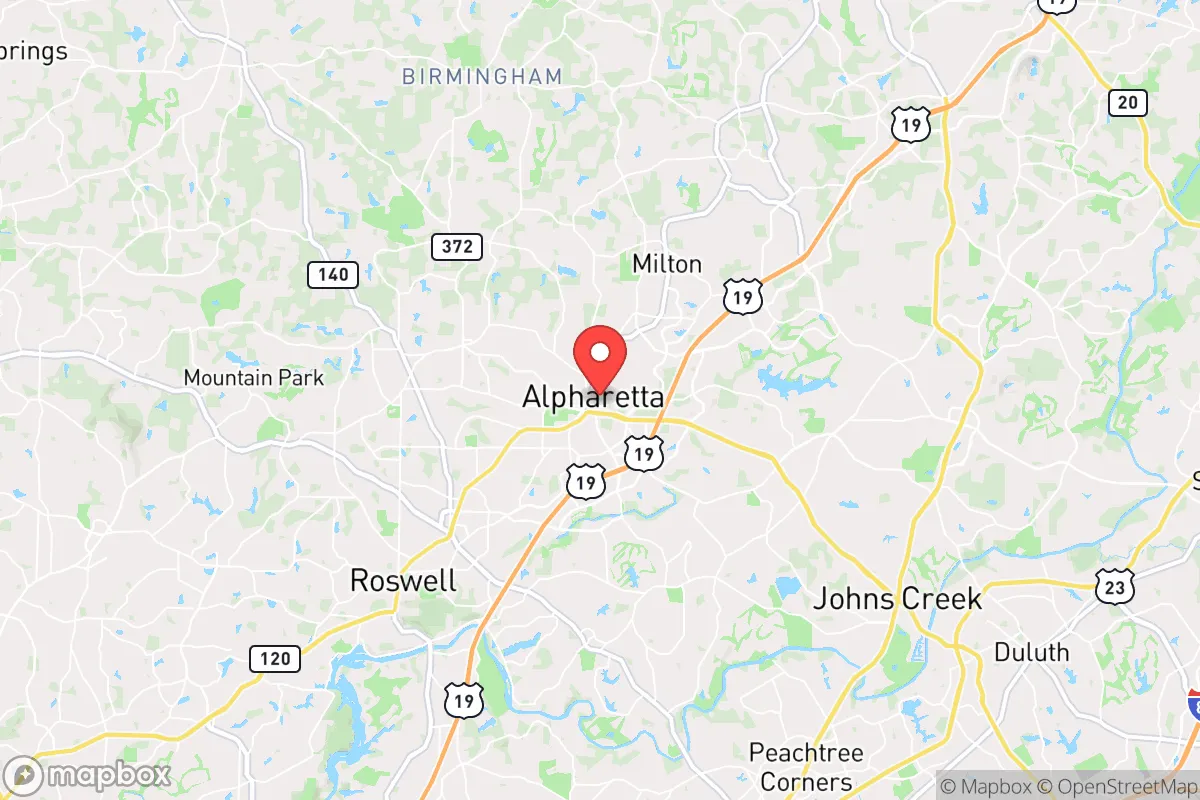
Alpharetta has long been a solidly conservative stronghold, and the numbers back that up with a Cook PVI of R+11, meaning the area votes about 11 points more Republican than the national average. But if you’ve lived here as long as I have, you’ve seen the winds start to shift, and it’s not all for the better. The old-school, limited-government values that built this town are still the backbone, but there’s a creeping influence from the Atlanta metro area that’s starting to test those foundations. For anyone who values personal freedoms and local control, the trajectory is worth watching closely.
How it compares
Drive 15 minutes south into Roswell or Sandy Springs, and you’ll feel the political temperature change fast. Those areas have swung noticeably left in recent cycles, with more progressive city councils and a heavier hand on zoning, taxes, and even local business mandates. Alpharetta, by contrast, has held the line better, but it’s not immune. Compare us to Cumming or Milton to the north and east, and you’ll see communities that are still deeply red, with less pressure from the urban sprawl. The difference is stark: in Alpharetta, you still get a Republican-leaning city council and a mayor who talks about fiscal responsibility, but the noise from the south is getting louder. Every election cycle, there’s a little more talk about “equity” initiatives and “sustainability” mandates that sound a lot like government overreach dressed up in nice language. It’s a slow creep, but it’s real.
What this means for residents
For the average family here, the political climate directly affects your wallet and your freedoms. Property taxes have inched up as the city takes on more social programs and “community engagement” efforts that feel like they’re solving problems nobody asked about. The school board, once a model of conservative common sense, has started flirting with DEI training and curriculum changes that prioritize ideology over academics. If you’re a parent who wants your kids taught how to think, not what to think, that’s a red flag. On the plus side, the Second Amendment is still respected here—no local gun bans or magazine limits like you’d see in Decatur or Atlanta proper. But the pressure is mounting. Every new development or zoning variance seems to come with a side of “affordable housing” mandates or “climate action” plans that add costs and bureaucracy. It’s not a crisis yet, but it’s a slow erosion of the hands-off, pro-business culture that made Alpharetta a great place to raise a family.
One thing that still sets Alpharetta apart is its cultural resistance to the kind of top-down policy you see in the core metro. The local chamber of commerce and many civic groups still champion low taxes and minimal regulation, and there’s a strong network of conservative churches and community organizations that push back against progressive overreach. But the long-term trend is concerning. As more young professionals and transplants move in from blue states, they bring their voting habits with them. If you’re a longtime resident who values personal liberty and local control, you’ll want to stay engaged in city council meetings and school board elections. The fight for Alpharetta’s soul is real, and it’s happening one ordinance at a time.

State Political ClimatePolitical Climate in Georgia
State Political AnalysisPolitical Environment in the State
Georgia has shifted from a reliably Republican stronghold to a true battleground state over the past two decades, with the 2020 presidential election flipping the state blue for the first time since 1992 by a razor-thin margin of just 0.2%. The state’s overall partisan lean is now a competitive 50-50 split, driven by explosive growth in the Atlanta metro area and a rapidly diversifying electorate, while the rest of the state remains deeply conservative. For a conservative considering relocation, the key takeaway is that Georgia is a state in flux—where your vote and your lifestyle choices still carry weight, but where the political ground is shifting under your feet faster than almost anywhere else in the country.
Urban vs. rural divide
The political map of Georgia is a textbook case of the urban-rural chasm. The Atlanta metro—including Fulton, DeKalb, Cobb, and Gwinnett counties—now accounts for roughly 60% of the state’s population and votes overwhelmingly Democratic. DeKalb County gave Biden 83% of the vote in 2020, while Fulton County delivered 73%. Meanwhile, rural and exurban counties like Murray, Gilmer, and Union in the north Georgia mountains routinely vote 80%+ Republican. The real story is the suburbs: Cobb County, once a GOP stronghold, flipped blue in 2016 and hasn’t looked back, while Gwinnett County followed suit in 2020. Forsyth County, just north of Atlanta, remains a conservative redoubt—voting 60% for Trump—but even there, growth is bringing more moderate voters. Outside the Atlanta orbit, Augusta and Savannah are blue-leaning urban islands in a sea of red, while Columbus and Macon are more purple but trending left. The rural-urban divide isn’t just political—it’s cultural, with Atlanta’s progressive policies often clashing with the rest of the state’s traditional values.
Policy environment
Georgia’s state-level policy environment is a mixed bag for conservatives. On the plus side, the state has a flat income tax rate of 5.49% (down from 6% in 2022, with further cuts planned), no estate tax, and a relatively business-friendly regulatory climate. The Georgia Right to Farm Act protects agricultural operations from nuisance lawsuits, a boon for rural landowners. Education policy is a bright spot: the state has a robust charter school system and the Georgia Promise Scholarship Act, passed in 2024, which provides $6,500 per student for private school tuition or homeschooling expenses. However, the state’s healthcare landscape is concerning—Georgia refused Medicaid expansion, which keeps taxes low but leaves a significant coverage gap. Election integrity saw a major win with the Election Integrity Act of 2021 (SB 202), which added voter ID requirements for absentee ballots and limited drop boxes, though it was demonized nationally. On the downside, Atlanta’s city government has enacted progressive policies like a $15 minimum wage for city contractors and sanctuary city-like ordinances limiting cooperation with ICE, which creates a patchwork of enforcement across the state.
Trajectory & freedom
Georgia’s trajectory on personal freedom is a tug-of-war. On the liberty-expanding side, the state passed constitutional carry (HB 218) in 2022, allowing permitless carry of firearms for law-abiding adults—a major win for Second Amendment rights. The Parental Rights in Education Act (SB 88) in 2023 requires schools to notify parents of any changes to a student’s mental or physical health, including gender identity discussions, and bans instruction on sexual orientation in grades K-3. Property rights got a boost with the Georgia Landowner Protection Act, which limits liability for landowners who allow recreational access. However, there are worrying trends: Atlanta’s city council passed a resolution in 2023 supporting “sanctuary city” policies, and the state’s medical marijuana program remains highly restrictive—only low-THC oil is legal, and dispensaries are few. The biggest threat to freedom is the Georgia Environmental Protection Division’s expanding regulatory reach over private wells and septic systems in rural areas, which has drawn backlash from property rights advocates. The state also saw a push for COVID-19 vaccine mandates by private employers, though the legislature banned state-level mandates in 2022.
Civil unrest & political movements
Georgia has been a flashpoint for political activism on both sides. The “Stop Cop City” movement in Atlanta—opposing a $90 million police training facility in DeKalb County—turned violent in 2023, with anarchist groups firebombing construction equipment and leading to the passage of the Georgia Public Safety Act, which expanded penalties for domestic terrorism and organized sabotage. Immigration politics are heated: the Georgia Security and Immigration Compliance Act (HB 87) from 2011 remains in effect, requiring employers to use E-Verify, but Atlanta’s sanctuary policies create tension. The 2020 election integrity controversy still simmers, with ongoing audits and lawsuits over ballot drop boxes and signature verification. On the right, the Georgia Republican Assembly and MAGA-aligned groups hold regular rallies, particularly in Rome and Dalton. On the left, the Georgia Democratic Party has been energized by Stacey Abrams’ organizing efforts, and groups like Fair Fight continue to push for expanded mail-in voting. A new resident in Athens or Decatur will see more visible progressive activism, while rural areas like Waycross or Tifton remain quiet but politically engaged.
Projection
Over the next 5-10 years, Georgia is likely to become more competitive and more polarized. In-migration from blue states—particularly California and New York—is accelerating, with Atlanta, Savannah, and Athens seeing the most new arrivals. This demographic shift will continue to push the Atlanta metro leftward, while rural areas will harden their conservative stance. The state’s Republican-controlled legislature will likely pass further tax cuts and school choice expansions, but may struggle to hold the line on cultural issues as the electorate diversifies. The 2026 gubernatorial race will be a bellwether: if a Democrat wins, expect a push for Medicaid expansion, gun control, and renewable energy mandates. If a Republican holds the seat, expect continued focus on election integrity, parental rights, and property tax relief. The wildcard is the 2028 presidential election, where Georgia could become the tipping-point state, drawing national attention and outside money that will further polarize local politics. A conservative moving to Georgia now should expect to live in a state where their values are still protected at the state level, but where local control—especially in metro Atlanta—will increasingly challenge those values.
For a conservative relocating to Georgia, the bottom line is this: you can still find communities where your values are the norm—places like Forsyth County, Oconee County, or Harris County—but you’ll need to be strategic about where you settle. The state’s tax and regulatory environment remains favorable, and recent laws on guns, parental rights, and school choice are genuine wins. However, the political winds are shifting, and the Atlanta metro’s influence is growing. If you’re looking for a state where you can still have a say in your children’s education, carry a firearm without a permit, and keep more of your paycheck, Georgia is a solid choice—just be prepared to stay engaged in local politics to keep it that way.
* Values derived from national, state, county, city and local statistics and may differ in a specific area. Last updated: 2026-04-16T00:21:24.000Z
Narrative content on this page is AI-generated and may contain mistakes. Verify any details that matter before acting on them.
ReloMaps may earn a commission from affiliate links at no extra cost to you.

