 Popular
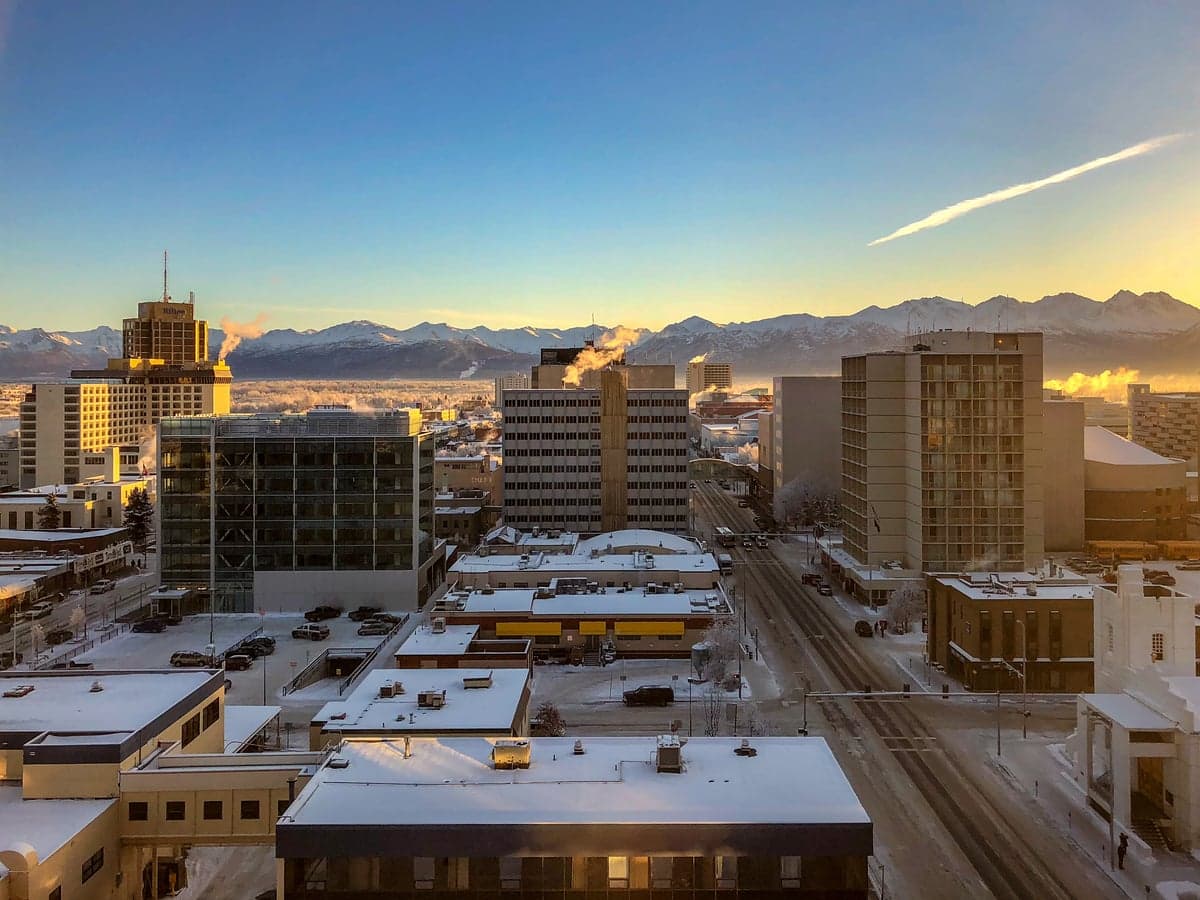
Photo: Wikipedia
Personal Sovereignty in Anchorage, AK
Strong independent fundamentals that actively favor personal liberty and low regulation.
What does Personal Sovereignty tell us?
Personal Sovereignty measures your capacity for self-reliance and independence with minimal government friction. Higher scores mean fewer barriers between you and the way you want to live... but it assumes you have the space you need and good neighbors.
What does this tell us?
Personal Sovereignty measures your capacity for self-reliance and independence with minimal government friction. Higher scores mean fewer barriers between you and the way you want to live... but it assumes you have the space you need and good neighbors.
State Policy
Energy independence: Net exporter (350% of energy produced in-state)
Personal Liberty
Homesteading

Personal Liberty Analysis
For the strategic relocator who prioritizes personal sovereignty above all else, Anchorage, Alaska, presents a uniquely complex environment. It is a place where the state constitution explicitly protects individual privacy and the right to keep and bear arms, yet the city itself operates under a municipal code that can feel surprisingly restrictive for a frontier town. The real sovereignty equation here is a trade-off: you gain immense freedom from the federal government’s footprint and a culture of self-reliance, but you must navigate a local bureaucracy that is often at odds with the libertarian-leaning spirit of the state. For a survivalist or prepper, Anchorage is not a sanctuary in itself, but it is the most practical base camp for accessing the true autonomy found in the surrounding Mat-Su Valley and beyond.
Tax burden and regulatory posture in Anchorage
From a fiscal sovereignty standpoint, Alaska is a standout. There is no state income tax and no state sales tax, which immediately puts more money back into your pocket for supplies, land, and preparedness. However, Anchorage is not a tax-free zone. The Municipality of Anchorage (MOA) levies a property tax that averages around 1.1% of assessed value, and while there is no city sales tax, the state’s high cost of living—driven by shipping and energy—acts as a hidden consumption tax. The regulatory posture is a mixed bag. Alaska’s state government is generally hands-off, but the MOA has a thick code of land use, building, and business regulations. For a prepper, the most relevant friction point is the strict building and fire codes that can make off-grid construction or installing a wood stove inside city limits a permitting headache. The state’s lack of a broad-based tax is a major win, but the local regulatory environment in Anchorage is more akin to a lower-tier mainland city than a free-wheeling frontier outpost.
Self-defense and gun law specifics in Anchorage
This is where Alaska’s sovereignty shines brightest, even within the city. Alaska is a constitutional carry state, meaning no permit is required to carry a concealed firearm for anyone 21 or older who can legally possess a gun. There is no state-level firearm registry, no waiting period, and no permit required to purchase a handgun or long gun. The state preemption law is strong, meaning Anchorage cannot pass its own gun control ordinances that are stricter than state law. This is a critical protection. For the survivalist, this means you can legally keep a rifle in your truck or a sidearm on your hip without bureaucratic interference. The practical reality in Anchorage is that violent crime rates are significantly higher than the national average, particularly property crime and assault, making the ability to defend oneself not just a right but a near-necessity. The legal environment for use of force is favorable, with a strong "Stand Your Ground" statute and no duty to retreat in any place you are lawfully present. For the prepper, the gun laws are a green light, but the high crime rate means you must be constantly vigilant.
Self-reliance and homesteading viability in Anchorage
True homesteading within the Anchorage city limits is difficult but not impossible. The typical residential lot in established neighborhoods is a standard 60x120 feet, which is enough for a substantial garden and a small greenhouse, but not for livestock or significant timber harvesting. The MOA zoning code is restrictive: keeping chickens is allowed with a permit, but goats, pigs, or larger livestock are generally prohibited on standard residential lots. For a prepper seeking true self-reliance, Anchorage is a staging ground, not the destination. The real viability lies in the Matanuska-Susitna Borough (Mat-Su), a 30-minute drive north, where land is cheaper, zoning is far more permissive, and off-grid living is common. In the Mat-Su, you can find 5-acre parcels with no building codes, no inspections, and the legal right to drill a well, install solar, and compost your waste. Anchorage offers the jobs, hospitals, and supply lines (Costco, Home Depot, gun shops) that support a self-reliant lifestyle, but the actual homesteading happens outside its jurisdiction. For the serious prepper, the strategy is to live in Anchorage for the economic base while securing raw land in the Mat-Su for retreat and long-term sustainability.
Personal liberties in Anchorage: parental rights, medical autonomy, speech, and property
Alaska’s state constitution is a strong bulwark for personal liberties, and this flows into Anchorage. Parental rights are robust; Alaska has no broad vaccine mandate for schoolchildren (though individual schools may have policies), and the state has a strong "parental consent" requirement for medical procedures on minors. Medical autonomy is a mixed picture. While the state has no income tax and a libertarian streak, Alaska expanded Medicaid under the ACA, which some conservatives view as government overreach. However, for the prepper, the key fact is that Alaska has no state-level prescription drug monitoring program that is as aggressive as many lower-48 states, and there is no state law requiring pharmacists to dispense emergency contraceptives against their conscience. Free speech is strongly protected under the state constitution, which has its own "free expression" clause that courts have interpreted broadly. Property rights are the strongest asset. Alaska’s "right to farm" laws protect agricultural activities from nuisance lawsuits, and the state’s homestead exemption for bankruptcy is generous, protecting up to $72,900 in home equity. The biggest liberty concern in Anchorage is the city’s aggressive code enforcement regarding property maintenance, junk vehicles, and unpermitted structures, which can feel like a violation of personal sovereignty for those who want to live unconventionally. Overall, the state provides a strong legal framework for personal freedom, but the city itself can be a petty tyrant on property aesthetics.
In the final analysis, Anchorage offers a high degree of personal sovereignty relative to most major U.S. cities, but it is not a libertarian paradise. The absence of state income and sales tax, combined with constitutional carry and strong property rights, puts it miles ahead of cities like Portland, Seattle, or Denver. However, the local municipal government’s zoning and code enforcement, combined with a high cost of living and significant crime, mean that Anchorage is best viewed as a strategic hub for a self-reliant lifestyle rather than a final retreat. For the prepper or survivalist, the smart play is to use Anchorage for its economic opportunities and supply chains while establishing a true sovereign foothold in the Mat-Su Valley or further into the bush. If your priority is maximum autonomy with minimal government interference, Anchorage is a solid B+; the surrounding areas are an A. The city itself is a compromise—a place where you can live free, but not entirely on your own terms.

* Values derived from national, state, county, city and local statistics and may differ in a specific area. Last updated: 2026-04-19T19:14:18.000Z
Narrative content on this page is AI-generated and may contain mistakes. Verify any details that matter before acting on them.
ReloMaps may earn a commission from affiliate links at no extra cost to you.

